Saoshyant the Savior Myth Meaning & Symbolism
The prophecy of a final savior born from the seed of Zoroaster, who defeats evil, resurrects the dead, and renews the world in a great cosmic judgment.
The Tale of Saoshyant the Savior
Listen, and hear the tale of the end that is a beginning. The world grows old and weary, its bones cracked by the long war between Ahura Mazda and the Lie, Angra Mainyu. The sun dims, the rains fail, and virtue flees from the hearts of men. It is the Age of Confusion, when the great order, Asha, is besieged by the storm of Druj.
But a promise was etched into the stars at the dawn of time. From the lineage of the prophet Zarathustra, three saviors would come, each born of a virgin who bathes in a sacred lake where the prophet’s seed has been preserved. The first two prepare the way, but the third, the ultimate one, is Saoshyant.
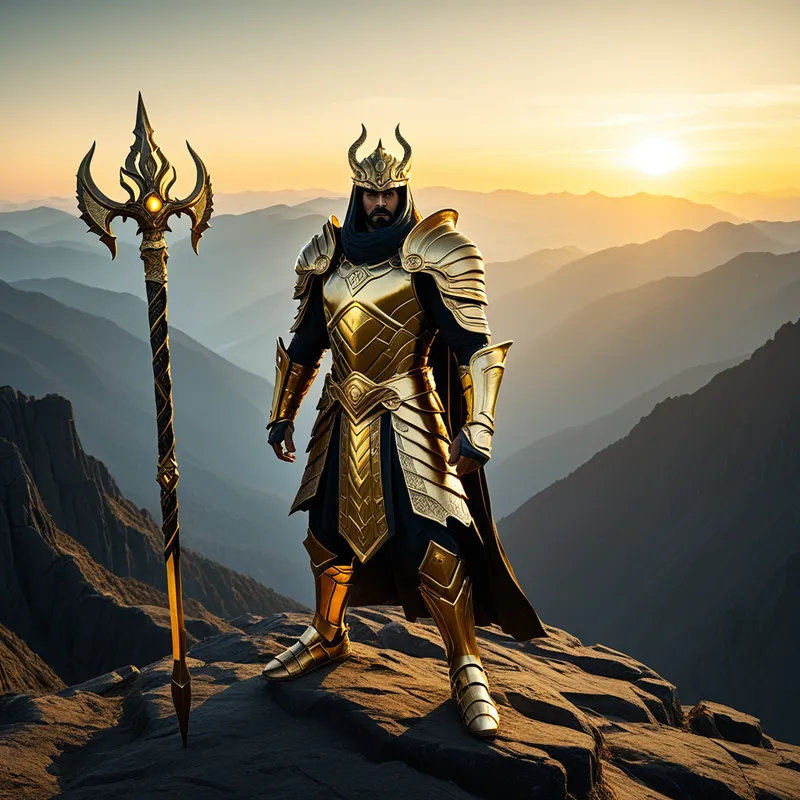
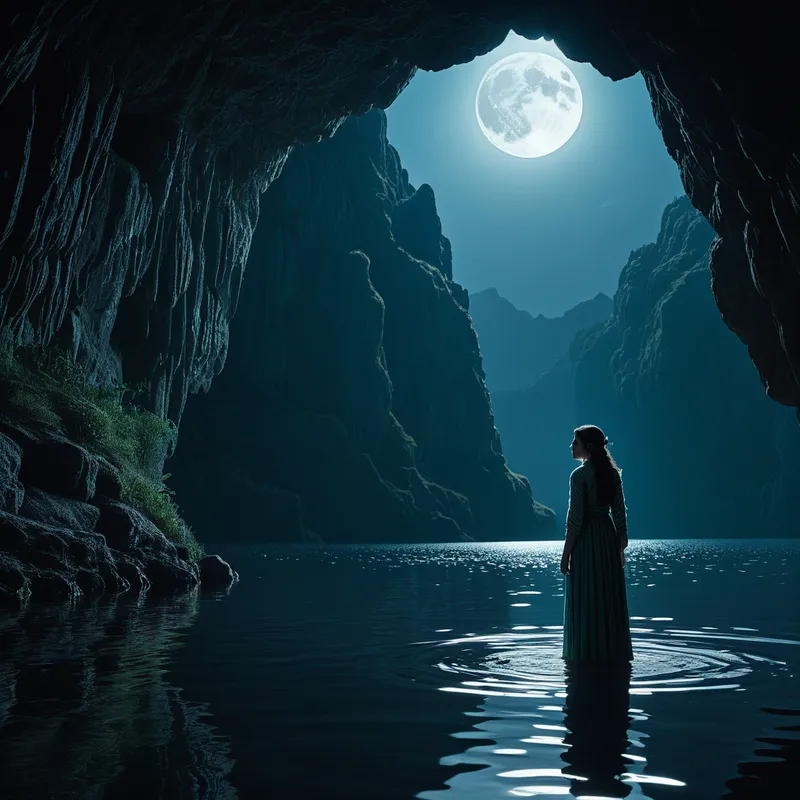
In the final, deepest darkness, a maiden named Eredat-fedhri, “She Who Nourishes the Faithful,” will come to Lake Kansaoya. As she enters the waters, touched by the celestial light of the prophet’s essence, she conceives. For thirty years, the child grows within her, radiant and mighty, until the destined day of his birth. He emerges not as a babe, but as a warrior of truth, a man of thirty years, shining with the glory of Amesha Spentas.
His coming is a trumpet blast that shakes the foundations of existence. He raises an army of the pure, and the final, terrible battle is joined upon the plain of Kangdez. The forces of the Lie muster every horror, every deceit, every drop of corruption they have sown in the world. But Saoshyant wields the weapon of the gods, a mace wrought from divine metal, and with it he strikes the decisive blow. The great serpent, the embodiment of evil, is slain. Angra Mainyu and all his demonic hosts are rendered powerless, cast into oblivion by a river of molten metal that flows across the earth, a purifying fire that judges all.
Then comes the great wonder. At Saoshyant’s call, the mountains melt like wax. The molten metal flows, warm and cleansing, over every soul that ever lived. To the righteous, it feels like warm milk. To the wicked, it is a searing agony that burns away their falsehood, leaving only purified essence. The dead stir in their graves. Bones knit, flesh is restored, and all humanity, every generation, rises whole. In a final, glorious reunion, soul rejoins body, and not a single being is lost. The world itself is made new—flat, boundless, evergreen, and perfect. Time stops, and immortality begins. The work of Ahura Mazda is complete, and evil is but a forgotten whisper.
Cultural Origins & Context
This profound apocalyptic vision is the heart of Zoroastrian eschatology, one of the oldest recorded savior narratives in human history. It emerged from the spiritual landscape of ancient Persia, systematized in the Avesta and later elaborated in the Pahlavi literature. The myth was not merely a story but a cosmological map and a social covenant. It was preserved and transmitted by the priestly class, the Magi, and served a critical societal function: it framed human existence as a active, moral battle within a cosmic war. Every individual’s choice for truth (Asha) or deceit (Druj) directly contributed to the final outcome. The myth of Saoshyant provided ultimate hope and justice, promising that no suffering in the cause of good was in vain, and that history itself had a teleological purpose leading to perfect restoration.
Symbolic Architecture
The myth is a masterwork of symbolic architecture, mapping the journey of consciousness from fragmentation to wholeness. Saoshyant is not an external deity intervening from afar, but a manifestation of the latent perfection within creation itself, born from the preserved essence (Farr) of the founding prophet. He represents the emergent, integrated Self that arises when the psyche has gathered all its scattered elements.
The savior is not who comes for us, but who emerges from us when we have preserved the sacred seed of our own deepest truth through the long winter of the world.
The Lake Kansaoya is the unconscious, the fertile depths where the potential for wholeness is stored. The virgin birth signifies a conception not of biological lineage, but of spiritual immaculacy—a new principle arising from the pure interaction between the conscious ego (the maiden) and the numinous, ancestral wisdom (the prophet’s seed) within the unconscious. The thirty-year gestation is the necessary period of inner maturation, the incubation of a new consciousness that cannot be rushed. The river of molten metal is the ultimate symbol of discernment and alchemical transmutation; it is the fierce, unsparing light of consciousness that tests and reveals the absolute core of every complex, burning away the dross of persona and shadow to leave only essential being.
The Dreamer's Resonance
When this myth stirs in the modern dreamer, it often signals a profound crisis of meaning and a call for psychic renewal that feels cosmic in scale. One may not dream of a literal Persian savior, but of overwhelming tides of filth or corruption being swept away by a golden flood. They may dream of a vast, silent gathering of all the people they have ever known, waiting in a twilight plain. They may encounter a serene, overpoweringly authoritative figure who begins to rearrange the landscape of the dream itself, melting distorted features back into harmony.
Somatically, this can accompany feelings of intense pressure followed by sudden release, or a sensation of “fiery” cleansing in the body. Psychologically, it is the process of the ego surrendering to a greater, integrative force within. The dreamer is experiencing the inner equivalent of the Frashokereti—the “making wonderful”—where deeply buried traumas (the “dead”), frozen aspects of the personality, and life-long patterns of “falsehood” (Druj) are being summoned, judged not by a moralizing god, but by the sheer, objective heat of one’s own awakening consciousness. It is a terrifying and exhilarating dissolution of the old world of the psyche.
Alchemical Translation
For the individual, the myth of Saoshyant models the ultimate stage of Jungian individuation: the conscious realization and embodiment of the Self as the organizing principle of the entire psyche. The long “cosmic winter” is the life spent identified with the ego, its conflicts, and its compromises. The preserved “seed of Zarathustra” is the core, incorruptible image of wholeness—the Self—that we have protected in our deepest interior, often through periods of doubt and despair.
The river of molten metal is the ordeal of absolute self-honesty, where we must consent to let every part of ourselves be seen and felt in its raw truth.
The alchemical operation here is separatio and coagulatio on a grand scale. First, the fierce discernment (the molten metal) separates the essential from the accidental in our character. What is mere adaptation, fear, or borrowed identity is burned away. Then, the “resurrection of the dead” occurs—the coagulatio. All the disowned parts, the abandoned talents, the repressed griefs and joys (“the dead”) are reintegrated into a new, immortal body of consciousness. The “world made flat and evergreen” is the psyche achieving a state of inner peace and perpetual fertility, where conflict is not destroyed but harmonized, and life proceeds from an infinite source. The individual becomes the savior of their own fragmented universe, not by fighting shadows, but by illuminating them with a light so complete that they are transformed into aspects of a restored kingdom.
Associated Symbols
Explore related symbols from the CaleaDream lexicon:
- Savior — The emergent archetype of wholeness that arises from within the psyche to orchestrate final healing and integration, ending the inner civil war.
- Lake — The deep, still unconscious where the seed of potential wholeness is preserved, awaiting the conscious engagement that will bring it to life.
- Fire — The purifying and discerning force of consciousness that tests all things, burning away illusion to reveal essential, immutable truth.
- Mountain — The lofty, enduring principle of order (Asha) and the vantage point from which the savior surveys and renews the entire created world.
- Seed — The latent, divine potential for transformation and new life, preserved across time and decay, containing the complete pattern of the future Self.
- River — The flowing, inevitable process of judgment and purification that culminates in renewal, carrying all things toward their ultimate state.
- Death — Not an end, but a necessary state of dormancy and potential from which a more complete form of life is destined to be resurrected.
- Light — The active principle of truth, consciousness, and revelation that ultimately overcomes all obscurity and restores original clarity.
- Rebirth — The core promise of the myth: the emergence of a new, immortal existence from the purified essence of the old, transcending cyclic decay.
- Order — The cosmic principle of Asha, the divine harmony that the savior re-establishes, both in the world and in the well-ordered psyche.
- Bone — The fundamental, enduring structure of identity and memory that persists through time, providing the framework for ultimate resurrection.
- Dream — The inner realm where the prophecy of personal renewal is first glimpsed, and where the symbols of final integration are staged.