Samjoko Myth Meaning & Symbolism
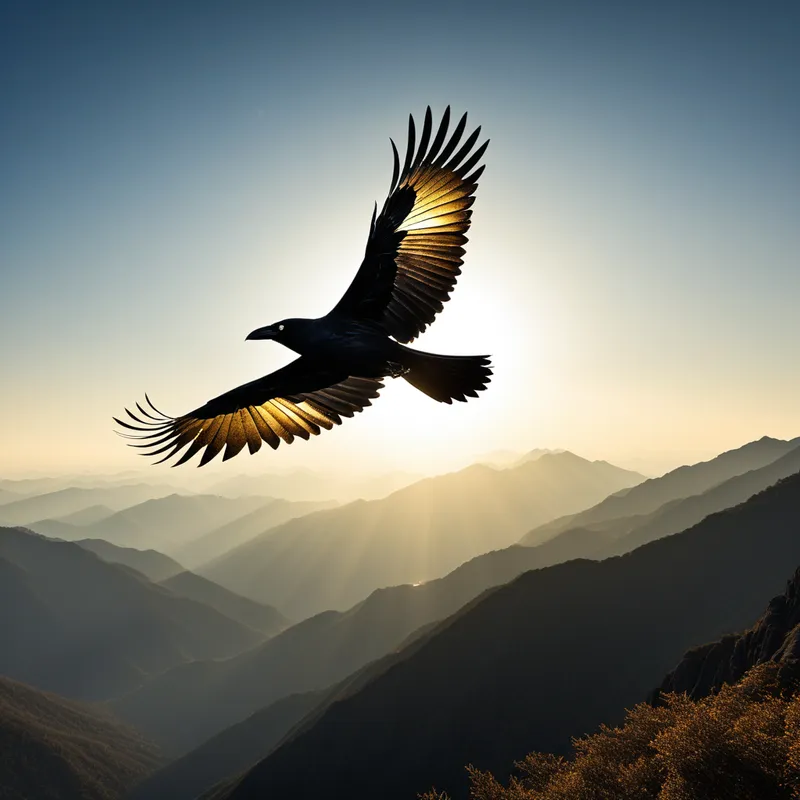
A three-legged crow, born from celestial fire, carries the sun across the sky, embodying the triumph of order over chaos and the soul's radiant journey.
The Tale of Samjoko
In the time before time, when [the world](/myths/the-world “Myth from Tarot culture.”/) was a canvas of soft clay and swirling mist, the heavens were a silent, empty vault. The great sun, Hwanin’s most precious jewel, hung motionless in [the void](/myths/the-void “Myth from Buddhist culture.”/), its light a dormant potential. Below, [the earth](/myths/the-earth “Myth from Hindu culture.”/) lay in a deep, formless slumber, caught between shadow and a dawn that would not come. Chaos, a whispering chill in the perpetual twilight, began to coil around the mountains and seep into the valleys.
From the heart of the silent sun, a spark fell—not a flicker, but a seed of pure, concentrated fire. It plunged through the cold ether and struck the peak of the sacred Mount Taebaek. The mountain shuddered. From the point of impact, not lava, but a radiant egg of crystalline light emerged, pulsing with the rhythm of a soon-to-be heart.
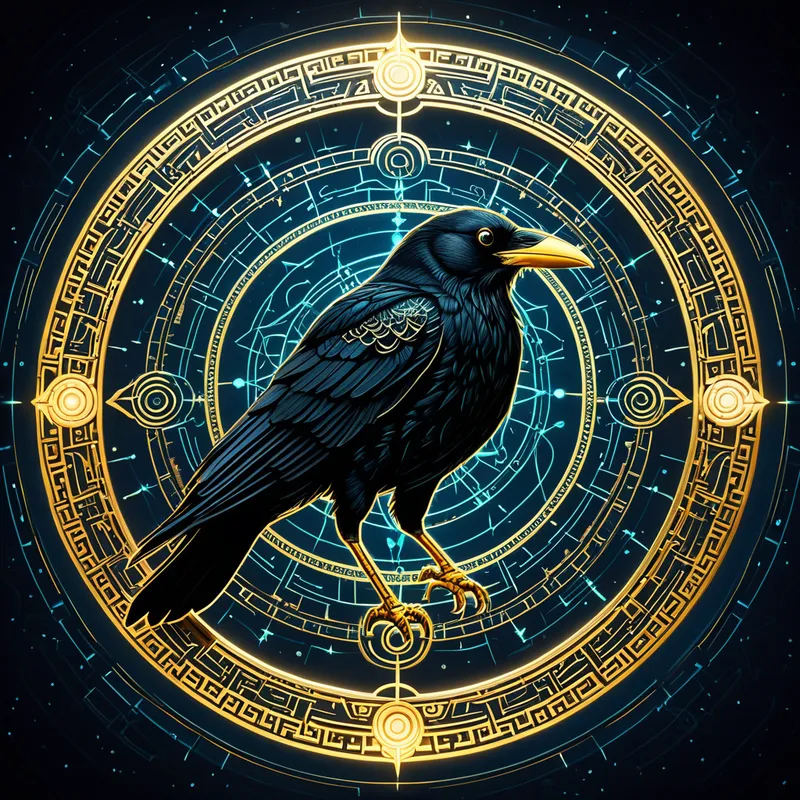
For nine cycles of [the moon](/myths/the-moon “Myth from Tarot culture.”/), the egg incubated in the mountain’s silence. Then, with a sound that was both a crack of thunder and the first note of a song, it split. What emerged was not a creature of feather and bone as the world knew them. It was a being forged from solar essence and earthly resolve: a crow, but unlike any other. Its plumage was the deep, absolute black of the space between stars, yet it shimmered with an inner fire, each feather edged in gold. And it stood not on two legs, but on three—a form of impossible stability, a living tripod of divine purpose.
This was Samjoko. It tilted its head, and its eyes, twin pools of molten amber, saw the stagnant world and the suspended sun. It felt the creeping chaos as a physical cold against its spirit. Without a cry, without hesitation, it spread its wings—wings that caught not air, but the very fabric of light. With a mighty beat, it launched itself from the mountain, not into [the sky](/myths/the-sky “Myth from Persian culture.”/), but toward the sky, ascending the invisible ladder between earth and heaven.
The journey was a battle. The void resisted. Tendrils of primordial darkness lashed at it, seeking to extinguish its fire, to pull it back into the formless night. But Samjoko’s three legs gave it an unshakeable balance; it could not be tipped, could not be overturned. It pushed onward, a single point of blackness moving toward the light, until it reached the colossal, slumbering orb.
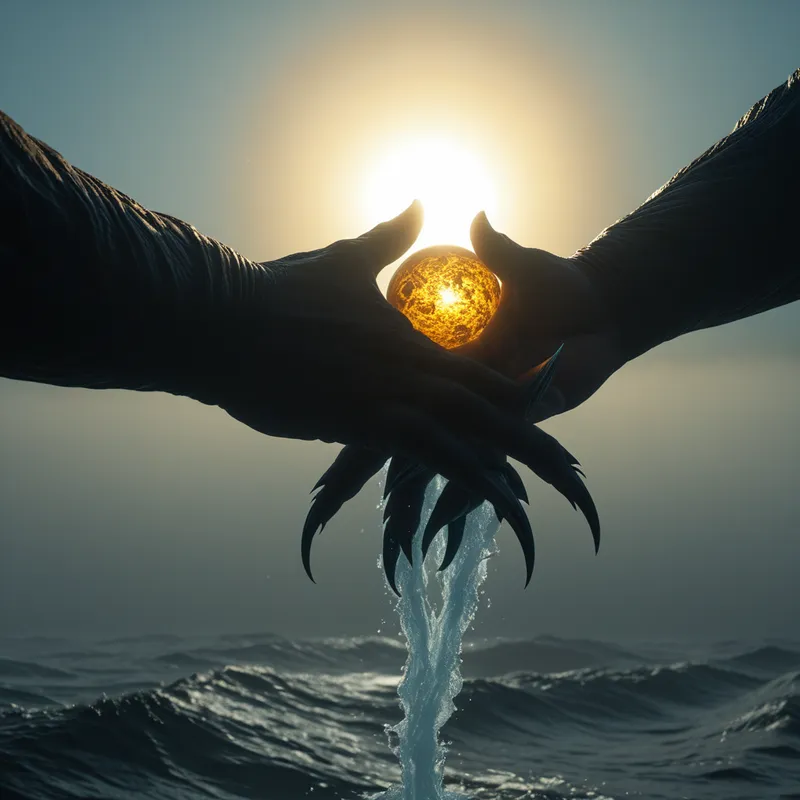
With its three powerful talons, it grasped the sun. And then, it began to pull.
At first, nothing moved. Then, a tremor. A groan from the axis of the world. And then, with a surge of will that echoed through all creation, the sun began to travel. Samjoko, the three-legged crow, became the charioteer of the day, dragging the brilliant weight of the sun across the arch of heaven. Dawn bled across the land for the first time. Shadows retreated, defined and sharp. The chaos recoiled, banished to the edges, to the deep forests and the hidden places where it belonged. Order was established. Day followed night, season followed season, all guided by the relentless, graceful flight of the crow with the sun in its grasp.
Cultural Origins & Context
The myth of Samjoko is woven into the earliest strata of Korean identity, appearing in the foundational text of Dangun and persisting through the Silla, Goguryeo, and Baekje kingdoms. It was not merely a pretty story for children, but a cosmological anchor. In tombs like the Jangcheon-ri Tomb No. 1, murals depict Samjoko alongside the Yong and the Bonghwang, placing it at the heart of a sacred triad governing heaven and earth.
Its primary function was to explain and sanctify the cosmic order. The sun’s movement was not arbitrary physics; it was the heroic, daily labor of a divine being. This myth provided a model of resilience and purposeful action. Samjoko’s three legs symbolized the stable foundation of a well-ordered state and the harmonious balance between the three realms of heaven, earth, and humanity. It was a symbol of royal authority—the king, like Samjoko, was the mediator who brought celestial order to the earthly realm, ensuring prosperity and driving back chaos.
Symbolic Architecture
At its core, Samjoko is an archetypal [symbol](/symbols/symbol “Symbol: A symbol can represent an idea, concept, or belief, serving as a powerful tool for communication and understanding.”/) of the conscious principle imposing order on the unconscious, chaotic [matrix](/symbols/matrix “Symbol: A dream symbol representing the fundamental structure of reality, consciousness, or the self. It often signifies feelings of being trapped, controlled, or questioning the nature of existence.”/) of [life](/symbols/life “Symbol: The symbol of ‘Life’ represents a journey of growth, interconnectedness, and existential meaning, encompassing both the joys and challenges that define human experience.”/). The crow, often a [trickster](/symbols/trickster “Symbol: A boundary-crossing archetype representing chaos, transformation, and the subversion of norms through cunning and humor.”/) or messenger of the [underworld](/symbols/underworld “Symbol: A symbolic journey into the unconscious, representing exploration of hidden aspects of self, transformation, or confronting repressed material.”/) in other traditions, is here alchemically transformed. Its blackness is not of [death](/symbols/death “Symbol: Symbolizes transformation, endings, and new beginnings; often associated with fear of the unknown.”/), but of the fertile, unmanifest potential from which all light is born. It is the container that makes the light visible, the defined form that allows the formless [radiance](/symbols/radiance “Symbol: A powerful symbol of illumination, divine presence, and inner awakening, often representing clarity, truth, and spiritual energy.”/) to be perceived.
The hero is not the one who destroys the darkness, but the one who learns to carry the light through it, using the darkness itself as the vehicle for illumination.
The three [legs](/symbols/legs “Symbol: Legs in dreams often symbolize movement, freedom, and the ability to progress in life, representing both physical and emotional support.”/) are the myth’s master symbol. They transcend duality. Two legs suggest [opposition](/symbols/opposition “Symbol: A pattern of conflict, duality, or resistance, often representing internal or external struggles between opposing forces, ideas, or desires.”/), back-and-forth, instability. Three creates a sacred [plane](/symbols/plane “Symbol: Dreaming of a plane often symbolizes a desire for freedom, adventure, and new possibilities, as well as transitions in life.”/), a tripod of unshakeable resolve. Psychologically, this represents the [synthesis](/symbols/synthesis “Symbol: The process of combining separate elements into a unified whole, representing integration, resolution, and the completion of a personal journey.”/) of opposites—the reconciling third that emerges from the [tension](/symbols/tension “Symbol: A state of mental or emotional strain, often manifesting physically as tightness, pressure, or unease, signaling unresolved conflict or anticipation.”/) between conscious and unconscious, [spirit](/symbols/spirit “Symbol: Spirit symbolizes the essence of life, vitality, and the spiritual journey of the individual.”/) and matter, [action](/symbols/action “Symbol: Action in dreams represents the drive for agency, motivation, and the ability to take control of situations in waking life.”/) and [stillness](/symbols/stillness “Symbol: A profound absence of motion or sound, often representing inner peace, creative potential, or existential pause in artistic contexts.”/). It is the stabilizing ego-[structure](/symbols/structure “Symbol: Structure in dreams often symbolizes stability, organization, and the framework of one’s life, reflecting how one perceives their environment and personal life.”/) that can hold the immense, often overwhelming [energy](/symbols/energy “Symbol: Energy symbolizes vitality, motivation, and the drive that fuels actions and ambitions.”/) of [the Self](/myths/the-self “Myth from Jungian culture.”/) (the sun) and move it purposefully through the world.
The sun it carries is not just a celestial [body](/symbols/body “Symbol: The body in dreams often symbolizes the dreamer’s self-identity, personal health, and the relationship they have with their physical existence.”/), but the archetypal symbol of the central [source](/symbols/source “Symbol: The origin point of something, often representing beginnings, nourishment, or the fundamental cause behind phenomena.”/) of life, [consciousness](/symbols/consciousness “Symbol: Consciousness represents the state of awareness and perception, encompassing thoughts, feelings, and experiences.”/), and psychic energy—what Jung termed the Self. Samjoko’s [flight](/symbols/flight “Symbol: Flight symbolizes freedom, escape, and the pursuit of one’s aspirations, reflecting a desire to transcend limitations.”/) is the heroic, enduring [task](/symbols/task “Symbol: A task represents responsibilities, duties, or challenges one faces.”/) of integrating this supreme value into the daily [reality](/symbols/reality “Symbol: Reality signifies the state of existence and perception, often reflecting one’s understanding of truth and life experiences.”/) of the [psyche](/myths/psyche “Myth from Greek culture.”/) and the world.
The Dreamer’s Resonance
When the pattern of Samjoko stirs in the modern dreamer, it often manifests as a profound somatic experience of burden and purpose. You may dream of carrying something immensely heavy yet radiant—a stone that glows, a child made of light, a burning heart. The path is arduous, through confusing landscapes or against a powerful, resisting wind. The critical detail is the sense of a third point of contact: a third arm to help carry, a staff for balance, or the ground itself feeling strangely, solidly triangular beneath your feet.
This dream signals a pivotal moment of psychic responsibility. The unconscious has delivered a core truth, a “solar” insight or a nascent identity (the Self), and [the ego](/myths/the-ego “Myth from Jungian culture.”/) is now tasked with the labor of integrating it. The chaos and resistance felt in the dream are the old patterns, fears, and complexes fighting this new, ordering energy. The dream is an affirmation: you are [the vessel](/myths/the-vessel “Myth from Alchemical culture.”/) chosen for this task. The exhaustion is real, but so is the inherent, triune stability being granted to you to see it through. It is the psyche’s way of initiating you into the role of the carrier of your own light.
Alchemical Translation
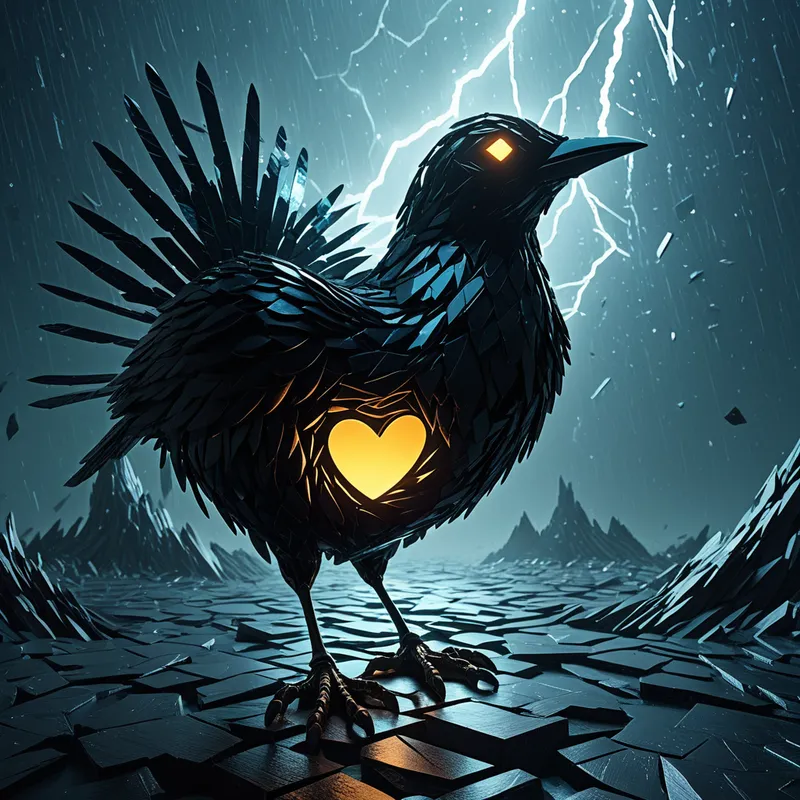
The myth of Samjoko provides a flawless map for the alchemical process of individuation. It begins with the [nigredo](/myths/nigredo “Myth from Alchemical culture.”/), the blackening: [the fall](/myths/the-fall “Myth from Biblical culture.”/) of the solar spark into the dark, formless mountain of the unconscious (a period of depression, confusion, or crisis). This is the necessary dissolution of the old, rigid ego.
From this black mass, the albedo, the whitening, occurs: the formation of the crystalline egg, a new, purified structure coalescing in the depths. This is the period of introspection and the emergence of a new potential identity.
Finally, the [rubedo](/myths/rubedo “Myth from Alchemical culture.”/), the reddening: the birth of Samjoko, the red-gold crow, and its glorious, laborious ascent. This is the conscious integration. The ego, now strengthened and transformed (symbolized by the third leg), actively engages with the central, transformative power of the Self (the sun). It does not seek to become the sun—a fatal inflation—but to serve as its faithful, enduring carrier.
Individuation is not about reaching a static state of perfection, but about committing to the daily flight, the endless cycle of grasping the light and moving it through the personal heavens of our experience.
For the modern individual, the alchemical translation is this: your deepest crisis or calling (the solar spark) contains the very energy needed to overcome it. Your task is not to flee your darkness (the crow’s black feathers), but to build from within it a structure of meaning (the three legs) stable enough to bear the weight of your own awakening consciousness. You are both the silent mountain and the crow that rises from it. The myth calls you to grasp the brilliant, burdensome truth of who you are, and to begin, with relentless grace, your own horizon-crossing flight.
Associated Symbols
Explore related symbols from the CaleaDream lexicon: