Salih and the She-Camel Myth Meaning & Symbolism
A prophet's divine she-camel becomes a test for a people, a symbol of sacred provision whose violation brings cataclysmic justice.
The Tale of Salih and the She-Camel
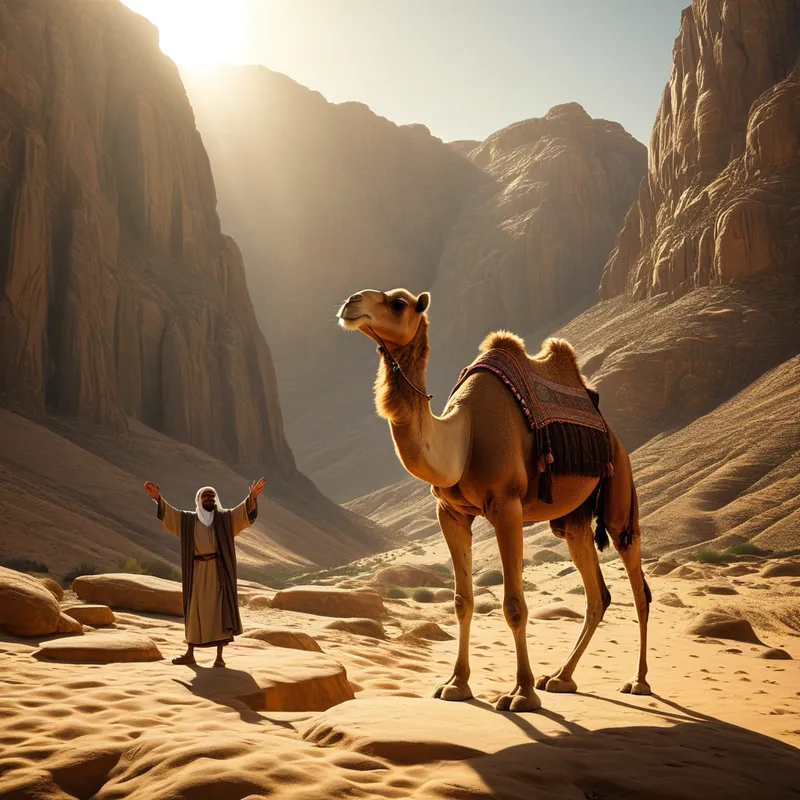
Hear now of the valley of al-Hijr, a place carved not by water but by pride. The sun was a hammer here, beating the sandstone into cliffs of rose and amber where the Thamud dwelled. They were a people of formidable craft, hewing palaces and homes from the living rock, believing their own hands had tamed the desert’s wrath. Into this fortress of arrogance was sent Salih, a man from among them, whose words were not of chisel and stone, but of spirit and warning.
He stood before the elders in the city’s heart and his voice carried the silence of the deep desert. “Worship God alone,” he implored. “Abandon the idols your fathers fashioned. A great punishment looms for those who spread corruption in the land.” They met his plea with scornful laughter. “You are but a man like us! Show us a sign, if you are of the truthful.”
And so Salih, directed by the Unseen, pointed to a great rock in the valley. “God will send you a she-camel as a sign. She will emerge from this stone. But heed this covenant: she shall drink from your well on her appointed day, and you shall have the water on yours. Do her no harm, lest a grievous punishment seize you.”
The rock groaned, sighed, and split asunder. From its heart, in a cloud of dust and awe, emerged the Naqat Allah, the She-Camel of God. She was immense, her form the very essence of sustenance, her eyes pools of ancient knowing. The people fell silent, their breath stolen. The sign was undeniable.
The rhythm was established. On her day, the she-camel would approach the single well, drink deeply, and leave it replenished with her blessing. On their day, the people would draw abundant water. She moved among them, a walking miracle, a test made flesh. For a time, a fragile equilibrium held. But the human heart, when faced with a shared sacredness, often measures it as a stolen portion. Resentment festered. “She drinks our water!” they whispered, then shouted. The miraculous provision became, in their eyes, an intolerable levy.
The conspiracy was born in shadow. Nine men, leaders in corruption, plotted in the hidden places of the rock. They inflamed the people, twisting the sign of grace into a grievance. They sought a man of brutal resolve, a man named Qudar ibn Salif, and promised him reward. On a day thick with portent, as the great she-camel knelt to drink her share, Qudar stole forward. The dagger flashed. A single, terrible stroke severed her tendon. A cry, not of beast but of ruptured covenant, echoed through the canyon. The she-camel fell. Then, a second stroke to her neck, and the miracle was murdered in the dust.
They looked at their handiwork and celebrated. “Now let your God’s punishment come, if you are truthful!” they jeered at Salih. The prophet looked upon his people with a grief that hollowed mountains. “Enjoy yourselves in your homes for three days,” he said, his voice heavy with finality. “That is a promise not to be belied.”
For three days, the valley held its breath. The sky turned the color of tarnished copper. Faces in the stone windows grew pale with a dawning terror. On the fourth day, as the sun sought the horizon, a single, piercing Cry seized the air—a sound from beyond the world. It was followed by a terrible convulsion of the earth. The magnificent stone palaces, the pride of Thamud, became their tombs. The mighty quake shook the foundations of the mountains, and a single, cataclysmic blast from the heavens reduced the arrogant and the unjust to nothingness. By morning, only the silent, scarred cliffs remained, and the echoing lesson of the slain she-camel.

Cultural Origins & Context
This narrative is rooted in the Quran, primarily in chapters 7, 11, 26, and 27, where the story of Salih and the Thamud is recounted as a paradigmatic lesson. It belongs to the genre of Qasas al-Anbiya, which are not mere history but moral and theological archetypes. Passed down through fourteen centuries of exegesis, sermon, and oral tradition, the tale functioned as a powerful societal narrative. It was told to reinforce core Islamic principles: the absolute oneness of God (Tawhid), the inevitability of divine justice, and the grave consequences of violating a sacred trust (Amanah). The Thamud, like the ‘Ad before them, represent a civilization that reached material zenith but spiritual bankruptcy, making the myth a timeless warning against the idolatry of self-sufficiency and communal greed.
Symbolic Architecture
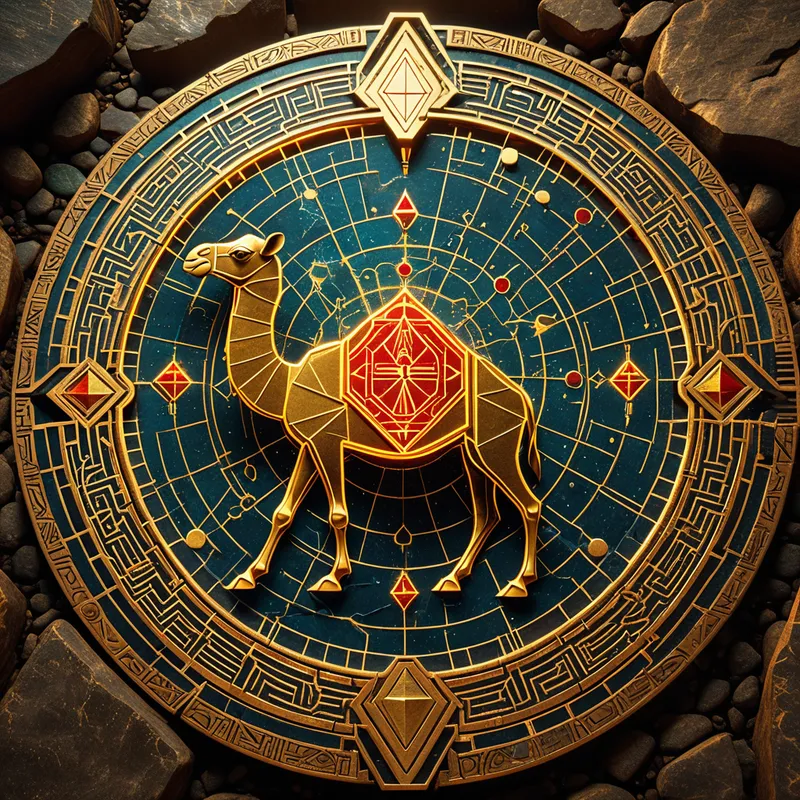
The myth’s power lies in its stark, almost geometric [symbolism](/symbols/symbolism “Symbol: The use of symbols to represent ideas or qualities, often conveying deeper meanings beyond literal interpretation. In dreams, it’s the language of the unconscious.”/). The She-[Camel](/symbols/camel “Symbol: A symbol of endurance, survival, and journey through harsh conditions, representing the ability to carry burdens across difficult terrain.”/) is not merely an animal; she is the embodied test. She represents divine providence made immediate and tangible—a sacred resource that demands a sacred [response](/symbols/response “Symbol: Response in dreams symbolizes how one reacts to situations, often reflecting the subconscious mind’s processing of events.”/). Her [emergence](/symbols/emergence “Symbol: A process of coming into being, rising from obscurity, or breaking through a barrier, often representing birth, transformation, or revelation.”/) from [stone](/symbols/stone “Symbol: In dreams, a stone often symbolizes strength, stability, and permanence, but it may also represent emotional burdens or obstacles that need to be acknowledged and processed.”/) signifies how grace can erupt into the most hardened of realities.
The ultimate test is not of belief in the unseen, but of behavior towards the seen miracle.
The central [covenant](/symbols/covenant “Symbol: A binding agreement or sacred promise between parties, often carrying deep moral, spiritual, or social obligations and consequences.”/)—the alternating days for [water](/symbols/water “Symbol: Water symbolizes the subconscious mind, emotions, and the flow of life, representing both cleansing and creation.”/)—establishes a [rhythm](/symbols/rhythm “Symbol: A fundamental pattern of movement or sound in time, representing life’s cycles, emotional flow, and universal order.”/) of sharing, a divine economic model where the [community](/symbols/community “Symbol: Community in dreams symbolizes connection, support, and the need for belonging.”/)’s survival is intertwined with respect for the sacred. The well becomes the [axis](/symbols/axis “Symbol: A central line or principle around which things revolve, representing stability, orientation, and the fundamental structure of reality or consciousness.”/) mundi of the [drama](/symbols/drama “Symbol: Drama signifies narratives, emotional expression, and the exploration of human experiences.”/), symbolizing the [source](/symbols/source “Symbol: The origin point of something, often representing beginnings, nourishment, or the fundamental cause behind phenomena.”/) of [life](/symbols/life “Symbol: The symbol of ‘Life’ represents a journey of growth, interconnectedness, and existential meaning, encompassing both the joys and challenges that define human experience.”/) itself. The murder of the she-camel is thus a [multi](/symbols/multi “Symbol: Multi signifies multiplicity and diversity, often representing various aspects of life or identity in dreams.”/)-layered [crime](/symbols/crime “Symbol: Crime in dreams often symbolizes guilt, inner conflict, or societal rules that are being challenged or broken.”/): it is the murder of the sign, the violation of [the covenant](/symbols/the-covenant “Symbol: A sacred, binding agreement between parties, often with divine or societal significance, representing commitment, obligation, and mutual responsibility.”/), and the willful poisoning of the communal wellspring out of spiteful possessiveness. The nine conspirators embody the organized, institutionalized [shadow](/symbols/shadow “Symbol: The ‘shadow’ embodies the unconscious, repressed aspects of the self and often represents fears or hidden emotions.”/) of a [community](/symbols/community “Symbol: Community in dreams symbolizes connection, support, and the need for belonging.”/)—the [capacity](/symbols/capacity “Symbol: A measure of one’s potential, limits, or ability to contain, process, or achieve something, often reflecting self-assessment or external demands.”/) for collective [action](/symbols/action “Symbol: Action in dreams represents the drive for agency, motivation, and the ability to take control of situations in waking life.”/) to be directed toward collective sin.
The Dreamer’s Resonance
When this myth stirs in the modern psyche, it often manifests in dreams of profound ethical fracture. One might dream of a unique, nurturing presence—a beloved animal, a guiding light, a creative project—that is suddenly and brutally betrayed by one’s own community or even a part of oneself. The dream carries the somatic weight of severed connection: a feeling of being spiritually hamstrung, of a vital flow being cut off.
Psychologically, this signals a confrontation with the Shadow in its collective form. The dreamer may be processing a situation where a shared “sacred” space—be it a relationship, a family trust, a workplace integrity, or an inner value—has been violated for short-term, “tribal” gain. The dream is the psyche’s “piercing Cry,” an alarm that the foundational covenant of one’s life or community has been wounded. The ensuing dread—the “three days” in the dream—is the anxious, suspended period awaiting the inevitable consequences of that moral rupture.
Alchemical Translation
The individuation process modeled here is the arduous journey from collective entitlement to individual responsibility within a shared world. The initial state of the Thamud is one of prima materia: a people fused with their material achievements, unconscious of any reality beyond their own power. Salih, as the emerging Self-archetype, introduces differentiation: the concept of the sacred “Other” (God) and the sacred “Sharing” (the covenant).
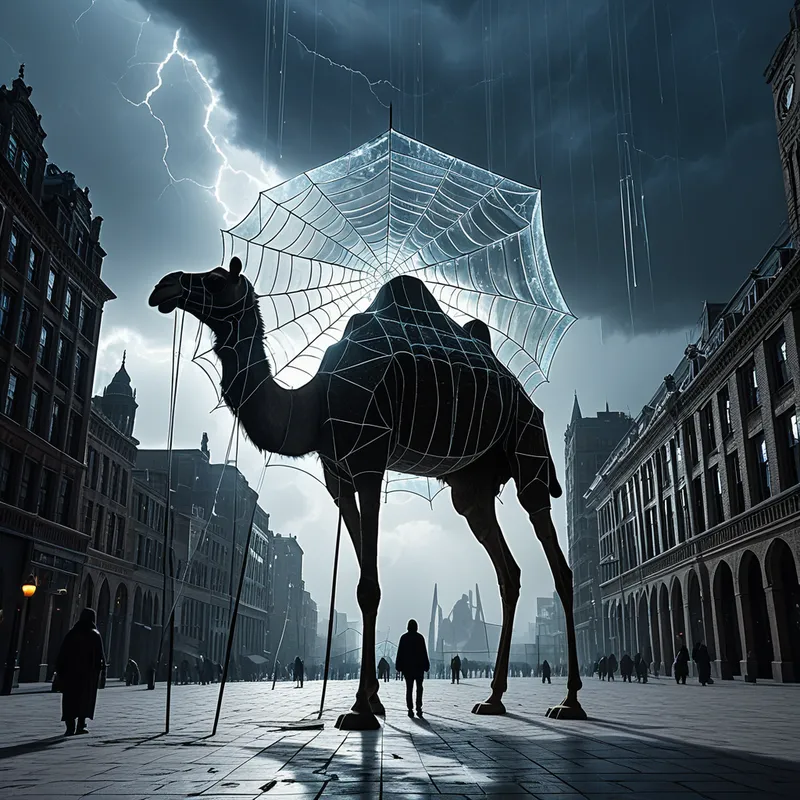
The she-camel is the Mercurius, the miraculous catalyst that makes the abstract test concrete. The psyche’s task is not to simply admire the catalyst, but to integrate its law: the rhythm of give-and-take, of respect for the source. The murder of the camel represents the ego’s violent refusal of this integration, choosing possession over relationship, control over covenant.
The alchemical fire is not just the punishment; it is the searing truth that a psyche which murders its own connection to the sacred must, by necessity, experience the cataclysm of its own barrenness.
The “punishment” is the inevitable nigredo that follows such a refusal—the utter dissolution of the old, arrogant structure. For the modern individual, this is not a literal earthquake, but the devastating inner collapse that occurs when we live in violation of our deepest ethical truths. The transmutation occurs only if one, like Salih, can witness the destruction of the old, rigid identity, and carry forward the lesson into a new, more conscious life, having learned that the true well is sustained not by hoarding, but by honoring the sacred turn.
Associated Symbols
Explore related symbols from the CaleaDream lexicon:
- Camel — The divine she-camel represents miraculous provision, a living test, and the sacredness of a shared resource that demands communal respect and cyclic reciprocity.
- Water — Symbolizes the essential, life-giving resource at the heart of the covenant; its allocation becomes the measure of the community’s justice or greed.
- Stone — Represents both the hardened hearts of the people and the material reality from which divine grace (the she-camel) miraculously emerges.
- Sacrifice — The murder of the she-camel is a perverse, blasphemous sacrifice that severs the community’s covenant with the divine, leading to its destruction.
- Justice — The core theme of the myth; the cataclysmic punishment is portrayed not as vengeance, but as the inevitable, structural consequence of violating a divine law.
- Mountain — The carved cliffs of al-Hijr symbolize the towering, seemingly permanent arrogance of a civilization built on its own power, which is ultimately shattered.
- Well — The single source of water is the axis of the drama, a symbol of collective survival and the focal point of the broken covenant.
- Shadow — Embodied by the nine conspirators and Qudar, representing the organized, collective capacity for envy, resentment, and destructive action within a community.
- Covenant — The sacred agreement governing the sharing of water, representing any foundational ethical or spiritual contract whose violation unravels reality.
- Thunder — The cataclysmic “Cry” and blast that destroys Thamud symbolizes the overwhelming, earth-shaking power of divine judgment and the end of an unjust order.
- Greed — The psychological engine of the tragedy, the transformation of a shared blessing into a perceived deprivation that justifies violence.
- Prophet — Salih embodies the archetypal warner, the voice of conscience and higher law that emerges from within a community to call it back to its foundational truth.