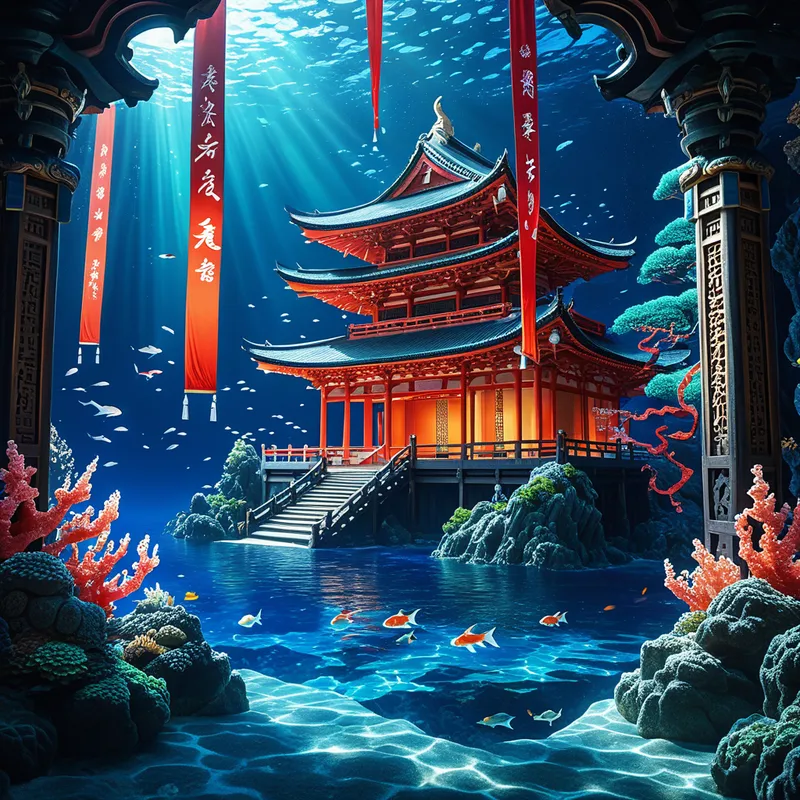
Ryūgū-jō Myth Meaning & Symbolism
A fisherman journeys to the undersea Dragon Palace, receives a magical gift, and learns the perilous cost of breaking a sacred promise.
The Tale of Ryūgū-jō
Listen, and let the salt air fill your lungs. Let the memory of the sea, vast and unknowable, rise within you. This is not a story of land, but of the deep.
Once, in a time when the boundary between worlds was as thin as a silken veil, there lived a fisherman named Urashima Tarō. He was a kind man, his hands calloused from nets, his heart gentle. One day, he saw children tormenting a small turtle on the shore. Moved by pity, he chased them away and returned the creature to the embracing waves. The sea sighed its thanks.
Days later, while Tarō was upon the deep blue, a great turtle surfaced beside his boat. Its shell was patterned like ancient jade, and its eyes held the wisdom of the abyss. “Honorable fisherman,” it spoke, its voice like the rumble of distant tides, “I am the one you saved. In gratitude, I have come to bear you to my home, to the Ryūgū-jō, the palace of Ryūjin, the Dragon King of the Sea.”
Bewildered yet trusting, Tarō climbed upon the turtle’s broad back. They descended. The sunlight faded to emerald, then to sapphire, then to a profound, velvety blue. Strange, luminous fish became his guides. And then, rising from the eternal night of the seabed, he saw it: a palace of impossible beauty. Towers of coral and pearl spiraled toward a ceiling that was not there. Gardens of waving anemones glowed with their own light. The very water seemed to sing.
He was welcomed not by a fearsome dragon, but by the Dragon King’s daughter, Otohime, a being of such grace that she seemed woven from moonlight and sea foam. In the timeless halls of Ryūgū-jō, where seasons did not turn and clocks did not exist, Tarō was feasted and entertained. He was given a seat of honor. Days of wonder flowed into what felt like mere weeks. But a deep, quiet longing for his home, for his aging parents and the familiar smell of pine and earth, began to stir in his heart.
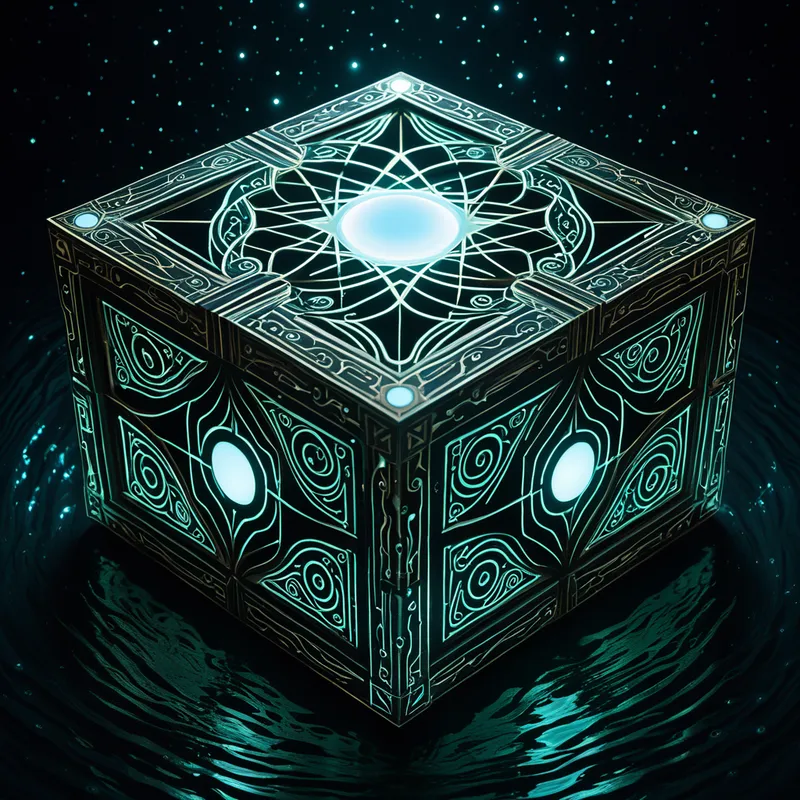
Seeing his sorrow, Otohime’s own joy dimmed. She understood the call of the land-bound soul. On the day of his parting, she presented him with a beautiful, layered box, lacquered and inlaid with mother-of-pearl. “This is the Tamatebako,” she said, her voice trembling like a ripple. “It contains something precious. But you must promise me, Urashima Tarō, upon your life and your honor: you must never, ever open this box.”
The great turtle carried him back, speeding through the ocean paths. He broke the surface near his village. But nothing was as he remembered. The pier was unfamiliar. The faces in the village were strange. His own home was gone, replaced by a field. In desperation, he asked an old man about the family of Urashima. The man squinted, thinking. “Urashima? That is a name from a legend. A fisherman, they say, who vanished at sea… hundreds of years ago.”
The world spun. The timeless weeks in the Dragon Palace had been centuries in the world of men. Everyone he knew was dust. Grief, vast and oceanic, crashed over him. In his despair, the weight of the Tamatebako in his hands felt like his only anchor. What precious thing could be inside? What secret could possibly explain this cruel twist of fate? The princess’s warning echoed, but it was drowned by the roar of his loneliness and confusion. His fingers found the clasp. He opened the box.
A wisp of pure, white smoke escaped. It coiled around him once, a final, ethereal embrace, and then dissipated into the sea air. In that instant, the centuries he had avoided rushed upon him. His black hair turned snow-white. His smooth skin withered and folded. His strong back bent under the unimaginable weight of lost time. Where a young man had stood, now only an ancient, crumbling figure remained, who then dissolved into salt and memory, returned to the sea from which all things come.

Cultural Origins & Context
The tale of Urashima Tarō and the Ryūgū-jō is one of Japan’s oldest and most beloved folktales, with written versions dating back to the 8th century in the Nihon Shoki and later in the 10th-century Yamato Monogatari. It belongs to the irui kon’in tan genre—tales of marriage between humans and non-humans. Unlike Western mermaid stories, this is not a tragic romance but a profound parable about time, gratitude, and consequence.
Passed down through oral storytelling, kōshaku, and later in woodblock prints and theater, the story served multiple societal functions. It reinforced the Shinto reverence for nature and its spirits (kami), particularly the powerful and capricious kami of the sea. It taught lessons about kindness (saving the turtle) and the importance of keeping promises. Most deeply, it articulated a pre-modern, cyclical understanding of time, contrasting the human world of decay and change (samsara) with the timeless, unchanging realm of the divine.
Symbolic Architecture
The myth is a perfect mandala of symbolic oppositions: Land and Sea, Time and Timelessness, Youth and Age, Curiosity and Obedience, Gift and Curse.
The Ryūgū-jō itself is the ultimate symbol of the unconscious. It is beautiful, orderly, and filled with treasure, yet it exists outside of linear time. To descend there is to dive into the depths of the psyche, where the ego (Tarō) encounters the Self in its majestic, archetypal form (Ryūjin and Otohime). This is not a frightening descent into chaos, but an invitation to a numinous, transformative experience.
The Tamatebako is the sealed container of the transformational experience itself. To open it prematurely is to literalize the mystery, destroying its power and releasing its protective spirit back to the source.
Tarō’s fatal error is a psychological one. He attempts to understand the mystery (the box) with his conscious, land-bound mind, rather than holding it as a sacred, unconscious truth. The white smoke is his own preserved vitality, the “bubble of time” that had protected him. His curiosity is not evil, but it is tragically human—the ego’s insistence on making the unknown known, thereby killing its magic.
The Dreamer’s Resonance
When this myth stirs in the modern dreamer, it often manifests as dreams of discovering hidden, beautiful rooms in one’s own house (the personal unconscious), or of being in a breathtaking, serene place where time feels suspended. The somatic sensation is one of weightless awe, coupled with a subtle, nagging anxiety—the “call back to the surface.”
To dream of receiving a sealed box or chest is to encounter the Tamatebako in one’s own life. The dream ego is being presented with a completed piece of inner work, a nascent wholeness that is still fragile. The intense temptation to open it represents the psyche’s warning: do not dissect this new feeling with rational analysis; do not boast of your spiritual progress; do not try to force its meaning. To do so is to risk the “smoke” escaping—the dissolution of a hard-won inner state back into the chaos of the unconscious. The dream is a ritual of containment, teaching the ego to bear the tension of the unknown.

Alchemical Translation
The journey of Urashima Tarō is a stark map of the individuation process. The initial act of kindness (saving the turtle) is the first step—an act of ego consciousness aligning with a deeper, ethical call. This grants access to the Ryūgū-jō of the Self, a period of profound inner enrichment and symbolic marriage (coniunctio).
The return, however, is the most critical and often failed phase of alchemy: the rubedo. One must bring the treasure back to the ordinary world. Tarō succeeds in the return voyage but fails in the integration. The Tamatebako is the lapis philosophorum, the philosopher’s stone—not as a physical object, but as a psychic attitude of wholeness.
The tragedy is not that he opened the box, but that he opened it from a place of despair and identification with his old world, rather than from the centeredness of his new, transformed self.
For the modern individual, the myth instructs us that profound inner change—a retreat, a therapy breakthrough, a creative awakening—creates a “time dilation.” We re-enter our daily lives subtly out of sync. The old landmarks of identity (our “village”) may no longer fit. The temptation is to panic, to “open the box”—to desperately explain ourselves, to revert to old patterns, to seek validation for our transformation from the very world it has estranged us from. The alchemical work is to hold the sealed box, to live with the mystery of our own change, and to allow the new timeline of our soul to solidify around us, without demanding that the outer world immediately understand. We must become the palace under the sea, and the keeper of its secret, simultaneously.
Associated Symbols
Explore related symbols from the CaleaDream lexicon: