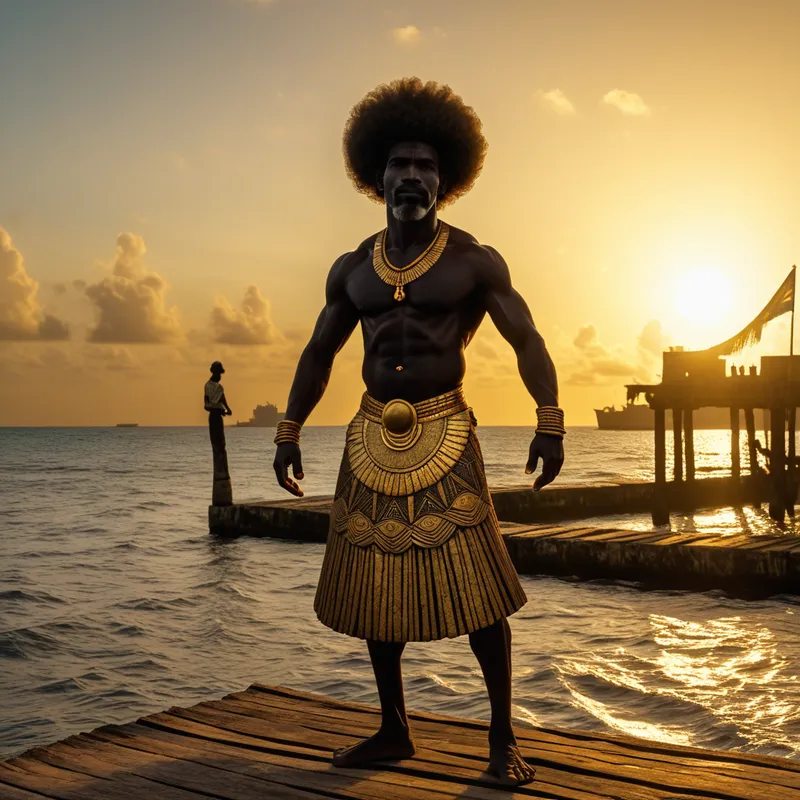
Rumba Myth Meaning & Symbolism
A myth where rhythm is forged from silence, a defiant heartbeat born in the docks and cane fields, weaving freedom from the threads of memory and resistance.
The Tale of Rumba
Listen. Before the first note, there was a silence so heavy it had its own gravity. It was the silence of the hold of a ship, of a sun-blasted cane field under a pitiless sky, of a tongue remembering a name it was forbidden to speak. This was the world where the story begins—not in a palace of gods, but in the salt-stained docks of Havana and the earth of Matanzas.
In this world lived a people whose bodies were not their own, but whose memories were. In their blood flowed the rivers of the Kongo, the wisdom of the Yoruba, the cadence of the Carabalí. The colonizers took their land, their labor, their names, but they could not find the chamber where the heart’s drum was kept. They forbade the drum, the very voice of the soul. They commanded a new silence, deeper than the first.
But the body is a temple of hidden instruments. One evening, as the oppressive heat lifted and a bruised purple twilight settled over the solares, a man, his back a map of suffering, leaned against a wooden packing crate. His frustration was a live wire. His fist, almost of its own accord, struck the hollow box. Tok. A dry, lonely sound.
Another man, hearing it, felt the vibration in his own chest. He answered not with a drum he did not have, but with two pieces of firewood, clapping them together in a counter-rhythm. Tak-a-tak. A woman, her hands raw from washing, began to slap the rhythm on her own thighs. Pam-pam. A third voice emerged, not from an instrument, but from a throat, singing a line that was half-prayer, half-protest, a melody that spiraled upwards like smoke from a hidden fire.
From the crate, the sticks, the hands, the voice, a conversation was born. It was hesitant at first, a stuttering cipher. But with each cycle, it grew bolder. The tok became the deep, grounding pulse of the tumba. The clacks became the chattering, conversational claves. The slaps became the answering, melodic middle voice. The song wove them all together.
This was not mere music. It was a reassembly. From the broken pieces of their world—discarded boxes, common tools, the body itself—they forged a new language. A language that could mock the overseer, praise the orisha, tell a story of the day, or call a lover. It was a rhythm that did not ask for permission. It was a declaration: We are here. We remember. We create.
The dance entered last, as it must when the rhythm calls. A man stepped into the circle. His dance was not an escape from the world, but a profound engagement with it. He mimed the labor of the field, the swing of the machete, but transformed it into a gesture of astonishing grace and defiance. He challenged the woman who entered to dance with him, not with violence, but with a playful, rhythmic competition of wit and movement—the vacunao. The circle clapped and sang, a living, breathing fortress of sound.
And so Rumba was born. Not from a single act of a god, but from the collective, stubborn heartbeat of a people. It was the myth made flesh and wood and voice, a perpetual act of creation in the face of silence.
Cultural Origins & Context
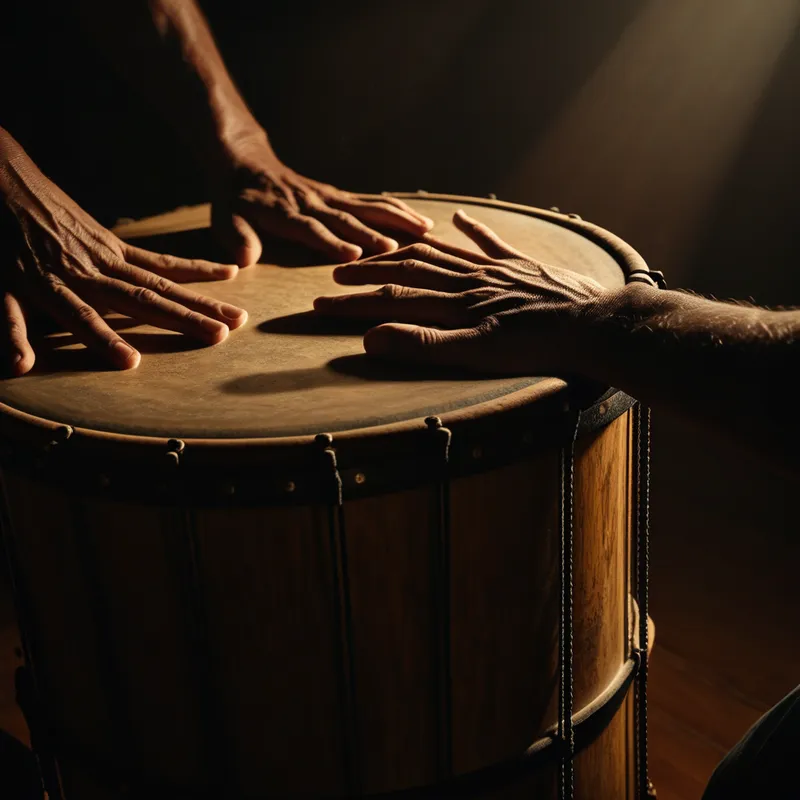
The myth of Rumba is not inscribed on parchment but in the collective muscle memory of 19th-century Cuba’s urban and rural Black communities—enslaved and free. Its cradle was the solares of Havana and the barracones of Matanzas province. With African drums banned by colonial authorities fearful of their power to communicate and incite, necessity became the mother of a profound invention.
Rumba was an organic, folk creation, passed down not by bards in courts but in communal gatherings. It was the soundtrack to daily life and a sacred, secular ritual for Sundays and holidays. Its three main forms—Yambú, the playful and competitive Guaguancó, and the fast, virtuosic Columbia—served as newspaper, social forum, historical archive, and spiritual release. It functioned as a societal pressure valve and a glue for community, a space where a marginalized culture could assert its identity, preserve its African roots, and critique its reality through metaphor and rhythm.
Symbolic Architecture
At its core, the myth of Rumba is a masterclass in alchemy—the transformation of leaden oppression into golden expression. Every element is a profound symbol.
The forbidden drum represents the suppressed Self, the authentic voice and ancestral memory that authority seeks to silence. The makeshift instruments—crates, drawers, spoons, the body—symbolize the resourcefulness of the psyche under duress. They are the prima materia, the worthless stuff that, through the fire of spirit, becomes the philosopher’s stone.
The first act of liberation is not to break the chains, but to find the music hidden within their links.
The interlocking rhythms—the steady tumba, the conversational claves, the improvisational quinto—model a psychic ecosystem. They represent the integration of different parts of the self: the foundational ego (the steady pulse), the intuitive dialogue between conscious and unconscious (the claves’ pattern), and the eruptive, authentic voice of the individual spirit (the soaring, improvisational quinto solo). The dance, especially the vacunao, symbolizes the dynamic, sometimes challenging engagement with the “Other”—be it a lover, a societal force, or one’s own inner shadow—transforming potential conflict into a creative, rhythmic dialogue.
The Dreamer’s Resonance
When the pattern of Rumba stirs in the modern dreamscape, it signals a profound somatic and psychological process: the struggle to give voice to the silenced. You may dream of trying to shout but producing no sound, of being in a room where all objects are muffled, or of finding a strange, resonant object in a forgotten drawer.
This is the psyche’s shadow laboring to be heard. The somatic sensation is often one of constriction in the chest or throat, a literal “choking back” of expression. The dream is presenting the “packing crate”—the seemingly mundane or oppressive aspect of your life (a job, a relationship, an inner critic) that must be struck to find its hidden resonance. The emergence of rhythm in the dream, however faint, marks the moment the unconscious begins to organize this raw pressure into a communicable form, a first step toward reclaiming your inner tempo from external imposition.
Alchemical Translation
For the individual, the myth of Rumba maps the path of individuation through creative rebellion. The process begins with the Recognized Silence—the felt sense of inauthenticity, of living by a rhythm not your own. This is the oppressive colonial law of the psyche.
The alchemical fire is ignited in the Improvised Strike—the first, often clumsy act of defiance against this inner silence. It might be setting a boundary, picking up a long-abandoned creative practice, or simply admitting a deeply buried truth to yourself. This is the fist hitting the crate.
The Self is not found in the echo of what you were told to be, but in the unique rhythm that emerges when you stop listening.
Then comes the Call and Response—the inner integration. You listen for the answering rhythm from other parts of your being. The disciplined part of you (the steady tumba) must learn to converse with your playful intuition (the claves), making space for the spontaneous, passionate voice (the quinto) to erupt. This internal dialogue forges a new, self-governed identity.
Finally, you achieve Rhythmic Embodiment. Your life ceases to be a reaction and becomes a creative composition. Your work, relationships, and personal growth become like the Rumba dance: a dynamic, sometimes challenging, but ultimately joyful and authentic engagement with the world, using the very materials—flaws, history, struggles—you once thought worthless. You have not escaped your history; you have learned to play it, transforming the weight of your lead into the liberating, golden rhythm of your own becoming.
Associated Symbols
Explore related symbols from the CaleaDream lexicon: