Ruaumoko Myth Meaning & Symbolism
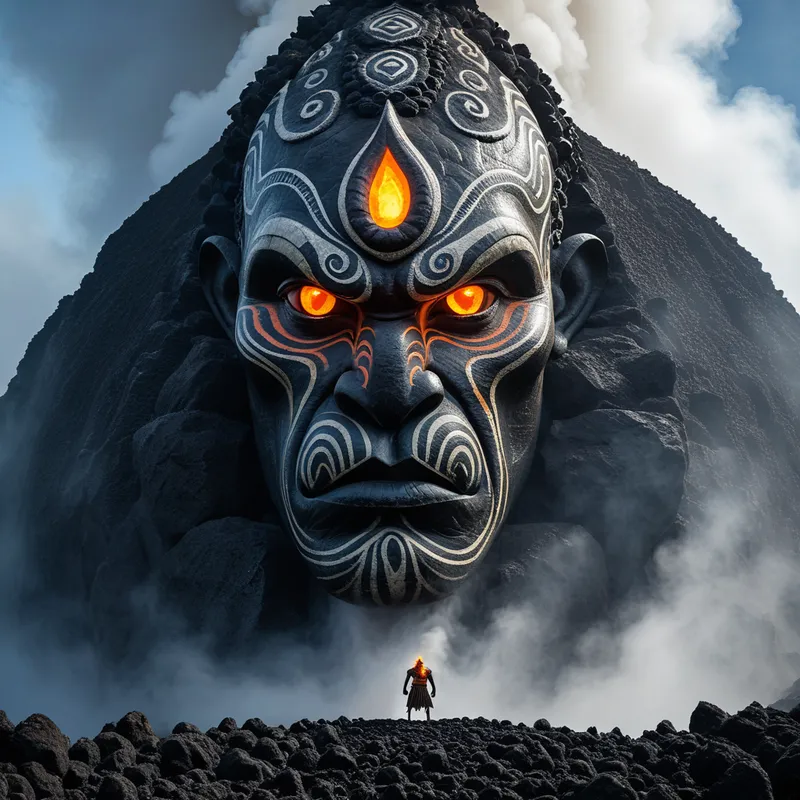
The unborn god of earthquakes, churning in the womb of the Earth Mother, whose restless movements shape the world and the turning of the seasons.
The Tale of Ruaumoko
In the beginning, there was only the embrace. A crushing, silent, eternal embrace. [Ranginui](/myths/ranginui “Myth from Maori culture.”/) lay upon Papatūānuku, and in the darkness between them, their children were born. They lived in a world without light, without space, without horizon—a world of pressure and whispered breath.
The children grew in the dark, their forms pressed against the warm, living flesh of their mother and the cool, hard muscle of their father. But a yearning stirred among them. A longing for light, for movement, for a world of their own. One by one, they tried to separate their parents. Tāne-mahuta pushed with his strong legs, god of trees. Tangaroa and Rongo-mā-tane strained. But the embrace held fast, a love so deep it had become a prison.
Then came the moment of creation’s agony. With a mighty, groaning effort that shook the very fabric of being, Tāne placed his shoulders upon the Earth and his feet against the Sky, and he pushed. He pushed until the tendons of the world screamed. He pushed until, with a sound like a mountain tearing, light flooded in. Ranginui was forced upwards, weeping tears that became the rain and the dew. Papatūānuku lay below, her body now a landscape of valleys and plains, her sighs becoming the mist.
But in that violent sundering, a child was left behind. In the frantic push towards the new light, one son was not yet ready. He was still in the womb, still forming, still curled in the deepest dark of his mother. His name was Ruaumoko. And as his brothers ascended to the world of light and wind, he remained. He was not abandoned, but entrusted. He stayed with his mother, a keeper of her inner fires, a companion in her grief.
Now, he stirs. When the world above grows quiet, he turns in his sleep, and the land trembles. When he dreams of his father’s distant, weeping face, his own rage and longing boil over, and the earth cracks, spewing fire and steam. His movements are not just tremors; they are the turning of the seasons. His restless energy is the force that churns the soil, that brings the warmth to the roots, that signals the death of winter and the birth of spring. He is the unborn god, the eternal child of the primal rupture, whose every kick shapes the living world.
Cultural Origins & Context
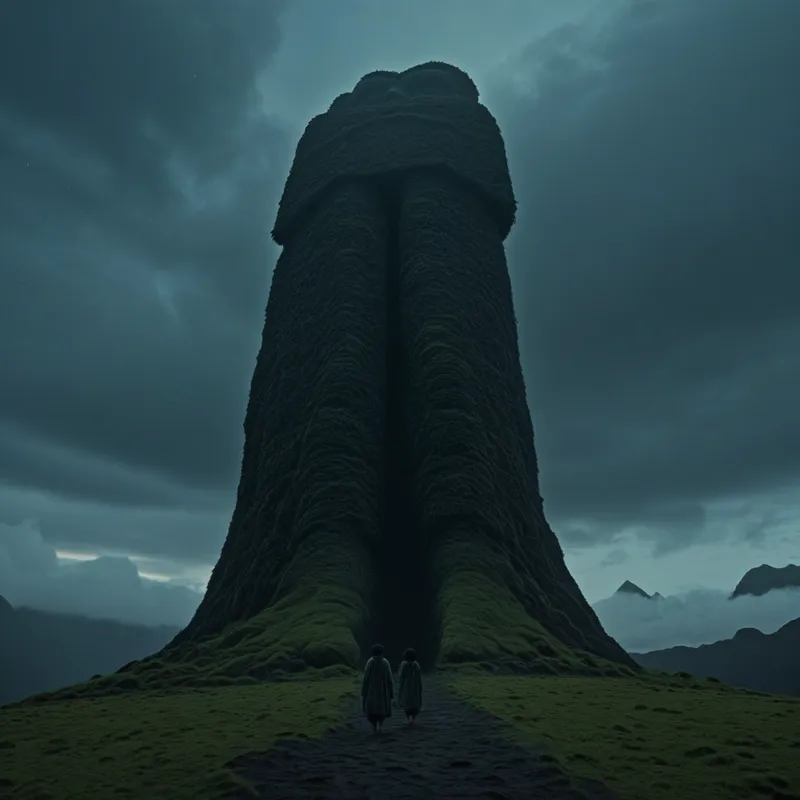
This is a story from the Māori world, a foundational narrative passed down through generations by tohunga and storytellers. It belongs to the whakapapa, the great genealogical chant that connects the people to the land, the gods, and the cosmos itself. The myth of Ruaumoko is not merely an explanation for geological phenomena; it is a living cosmology that embeds human experience within the body of the Earth Mother.
The story was recited in the wharenui, its carved panels often depicting the separation of the primal parents. It served a vital societal function: it explained the volatile, living nature of whenua. Earthquakes and volcanic eruptions were not random disasters but the actions of a divine, if tempestuous, relative. This fostered a relationship of profound respect and negotiation with the land, a understanding that the earth was not inert but possessed of its own mauri and will. The myth also encoded an understanding of cyclical time and regenerative destruction, where death (of the old embrace) and violence (the separation) are necessary for life (the world of light) to continue.
Symbolic Architecture
Ruaumoko is the ultimate [symbol](/symbols/symbol “Symbol: A symbol can represent an idea, concept, or belief, serving as a powerful tool for communication and understanding.”/) of potent, unfinished potential. He represents the creative-destructive force that remains in the [womb](/symbols/womb “Symbol: A symbol of origin, potential, and profound transformation, representing the beginning of life’s journey and the unconscious source of creation.”/) of being, the part of any process that is not yet ready for the light of [consciousness](/symbols/consciousness “Symbol: Consciousness represents the state of awareness and perception, encompassing thoughts, feelings, and experiences.”/).
He is the chthonic truth that not all creation is gentle, and not all gestation ends in a quiet birth. Some energies must rumble in the dark until they reshape the very ground we stand on.
Psychologically, he embodies the primal affect—the raw, unmediated [emotion](/symbols/emotion “Symbol: Emotion symbolizes our inner feelings and responses to experiences, often guiding our actions and choices.”/) (rage, [grief](/symbols/grief “Symbol: A profound emotional response to loss, often manifesting as deep sorrow, yearning, and a sense of emptiness.”/), longing) that was present at a foundational [trauma](/symbols/trauma “Symbol: A deeply distressing or disturbing experience that overwhelms the psyche, often manifesting in dreams as unresolved emotional wounds or psychological injury.”/) (the [separation](/symbols/separation “Symbol: A spiritual or mythic division between realms, states of being, or consciousness, often marking a transition or loss of connection.”/) of the parents). This [emotion](/symbols/emotion “Symbol: Emotion symbolizes our inner feelings and responses to experiences, often guiding our actions and choices.”/) was not resolved or released but was internalized, contained within the “[earth](/symbols/earth “Symbol: The symbol of Earth often represents grounding, stability, and the physical realm, embodying a connection to nature and the innate support it provides.”/)” of the psyche. He is the [archetype](/symbols/archetype “Symbol: A universal, primordial pattern or prototype in the collective unconscious that shapes human experience, behavior, and creative expression.”/) of the Eternal Fetus, a being of pure potential and pure [reaction](/symbols/reaction “Symbol: A reaction in a dream signifies the subconscious emotional responses to situations we face, often revealing our coping mechanisms and fears.”/), whose development is arrested at a critical [moment](/symbols/moment “Symbol: The symbol of a ‘moment’ embodies the significance of transient experiences that encapsulate emotional depth or pivotal transformations in life.”/). His domain is the subconscious bedrock, where the tectonic plates of repressed [memory](/symbols/memory “Symbol: Memory symbolizes the past, lessons learned, and the narratives we construct about our identities.”/) and unresolved conflict grind against one another. His earthquakes are the psyche’s necessary, violent adjustments to maintain its integrity.
The Dreamer’s Resonance
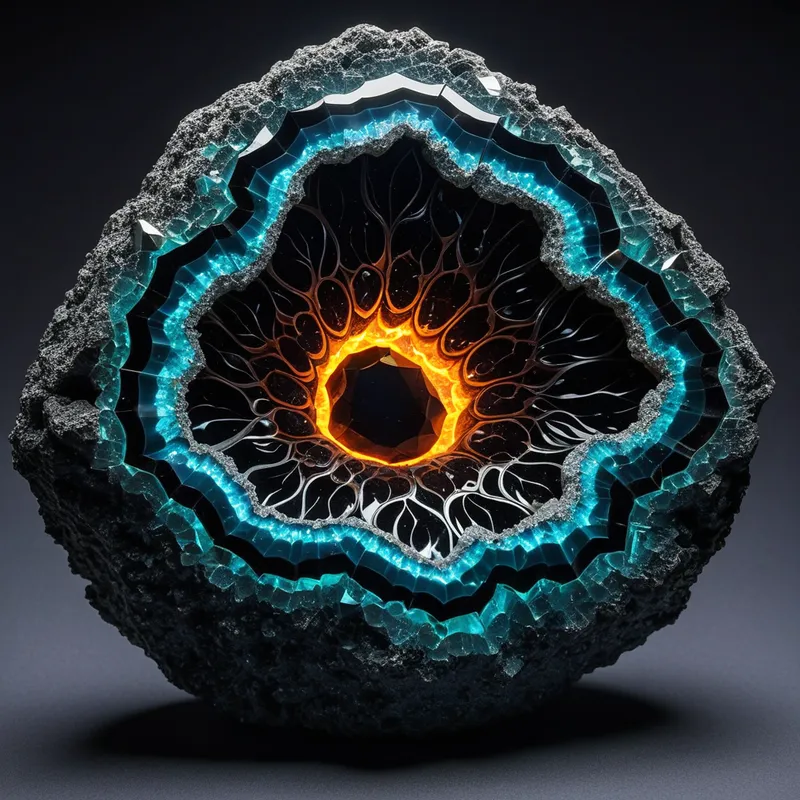
When the pattern of Ruaumoko stirs in modern dreams, it signals a profound somatic and psychological process. The dreamer may experience dreams of tremors, of being in subterranean spaces, of volcanic eruptions, or of a powerful, unseen presence moving in the foundations of a house.
Somatically, this can correlate with feelings of deep, internal agitation—a rumbling in the gut, a tension in the bones, a sense of pressure building with no clear outlet. Psychologically, it is the process of a long-gestating truth or emotion beginning to demand recognition. This is not about a new idea being born, but an old, foundational pain or power beginning to move. The dreamer is going through a period where the very ground of their identity feels unstable. The “earthquake” in the dream is the psyche’s attempt to break up frozen, rigid structures of the self to make way for something new. It is often a prelude to a major life shift that feels both destructive and necessary, terrifying and enlivening.
Alchemical Translation
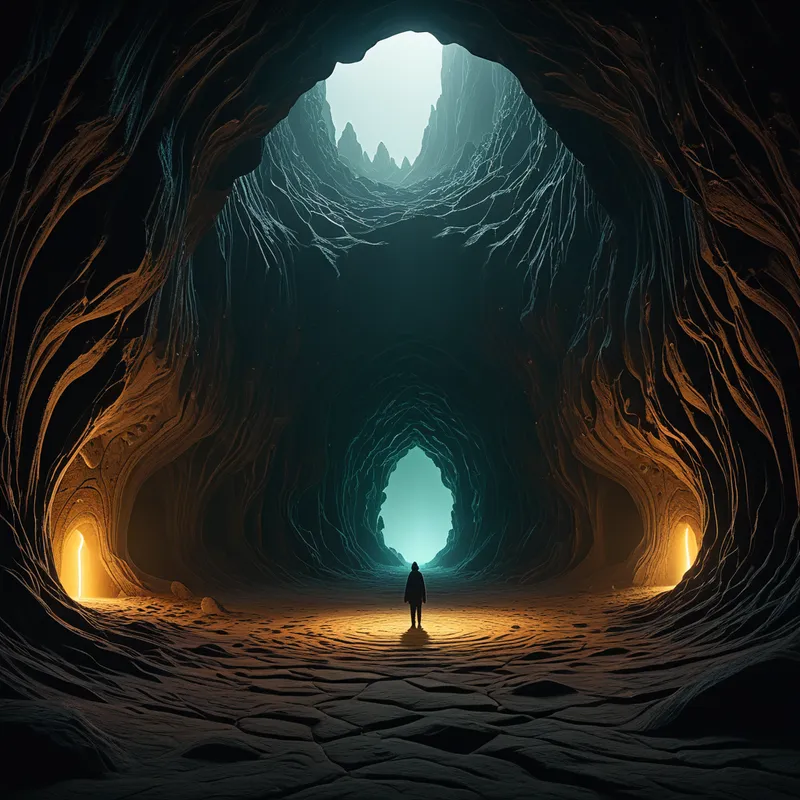
The individuation process modeled by Ruaumoko is one of acknowledging the god in the basement. It is the alchemical solve et coagula—dissolve and coagulate—played out on a seismic scale.
The first step is to descend into the inner darkness, to the place where a vital part of one’s energy was left behind during a primal “separation” (a childhood trauma, a cultural displacement, a repressed aspect of the personality). This is the Papatūānuku of the soul, the foundational, often wounded, ground of being. There, one encounters the Ruaumoko-complex: the furious, grieving, potent energy that has been kicking at the walls of containment for a lifetime.
The transmutation occurs not by forcing this god to be born prematurely into the light of ego-consciousness, but by learning to speak its language of tremor and fire, to recognize its movements as the source of one’s seasons.
The alchemical work is to build a psychic structure strong enough to contain these quakes without being shattered—to differentiate from the raw emotion while honoring its power. One must become both the stable earth and the attentive parent to this inner deity. The goal is integration, not expulsion. When this rebellious, chthonic force is acknowledged and its energy harnessed, it ceases to be merely a source of random disaster. It becomes the engine of renewal, the internal force that turns the seasons of the psyche, that breaks up fallow ground so new growth can emerge. The individual learns that their deepest tremors are not a flaw, but a signature—the mark of a creative-destructive power that is fundamental to their being and their capacity for rebirth.
Associated Symbols
Explore related symbols from the CaleaDream lexicon:
- Earth — The living body of Papatūānuku, the womb and the tomb, the stable ground that is also the site of seismic transformation in the Ruaumoko myth.
- Mother — Papatūānuku, the Earth Mother, who contains and nurtures the unborn god, representing the foundational, containing aspect of the psyche where deep potentials gestate.
- Father — Ranginui, the distant Sky Father, whose separation caused the primal wound and whose absence fuels the longing and rage of the contained child.
- Chaos — The raw, disruptive energy of Ruaumoko’s movements, representing the necessary creative force that breaks apart stagnant order to allow for new life.
- Thunder — The audible manifestation of Ruaumoko’s rage and power, the sound of the earth itself groaning and speaking from the depths.
- Fire — The volcanic fury of the unborn god, the transformative heat that destroys and purifies, lying dormant beneath the surface until it erupts.
- Rebirth — The ultimate promise of Ruaumoko’s cycle; his quakes and eruptions are not merely destruction but the violent precondition for renewal and the turning of seasons.
- Wound — The primal separation of Sky and Earth, the original trauma that creates the condition of life but also leaves a divine child trapped in a state of potent, unresolved becoming.
- Shadow — Ruaumoko as the ultimate shadow archetype, the powerful, unconscious, chthonic force that rumbles beneath the surface of conscious life, demanding integration.
- Root — The deep, anchoring connections to the earth and to the primal past, which are also the channels through which Ruaumoko’s seismic energy travels.