
Rati Myth Meaning & Symbolism
The story of Rati, who resurrects her slain husband Kama through fierce devotion, embodying the soul's power to transform grief into creative, sacred love.
The Tale of Rati
Listen. This is not a story of gentle spring. It is a story of a fire that consumes the world, and the single ember that refused to die.
In the beginning, there was a hum. The hum of creation, yes, but also the deep, resonant silence of the ascetic’s mountain. Upon that mountain sat Shiva, deep in meditation. His third eye was closed, his senses turned inward, and around him, the cosmos held its breath. For if Shiva remained forever in samadhi, the great dance of life would cease. The world would become a still, perfect, and lifeless crystal.
The gods trembled. They needed a spark. They needed the first flutter of a butterfly’s wing to stir the cosmic air. And so they turned to him: Kama. He who wields the bow of sugarcane, strung with humming bees, whose arrows are tipped with fragrant blossoms. His very presence is a sweet, irresistible fever. “Awaken him,” they pleaded.
Kama looked to his wife, Rati, whose name means “passion,” “pleasure,” “the act of love.” She was his other half, the delight that follows desire, the fulfillment of the longing he inspired. Their union was the very rhythm of life. With a shared glance that held all the tenderness and terror of their task, Kama ascended the mountain.
The air grew heavy with the scent of mango blossoms and spring rain. Kama drew his bow. He aimed the flower-tipped arrow at Shiva’s heart. The string twanged, a sound like a bee’s promise.
Shiva’s third eye blazed open.
It was not anger, but an absolute, purifying negation. A bolt of psychic fire, hotter than a thousand suns, erupted from his forehead. It was the fire of absolute consciousness, which sees all transient desire as illusion. The flame touched Kama, and the god of love did not scream—he vaporized. He was unmade, reduced to a fine, silent ash that settled on the cold mountain stone.
The hum of the world cracked. Color drained from the flowers. The bees fell silent.
And Rati felt it. The universe’s sweet fever broke into a deathly chill. Her world, her meaning, her very sense of self, was scattered into those cold ashes. Her wail was not a sound of this earth; it was the sound of creation itself grieving its lost pulse. She collapsed upon the scorched earth, her body convulsing with a sorrow so vast it had no name. The gods bowed their heads. This was the price. The spark was extinguished to save the world, but what world could exist without it?
Yet, from the depths of that absolute desolation, a different fire was kindled. Not the fire of blissful union, but the fierce, white-hot fire of viraha—the agony of separation that becomes its own form of devotion. Rati rose. Her silks were stained with dust and tears, but her eyes held a new, terrifying light. She would not accept this void. She would not let the story end in ash.
She turned to the gods, to Shiva himself, her voice raw but unwavering. “My lord is not gone. He is formless. Return him to me. In any form. By any means.” Her devotion was no longer soft; it was a diamond-tipped drill aimed at the heart of cosmic law.
Moved by this unbearable fidelity, by a love that dared to challenge the destroyer’s decree, Shiva spoke. His voice was like distant thunder. “He will return. But not to you, Rati. He will be born anew to another.”
Rati’s resolve did not falter. “Then I will wait. I will find him. I will make him remember. Through lifetimes, through forms, I will be the thread that pulls him back to himself—and to me.”
And so began her pilgrimage through the annihilated landscape of her soul. She became a wanderer in the realm of loss, gathering the memory of her beloved from the whispers of the wind, the scent of a fading flower, the ghost of a touch on her skin. Her devotion became her new bow, her longing her only arrow.
Her fierce tapas—her spiritual austerity of love—pierced the veil. Shiva’s boon unfolded. Kama was reborn as Pradyumna, and Rati was reborn as Mayavati. She nurtured him, guided him, and when the moment was ripe, she revealed the truth of his own soul. Memory flooded back. The scattered ashes of a god coalesced into the body of a man, and the man remembered he was a god. In that recognition, in that sacred reunion, desire was not merely restored; it was transfigured. It was no longer a fleeting arrow, but the eternal, conscious force that binds the soul to the divine, the seeker to the sought.

Cultural Origins & Context
The myth of Rati and Kama finds its roots in the rich soil of early Hindu epics and Puranic literature, most notably in the Mahabharata and the Puranas like the Shiva Purana and Bhagavata Purana. It is a myth told not to children at bedtime, but to adults navigating the complexities of life, death, and spiritual discipline.
In a culture that developed profound philosophies of asceticism and renunciation, epitomized by figures like Shiva and the forest-dwelling sages, the story of Kama’s burning served as a potent cautionary tale about the power of sensual desire to distract from the path to liberation (moksha). Yet, the subsequent narrative of Rati’s quest provides the essential counterbalance. It was preserved and recited by storytellers and priests to illustrate a foundational Hindu principle: that no aspect of existence is inherently evil or separate from the divine. Even kama (desire), when approached with the right consciousness, is one of the four legitimate aims of human life (Purusharthas), alongside dharma (duty), artha (prosperity), and moksha.
The myth thus functioned as a societal and psychological regulator. It acknowledged the terrifying, destructive potential of untamed desire (Shiva’s fire), while simultaneously validating the transformative, world-sustaining power of desire when it is refined into devotion, fidelity, and selfless love (Rati’s tapas). It taught that transcendence does not always mean annihilation; sometimes, it means alchemical resurrection.
Symbolic Architecture
At its core, this is a myth about the death and rebirth of Eros—not as a trivial feeling, but as the fundamental psychic energy that connects, yearns, and creates.
Kama represents the primal, instinctual spark of desire in its pure, initial form. He is life’s impulse, beautiful but fragile. His incineration by Shiva’s third eye symbolizes the moment when raw, personal desire collides with the absolute reality of the Self (or the transcendent principle). In psychological terms, it is the inevitable “burning” of our childish fantasies and ego-driven wants by the cold light of consciousness or the harsh realities of life. Our personal “Kama”—our initial romantic ideals, our simple joys, our uncomplicated wants—is often reduced to ash.
Rati is the soul’s response to that incineration. She is not the desire itself, but the capacity for relationship that survives the fire.
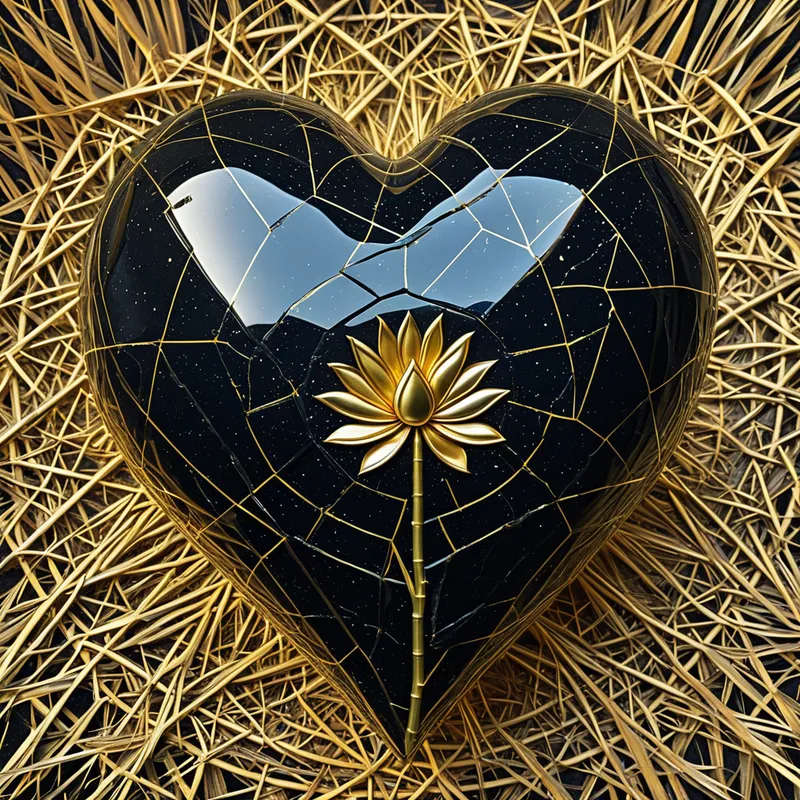
She symbolizes the part of the psyche that refuses to let connection die, even when its original object is lost. Her journey from consort to mourner to determined petitioner to guiding wisdom is the archetypal path of love transforming into devotion. The ashes of Kama are the shattered fragments of a broken heart, a lost dream, a failed project. Rati’s gathering of those ashes is the painful, meticulous work of grieving—not to cling to the past, but to recover its essential essence.
Her ultimate success, where Kama is reborn and recognizes himself through her, illustrates a profound psychological truth: the Self (or an integrated aspect of it) often cannot be recovered directly. It must be “found” through relationship, through the mirror of another consciousness that holds its memory and its potential. Rati is the anima figure who guides the lost masculine spirit (Pradyumna/Kama) back to its own divine identity.
The Dreamer’s Resonance
When this myth stirs in the modern unconscious, it often manifests in dreams of profound loss followed by a determined, often lonely, search. You may dream of a beloved person or a cherished object turning to dust or ash in your hands, accompanied by a devastating sense of finality. This is the “Kama burning” moment in the psyche—the death of a hope, the end of a relationship, the collapse of an identity built around a specific desire.
The subsequent dreams, the “Rati phase,” are characterized by a somber, persistent energy. You might dream of wandering through empty, labyrinthine spaces (the scorched mountain), gathering seemingly meaningless fragments—shards of glass, old photographs, scattered papers. There is a somatic quality to these dreams: a heaviness in the chest, the physical sensation of weeping, or a strange, focused calm amidst the desolation. The psyche is performing the essential, non-negotiable work of sitting with the ashes. It is refusing the easy numbing of the loss and is instead fully incarnating the grief, which is the first, crucial step in alchemizing it.
To dream of Rati is to dream the process of your own heart refusing to accept annihilation as the final answer. It is the dream-ego moving from passive victim of circumstance to active, devotional seeker of wholeness.

Alchemical Translation
The myth of Rati provides a precise map for the process of psychic transmutation, or individuation, following a catastrophic loss—the loss of a loved one, a career, a health, or a deeply held belief about oneself.
Stage 1: The Incineration (Nigredo). This is the unavoidable dark night. The Shiva-fire of reality destroys our cherished illusions. The conscious attitude (our personal Kama) is annihilated. We are left in the viraha, the agonizing separation from what gave our life color and meaning. There is no skipping this stage. One must be reduced to ash.
Stage 2: The Gathering (Mortificatio). This is Rati’s work. It is the conscious, often excruciating, engagement with the debris. In therapy, this is speaking the unspeakable grief. In journaling, it is writing the raw pain. In ritual, it is honoring what was lost. It is the meticulous sorting through memory and emotion, not to rebuild the old form, but to extract its quintessence—the why it mattered, the quality of love it contained.
The alchemy occurs in the crucible of devotion. The love that was once directed outward at the object (Kama) is turned inward as a fierce, committed attention to the process of healing (Rati’s tapas).
Stage 3: The Petition & The Boon (Albedo). Rati’s appeal to Shiva represents a critical shift: appealing to a higher, transpersonal authority within the psyche. It is the moment we stop asking “Why me?” and start asking, “What is this loss asking of me? What new consciousness must be born from this?” The “boon” of rebirth is not a return of the old, but the emergence of a new potential from a deeper layer of the Self.
Stage 4: The Reunion & Recognition (Rubedo). Kama is reborn as Pradyumna, a new form with a new life. Rati, as Mayavati, does not force the old relationship. She nurtures the new form until it is ready to remember its own true nature. Psychologically, this is the integration. The energy that was lost (vitality, joy, creativity) returns, but it is no longer a naive, external force. It is now an inseparable part of a more conscious, more resilient self. The lover and the beloved within the psyche are reunited, not in childish fantasy, but in sacred, conscious marriage.
Thus, the myth teaches that desire, when it passes through the fire of conscious loss and the devotion of a heart that will not quit, is not destroyed. It is purified. It is reborn not as grasping need, but as the very force of sacred connection that can, indeed, move the gods.
Associated Symbols
Explore related symbols from the CaleaDream lexicon: