Rapunzel Myth Meaning & Symbolism
A maiden, a tower, and golden hair: a timeless myth of psychic enclosure, the call of the wild self, and the perilous descent into wholeness.
The Tale of Rapunzel
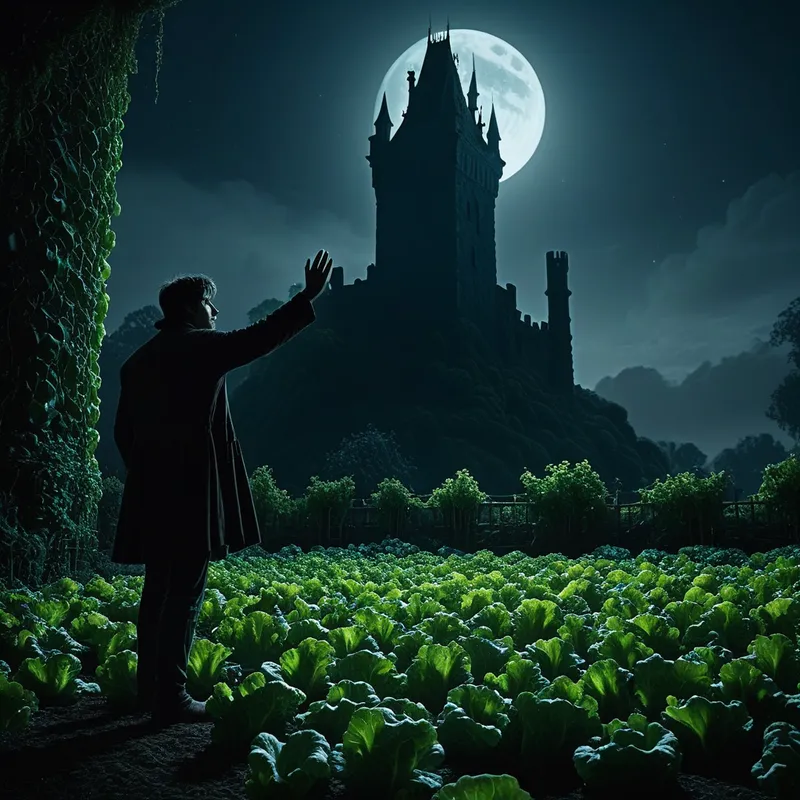
Listen, and hear a tale woven from longing and shadow. In a time not so distant, a man and a woman lived in a cottage that pressed against a high, wild garden wall. Their deepest sorrow was an empty cradle. But from that wall, a scent drifted—sharp, green, and irresistible. It was the rapunzel plant, and the woman’s craving for it became a fever in her blood. Her husband, desperate to quench her hunger, scaled the wall under a thief’s moon. He was caught by the garden’s keeper, a woman of terrible power, whose eyes held the cold glint of a bargain. “Take your greens,” she hissed. “But [the child](/myths/the-child “Myth from Alchemy culture.”/) your wife carries will be mine.”
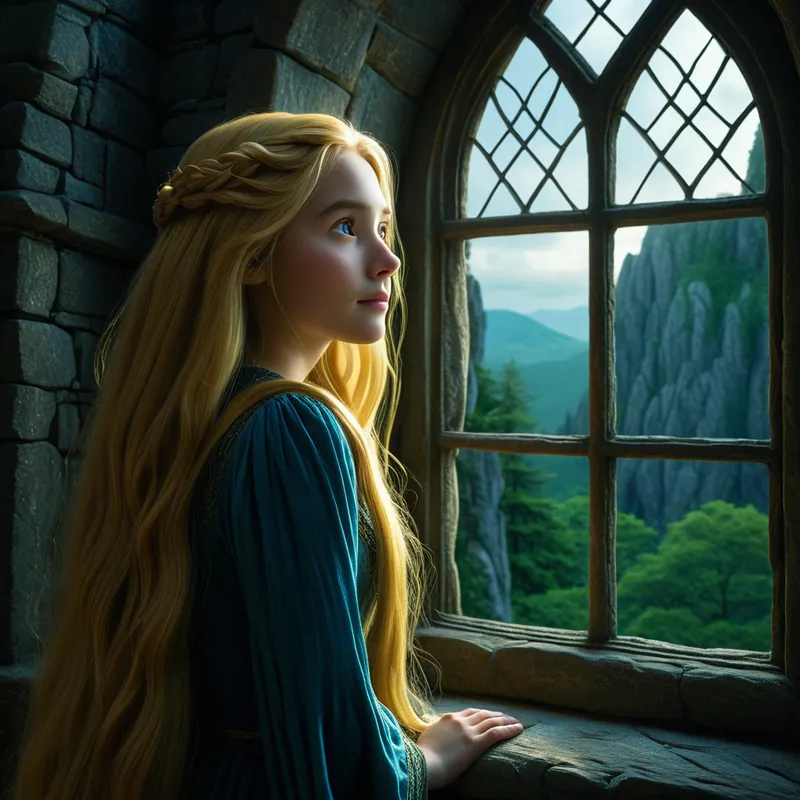
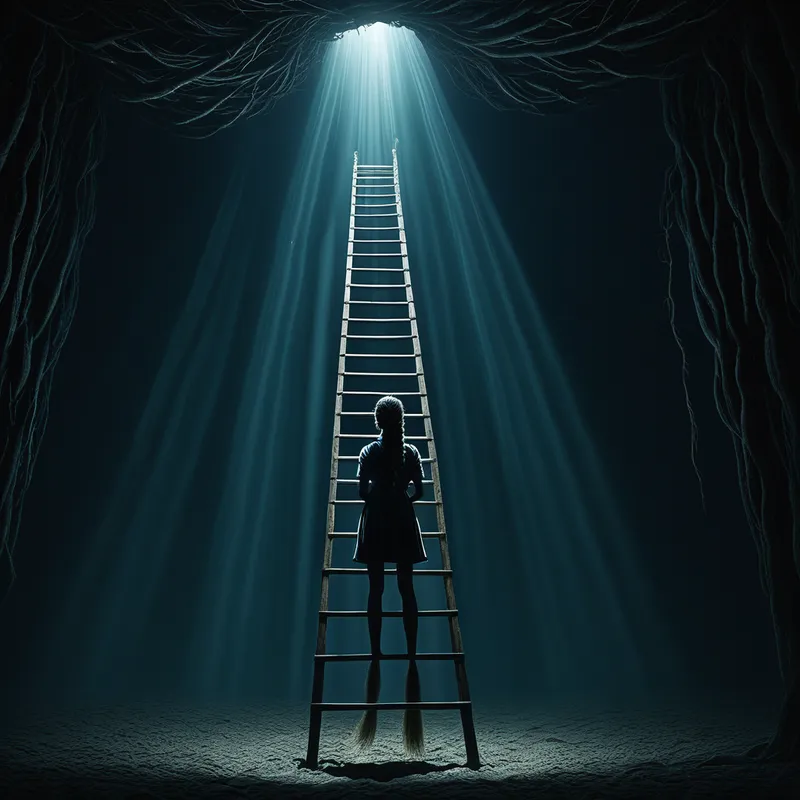
So it was. The babe, a girl with hair like spun sunlight, was taken and named for the plant that bought her: Rapunzel. The Witch raised her in a tower deep in the forest, a stone finger pointing at a sky the girl could never touch. It had no door, no stair. Only a single high window. When the Witch came, she would stand below and call: “Rapunzel, Rapunzel, let down your hair!” And the girl would unwind her golden braid, a living ladder, for the old woman to climb.
Years turned in that solitary room. Rapunzel sang, and her voice was the only beautiful [thing](/myths/thing “Myth from Norse culture.”/) the forest knew. It drew a prince, wandering and lost. He heard the unearthly song, saw the golden rope descend, and learned the secret call. When he climbed, [the world](/myths/the-world “Myth from Tarot culture.”/) shifted. Here was not a monster, but a maiden, her eyes wide with the wonder of a stranger. Here was not a prisoner, but a young man, his heart captured by a song. They made plans in whispers.
But secrets have weight. Rapunzel, in her innocence, once asked the Witch why she was so much heavier to pull up than the young prince. Fury, cold and sharp, filled [the tower](/myths/the-tower “Myth from Tarot culture.”/). The Witch seized shears. The song was cut short with a scream, and the golden rope was severed. Rapunzel was cast out into a barren wilderness, blind with grief and pregnancy. The Witch, in a final act of cruel theater, waited for the prince. She fastened the shorn braid and let him climb into a hollow victory—to find his love gone, and the Witch’s vengeance waiting. He fell from the window, his eyes torn out by thorns.
The world was now a map of pain. The prince wandered, sightless, a ghost in the brambles. Rapunzel bore twins in the desolate waste, her voice now a lullaby for survival. And then, one day, in the vast silence, her song found his ears again. He stumbled toward it. Her tears fell upon his sightless eyes—and where they touched, the world returned. Not as it was, but as it could be. He saw his wife, his children, and the open sky. The tower was far behind them, a forgotten tooth in the jaw of the forest.
Cultural Origins & Context
The tale of Rapunzel belongs to the great, murmuring river of European folklore, collected and crystallized in the 19th century by the Brothers Grimm. Its roots, however, dig much deeper, touching upon ancient narratives of stolen children, prophetic isolation, and oracular maidens in high places. It is a myth of [the hearth](/myths/the-hearth “Myth from Norse culture.”/) and the spindle, told by women to children, its rhythm that of a repetitive chore or a lullaby. Its societal function was multifaceted: a cautionary tale about the perils of uncontrolled desire (the mother’s craving), a narrative about the transition from childhood enclosure to adult sexuality and responsibility, and a stark depiction of the power dynamics between the young and the old, the fertile and the barren. It was a story that acknowledged the terrifying, necessary act of leaving the psychic “mother”—whether biological or societal—often portrayed as a vengeful witch who must be escaped, not reconciled with.
Symbolic Architecture
The myth’s power lies in its stark, almost brutal [symbolism](/symbols/symbolism “Symbol: The use of symbols to represent ideas or qualities, often conveying deeper meanings beyond literal interpretation. In dreams, it’s the language of the unconscious.”/). Each element is a psychic [landmark](/symbols/landmark “Symbol: A recognizable feature that marks a significant point in a journey, representing achievement, orientation, or a turning point in life’s path.”/).
The [Tower](/symbols/tower “Symbol: The tower symbolizes protection, aspirations, and isolation, representing both stability and the longing for higher achievement.”/) is the ultimate [symbol](/symbols/symbol “Symbol: A symbol can represent an idea, concept, or belief, serving as a powerful tool for communication and understanding.”/) of [enclosure](/symbols/enclosure “Symbol: A bounded space representing psychological containment, social boundaries, or existential limitations. It can symbolize both safety and restriction.”/). It is not a natural cave or a house with a [door](/symbols/door “Symbol: A door symbolizes transition, opportunity, and choices, representing thresholds between different states of being or experiences.”/); it is a constructed [isolation](/symbols/isolation “Symbol: A state of physical or emotional separation from others, often representing a need for introspection or signaling distress.”/), a vertical [prison](/symbols/prison “Symbol: Prison in dreams typically represents feelings of restriction, confinement, or a lack of freedom in one’s life or mind.”/) that separates the inhabitant from the horizontal world of [relationship](/symbols/relationship “Symbol: A representation of connections we have with others in our lives, often reflecting our emotional state.”/) and experience. It represents the [psyche](/myths/psyche “Myth from Greek culture.”/) in a state of naïve [innocence](/symbols/innocence “Symbol: A state of purity, naivety, and freedom from guilt or corruption, often associated with childhood and moral simplicity.”/), protected yet utterly deprived, often built by well-intentioned or fearful guardians (internal or external) to keep the world out—and [the self](/myths/the-self “Myth from Jungian culture.”/) in.
The tower is the ego’s fortress, built for safety but becoming the tomb of the soul.
Rapunzel’s [Hair](/symbols/hair “Symbol: Hair often symbolizes identity, power, and self-expression, reflecting how we perceive ourselves and how we wish to be perceived by others.”/) is the miracle and the trap. It is her [life](/symbols/life “Symbol: The symbol of ‘Life’ represents a journey of growth, interconnectedness, and existential meaning, encompassing both the joys and challenges that define human experience.”/) force, her vitality, her [connection](/symbols/connection “Symbol: Connection symbolizes relationships, communication, and bonds among individuals.”/) to the world—but it is the very [instrument](/symbols/instrument “Symbol: An instrument symbolizes creativity, communication, and the means by which one expresses oneself or influences the world.”/) of her bondage. The [Witch](/symbols/witch “Symbol: The image of a witch embodies the archetype of the outlawed or misunderstood, often associated with feminine power, magic, and the unknown.”/) uses it to ascend; the [Prince](/symbols/prince “Symbol: A prince symbolizes nobility, leadership, and aspiration, often representing potential or personal authority.”/) uses it to find her. It is a golden chain and a golden ladder, a [paradox](/symbols/paradox “Symbol: A contradictory yet true concept that challenges logic and perception, often representing unresolved tensions or profound truths.”/) of feminine power that is simultaneously the [source](/symbols/source “Symbol: The origin point of something, often representing beginnings, nourishment, or the fundamental cause behind phenomena.”/) of value and the means of exploitation. Its severing is a brutal [initiation](/symbols/initiation “Symbol: A symbolic beginning or transition into a new phase, status, or awareness, often involving tests, rituals, or profound personal change.”/): the [loss](/symbols/loss “Symbol: Loss often symbolizes change, grief, and transformation in dreams, representing the emotional or psychological detachment from something or someone significant.”/) of one’s former [identity](/symbols/identity “Symbol: Identity represents the sense of self, encompassing personal beliefs, cultural background, and social roles.”/), the defining feature that made one “special” in the old, confined world.
The Witch is the [Shadow](/symbols/shadow “Symbol: The ‘shadow’ embodies the unconscious, repressed aspects of the self and often represents fears or hidden emotions.”/) of the [caregiver](/symbols/caregiver “Symbol: A spiritual or mythical figure representing nurturing, protection, and unconditional support, often embodying divine or archetypal parental energy.”/). She is the possessive, devouring [mother](/symbols/mother “Symbol: The symbol of ‘Mother’ represents nurturing, protection, and the foundational aspect of one’s emotional being, often associated with comfort and unconditional love.”/) [archetype](/symbols/archetype “Symbol: A universal, primordial pattern or prototype in the collective unconscious that shapes human experience, behavior, and creative expression.”/) who cannot tolerate the [separation](/symbols/separation “Symbol: A spiritual or mythic division between realms, states of being, or consciousness, often marking a transition or loss of connection.”/) and autonomy of the [child](/symbols/child “Symbol: The child symbolizes innocence, vulnerability, and potential growth, often representing the dreamer’s inner child or unresolved issues from childhood.”/). She does not represent evil in a cosmic sense, but the psychic force that seeks to keep the [personality](/symbols/personality “Symbol: Personality in dreams often symbolizes the traits and characteristics of the dreamer, reflecting how they perceive themselves and how they believe they are perceived by others.”/) intact, unchanging, and under control, even at the cost of its aliveness. Her garden, walled and full of forbidden life, is the unconscious itself, fertile but guarded.
The Dreamer’s Resonance
When this myth stirs in the modern dreamscape, it signals a profound somatic and psychological process of enclosure seeking release. To dream of being in a high room with no exit is to feel the walls of a life structure—a job, a relationship, a self-concept—that has become a prison. The body may feel heavy, restricted, or floating in dissociation.
Dreaming of long hair that tangles, is cut, or is used as a rope speaks to issues of personal power, attractiveness, and connection. Is your vitality (your hair) being used by others to reach you on their terms? Is it time for a symbolic “cutting” to sever an outdated mode of relating? [The fall](/myths/the-fall “Myth from Biblical culture.”/) of the prince, the blindness, and the healing tears map onto the dreamer’s own experience of catastrophic change, a period of wandering in psychological darkness (“the barren wilderness”), and the slow, unexpected healing that comes not from a grand quest, but from the humble, embodied act of tending to new life (the twins) and expressing genuine grief (the tears).
Alchemical Translation
The myth of Rapunzel is a perfect model of psychic individuation, the alchemical journey from unconscious unity to conscious wholeness. It begins in the [nigredo](/myths/nigredo “Myth from Alchemical culture.”/), the blackening: the primal craving, the theft, the imprisonment in the tower of a borrowed identity (“You are the child of the rapunzel plant”).
The long period in the tower is the albedo, the whitening, a state of sterile reflection and purification. Here, the conscious ego (Rapunzel) is separated from the world, but a unique talent (her voice, her hair) develops in isolation. The arrival of the prince represents the arrival of the animus—the inner masculine principle of agency, direction, and relatedness. He provides [the mirror](/myths/the-mirror “Myth from Various culture.”/) that shows Rapunzel she is more than the tower.
The crisis of severance is the necessary death that precedes the impossible birth.
The brutal [separatio](/myths/separatio “Myth from Alchemical culture.”/)—the cutting of the hair and the expulsion—is the pivotal alchemical operation. The old form must be shattered. The prince’s blinding is [the ego](/myths/the-ego “Myth from Jungian culture.”/)’s necessary humiliation, the loss of its old way of “seeing” and navigating the world. Both are cast into the mortificatio, the state of putrefaction and despair in [the wilderness](/myths/the-wilderness “Myth from Biblical culture.”/).
The final transmutation occurs not through magic, but through the slow, organic work of life. Rapunzel, in her exile, gives birth—to literal children and to her own mature, resilient self. The prince learns to navigate by sound and touch, developing a new kind of sight. Their reunion is the coniunctio, [the sacred marriage](/myths/the-sacred-marriage “Myth from Various culture.”/). Her tears, the healing waters, are the aqua permanens, the permanent [water](/myths/water “Myth from Chinese culture.”/) of the alchemists—the embodied emotion that finally integrates the shattered parts. The healed eyes see not the old, idealized world of the tower, but the real, complex, and liberated world they have earned. The tower remains, but it is empty, a monument to a self they had to outgrow. The gold is no longer just in the hair; it is in the hard-won, tear-stained vision of a life truly lived.
Associated Symbols
Explore related symbols from the CaleaDream lexicon: