Ragnarok Myth Meaning & Symbolism
The prophesied end of the Norse cosmos, a cataclysmic battle where gods and monsters fall, clearing the way for a new world to rise from the sea.
The Tale of Ragnarok
Listen. [The wind](/myths/the-wind “Myth from Various culture.”/) from the north carries a scent of iron and frost. The sun, a pale and sickly disc, is swallowed by the wolf Sköll, and his brother Hati devours [the moon](/myths/the-moon “Myth from Tarot culture.”/). Stars gutter and die, plunging [the nine worlds](/myths/the-nine-worlds “Myth from Norse culture.”/) into a long, terrible winter—the [Fimbulwinter](/myths/fimbulwinter “Myth from Norse culture.”/)—that knows no spring. Bonds of kinship and oath snap like rotten thread. Brother slays brother, and [the world](/myths/the-world “Myth from Tarot culture.”/) is adrift in a tide of chaos.
From the eastern depths, the ship [Naglfar](/myths/naglfar “Myth from Norse culture.”/), crafted from the untrimmed nails of the dead, breaks its moorings. At its helm stands Loki, freed from his agonizing bonds, his eyes burning with ancient malice. With him sails a host of giants, their breath a blizzard. From the south, wreathed in fire, comes the realm of [Muspelheim](/myths/muspelheim “Myth from Norse culture.”/). Its lord, [Surtr](/myths/surtr “Myth from Norse culture.”/), advances, a living conflagration, a sword of flame brighter than the sun held aloft.
The watchman [Heimdallr](/myths/heimdallr “Myth from Norse culture.”/) stands upon Bifröst. He sees all, hears the grass grow on earth and the wool on sheep. Now, he hears the thunderous approach of doom. He raises the [Gjallarhorn](/myths/gjallarhorn “Myth from Norse culture.”/) and blows a note that shivers through the roots of [Yggdrasil](/myths/yggdrasil “Myth from Global/Universal culture.”/) itself. It is the call to the final gathering.
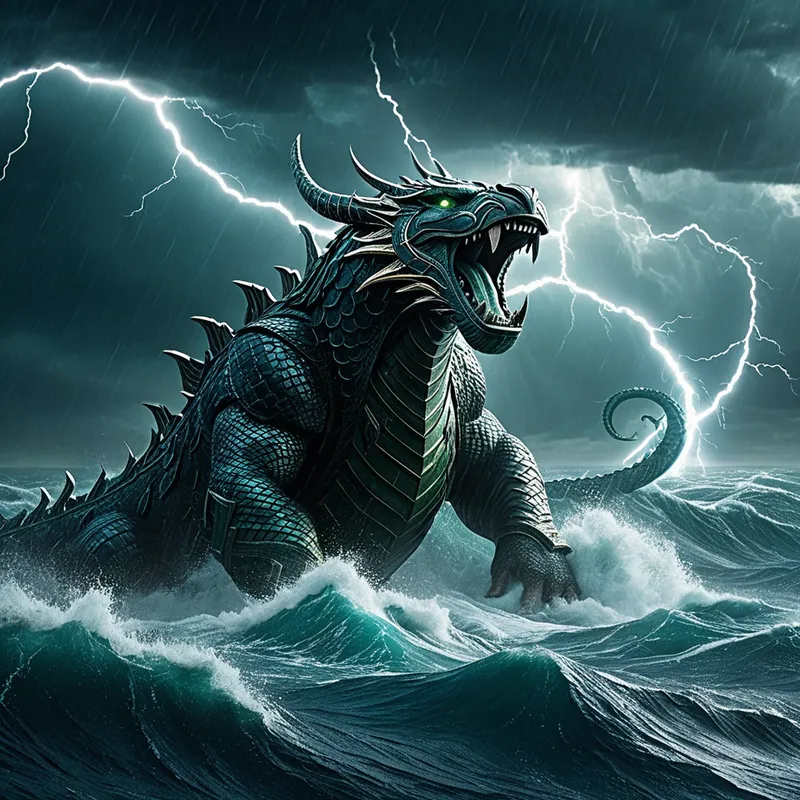
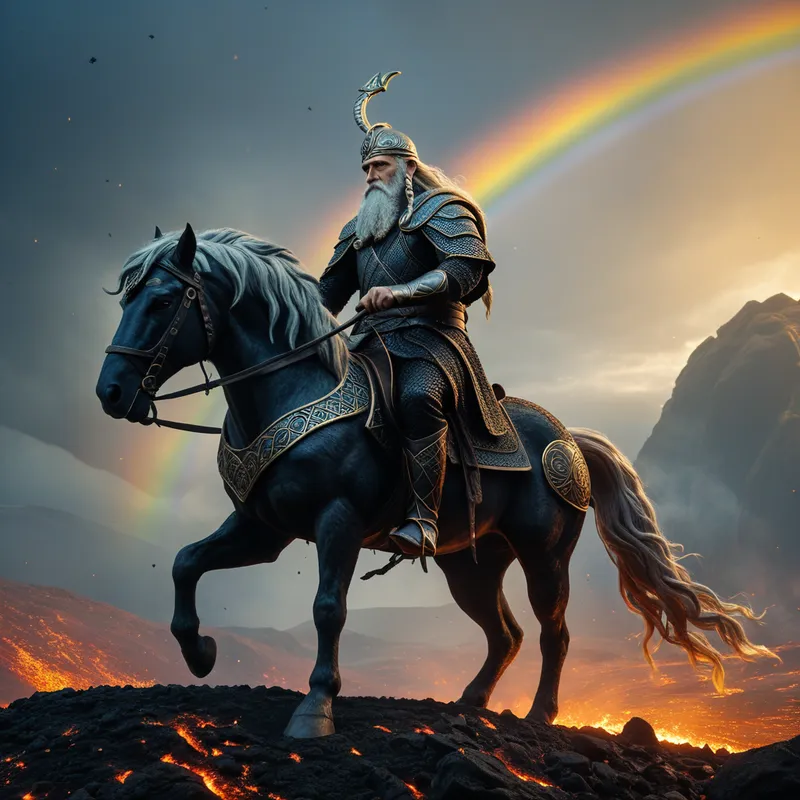
In the field of Vígríðr, the hosts assemble. From [Valhalla](/myths/valhalla “Myth from Germanic culture.”/), [the einherjar](/myths/the-einherjar “Myth from Norse culture.”/), the chosen slain, march forth alongside Odin, who wears a helm of gold and grips his spear, [Gungnir](/myths/gungnir “Myth from Norse culture.”/). The great wolf [Fenrir](/myths/fenrir “Myth from Norse culture.”/), whose jaws stretch from earth to sky, breaks free. Thor, his mighty hammer [Mjölnir](/myths/mjlnir “Myth from Norse culture.”/) crackling, seeks his ancient foe, the world-encircling serpent [Jörmungandr](/myths/jrmungandr “Myth from Norse culture.”/), who rises from [the sea](/myths/the-sea “Myth from Greek culture.”/), venom flooding the waves.
The battle is joined. It is not a war of strategy, but of fate meeting fate with a terrible, final crash. Odin charges the wolf Fenrir and is swallowed whole. In turn, Odin’s son [Vidarr](/myths/vidarr “Myth from Norse culture.”/) steps forth, places a foot on the beast’s lower jaw, and rips its maw asunder. Thor and the [Midgard Serpent](/myths/midgard-serpent “Myth from Norse culture.”/) meet in a cataclysm of thunder and poison. Thor slays the serpent, staggers back nine paces, and falls dead, drowned in the creature’s venom. Loki and Heimdallr, eternal adversaries, slay one another. The fire giant Surtr swings his flaming sword, and the very cosmos burns. Yggdrasil trembles, the nine worlds are consumed, and all sinks into a silent, boiling sea.
But listen. The waters subside. A new earth, green and fair, rises from the depths. The sun, borne by a daughter more beautiful than her mother, shines upon it. A few gods survive: Odin’s sons Vidarr and Vali, and Thor’s sons. From the world-tree’s hidden wood, two human beings, Líf and Lífþrasir, emerge. They had hidden themselves within Yggdrasil’s trunk. In the grass, they find the golden playing pieces the gods once used, tokens of a past age. The wheel has turned. The story begins again.
Cultural Origins & Context
The myth of Ragnarok is preserved primarily in two 13th-century Icelandic texts: the Poetic Edda, a collection of older mythological poems, and the Prose Edda, a handbook for skalds (poets) written by Snorri Sturluson. These sources, while Christianized in their recording, offer a window into a pre-Christian Norse worldview that was oral, poetic, and deeply integrated with the harsh realities of Scandinavian life.
The myth was not a simple bedtime story but a foundational narrative that gave shape to a culture’s understanding of time, ethics, and existence. It was recited by skalds, who functioned as historians, entertainers, and custodians of cosmic law. In a world of finite growing seasons, brutal winters, and inevitable conflict, Ragnarok provided a framework that accepted destruction as an intrinsic part of the cosmic order. It taught that even the gods are subject to fate (ørlög), and that courage is measured not by victory, but by the dignity with which one meets a foreknown end. The myth validated a heroic ethos: to fight bravely alongside Odin in the final battle was the highest aspiration, for it affirmed one’s role in the grand, tragic, and cyclical drama of all things.
Symbolic Architecture
Ragnarok is not merely an apocalypse; it is the necessary [dissolution](/symbols/dissolution “Symbol: The process of breaking down, dispersing, or losing form, often representing transformation, release, or the end of a state of being.”/) of a worn-out [structure](/symbols/structure “Symbol: Structure in dreams often symbolizes stability, organization, and the framework of one’s life, reflecting how one perceives their environment and personal life.”/) to make way for new [life](/symbols/life “Symbol: The symbol of ‘Life’ represents a journey of growth, interconnectedness, and existential meaning, encompassing both the joys and challenges that define human experience.”/). It is the ultimate [expression](/symbols/expression “Symbol: Expression represents the act of conveying thoughts, emotions, and individuality, emphasizing personal communication and creativity.”/) of the [archetype](/symbols/archetype “Symbol: A universal, primordial pattern or prototype in the collective unconscious that shapes human experience, behavior, and creative expression.”/) of the Rebel, overthrowing an established, even divine, order that has become stagnant or corrupt.
The key figures are psychological forces. Odin represents the ruling [consciousness](/symbols/consciousness “Symbol: Consciousness represents the state of awareness and perception, encompassing thoughts, feelings, and experiences.”/)—[the ego](/myths/the-ego “Myth from Jungian culture.”/) and accumulated wisdom—that must be consumed by the unchecked, ravenous instinctuality of the [Shadow](/symbols/shadow “Symbol: The ‘shadow’ embodies the unconscious, repressed aspects of the self and often represents fears or hidden emotions.”/), symbolized by Fenrir. Thor is the heroic will and brute force of the [psyche](/myths/psyche “Myth from Greek culture.”/), which can defeat a great externalized [threat](/symbols/threat “Symbol: A threat in dreams often reflects feelings of vulnerability, anxiety, or fear regarding one’s safety or well-being. It can indicate unresolved conflicts or the presence of external pressures.”/) (Jörmungandr, often seen as [chaos](/symbols/chaos “Symbol: In Arts & Music, chaos represents raw creative potential, uncontrolled expression, and the breakdown of order to forge new artistic forms.”/) or the “other”) but is ultimately poisoned by the engagement, perishing from the toxins of the battle itself. Loki is the [trickster](/symbols/trickster “Symbol: A boundary-crossing archetype representing chaos, transformation, and the subversion of norms through cunning and humor.”/), [the principle](/symbols/the-principle “Symbol: A fundamental truth, law, or doctrine that serves as a foundation for a system of belief, behavior, or reasoning, often representing moral or ethical standards.”/) of [chaos](/symbols/chaos “Symbol: In Arts & Music, chaos represents raw creative potential, uncontrolled expression, and the breakdown of order to forge new artistic forms.”/), change, and unbound potential who dismantles the old order, a necessary but destructive force.
The old world does not end because it is evil, but because it is complete. Its stories have been told, its patterns exhausted. The fire of Surtr is not punishment, but purification.
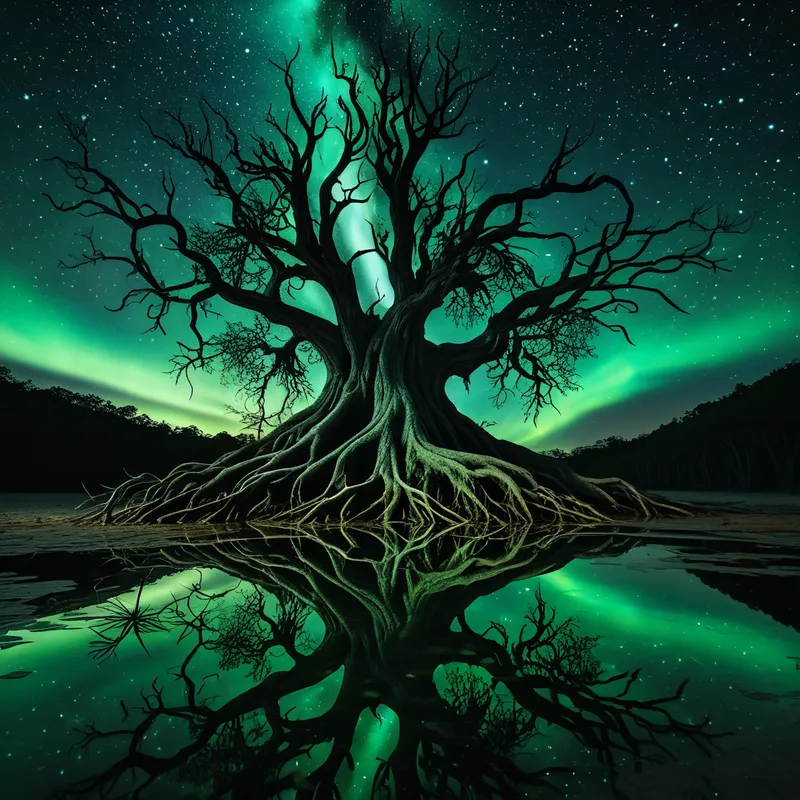
The survival of Lif and Lifthrasir within the World [Tree](/symbols/tree “Symbol: In dreams, the tree often symbolizes growth, stability, and the interconnectedness of life.”/) is the most potent [symbol](/symbols/symbol “Symbol: A symbol can represent an idea, concept, or belief, serving as a powerful tool for communication and understanding.”/). It signifies that the essential core of life—the seed of consciousness and potential—is preserved within the enduring psychic structure ([the Self](/myths/the-self “Myth from Jungian culture.”/), represented by Yggdrasil) even during total ego-[death](/symbols/death “Symbol: Symbolizes transformation, endings, and new beginnings; often associated with fear of the unknown.”/). The golden game pieces found in the new [grass](/symbols/grass “Symbol: Grass often symbolizes growth, renewal, and a connection to nature, representing both the fragility and resilience of life.”/) are the rediscovered archetypal patterns, ready to be played anew.
The Dreamer’s Resonance
When the pattern of Ragnarok stirs in the modern psyche, it manifests in dreams of overwhelming catastrophe: world-ending storms, collapsing buildings, or being pursued by titanic, impersonal forces. This is not a prophecy of literal doom, but a somatic signal of profound internal transformation.
The dreamer is likely in a life phase where a long-standing identity, career, relationship, or belief system is crumbling. The “Fimbulwinter” is a period of emotional coldness, isolation, and stagnation that precedes this breakdown. Dreaming of fighting a losing battle against a monster reflects the ego’s desperate, and ultimately futile, struggle to maintain control over rising unconscious contents. The feeling of everything burning away correlates to the painful but necessary process of letting go of attachments, old self-images, and outmoded ways of being. The psyche is initiating its own Ragnarok to clear the psychic landscape for renewal.
Alchemical Translation
The alchemical process mirrored in Ragnarok is [nigredo](/myths/nigredo “Myth from Alchemical culture.”/)—the blackening, the putrefaction, and dissolution of [the prima materia](/myths/the-prima-materia “Myth from Alchemical culture.”/). It is the darkest night of the soul, where all one has known is reduced to ash. For the individual undergoing individuation, this is the stage where the conscious personality must face its own limits, its shadow, and its destined end.
The heroic task is not to avoid this battle, but to enter it consciously. This means acknowledging the “Loki” within—the disruptive, chaotic, and creative impulses we have bound and denied. It means facing the “Fenrir” of our own ravenous, instinctual nature, not to defeat it, but to be transformed by it, as Vidarr transforms Odin’s death into an act of tearing open new possibility.
Individuation requires a Ragnarok of the personal myth. The ego-Odin must be devoured so that the more complete Self, symbolized by the resilient, hidden seed in the World Tree, can emerge.
The “green land” that rises from the sea is the new level of psychological integration achieved after the crisis. The survivor is not the same person who entered the battle. They are Lif or Lifthrasir—a simpler, more essential being, standing on a fresh earth, holding the golden patterns of archetypal truth. They have survived the end of their world and discovered, in the clearing left by the fire, the space to begin their story anew, with a deeper, more grounded connection to the eternal cycles of death and rebirth.
Associated Symbols
Explore related symbols from the CaleaDream lexicon: