Ragnarök Prophecy Myth Meaning & Symbolism
The prophesied twilight of the gods, a cataclysmic battle where all worlds burn, die, and are reborn from the sea, green and new.
The Tale of Ragnarök Prophecy
Listen. The wind does not just blow; it carries whispers from the roots of the Yggdrasil. The ravens, Huginn and Muninn, bring not just news, but dread. For in the high halls of Asgard, even the Æsir know a chill that no fire can thaw. It is the cold of a prophecy spoken long ago by a long-dead seeress, a song of an ending so absolute it gnaws at the foundations of all things.
It begins not with a bang, but with a long, cruel winter. Fimbulwinter descends, three winters with no summer between. Brothers turn to blades for a crust of bread. The sun and moon, forever hunted by wolves, grow weak and dim. Stars wink out, one by one, swallowed by the growing void. This is the unmaking of time, the unraveling of bonds.
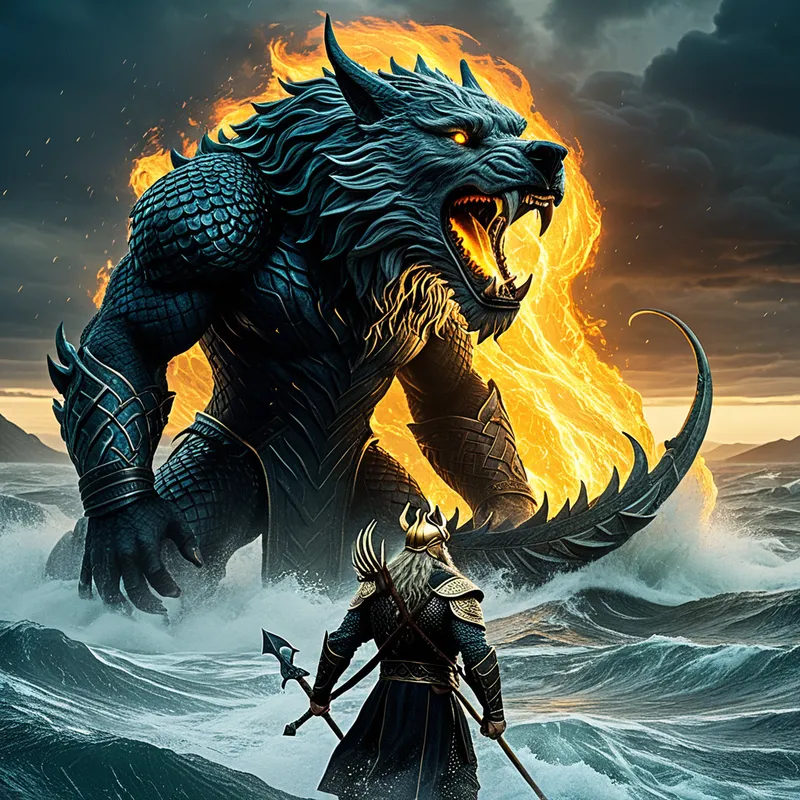
Then, the silence shatters. From the eastern woods, a cacophony of iron and rage: the army of the dead from Valhalla, led by Loki, freed from his agonizing bonds. His children, long foretold, take their places. The monstrous wolf Fenrir, whose gaping maw touches earth and sky, advances with drool that is a river of venom. From the boiling ocean, the Midgard Serpent rises, coiling mountains in its scales, spewing poison that fills the air and sea. And from the realm of fire, Muspell</#8217;s sons come, their brightness a lie, for Surtr himself marches with a sword brighter than the sun, destined to set the world aflame.
The gods, knowing their doom, arm themselves. Odin, in his golden helm, rides to the great field Vigrid to face Fenrir. Thor, mighty and furious, strides forth to meet the World Serpent. Freyr, lacking his magical sword, fights the fire giant Surtr with an antler. The air is thunder, the clash of fang on shield, the hiss of poison, the roar of infernos. Odin is swallowed whole. Thor slays the serpent but staggers back nine steps, dead from its venom. One by one, the bright gods fall. Loki and Heimdallr kill each other. Surtr swings his sword, and the universe itself catches fire. Midgard burns. Asgard crumbles. Yggdrasil trembles, and all things—gods, giants, monsters, and men—are consumed.
Then, silence. A silence deeper than the void. The waves, at last, cover the scorched earth.
But listen… beneath the waves, a sound. Not a roar, but a sigh. The waters recede. Land emerges, green and fertile, untouched. From a hidden wood, two human survivors, Lif and Lifthrasir, emerge to repopulate the earth. And in the sky, a sun, born of the old one, shines upon a world where a new, gentle pantheon of younger gods, including the returned Baldr, now dwells. The cycle is not broken. It has been completed, and from the ashes, the wheel turns once more.
Cultural Origins & Context
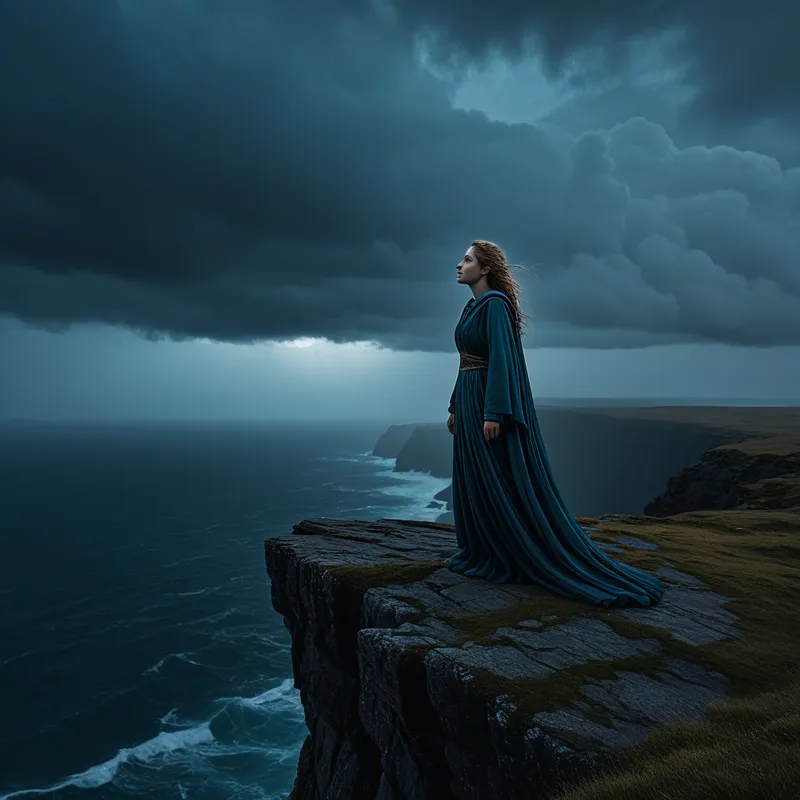
This profound narrative reaches us primarily through two 13th-century Icelandic texts: the Poetic Edda (particularly the poem Völuspá, “The Prophecy of the Seeress”) and the Prose Edda of Snorri Sturluson. These works, compiled after the Christianization of Scandinavia, preserve a pagan worldview that was already ancient. The myth was not a scripture, but a living tradition—a story told by skalds (poets) and possibly by ritual specialists around fires during the long winters. Its function was multifaceted: it was a cosmological map explaining the world’s ultimate origin and destiny, a moral framework highlighting the values of courage and fatalistic resolve (ørlög), and a societal mirror reflecting a culture that saw existence as a precarious balance maintained through struggle, destined to end in a climactic, cleansing violence. The prophecy of Ragnarök validated the Norse experience of a harsh, cyclical world where even the most powerful entities were subject to time and fate.
Symbolic Architecture
Ragnarök is not merely an apocalyptic fantasy; it is a grand symbolic drama of psychic necessity. It represents the inevitable confrontation between a ruling conscious order (the Æsir and their structured worlds) and the repressed, chaotic contents of the unconscious (the giants, monsters, and chaotic forces of Ginnungagap).
The world must burn for the green to return. This is the non-negotiable law of the psyche: what is rigid must be shattered for what is vital to emerge.
Loki is the ultimate trickster and shadow—the repressed ingenuity, chaos, and destructive potential that the psychic system (Asgard) tried to bind but could not integrate. His children—Fenrir (ravenous, unbounded instinct), the Midgard Serpent (the encircling, suffocating nature of unresolved complexes), and Hel—are the manifestations of this neglected shadow, growing in power until they demand a final reckoning. Fimbulwinter symbolizes a psychic ice age, a period of sterility and frozen feeling where the old ways no longer sustain life. The battle itself is the ego’s last, heroic but doomed, stand against the tidal wave of the unconscious.
The Dreamer’s Resonance
When this mythic pattern stirs in the modern dreamer, it often heralds a profound psychological crisis or impending transformation. One does not dream of Ragnarök during times of stability. The somatic experience may be one of deep anxiety, a feeling of foundations crumbling, or a chilling sense of inevitability. Psychologically, this is the “night sea journey”—the ego’s terrifying descent as long-held identities, beliefs, or life structures (the “gods” one has served) are threatened with annihilation.
Dreams may feature images of endless winter, rising floodwaters, fighting futile battles, or watching beloved inner landscapes burn. The key is the presence of an apocalyptic atmosphere—an ending that feels total. This is not a simple nightmare; it is the psyche’s brutal, archetypal method of communicating that a phase of life has reached its terminus. The old king (the ruling conscious attitude) must die. The dreamer is in the grip of a necessary, if terrifying, process of de-integration.
Alchemical Translation
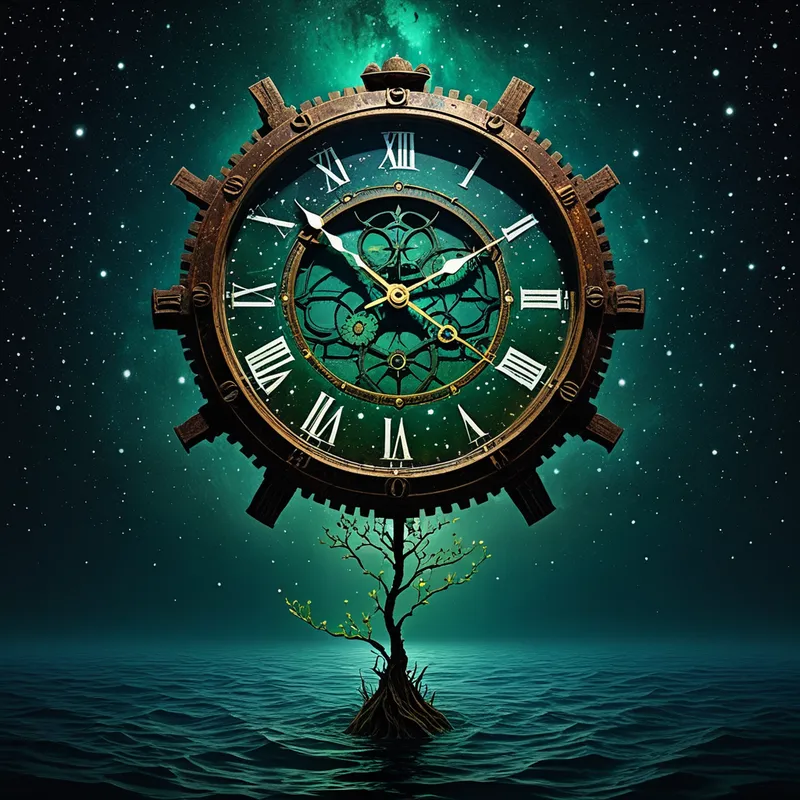
The alchemical process mirrored in Ragnarök is nigredo followed by albedo—the blackening and putrefaction leading to the whitening, or purification. The conflagration is the nigredo in its most extreme form: the reduction of all complex psychic matter to its prima materia, its essential, chaotic state. The ego’s heroic fight and fall represent the necessary death of the old, inflated, or outworn conscious standpoint.
The prophecy is the promise hidden within the doom: the seed knows it must be destroyed as a seed to become the tree.
The rebirth—the green earth, the new sun, the return of Baldr—symbolizes the albedo and the emergence of a new, more integrated consciousness. Baldr, the god of light and purity who was once killed by blind ignorance (the mistletoe dart), returns. This signifies that what was most valuable but lost or wounded in the old order can be redeemed in the new. The two survivors, Lif and Lifthrasir (“Life” and “Will-to-Live”), represent the indestructible core of the psyche, the basic life force and will that endure the catastrophe to begin anew.
For the individual, the myth models the path of individuation through catastrophic transformation. It teaches that true renewal is not a gentle reform but often requires a willing descent into one’s own Fimbulwinter, a facing of the Fenrir and Serpent within (one’s ravenous and encircling shadows), and the courage to let the old self be consumed by the fires of profound self-confrontation. Only then can a more authentic, grounded, and resilient consciousness—a green world—rise from the sea of the unconscious. The prophecy is not about fearing the end, but about understanding the sacred necessity of the cycle of death and rebirth within the soul.
Associated Symbols
Explore related symbols from the CaleaDream lexicon: