Ragnarök Prophecies Myth Meaning & Symbolism
The prophesied twilight of the gods, a cataclysmic battle of cosmic forces that ends the old world, clearing the way for a new, green earth to rise.
The Tale of Ragnarök Prophecies
Listen. [The wind](/myths/the-wind “Myth from Various culture.”/) that bites through the pines carries more than winter’s chill. It carries a whisper, a dread known to the gods themselves. It is the breath of ørlǫg, the woven doom, and its name is [Ragnarök](/myths/ragnark “Myth from Norse culture.”/).
In the high seat of Asgard, the Allfather, Odin, drinks not for pleasure, but for sight. From the well of [Mímir](/myths/mmir “Myth from Norse culture.”/) he sought wisdom, and at the foot of the [Yggdrasil](/myths/yggdrasil “Myth from Global/Universal culture.”/) the [Norns](/myths/norns “Myth from Nordic culture.”/) carve [runes](/myths/runes “Myth from Norse culture.”/) of ending into its roots. He has seen it. He knows the pattern of the final tapestry.
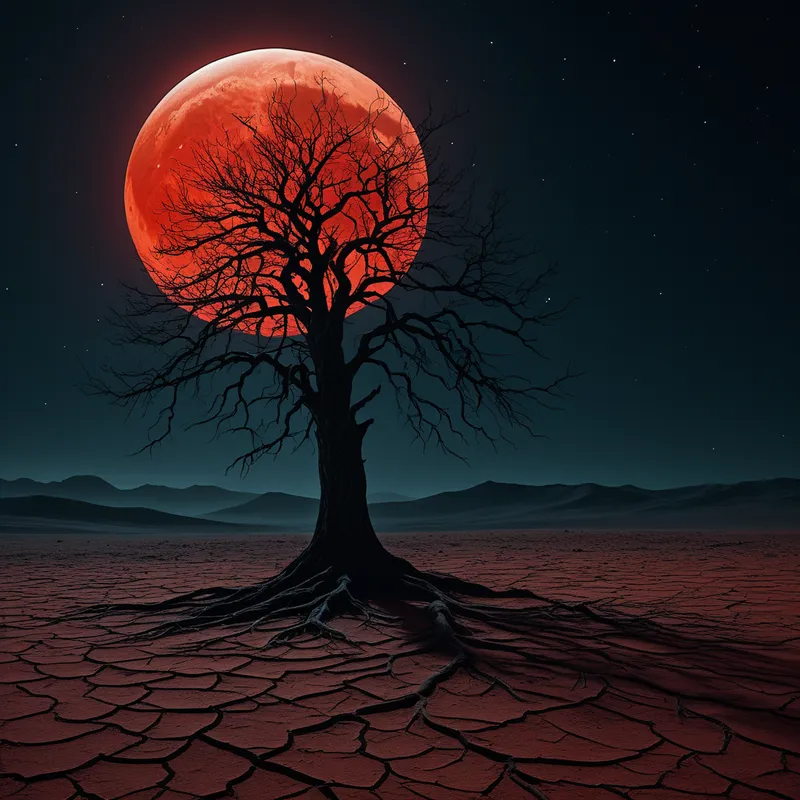
It begins with a winter that has no heart, only hunger: the [Fimbulwinter](/myths/fimbulwinter “Myth from Norse culture.”/). Snow drives horizontally for seasons unending. Brothers turn to blades for a crust of bread. The sun is a weak, grey memory; [the moon](/myths/the-moon “Myth from Tarot culture.”/) is stolen from [the sky](/myths/the-sky “Myth from Persian culture.”/). This is the unraveling of bonds, the freezing of compassion.
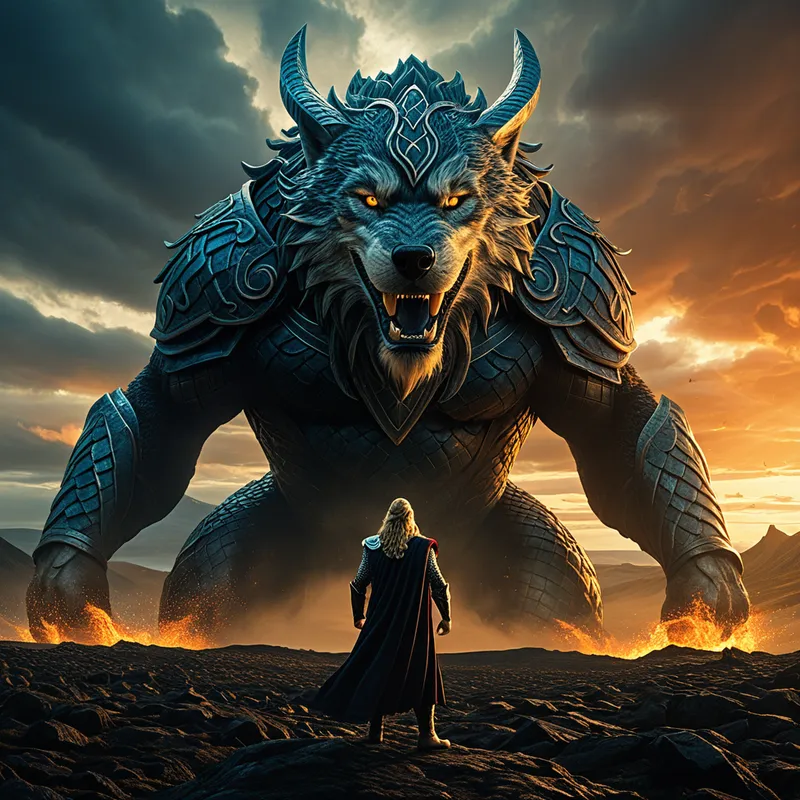
Then, the loosening. The great wolf [Fenrir](/myths/fenrir “Myth from Norse culture.”/), bound by a ribbon forged from a cat’s footfall and a mountain’s roots, snaps his chains. His jaws stretch from earth to sky. The serpent [Jörmungandr](/myths/jrmungandr “Myth from Norse culture.”/), who grips his own tail in the deep sea, releases his hold and heaves his mountainous coils onto the land, poison flooding the oceans. From the realm of the dead, [Naglfar](/myths/naglfar “Myth from Norse culture.”/) breaks free, its hull a nightmare of untrimmed nails, carrying a host of giants. And Loki, [the architect](/myths/the-architect “Myth from Various culture.”/) of betrayal, leads them, free from his agonizing bonds.
The heavens groan. [The star](/myths/the-star “Myth from Tarot culture.”/)-wolf Sköll devours the sun; his brother Hati catches the moon. Stars gutter out like spent embers. The great tree Yggdrasil trembles in every world.
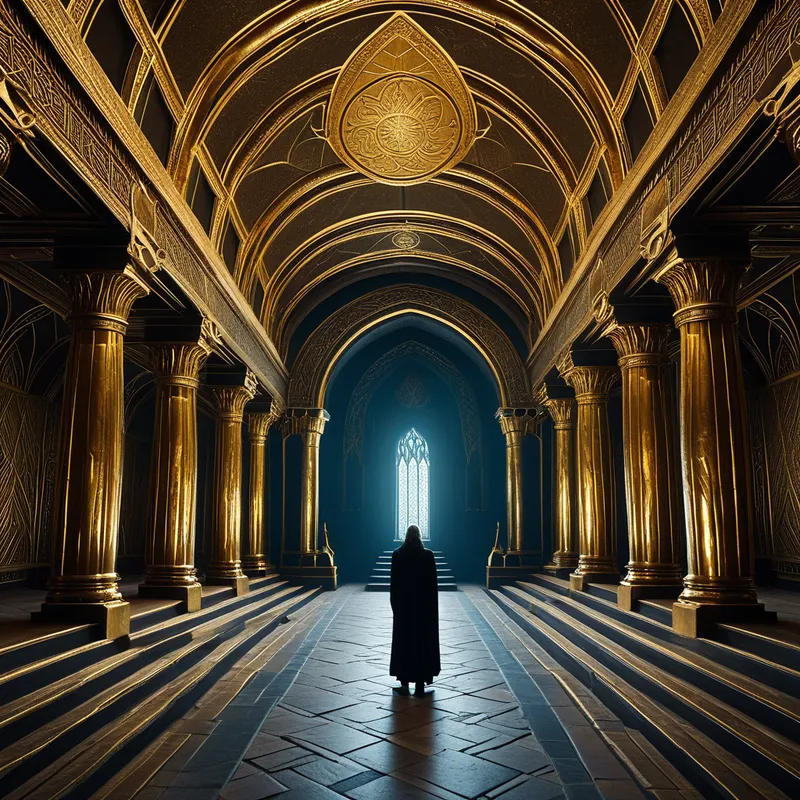
They gather on the field of Vígríðr, a plain vast as sorrow. From [Valhalla](/myths/valhalla “Myth from Germanic culture.”/), the Einherjar march, their armor bright against the gloom, led by Allfather Odin. The air is thick with the scent of ozone, poison, and cold iron. There is no strategy here, only fate meeting fate.
Odin rides toward the gaping maw of Fenrir and is consumed. Thor, protector of mankind, strides forth to meet his ancient foe, Jörmungandr. He strikes the death blow with [Mjölnir](/myths/mjlnir “Myth from Norse culture.”/), crushing the serpent’s skull, and then staggers back nine steps, drowning in the creature’s venomous breath. The one-handed god Týr and the hound of Hel, [Garmr](/myths/garmr “Myth from Norse culture.”/), slay each other. [Freyr](/myths/freyr “Myth from Norse culture.”/), without his sword, falls to the fiery giant [Surtr](/myths/surtr “Myth from Norse culture.”/). Loki and [Heimdallr](/myths/heimdallr “Myth from Norse culture.”/), eternal adversaries, exchange final blows and fall together.
Then Surtr swings his flaming sword. The fire consumes all. Asgard falls. [Midgard](/myths/midgard “Myth from Norse culture.”/) burns. The seas boil. The great tree is engulfed. All is ash, silence, and drowning waves.
But listen… deeper than silence. From [the void](/myths/the-void “Myth from Buddhist culture.”/) of [the sea](/myths/the-sea “Myth from Greek culture.”/), a new land rises, green and fair, washed clean. The sun, daughter of the old, shines brighter. In a hidden grove, two humans, Líf and Lífþrasir, emerge. And in the high grass, glinting amidst the ruins, are the gods’ golden playing pieces—a new game begins.
Cultural Origins & Context
The prophecies of Ragnarök are preserved primarily in two 13th-century Icelandic texts: the Poetic Edda, a collection of older mythological poems, and the Prose Edda, a handbook for skalds (poets) written by Snorri Sturluson. These texts are Christian-era recordings of a pre-Christian oral tradition. The myths were not scripture, but living poetry, recited by skalds in halls to affirm a specific worldview for a people acquainted with hardship, feud, and the capricious northern sea.
The societal function was profound. In a culture that valued heroic defiance in the face of certain death (“Cattle die, kinsmen die, you yourself will die”, as the Hávamál says), Ragnarök provided the ultimate cosmic frame. Even the gods, with all their power, are subject to fate. The emphasis is not on preventing the end, but on meeting it with courage and dignity, and on the implicit promise of continuity—the survival of Lif and Lifthrasir, the return of the gods’ sons. It was a myth that did not offer salvation, but meaning: our struggles are part of a vast, cyclical pattern of order, chaos, and renewal.
Symbolic Architecture
Ragnarök is not merely an apocalyptic battle; it is the necessary [dissolution](/symbols/dissolution “Symbol: The process of breaking down, dispersing, or losing form, often representing transformation, release, or the end of a state of being.”/) of a psychic [structure](/symbols/structure “Symbol: Structure in dreams often symbolizes stability, organization, and the framework of one’s life, reflecting how one perceives their environment and personal life.”/) that has become rigid, corrupt, or unsustainable. The Æsir represent a reigning conscious order—a [kingdom](/symbols/kingdom “Symbol: A kingdom symbolizes authority, belonging, and a sense of identity within a larger context or community.”/) of the [psyche](/myths/psyche “Myth from Greek culture.”/) built on wisdom, law, and power, but also on secrets, broken oaths, and bound monsters (the repressed [shadow](/symbols/shadow “Symbol: The ‘shadow’ embodies the unconscious, repressed aspects of the self and often represents fears or hidden emotions.”/)).
The shadow, bound too tightly, does not disappear; it gathers strength in the dark until it can shatter its chains.
The [Fimbulwinter](/symbols/fimbulwinter “Symbol: Fimbulwinter represents a cataclysmic winter preceding the end of the world, embodying themes of destruction, transformation, and renewal.”/) symbolizes a deep, prolonged psychic [winter](/symbols/winter “Symbol: Winter symbolizes a time of reflection, introspection, and dormancy, often representing challenges or a period of transformation.”/)—a state of depression, [sterility](/symbols/sterility “Symbol: Represents inability to create, grow, or produce, often linked to emotional barrenness, creative blocks, or existential emptiness.”/), and emotional coldness where [the ego](/myths/the-ego “Myth from Jungian culture.”/)’s resources are exhausted. The breaking of bonds—Fenrir, Loki, Jörmungandr—signifies the catastrophic return of all that has been denied: rage, chaotic instinct, deceit, and primal fear. The final battle is the ego’s last, heroic stand against the overwhelming tide of the unconscious, knowing it is doomed. Surtr’s fire is the alchemical ignis that reduces everything to its essential, undifferentiated state—[prima materia](/myths/prima-materia “Myth from Alchemical culture.”/) for a new beginning.
The Dreamer’s Resonance
When this myth stirs in modern dreams, it rarely manifests as a literal epic battle. Instead, one may dream of overwhelming natural disasters—tsunamis, world-engulfing fires, or endless winters. One might dream of a beloved home collapsing, or of facing a terrifying, inevitable confrontation with a monstrous figure that is somehow also a part of [the self](/myths/the-self “Myth from Jungian culture.”/).
Somatically, this can accompany periods of extreme life transition: the end of a career, the collapse of a long-held identity, a profound depression, or a crisis of faith. The psyche is announcing a necessary, total deconstruction. The dreamer is in the Fimbulwinter. The emotional experience is one of profound inevitability and dread, mixed with a strange, deep knowing that this must happen. The process is one of ego dissolution, where the conscious personality must surrender to a cataclysm it cannot control.
Alchemical Translation
For the individual, the Ragnarök process is the ultimate stage of the [nigredo](/myths/nigredo “Myth from Alchemical culture.”/)—the blackening, the putrefaction, and [the calcination](/myths/the-calcination “Myth from Alchemical culture.”/) of the psyche. It is [the dark night of the soul](/myths/the-dark-night-of-the-soul “Myth from Christian Mysticism culture.”/) where every structure, every defense, and every cherished ideal is burned away. The conscious attitude (the Asgard of the psyche) must fall.
The goal is not to avoid the twilight, but to pass through its fire so completely that one becomes the fertile soil from which the new green land can rise.
This is not a passive destruction, but an active, courageous engagement with one’s own Fenrir and Jörmungandr—the bound wolves of rage and the encircling serpents of existential dread. One must, like Odin, face being consumed. One must, like Thor, fight one’s deepest poison even as it kills you. The [triumph](/myths/triumph “Myth from Roman culture.”/) is in the integrity of the engagement, not in victory.
The alchemical gold found in the grass afterwards is the nascent, more authentic Self that emerges when the old, burdensome complexes have been destroyed. The new land is a psyche recalibrated, not on old laws and secrets, but on a foundation that has integrated its shadows. The surviving gods’ sons—[Vidarr](/myths/vidarr “Myth from Norse culture.”/), Váli, Móði and Magni—represent the valuable, transformed aspects of the old consciousness that carry forward: silent strength, swift [justice](/myths/justice “Myth from Tarot culture.”/), and raw, tempered power. The individual who undergoes this Ragnarök does not return to who they were; they become the ground from which a new world grows.
Associated Symbols
Explore related symbols from the CaleaDream lexicon: