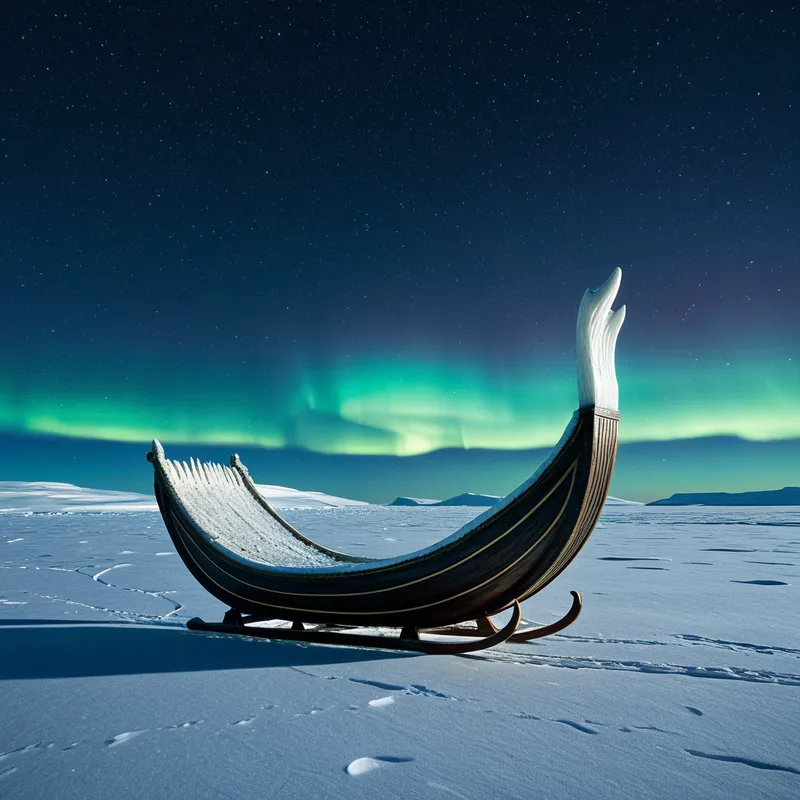
Qamutiik Myth Meaning & Symbolism
The story of a cosmic sled, born from a shaman's sacrifice, that carries the soul across the threshold between worlds, guided by the wisdom of the land.
The Tale of Qamutiik
Listen. The wind does not just blow across the ice; it carries the old stories in its teeth. In the time when the world was still being dreamed into being, when the great ice was a living skin over the deep, there was a silence so profound it had weight. The People were strong, but the land was stronger. The caribou grew thin, the seals hid in the breathing-holes of their own cunning, and the long night pressed down, a lid of stars on a pot of hunger.
In this time lived a man named Angakkuq. Not just any hunter, but one who could speak to Sedna in the depths and hear the laughter of the Aqsarniit. He felt the People’s fear, a cold sharper than any wind, seeping into their bones. They were not just lost on the ice; they were lost in the world, their spirits adrift between the solid land and the treacherous sea.
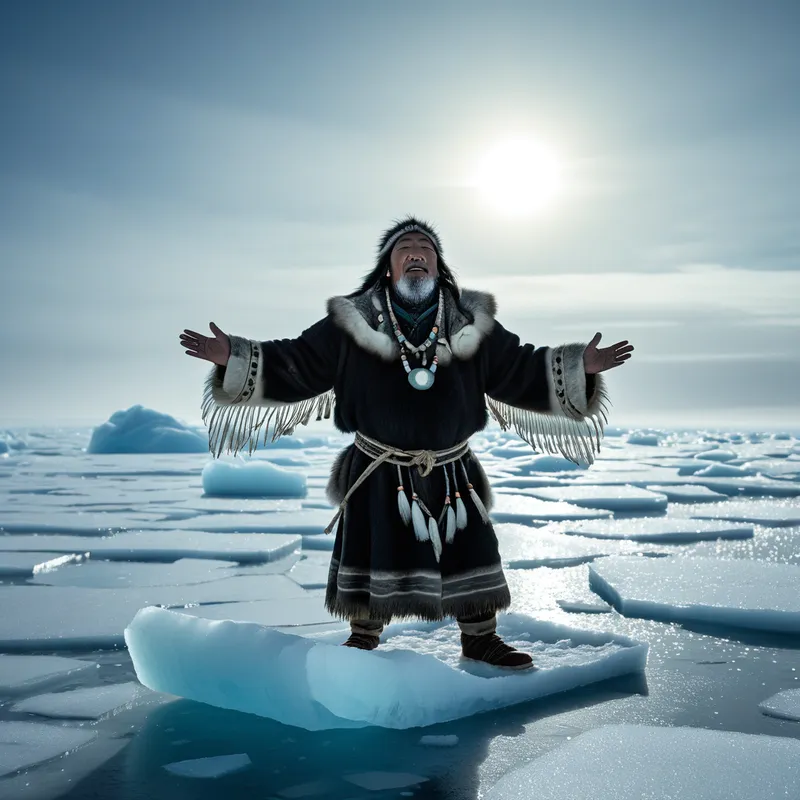
One night, under the swirling, silent dance of the lights, Angakkuq walked out beyond the last scent of the dogs. He went to a place where the ice groaned like a living thing. He carried no harpoon, no knife. He carried only his song—a low, resonant hum that vibrated in his chest and steamed from his lips. He sang to the bones of the world. He sang of the need for a path where there was none, for a vessel that could carry not just bodies, but purpose.
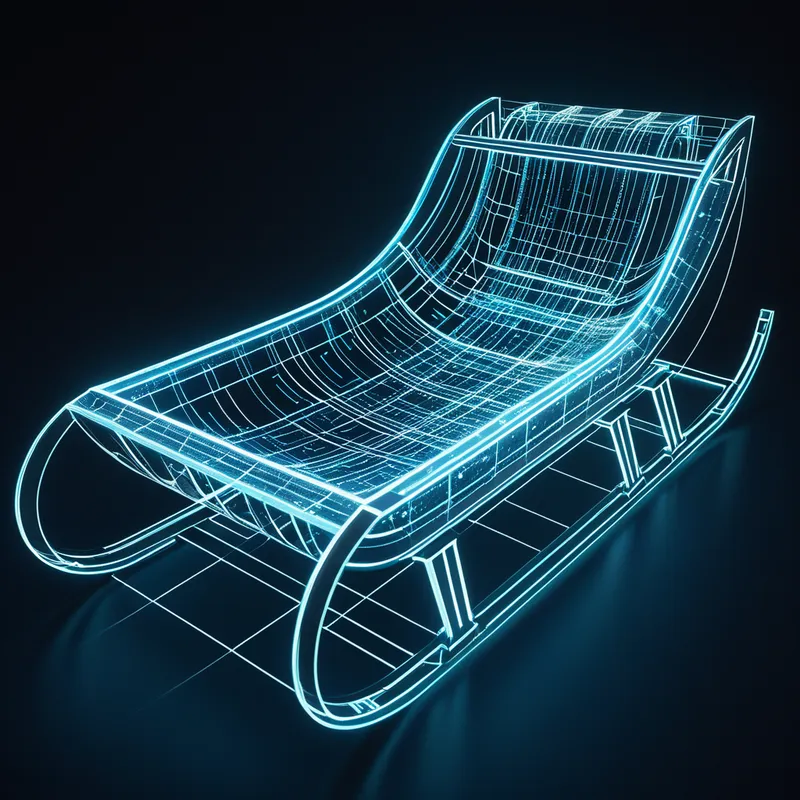
He sang until his voice cracked and the stars themselves seemed to lean closer. Then, he did not take from the land; he gave to it. With a final, breathless note, he pressed his own warmth, his own vitality, into the frozen ground at his feet. The ice did not melt. It transformed. It shimmered, drawing starlight into its heart, pulling the resilience from the whalebone ridges far below, the flexibility from the sinew of the great bears. From the place of his offering, lines of luminous force began to weave themselves—long, graceful runners that curved like smiles, crosspieces that held the strength of mountains.
From the mist of his breath and the last echo of his song, the Qamutiik was born. It was not built; it was conjured. It stood silent and perfect, glowing with a soft, inner light, like captured moonlight on new snow. It felt both ancient and unborn. Without a word, Angakkuq knew. This was the answer. Not a tool for hunting, but a vessel for journeying.
He returned to the People, the Qamutiik gliding soundlessly behind him. They did not cheer; they knelt. For they saw that the sled was empty, yet it was full of potential. The first to step upon it felt not wood or bone, but a thrumming connection to the rhythm of the land itself. When the dogs were harnessed, they did not strain; they ran with the joy of rivers finding the sea. The Qamutiik did not merely cross the ice; it understood it. It found the hidden paths, the safe passages over thin ice, leading the People to the waiting seals, to the migrating caribou. It carried them through the storm, its glow a beacon that the blizzard could not swallow. It became the heartbeat of their travel, the physical manifestation of the path between despair and survival, between being lost and coming home. It was the first journey, and every journey since has been its echo.
Cultural Origins & Context
The story of Qamutiik is not a single, codified myth from a sacred text, but a living narrative breath woven into the practical and spiritual fabric of Inuit life. It emerges from the Inuit Nunangat, where survival is an intimate dialogue with an extreme environment. This tale is a foundational etiological story, explaining the origin of the most crucial piece of material culture: the sled. But in true Inuit fashion, the explanation transcends the merely practical.
Passed down through generations by elders and storytellers, often during the long winter nights in the qarmaq or iglu, the story served multiple vital functions. It encoded essential knowledge about respect for materials (bone, sinew, frozen wood), the sacred relationship between the shaman (Angakkuq) and the community’s well-being, and the profound concept that tools are partners, not just implements. The myth spiritualized the act of travel, transforming the sled from a conveyance into a companion spirit for the journey. It taught that innovation and survival are born not from domination of the land, but from a sacrificial offering of one’s own spirit to it, resulting in a gift that serves all.
Symbolic Architecture
At its core, the Qamutiik is the archetypal vessel of the soul navigating the terrain of existence. Its symbolic architecture is a masterclass in psychological resilience.
The sled is not the journey, but the means of the journey. It is the resilient structure of the Self that makes traversing the chaotic landscape of life possible.
The runners, often said to be forged from starlight and ice, represent the guiding principles, the core values, or the unwavering truths that keep us on course. They must be strong enough to bear weight, yet smooth enough to glide over obstacles. The crosspieces and bindings symbolize the connections and relationships—family, community, tradition—that hold the structure of our identity together under tension. The act of the Angakkuq sacrificing his own warmth is the crucial alchemical ingredient: the sled is animated by conscious intention and personal cost. It is not found; it is earned through a surrender of the ego’s immediate comfort for a greater, communal utility.
The Qamutiik’s ability to find hidden paths speaks directly to the function of intuition and the unconscious. It represents that part of the psyche which knows the way even when the conscious mind (the lost hunter) is blinded by the storm of circumstance. It is the embodied intelligence of adaptation.
The Dreamer’s Resonance
When the symbol of the Qamutiik glides into the modern dreamscape, it often appears during periods of transition, burden, or when one feels tasked with “carrying” something—a project, a family crisis, a personal transformation—across a difficult “frozen” period in life.
To dream of building or finding a Qamutiik suggests the dreamer is in the process of constructing a new psychological structure to navigate a challenge. There is a gathering of inner resources. Dreaming of a broken or stuck sled is a somatic signal of perceived brokenness in one’s support systems, values (the runners), or connections (the bindings). The dream body feels incapable of moving forward.
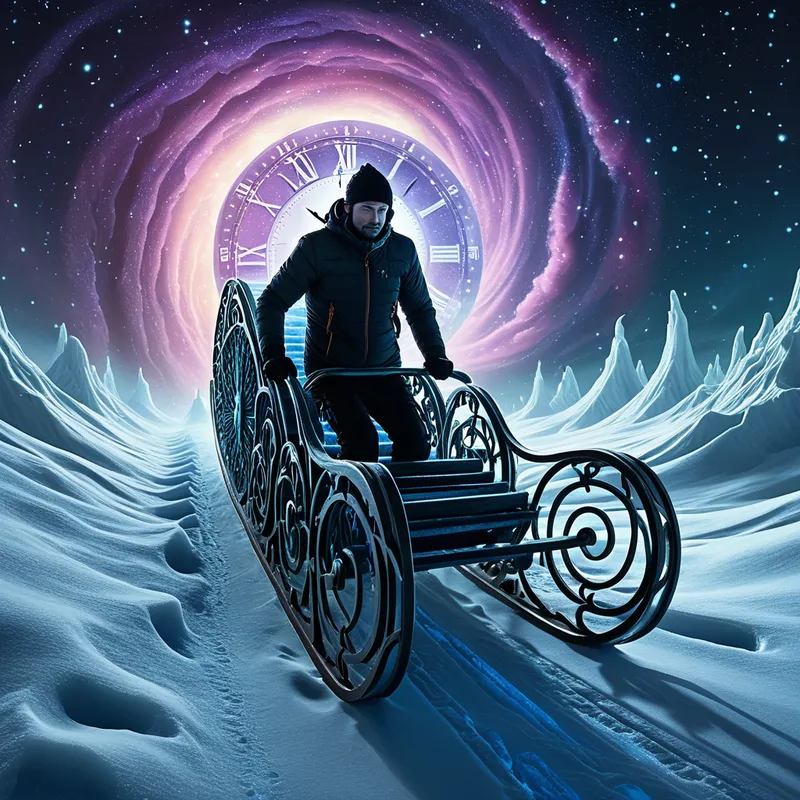
Dreaming of riding or driving a Qamutiik across impossible terrain—star-fields, emotional ice-scapes, dream-tundras—indicates the dreamer is actively engaged in this soul-journey. The smoothness of the ride reflects the degree of inner alignment. A lurching, difficult ride points to internal conflict. The cargo on the sled is paramount: what is the dreamer carrying? Are they hauling shadowy, heavy burdens (unprocessed grief, old identities), or are they transporting something luminous and new (creative potential, a nascent idea)?
Alchemical Translation
The myth of Qamutiik models the individuation process—the Jungian journey toward psychic wholeness—with stark, Arctic clarity. The initial state of the People is one of fragmentation and paralysis, a psychic “hunger.” The Angakkuq represents the emerging conscious ego that recognizes this state and undertakes the work.
His sacrifice is the critical first step of alchemical nigredo, the blackening. It is the surrender of a familiar, ego-bound energy (his personal warmth/vitality) into the cold, unknown ground of the unconscious. This is not an act of loss, but of sacred investment.
The creation that saves the community is forged in the solitary, sacrificial fire of the individual who dares to engage the unknown.
From this dissolution comes the albedo, the whitening: the birth of the luminous Qamutiik. This is the emergence of the Self as a functional, resilient vessel. It is a new psychic structure—the “sled”—that can hold and integrate the complexities of life (the cargo, the terrain). The journey across the ice is the ongoing process of life itself, now made navigable. The sled does not eliminate the harsh landscape (the challenges of reality), but it provides the means to traverse it with purpose and direction, ultimately leading the psyche from a state of being “lost” to a state of dynamic, purposeful movement—the essence of a life in meaning. We are all tasked with singing our unique song into the frozen ground of our circumstances, to conjure the vessel that can carry us home.
Associated Symbols
Explore related symbols from the CaleaDream lexicon: