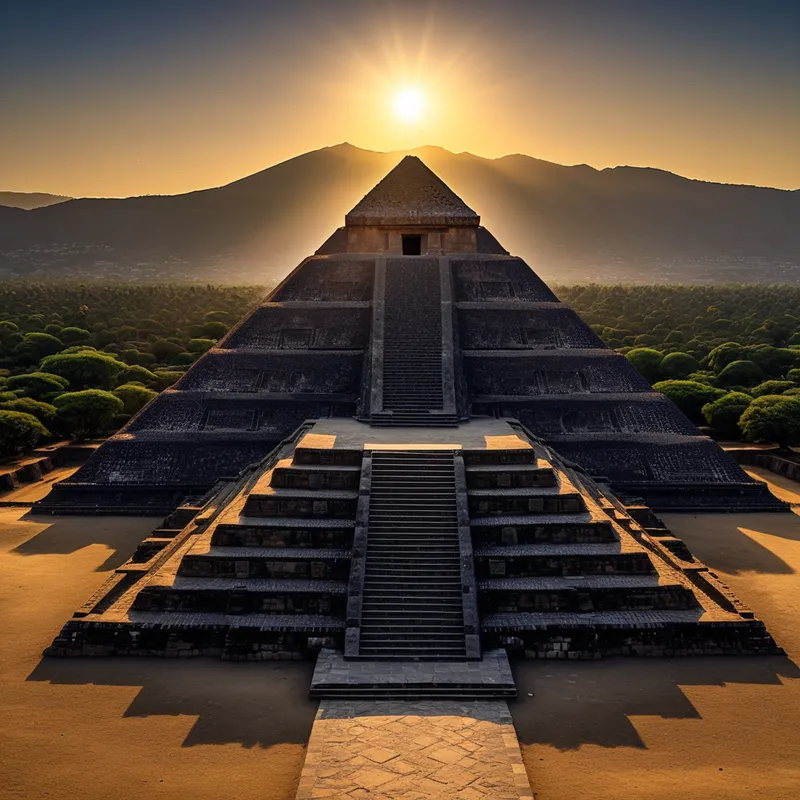
Pyramid of the Sun at Teotihuacan Myth Meaning & Symbolism
A tale of primordial gods sacrificing themselves in a sacred fire to birth the Fifth Sun, establishing Teotihuacan as the birthplace of the current age.
The Tale of Pyramid of the Sun at Teotihuacan
Listen. Before the world you know, there was darkness. Not a simple night, but a profound, silent, and starless dark. The gods gathered in that void, at the place that would be called Teotihuacan. They were weary, for four suns had already perished, each age ending in cataclysm. The earth was formless, and humanity, what little remained, stumbled blindly in the perpetual gloom. A new sun was needed, a Fifth Sun, to set the cosmos in motion once more. But a sun is not simply made; it must be born from the ultimate offering.
The question hung in the sacred silence: “Who will take upon themselves this burden? Who will leap into the divine furnace to become the new sun, to give light and life to this Fifth Age?”
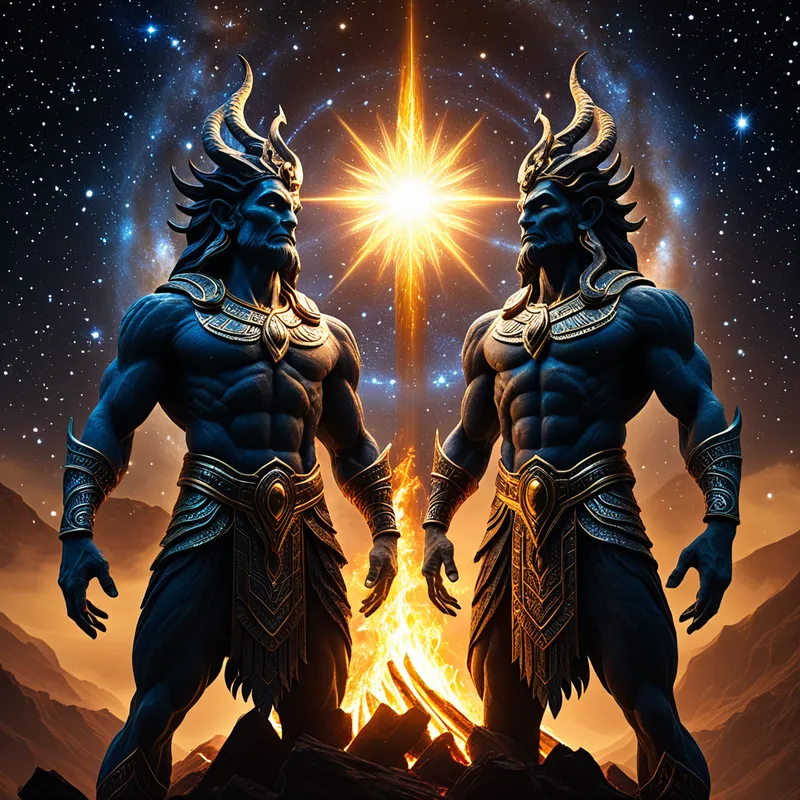
Two gods stepped forward. One was Tecuciztecatl, adorned in rich quetzal feathers and gleaming gold. His pride shone almost as brightly as the potential sun he sought to become. The other was Nanahuatzin, poor and pustulent, his body covered in sores, clad in simple paper garments. He offered no boasts, only a quiet, unwavering resolve.
For four days, they prepared atop the twin pyramids that were their altars. Tecuciztecatl made offerings of precious quetzal plumes, balls of gold, and spines of red coral. Nanahuatzin offered green reeds he had gathered himself, balls of dried grass, and maguey spines coated with his own blood. The other gods built a tremendous, roaring bonfire—a mountain of flame that licked at the fabric of the sky itself.
The moment arrived. The gods called to Tecuciztecatl. “Now! Enter the fire!” The proud god approached the terrifying heat. He hesitated, recoiling from the blistering fury. Four times he tried, and four times his courage failed him, his finery seeming to melt before the flame’s truth.
Then the gods turned to Nanahuatzin. Without a moment’s pause, without a backward glance, the humble god gathered himself. He closed his eyes, not in fear, but in final acceptance. And he ran. He ran and leapt, his paper garments igniting into a brief, bright halo before he was utterly consumed by the sacred blaze.
Witnessing this ultimate act of courage, shamed into true sacrifice, Tecuciztecatl finally found his resolve. He too hurled himself into the inferno. For a time, there was only the crackle of the fire. Then, the heavens began to glow. A magnificent, ruddy light emerged from the east: Nanahuatzin, transformed, rising as the brilliant, life-giving Sun. His light was fierce and true, banishing the primordial dark. Close behind him, another light rose—Tecuciztecatl, become the pale Moon, his brilliance dimmed by his earlier hesitation.
But the new Sun hung motionless in the sky, blazing fiercely. It would not move. The world below began to scorch. The gods understood: the sacrifice was not complete. To set the Sun in its vital dance across the sky, to create the rhythm of days and nights, they too must give of themselves. And so, one by one, the gods of Teotihuacan offered their own lives, their life-force, their very essence, to the wind. Quetzalcoatl blew with all his might, and with the sacred breath of the sacrificed gods behind him, he set the Sun into its eternal, life-giving journey. The Fifth Age had begun, born from the courage of the humble and the final, total offering of the divine.
Cultural Origins & Context
This foundational narrative was recorded by Spanish friars like Bernardino de Sahagún in the 16th century, based on the oral traditions of the Nahua peoples, the cultural inheritors of Teotihuacan. While the great city itself (circa 100 BCE – 550 CE) predates the Aztec empire, the Aztecs, who called themselves the Mexica, revered it as the sacred birthplace of the current cosmic era. They gave it its name and pilgrimaged to its ruins, interpreting its colossal pyramids—the Pyramid of the Sun and the Pyramid of the Moon—as the very altars of this primordial drama.
The myth was not mere entertainment; it was a cosmological charter. It explained the origin of the sun and moon, the necessity of sacrificial exchange for cosmic order (teotl), and the sacred nature of the site itself. It was recited and performed in rituals, intimately linking the authority of the state and the duty of the individual to the foundational act of divine sacrifice. The story served to validate the practice of ritual sacrifice (both human and symbolic) as a necessary, sacred duty to “pay the debt” and keep the sun moving, thus sustaining all life.
Symbolic Architecture
At its core, the myth is an alchemical drama of transformation through self-annihilation. The Pyramid of the Sun is not just a tomb or temple; it is the symbolic furnace of this transmutation.
Nanahuatzin represents the undervalued, wounded, or “impure” aspect of the self—the part we scorn or hide. His disease is not a mark of weakness, but of potent, raw potential. His leap is the ultimate act of humility, which here is not self-abasement, but an ego-shattering surrender to a process greater than oneself. In contrast, Tecuciztecatl symbolizes the ego in its splendid finery—ambitious, identified with its attributes, but ultimately paralyzed by self-preservation. His transformation into the lesser Moon illustrates that when the ego finally submits to the fire of necessity, its light, while still present, is forever changed and contextualized.
The most radiant illumination is born not from the perfection we display, but from the woundedness we courageously consign to the sacred fire.
The immobile Sun represents a creation that is potent but inert. It requires the second, collective sacrifice—the “wind” of the other gods—to be set in motion. This signifies that no true creation, no lasting movement in the psyche or the world, is a solo endeavor. It requires the investment of all our inner “powers” (instincts, thoughts, emotions) to animate the new central principle.
The Dreamer’s Resonance
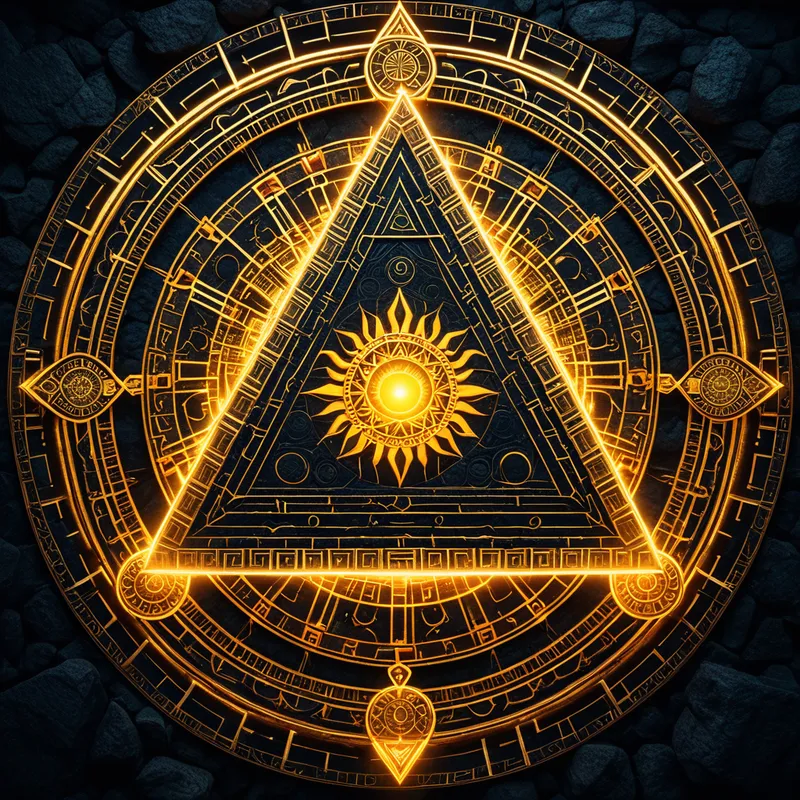
To dream of the Pyramid of the Sun is to encounter the psyche’s own furnace of transformation. The dreamer may find themselves at the base of an impossibly large, dark pyramid, feeling both dwarfed and drawn toward its summit. The structure itself is the dreamer’s looming, monumental task or core complex—a burden that feels ancient and immovable.
The somatic feeling is often one of profound awe mixed with dread—a tightening in the chest, a sense of momentous weight. The dream may involve a difficult, arduous climb, symbolizing the conscious effort toward integration. Alternatively, the dreamer might be standing before a great fire at the pyramid’s peak, faced with the terrifying choice to leap or hold back. This is the psyche presenting the necessity of a “sacrifice”—not of something external, but of an old identity, a cherished self-image, a long-held grievance, or a pattern of pride. The dream asks: What worn-out version of yourself, however splendid or however wounded, are you being called to offer up to become a source of light?
Alchemical Translation
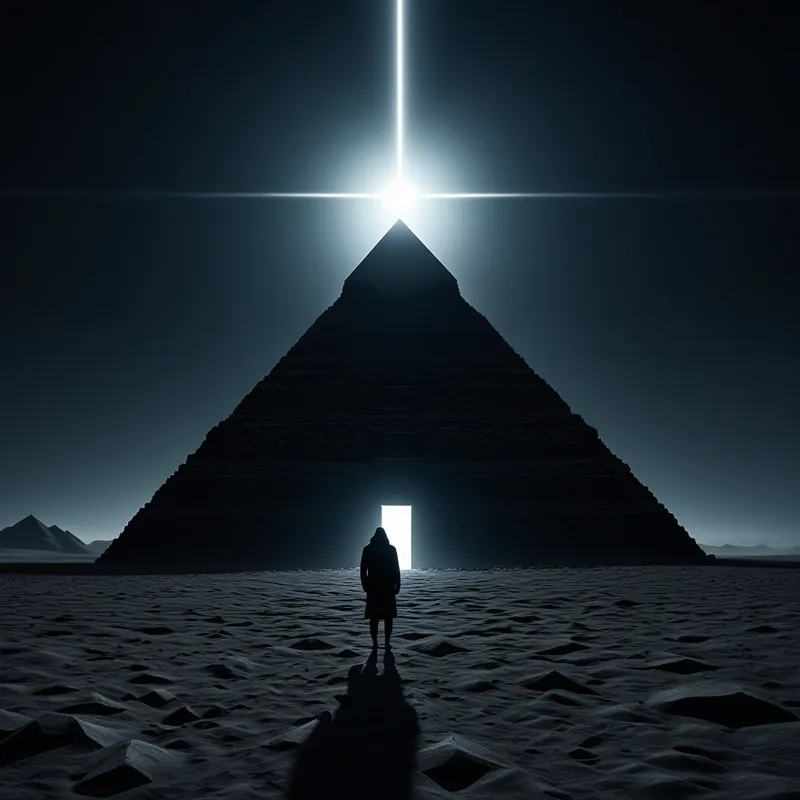
For the modern individual navigating the path of individuation, the myth maps the process of forging a conscious, purposeful life (the moving Sun) from the raw material of the psyche. The first stage is the nigredo: the recognition of our inner Nanahuatzin and Tecuciztecatl—our hidden wounds and our glittering personas. The conflict at the bonfire is the critical moment of separatio and mortificatio, where we must differentiate what is essential from what is ornamental and allow a part of the self to “die.”
The leap into the fire is the ultimate solutio—a dissolution of old structures in the transformative fires of the unconscious. Nanahuatzin’s transformation is the albedo, the emergence of a purer, luminous essence. But the work is not done. The new consciousness, brilliant but static, represents an insight not yet integrated into the flow of daily life.
Individuation is not the creation of a static, perfect self, but the setting in motion of a living sun through the continual sacrifice of outmoded psychic elements.
The final, collective sacrifice is the stage of coniunctio and circulation. It translates as the necessity to invest all facets of our being—our intellect, our creativity, our relationships, our bodily life—into animating this new central attitude. We must “give our breath” to it. The moving Sun is the symbol of a psyche in dynamic, sustainable equilibrium, where the center holds and propels the whole system forward, creating the days and nights—the rhythms of engagement and reflection—that constitute a truly lived life. The pyramid, therefore, stands eternally not as a monument to a finished god, but as an eternal altar where this sacred, interior work is forever performed.
Associated Symbols
Explore related symbols from the CaleaDream lexicon: