
Psyche's Tears Myth Meaning & Symbolism
A mortal woman's love for a god is tested by impossible tasks, her tears becoming the catalyst for divine intervention and ultimate transformation.
The Tale of Psyche’s Tears
Listen, and hear the tale not of a goddess born in splendor, but of a soul born in mortal flesh, whose name was Psyche. Her beauty was so profound it stole the breath from the world, and the very altars of Aphrodite grew cold with neglect. Enraged, the goddess commanded her son, Eros, to make Psyche fall in love with a vile monster. But fate’s arrow flies both ways. Eros, beholding her, pricked himself with his own golden dart. A love deeper than any command took root in the god’s heart.
Psyche was led by oracle to a lonely cliff, where the West Wind, Zephyrus, gently carried her down to a hidden valley of impossible splendor. There, in a palace wrought of light and shadow, she found a husband she could never see. He came only in the profound darkness of night, a voice of honey and starlight, a touch that promised eternity. “You must never seek to see my face,” he whispered. “Trust in the love that holds you.”
For a time, bliss was her cloak. But solitude is a cunning poison. Visiting her sisters, she heard their whispers seed doubt in her heart: “What if he is the serpent-monster the oracle foretold?” Terror and a desperate need to know overcame her. One night, as he slept, Psyche lit an oil lamp and stole a glance. The light fell not on a monster, but on the most beautiful being she could conceive, the god Eros himself, his golden wings folded in peaceful slumber. But a drop of scalding oil fell upon his shoulder. He awoke, his eyes holding the betrayal of shattered worlds. “Love cannot live where there is no trust,” he said, his voice breaking. And he was gone, the palace, the gardens, all dissolving into empty air.
Psyche was alone, truly alone, in a barren field. Her tears were the first rain upon that desolate ground. She wandered, a ghost of her former self, until she came to the temple of her rival, Aphrodite. The goddess, with cruel delight, set forth four impossible tasks to break her.
She sorted a mountain of mixed grains before dawn, aided by an army of compassionate ants. She gathered golden wool from fierce, sun-grazing sheep, instructed by a whispering reed to collect the fleece caught on thorns at twilight. She filled a crystal vial with water from the source of the rivers Styx and Lethe, which sprang high on an unscalable cliff, guarded by sleepless dragons. Here, Psyche stood defeated. The cliff was a wall of black glass, the waters roared far above, and the dragons’ eyes were cold fire. She knew she could not prevail. In absolute despair, she sank to her knees. She did not rage. She simply wept. Her tears were not for her life, but for the love she had lost through her own doubt, for the beauty she had broken.
Her sincere sorrow moved the universe itself. From the high crag, Zeus’s own eagle, the emblem of sovereign power, swooped down. It took the vial from her trembling hands, soared past the dragons, filled it with the terrible black water, and returned it to her. Her tears of surrender had called forth divine aid where her striving could not.
The final task was a descent to the Underworld itself, to fetch a box of beauty from Persephone. Instructed not to open it, she succeeded in her grim journey. Yet, upon returning to the light, a new doubt arose: perhaps she should use this divine beauty to win Eros back. She opened the box. But it contained not beauty, but the sleep of death itself, and she fell lifeless to the earth.
It was here, at the absolute end of her mortal journey, that Eros, his wing healed, flew to her. He wiped the death-sleep from her eyes and lifted her. “See what your curiosity has done again,” he chided, but his voice was now filled with love, not anger. “But you have also done what no mortal has: you have labored, you have wept, and you have proven your soul.” He appealed to Zeus, who granted Psyche immortality. The wedding of Eros and Psyche was celebrated by all the gods, and from their union was born a daughter named Voluptas—Joy.

Cultural Origins & Context
This exquisite narrative comes to us from the Latin novel Metamorphoses (also known as The Golden Ass) by Apuleius, written in the 2nd century CE. While Apuleius was a Roman writer, the myth’s characters, settings, and divine machinery are profoundly Greek, reflecting the deep cultural syncretism of the Hellenistic and Roman eras. It is a literary myth, not a cult hymn, told within a larger, picaresque frame story. Its function was entertainment, moral instruction, and philosophical allegory. In a world where mystery religions like the cults of Demeter and Dionysus promised salvation and personal communion with the divine, the tale of Psyche served as a powerful allegory for the soul’s (ψυχή, psūkhē) arduous journey toward divine union and eternal bliss, a central concern in later classical spirituality.
Symbolic Architecture
The myth is a masterful map of the soul’s individuation. Psyche, the human soul, begins in a state of unconscious beauty, worshipped for her exterior but ignorant of her own interior depth. Her invisible husband, Eros, represents the animating principle of deep, instinctual, often unseen love and desire that connects the psyche to the divine. The prohibition against seeing him is the necessary darkness of the unconscious, where transformation occurs without the harsh light of the critical, analytical ego.
The soul’s greatest task is not to conquer the world, but to endure the revelation of its own sacred darkness.
Her transgression—lighting the lamp—is the inevitable rise of consciousness, the ego’s need to analyze and define the numinous. This “fall” into consciousness is both a catastrophe and the beginning of the true journey. The four impossible tasks are the ordeals of psychological maturation: sorting confusion (the grains), integrating dangerous, potent energies (the golden sheep), confronting the ultimate, annihilating truths of existence (the waters of Styx and Lethe), and finally, facing the realm of the repressed and the ancestral (the Underworld). Her tears at the foot of the unscalable cliff are the critical pivot. They represent the ego’s surrender, the moment when striving ceases and the conscious self admits its absolute limitation. This authentic humility, this grief that is not self-pity but profound recognition of loss, opens the channel for the Self (symbolized by Zeus’s eagle) to intervene.

The Dreamer’s Resonance
When this mythic pattern stirs in modern dreams, it often manifests as sequences of impossible tests, being lost in labyrinthine spaces, or encountering a profoundly beautiful or terrifying beloved who remains just out of sight or touch. The somatic feeling is one of exquisite longing mixed with deep anxiety. Dreaming of weeping, especially tears that feel transformative—tears of light, of crystal, or of black water—can signal this specific psychic process. The dreamer is in the throes of a “sacred descent,” where an old container of identity (the invisible, blissful palace) has been shattered by the emergence of a new level of consciousness or a painful truth. The psyche is now in the laborious phase of rebuilding through ordeal, where the only way forward is through the conscious endurance of sorrow, doubt, and seemingly futile effort.
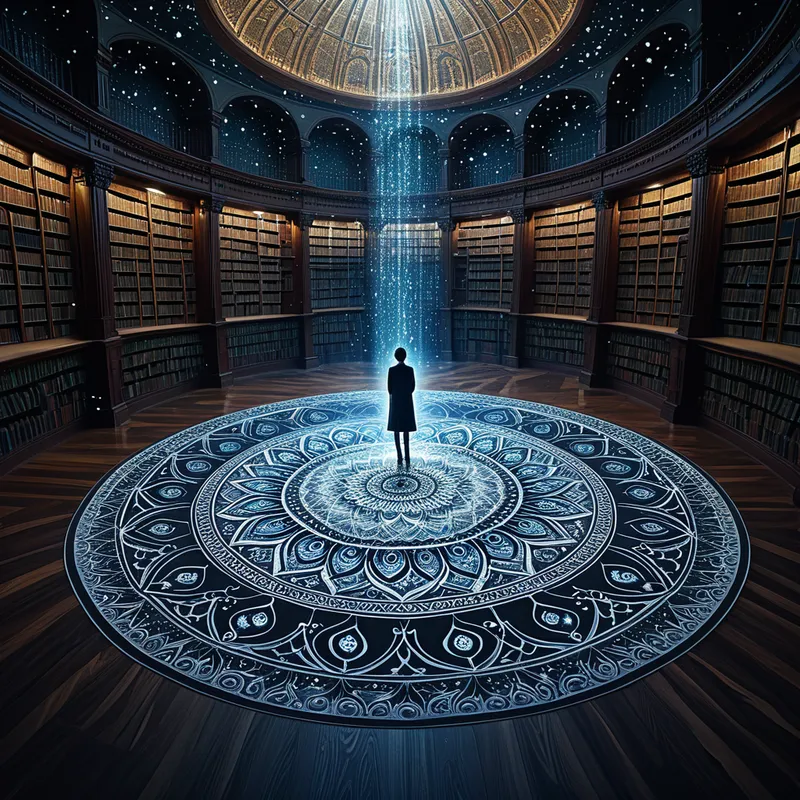
Alchemical Translation
The alchemy of Psyche’s tears models the complete process of psychic transmutation. The base material is the naive, projected soul (unconscious beauty). The nigredo, or blackening, is her exile and despair—the dissolution of her former world. The four tasks are the albedo and citrinitas, the whitening and yellowing, the painful purification and burning away of impurities like pride, doubt, and fear.
The vial filled by the eagle is the moment when the personal will yields to the transpersonal, and the individual is acted upon by the greater Self.
Her final failure—opening the box—is a crucial, paradoxical step. It is the ego’s last, reflexive grasp for control, which leads to a symbolic death. This is the necessary mortificatio. Only from this “death” can the true, immortal union be born. Eros reviving her is the archetypal lover uniting with the now-tempered soul, a coniunctio oppositorum (union of opposites) that births Voluptas—not mere pleasure, but the profound joy of a psyche that has become whole and conscious. For the modern individual, the myth instructs: the path to wholeness is not avoiding error or darkness, but fully living through the consequences of your curiosities and failures, allowing your genuine tears of surrender to become the solvent that dissolves the barrier between your striving humanity and the waiting, divine aid within your own depths.
Associated Symbols
Explore related symbols from the CaleaDream lexicon: