
Prospero Myth Meaning & Symbolism
An exiled duke, a sorcerer on a wild isle, commands spirits and storms to orchestrate justice, only to renounce his art for a deeper, human wisdom.
The Tale of Prospero
Listen, and I will tell you of a man who was a storm, and of the great calm he had to learn.
Once, in the city of Milan, there was a duke named Prospero. His true dukedom was not of land, but of the mind. He dwelled in his library, a world of vellum and vision, communing with secrets older than stone. His brother, Antonio, hungered for a simpler power—the clink of coin, the whisper of courtiers. While Prospero’s gaze was turned inward, to the architecture of the cosmos, Antonio’s gaze fixed on his brother’s throne. With false promises and the king of Naples as his ally, Antonio cast Prospero and his infant daughter, Miranda, adrift upon the salt-wild sea in a rotten hull, expecting the waves to swallow them whole.
But the deep has its own justice. They washed ashore on an island that was less a place and more a state of being—a liminal realm between the human world and the raw, singing pulse of nature’s spirit. Its previous lord was a witch, Sycorax, who had bound the island’s airy spirit, Ariel, into a cloven pine for refusing her cruel commands. Prospero, with his art, freed Ariel, and the spirit, in a debt of gratitude mixed with yearning for final liberty, became the instrument of his will. The island’s sole other inhabitant was Caliban, a creature of earth and appetite, whom Prospero first taught language, only to enslave him when he sought to violate Miranda.
Twelve years passed. The island became Prospero’s laboratory, his kingdom, and his prison. Then, the heavens conspired. A ship carrying his old enemies—Antonio and the King of Naples, Alonso—sailed close by. With a gesture and an incantation that drew the very breath from the sky, Prospero, through Ariel, summoned a tempest of terrifying beauty. The ship was wrecked, its passengers scattered in believing groups along the shore, each group trapped in a waking dream of his design.
What followed was not a war, but a symphony of manipulated perception. Ariel, as a harpy, confronted the guilty men with a spectral feast that vanished into dust. Ferdinand, Alonso’s son, was led to Miranda, and their love blossomed like an impossible flower in the wilderness. Meanwhile, Caliban conspired with two drunken fools from the ship to murder Prospero, a plot as clumsy as it was desperate.
At the climax, Prospero stood before the assembled, bewildered court. He wore not the robes of a vengeful sorcerer, but the simple weeds of the Duke of Milan, long thought dead. The revelation was a thunderclap of silence. He spoke not of punishment, but of restoration. He recounted his wrongs with a weary clarity, then forgave them, demanding only his dukedom back. He promised calm seas and kindly winds for their return. Then, in a moment that hushed the universe, he called for Ariel one last time to perform a final, tender service, before setting the spirit free to the elements. He broke his staff, drowned his book of magic deeper than ever plummet sounded, and turned to face the world, a man once more, ready to go home.

Cultural Origins & Context
This is not a myth from the misty dawn of time, but a conscious creation from the twilight of the Renaissance, born from the quill of William Shakespeare in his play The Tempest (c. 1611). It exists at a crossroads: the medieval worldview of magic and spirits colliding with the burgeoning humanism of the early modern age. It was performed for the court of King James I, a monarch fascinated by witchcraft and sovereignty, making its meditation on legitimate rule profoundly contemporary.
The tale was passed down not by oral bards around a fire, but by actors on a wooden stage, its magic conjured through language, costume, and the audience’s collective imagination. Its societal function was complex. It served as a commentary on colonial encounters (the “brave new world” of the Americas), on the responsibilities of power, and on the artist’s own role—the playwright as a Prospero, orchestrating events on the stage-island of the Globe Theatre, before retiring and breaking his imaginative staff.
Symbolic Architecture
Prospero is the archetype of the conscious mind, the ego, exiled from its rightful place by the shadowy, ambitious complexes of the unconscious (Antonio). The island is the psyche itself—a wild, fertile, and potentially terrifying inner landscape one is shipwrecked upon by life’s betrayals.
Ariel is the spirit of intellect, imagination, and intuition—the psychic energy that can be bound by the cruel spells of unresolved trauma (Sycorax) or liberated and harnessed by conscious discipline. Caliban is the embodied instinct, the shadow of the flesh, the part of nature that is resistant to, and corrupted by, forced civilization.
The tempest is the necessary psychic cataclysm, the emotional storm that must be raised to bring the contents of the unconscious (the guilty parties) to the shore of awareness for reconciliation. Prospero’s “rough magic” is the directed force of will and art used to re-order a shattered world.
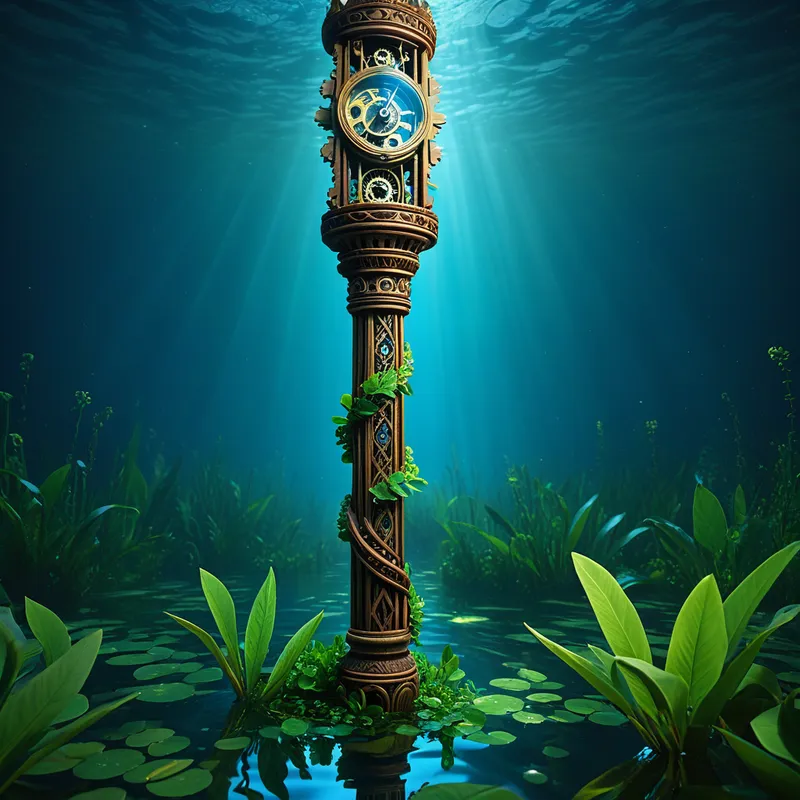
The drowning of the book and breaking of the staff is the ultimate symbolic act: the transcendence of the tools of control for the sake of integration. One cannot live forever in the magic circle of the isolated, controlling mind. Life demands a return to the shared, imperfect, human community.
The Dreamer’s Resonance
To dream of Prospero’s isle is to dream of a time of forced introspection and potent, lonely authority. You may dream of commanding elements or spirits (Ariel), representing a period where your intellect or creativity is powerfully in service to a goal, but may feel like servitude. Dreaming of a cherished, hidden study or library signifies a retreat into the self for knowledge and recovery.
Conversely, dreaming of being Caliban—feeling monstrous, enslaved, and misunderstood—points to a somatic or instinctual part of yourself that feels colonized by your own intellect or societal demands, crying out for recognition, not punishment. A dream of breaking a wand or throwing a key into the sea often surfaces at life’s major transitions, signaling the psyche’s readiness to relinquish an old identity or strategy that, however powerful, has become a prison. The somatic process is one of releasing a long-held tension in the body—the magician’s grip—and allowing a softer, more vulnerable posture to emerge.

Alchemical Translation
The myth of Prospero is a perfect map of the individuation process. The initial state is Nigredo: the blackening, the betrayal and exile, the shipwreck into the chaos of the unconscious.
The twelve years on the island represent the Albedo: the whitening, the purification and study. Here, the magician sorts the psyche, freeing the trapped spirit (Ariel/inspiration) and confronting the base shadow (Caliban). The orchestration of the tempest and the manipulation of the shipwrecked souls is the Citrinitas: the yellowing, the application of hard-won wisdom to actively engage with and re-order one’s inner conflicts and past traumas.
The final act—the forgiveness, the abjuration of magic, the freeing of Ariel—is the Rubedo: the reddening, the culmination. This is not a victory of power, but its transcendence. The magical, isolated ego-consciousness surrenders its supreme authority to achieve a higher synthesis. Prospero integrates his shadow (forgives his brother), acknowledges his soul (releases Ariel), and accepts his embodied humanity (returns to Milan). He transmutes the base metal of vengeful isolation into the gold of compassionate, embodied wisdom. He becomes, at last, not the ruler of an island, but a citizen of the world.
Associated Symbols
Explore related symbols from the CaleaDream lexicon: