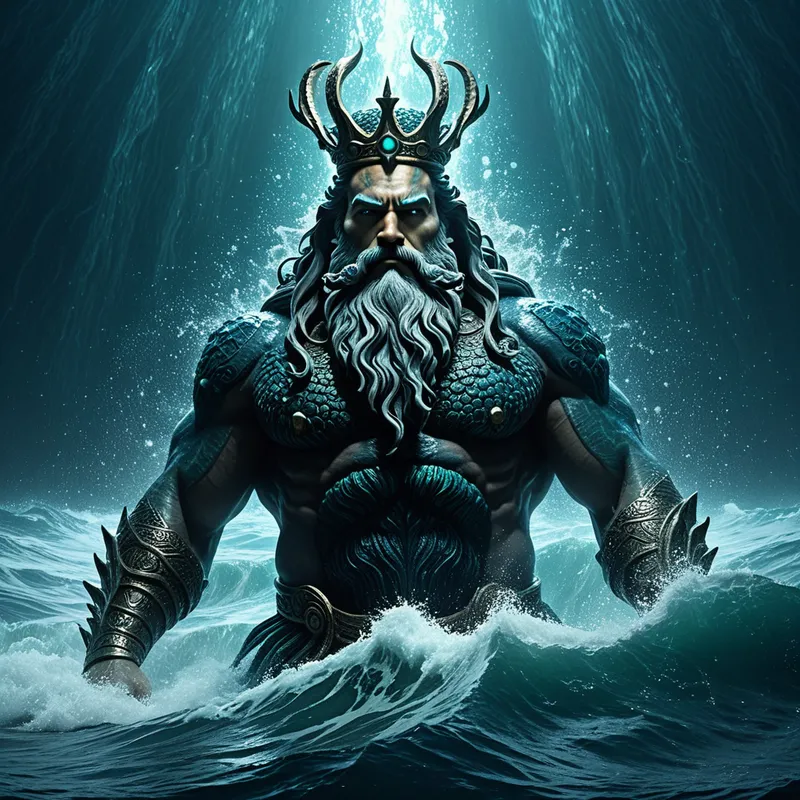
Pontus Myth Meaning & Symbolism
Pontus is the primordial sea, born of Gaia. He is the dark, fertile abyss from which ancient marine life and monstrous forms first emerged.
The Tale of Pontus
Before the sun knew its path, before [the wind](/myths/the-wind “Myth from Various culture.”/) had a name to whisper, there was the Gap. Gaia, the wide-breasted land, lay in the embrace of this formless dark, and from her own fertile essence, without consort, she brought forth a son. He was not a god of shores or sailors, but of [the Abyss](/myths/the-abyss “Myth from Kabbalistic culture.”/) itself. His name was Pontus, and he was [the Sea](/myths/the-sea “Myth from Greek culture.”/).
He did not rise from the waves; he was the waves. His body was the cold, black deep that drank the first light and gave nothing back. His breath was the salt-tang that scoured the bare rock of his mother’s newly formed bones. In that primeval silence, broken only by the slow pulse of tidal hearts not yet beating, Pontus stretched. His domain was the featureless, the boundless, the potential that churned in absolute darkness.
From his union with his mother Gaia—a union of depth with solidity, of the hidden with the manifest—life first stirred. But it was not the life of the sunlit world. From the fertile murk of Pontus came the ancient ones: Nereus, the Old Man of the Sea, truthful and prophetic. Thaumas, the Wonder, whose children would be [the Harpies](/myths/the-harpies “Myth from Greek culture.”/) and the rainbow. Phorcys and Ceto, the dread couple who spawned a brood of monsters—the Gorgons with serpent hair, [the Graeae](/myths/the-graeae “Myth from Greek culture.”/) who shared one eye, [the dragon](/myths/the-dragon “Myth from Chinese culture.”/) [Ladon](/myths/ladon “Myth from Greek culture.”/). These were his children: the strange, the terrible, the wondrous, all born from the unlit, fecund deep.
Pontus watched, a silent, pervasive presence, as his grandchildren and great-grandchildren—[the Nereids](/myths/the-nereids “Myth from Greek culture.”/), the rivers, the monsters—populated his realm. He was the canvas upon which the drama of later gods would be painted, the foundational darkness against which the glittering forms of Zeus and [Poseidon](/myths/poseidon “Myth from Greek culture.”/) would later shine. He did not rule; he simply was. The conflict was not his, but inherent in his nature: the tension between the fertile void and [the forms](/myths/the-forms “Myth from Platonic culture.”/) it begot, between the silent origin and the noisy, clashing world of shapes that emerged from it. His resolution was his eternal existence. While Olympians fought and loved and schemed in the light above, Pontus remained below, the profound, generative dark, the first father of all that is hidden, strange, and emergent from the deep.
Cultural Origins & Context
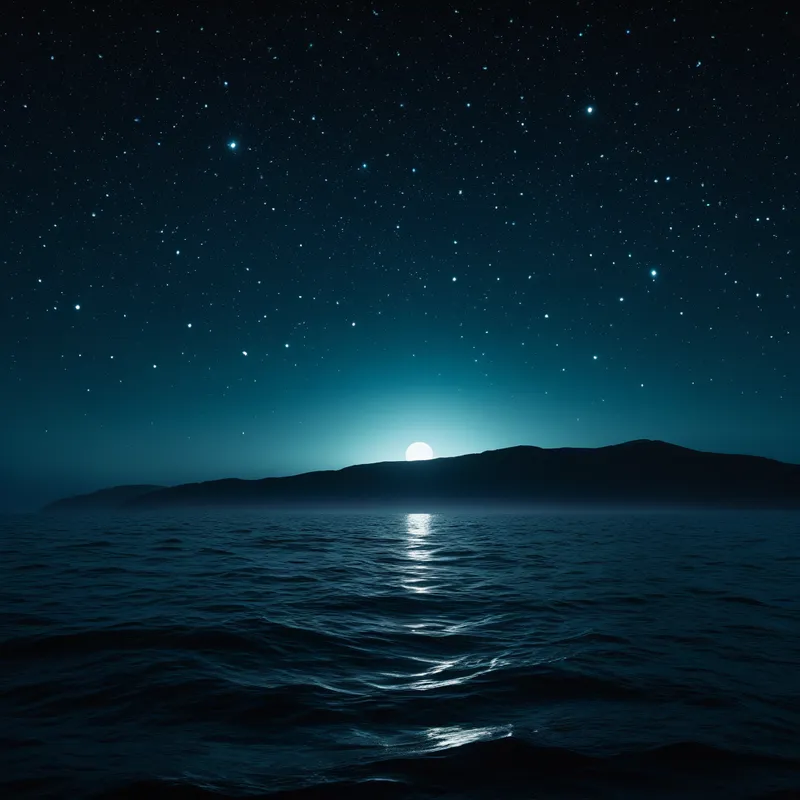
The myth of Pontus is not a narrative with a plot, but a foundational statement of origin embedded within the earliest Greek cosmogonic poetry, most notably in Hesiod’s Theogony (c. 700 BCE). In an oral culture where genealogy was a primary tool for mapping reality, Pontus’s place in the family tree of the gods is profoundly significant. He is not a god worshipped in city-states with temples and festivals; he is a primordial force given a name and a lineage to explain the very existence of the sea as a cosmic principle.
His story was passed down by bards and poets who served as the philosophers and scientists of their time, structuring chaos into a comprehensible, familial order. By making Pontus a child of Gaia alone, born after Chaos and before the starry [Uranus](/myths/uranus “Myth from Greek culture.”/), the tradition establishes the sea as a fundamental, auto-generated element of [the world](/myths/the-world “Myth from Tarot culture.”/)-body. It exists independently of [the sky](/myths/the-sky “Myth from Persian culture.”/), emerging directly from the substance of [the Earth](/myths/the-earth “Myth from Hindu culture.”/). This mythic genealogy served a societal function of orientation. It answered the profound, looming question posed by the Mediterranean itself: where did this vast, terrifying, life-giving, and treacherous expanse come from? The answer: it is our world’s own firstborn, dark child, the source of both wonder and terror.
Symbolic Architecture
Pontus represents the primordial, unstructured potential of the unconscious. He is not [the personal unconscious](/myths/the-personal-unconscious “Myth from Jungian Psychology culture.”/) of repressed memories, but the collective, impersonal, and fecund [depths](/symbols/depths “Symbol: Represents the subconscious, hidden emotions, or foundational aspects of the self, often linked to primal fears or profound truths.”/) from which all psychic [life](/symbols/life “Symbol: The symbol of ‘Life’ represents a journey of growth, interconnectedness, and existential meaning, encompassing both the joys and challenges that define human experience.”/) first emerges.
He is the dark water of the psyche before the ego, the “I,” has formed to look upon its own reflection.
As the [father](/symbols/father “Symbol: The father figure in dreams often symbolizes authority, protection, guidance, and the quest for approval or validation.”/) of Nereus (“the Old Man of the Sea”), he symbolizes the [source](/symbols/source “Symbol: The origin point of something, often representing beginnings, nourishment, or the fundamental cause behind phenomena.”/) of deep, instinctual wisdom and [prophecy](/symbols/prophecy “Symbol: A foretelling of future events, often through divine or supernatural means, representing destiny, fate, and hidden knowledge.”/) that arises from these depths. As the [father](/symbols/father “Symbol: The father figure in dreams often symbolizes authority, protection, guidance, and the quest for approval or validation.”/) of Phorcys and Ceto, he is equally the [source](/symbols/source “Symbol: The origin point of something, often representing beginnings, nourishment, or the fundamental cause behind phenomena.”/) of the monstrous, the shadowy, and the terrifying aspects that we instinctively recoil from. This is the core symbolic [architecture](/symbols/architecture “Symbol: Architecture in dreams often signifies structure, stability, and the framing of personal identity or life’s journey.”/): the deep is neutral. It is simply fertile. It generates both the nurturing, guiding figures and the terrifying, chaotic ones. Pontus himself is ambivalent—neither good nor evil, but profoundly creative in a way that includes all possibilities, especially those the conscious mind deforms into monsters.
He is the psychological equivalent of the oceanic feeling, the undifferentiated state of early [infancy](/symbols/infancy “Symbol: A symbol of beginnings, vulnerability, and foundational development, often representing a return to origins or a state of pure potential.”/), and the creative void from which art, innovation, and madness can equally spring. His [marriage](/symbols/marriage “Symbol: Marriage symbolizes commitment, partnership, and the merging of two identities, often reflecting one’s feelings about relationships and social obligations.”/) to Gaia symbolizes the necessary union of the unconscious (sea) with the conscious, embodied world ([earth](/symbols/earth “Symbol: The symbol of Earth often represents grounding, stability, and the physical realm, embodying a connection to nature and the innate support it provides.”/)) for anything of substance to be born into [reality](/symbols/reality “Symbol: Reality signifies the state of existence and perception, often reflecting one’s understanding of truth and life experiences.”/).
The Dreamer’s Resonance
When the pattern of Pontus stirs in modern dreams, it announces a confrontation with the primordial layer of the [psyche](/myths/psyche “Myth from Greek culture.”/). This is not a dream about a specific problem, but about the ground of being from which problems and solutions alike emerge.
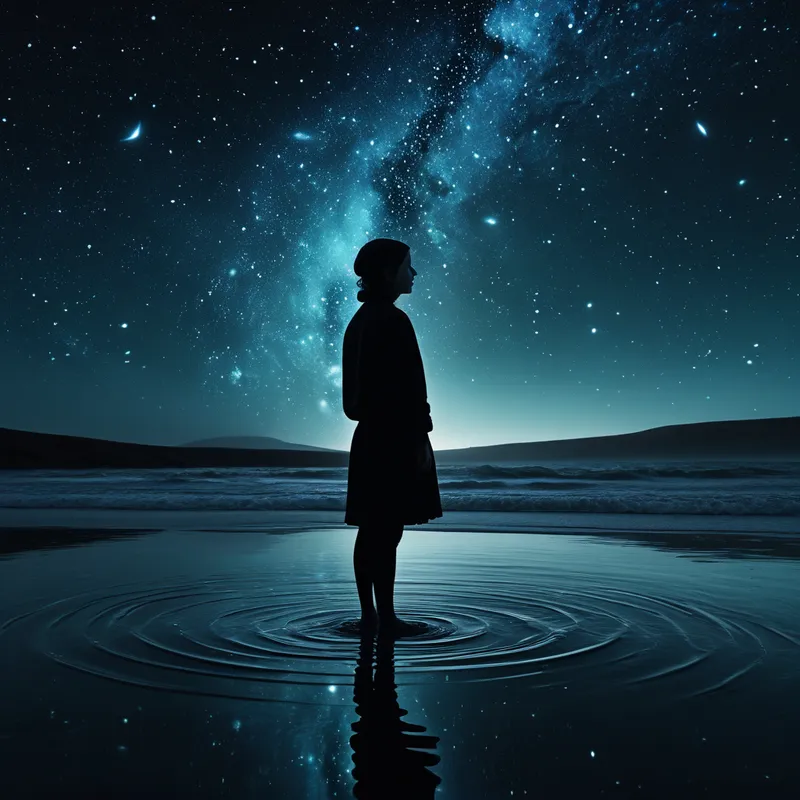
The dreamer may find themselves on the shore of a vast, dark, and calm ocean under a starry sky, feeling both profound peace and existential dread. They may dream of diving into impossibly deep, clear [water](/myths/water “Myth from Chinese culture.”/) where strange, beautiful, and slightly frightening archaic creatures (fish with ancient faces, bioluminescent jellies in the shape of symbols) drift silently. The somatic experience is one of weightlessness, pressure, and coolness. There is often a profound silence.
Psychologically, this indicates a process of re-sourcing. The conscious ego is being invited, or compelled, to remember its origins in a much vaster and older system. It is a dream of de-integration, where the familiar structures of identity temporarily dissolve back into the potential from which they were formed. This can be terrifying (encountering the “monstrous” children of Pontus) or profoundly healing (encountering the “prophetic” wisdom of Nereus). The process is one of touching the bedrock of [the self](/myths/the-self “Myth from Jungian culture.”/), before personality, before trauma, before story—a return to the primal creative matrix.
Alchemical Translation
The alchemical journey modeled by Pontus is the [Nigredo](/myths/nigredo “Myth from Alchemical culture.”/), not as a stage of despair, but as the essential, initial dissolution into the massa confusa. For the modern individual seeking individuation, the myth instructs that one must first become Pontus.
The triumph is not in slaying the monster from the deep, but in first acknowledging that you are born from the same source as the monster.
The psychic transmutation begins with a courageous descent into one’s own primordial state. This means allowing the conscious identity to be dissolved—not destroyed, but returned to its component parts in the inner sea. It is a voluntary immersion in the unstructured feelings, the chaotic impulses, the forgotten memories, and the raw, unedited potential that lies beneath the [persona](/myths/persona “Myth from Greek culture.”/). This is the “sea” from which one’s personal Nereus (inner wisdom), Thaumas (capacity for awe), and yes, one’s personal Phorcys and Ceto (shadow complexes, innate fears) all emerge.
The alchemical work is to hold this massa confusa, this salty, dark, fertile soup of the self, without rushing to form it into something acceptable. It is to be [the vessel](/myths/the-vessel “Myth from Alchemical culture.”/) that contains the deep. From this patient, respectful containment—this symbolic marriage of the conscious vessel (Gaia) to the unconscious content (Pontus)—the true, authentic, and often unexpected forms of one’s being can eventually coalesce and rise to the surface. The individual does not conquer the deep; they learn to be its conscious shore, allowing its timeless, creative tides to shape them.
Associated Symbols
Explore related symbols from the CaleaDream lexicon: