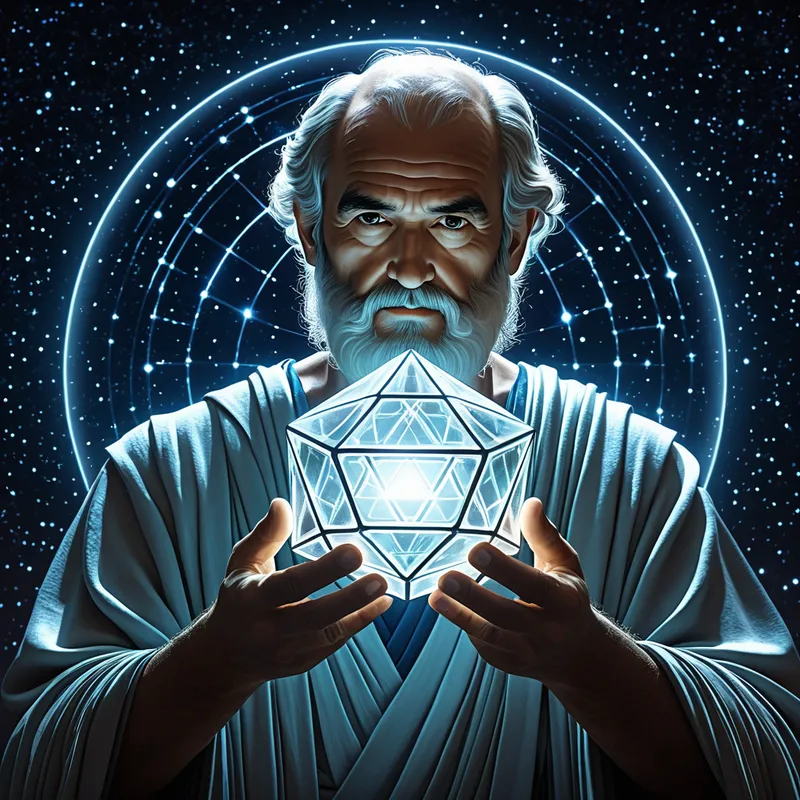
Platonic Solids Myth Meaning & Symbolism
The tale of the five perfect forms, the sacred geometry at the heart of the cosmos, given as the divine blueprint for all material existence.
The Tale of Platonic Solids
Listen, and I will tell you of the shapes that hold up [the world](/myths/the-world “Myth from Tarot culture.”/). Before the marble was quarried, before the first city was raised, there was a silence in the mind of the cosmos. It was a silence not of emptiness, but of potential, humming with a music not yet given form.
In this pregnant stillness dwelt the great geometer, the divine artisan. Some call him the Demiurge, the shaper of the All. He looked upon the swirling, chaotic Kháos and saw not disorder, but a [sleeping beauty](/myths/sleeping-beauty “Myth from Greek culture.”/) waiting for a frame. His tools were not hammer and chisel, but the unbreakable laws of number and ratio. His workshop was the boundless void, his lamp the light of pure reason.
He reached into the formless substance and began to impose limit. His first thought was of [the hearth](/myths/the-hearth “Myth from Norse culture.”/), the stable center. From this intention, he drew forth the Tetrahedron—a pyramid of four perfect triangles, sharp as a flame’s point, the very essence of fire itself. It crackled into being, a seed of transformation.
His second thought was of the solid ground, the unshakable foundation. From this, he manifested the Hexahedron—the cube. Its faces were plains, its angles true, the embodiment of steadfast earth. It settled, heavy and eternal.
Then, he thought of the flowing, the mutable, the clear. From the essence of liquidity, he conjured the [Icosahedron](/myths/icosahedron “Myth from Greek culture.”/). With its twenty faces, it rolled like a droplet perfected, the archetype of all [water](/myths/water “Myth from Chinese culture.”/).
His fourth thought took flight on [the wind](/myths/the-wind “Myth from Various culture.”/). For the intangible, the swift, the breath of life, he formed the Octahedron. It spun on a whisper, its eight faces catching the light like a gust given crystalline form, the perfect shape of air.
Four shapes for [four elements](/myths/four-elements “Myth from Greek culture.”/). The cosmos now had its vocabulary: fire, earth, water, air. But [the Demiurge](/myths/the-demiurge “Myth from Gnostic culture.”/) paused. The workshop of creation was ordered, yet it felt like a house without a roof, a song without its final, resolving chord. There was a fifth essence, a substance not of the mundane world but of the heavens themselves—the Aithḗr.
For this [quintessence](/myths/quintessence “Myth from Alchemical culture.”/), the substance of the stars and the home of the divine, he needed a shape of profound mystery. One that could contain the others, that spoke of the cosmos as a whole, a sacred vessel. With utmost care, he fashioned the Dodecahedron. Its twelve pentagonal faces seemed to hold a secret, its form the closest to a sphere, the shape of the All. He did not give it to the earthly realm, but used it to decorate the Ouranós, the very vault of [the sky](/myths/the-sky “Myth from Persian culture.”/).
And so, the work was complete. The five perfect bodies, [the Platonic solids](/myths/the-platonic-solids “Myth from Platonic culture.”/), were not mere shapes. They were the divine stamps, the primordial seals pressed into the wax of reality. Every flicker of flame, every grain of soil, every ripple on a pond, every sigh of the breeze, and every glimmering star above—all were but imperfect echoes of these five, perfect, eternal forms.
Cultural Origins & Context
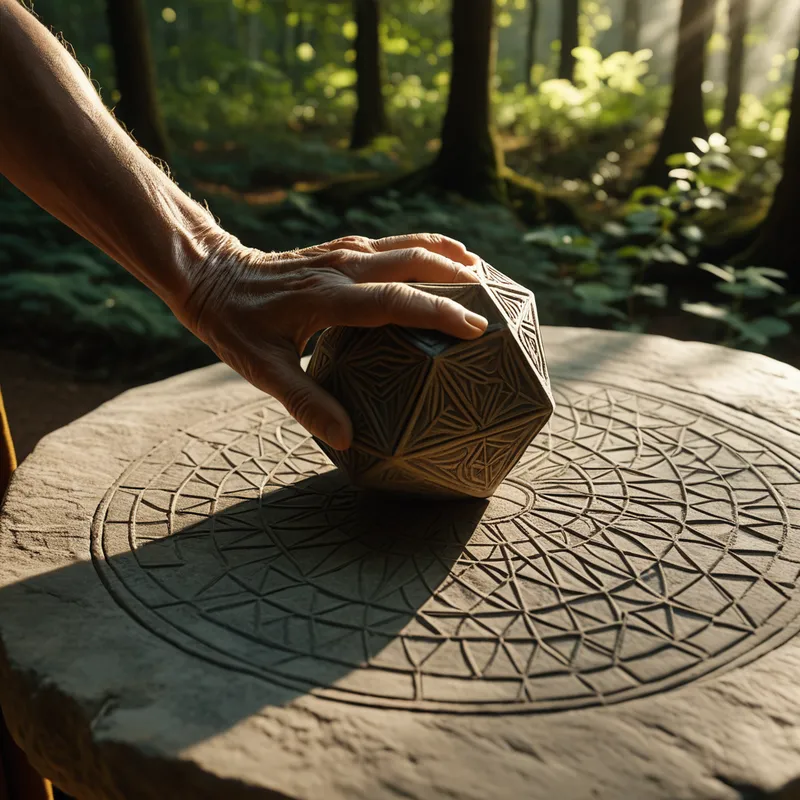
This myth finds its primary vessel not in the epic poetry of [Homer](/myths/homer “Myth from Greek culture.”/) or the plays of the tragedians, but in the philosophical dialogues of Plato, specifically in the Timaeus. Here, the character Timaeus, a learned astronomer from Locri, delivers a “likely story” (eikṓs mŷthos) about the creation of the universe. It is a synthesis, a philosophical myth weaving together earlier Pythagorean mysticism—which held numbers and geometry as divine—with a new, systematic vision of cosmic order.
Its societal function was profound yet exclusive. This was not a populist tale for the Athenian agora, but a teaching for the academy, for those being initiated into a vision of a rational, beautiful, and mathematically ordered cosmos. It served to elevate geometry from a practical art into a theological and metaphysical pursuit. To understand these shapes was to glimpse the very mind of the creator, to participate in divine reason ([Logos](/myths/logos “Myth from Christian culture.”/)). It provided an intellectual and spiritual foundation for the Greek pursuit of harmony, proportion, and ideal form, which would echo through their art, architecture, and astronomy for centuries.
Symbolic Architecture
The myth of the Platonic solids is a monumental [allegory](/symbols/allegory “Symbol: A narrative device where characters, events, or settings represent abstract ideas or moral qualities, conveying deeper meanings through symbolic storytelling.”/) for the [human](/symbols/human “Symbol: The symbol of a human represents individuality, complexity of emotions, and social relationships.”/) [psyche](/myths/psyche “Myth from Greek culture.”/)’s encounter with the underlying [patterns of existence](/symbols/patterns-of-existence “Symbol: Patterns of existence signify the interconnected and cyclical nature of life, symbolizing how experiences and events are recurrent and interrelated.”/). They represent the archetypal blueprints from which the bewildering diversity of the phenomenal world is constructed.
The solids are the alphabet of the visible world; to know them is to read the first language of God.
Psychologically, each solid maps to a fundamental mode of being. The tetrahedron is the [archetype](/symbols/archetype “Symbol: A universal, primordial pattern or prototype in the collective unconscious that shapes human experience, behavior, and creative expression.”/) of focused [energy](/symbols/energy “Symbol: Energy symbolizes vitality, motivation, and the drive that fuels actions and ambitions.”/) and penetrating [insight](/symbols/insight “Symbol: A sudden, deep understanding of a complex situation or truth, often arriving unexpectedly and illuminating hidden connections.”/) (fire). The hexahedron is [the principle](/symbols/the-principle “Symbol: A fundamental truth, law, or doctrine that serves as a foundation for a system of belief, behavior, or reasoning, often representing moral or ethical standards.”/) of [stability](/symbols/stability “Symbol: A state of firmness, balance, and resistance to change, often represented by solid objects, foundations, or steady tools.”/), containment, and the physical [vessel](/symbols/vessel “Symbol: A container or structure that holds, transports, or protects something essential, representing the self, emotions, or life journey.”/) ([earth](/symbols/earth “Symbol: The symbol of Earth often represents grounding, stability, and the physical realm, embodying a connection to nature and the innate support it provides.”/)). The [icosahedron](/symbols/icosahedron “Symbol: A 20-sided Platonic solid representing cosmic order, complexity, and the integration of opposites into a harmonious whole.”/) represents the fluidity of [emotion](/symbols/emotion “Symbol: Emotion symbolizes our inner feelings and responses to experiences, often guiding our actions and choices.”/), adaptability, and the unconscious ([water](/symbols/water “Symbol: Water symbolizes the subconscious mind, emotions, and the flow of life, representing both cleansing and creation.”/)). The octahedron symbolizes the intellect, [clarity](/symbols/clarity “Symbol: A state of mental transparency and sharp focus, often representing resolution of confusion or attainment of insight.”/), and the [movement](/symbols/movement “Symbol: Movement symbolizes change, progress, and the dynamics of personal growth, reflecting an individual’s desire or need to transform their circumstances.”/) of thought (air). The [dodecahedron](/symbols/dodecahedron “Symbol: A twelve-faced geometric solid representing cosmic order, hidden knowledge, and the fundamental structure of reality in Platonic philosophy.”/), encompassing the [cosmos](/symbols/cosmos “Symbol: The entire universe as an ordered, harmonious system, often representing the totality of existence, spiritual connection, and the unknown.”/), is the [symbol](/symbols/symbol “Symbol: A symbol can represent an idea, concept, or belief, serving as a powerful tool for communication and understanding.”/) of the Self—the mysterious, all-containing totality of the psyche that transcends and coordinates the four elemental functions.
The struggle in the myth is not a battle, but the creative [tension](/symbols/tension “Symbol: A state of mental or emotional strain, often manifesting physically as tightness, pressure, or unease, signaling unresolved conflict or anticipation.”/) of bringing order from [chaos](/symbols/chaos “Symbol: In Arts & Music, chaos represents raw creative potential, uncontrolled expression, and the breakdown of order to forge new artistic forms.”/). It models the essential human [task](/symbols/task “Symbol: A task represents responsibilities, duties, or challenges one faces.”/): to find the eternal forms within our own transient and often chaotic experiences.
The Dreamer’s Resonance
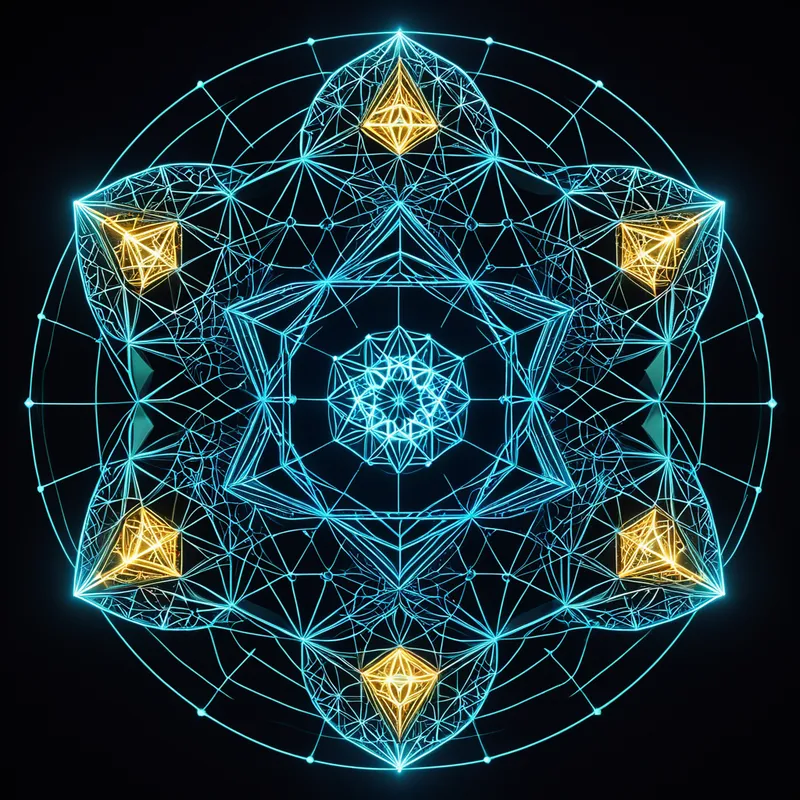
When these forms appear in modern dreams, they rarely manifest as textbook geometric diagrams. Instead, they surface as profound somatic and architectural experiences. One might dream of a house that is inexplicably, perfectly cubic, evoking a feeling of absolute security or, conversely, of stifling confinement. One might find oneself holding a crystal that shifts between a sharp pyramid and a smooth sphere, mirroring an internal conflict between decisive action and holistic acceptance.
A dream of a dodecahedron—perhaps as a strange jewel, a celestial map, or the structure of a vast, empty room—often signals a confrontation with the archetype of [the Self](/myths/the-self “Myth from Jungian culture.”/). It can feel awe-inspiring and terrifying, a call to acknowledge a pattern of wholeness that the conscious ego cannot yet fully comprehend. The body may respond with a sense of vibrational humming, expansion, or a deep, centering calm. Such dreams indicate the psyche is working at a foundational level, attempting to re-order its core structures, seeking the perfect form hidden within the personal chaos.
Alchemical Translation
The alchemical process mirrored in this myth is not the transformation of lead into gold, but of psychic chaos into cosmic order—the opus of individuation. The raw, undifferentiated [prima materia](/myths/prima-materia “Myth from Alchemical culture.”/) of the soul (the chaotic Kháos) must be subjected to the discipline of the “divine geometer” within.
Individuation is the slow, patient work of discovering the five perfect solids hidden in the quarry of one’s own soul.
First, we must identify our elemental components: the fire of our passion and anger (tetrahedron), [the earth](/myths/the-earth “Myth from Hindu culture.”/) of our body and habits (hexahedron), the water of our feelings and instincts (icosahedron), and the air of our thoughts and communications (octahedron). The initial stages of analysis and self-knowledge involve separating and understanding these often-conflicting elements.
[The great work](/myths/the-great-work “Myth from Alchemical culture.”/), however, culminates in the realization of the dodecahedron. This is the coniunctio oppositorum—the marriage of opposites—on a cosmic scale. It is the moment when the integrated psyche no longer experiences itself as a battleground of fire, earth, water, and air, but as a cohesive, spherical whole that contains and transcends them. The dodecahedron is the symbol of [the philosopher’s stone](/myths/the-philosophers-stone “Myth from Alchemical culture.”/) of the spirit: the achieved Self, which is experienced as a sense of being a unique, individual microcosm that perfectly mirrors the order of the macrocosm. One becomes, in a psychological sense, a vessel decorated with the stars, a living embodiment of the sacred geometry that structures all things.
Associated Symbols
Explore related symbols from the CaleaDream lexicon: