Pillar of Cloud Myth Meaning & Symbolism
A divine manifestation guiding a people through wilderness, a visible sign of presence in absence, a promise moving through the unknown.
The Tale of Pillar of Cloud
Listen. The story begins not in a palace, but in the dust. In the crushing weight of the sun and the lash. A people, the children of Israel, are ground into the mud-bricks of a foreign empire. Their cries are not poetry; they are the raw, animal sound of a spirit breaking. And from that breaking, a whisper becomes a wind.
A man, [Moses](/myths/moses “Myth from Biblical culture.”/), stands before the might of [Pharaoh](/myths/pharaoh “Myth from Egyptian culture.”/), his staff not a weapon of iron, but of faith. Plagues descend like judgments written in blood, frog, and darkness. The empire shudders. And finally, in the dead of a terrible night, a people walk out. They stumble from slavery into a vast, yawning emptiness—[the wilderness](/myths/the-wilderness “Myth from Biblical culture.”/) of Shur.
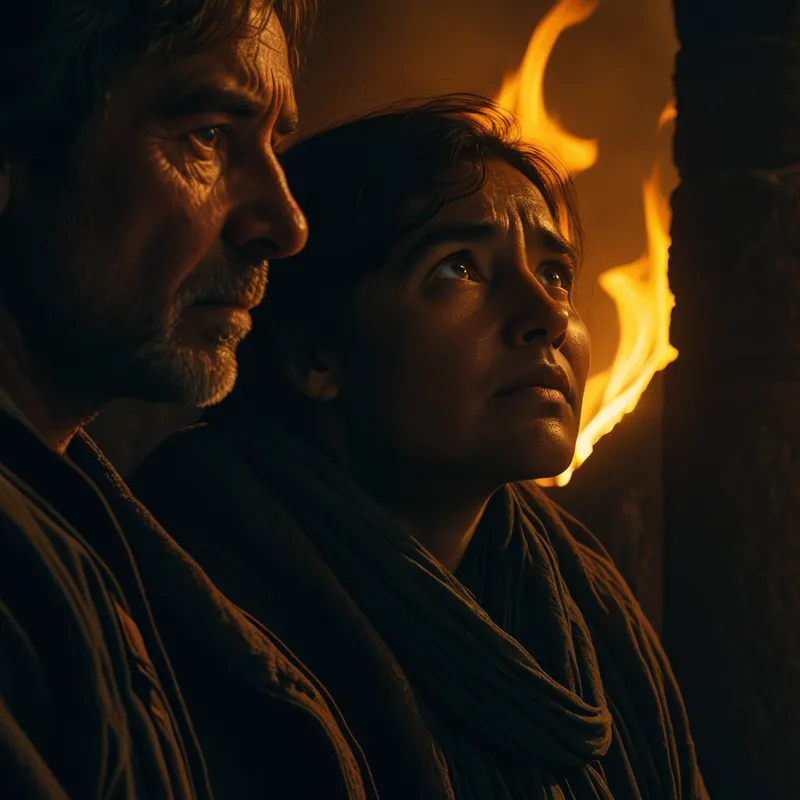
Fear is their first companion. Behind them, the thunder of chariots. Before them, an impassable sea, its waters churning like a wall of despair. They are trapped between the devil and the deep blue sea, a phrase born in this very moment of absolute [terminus](/myths/terminus “Myth from Roman culture.”/). Then, it appears.
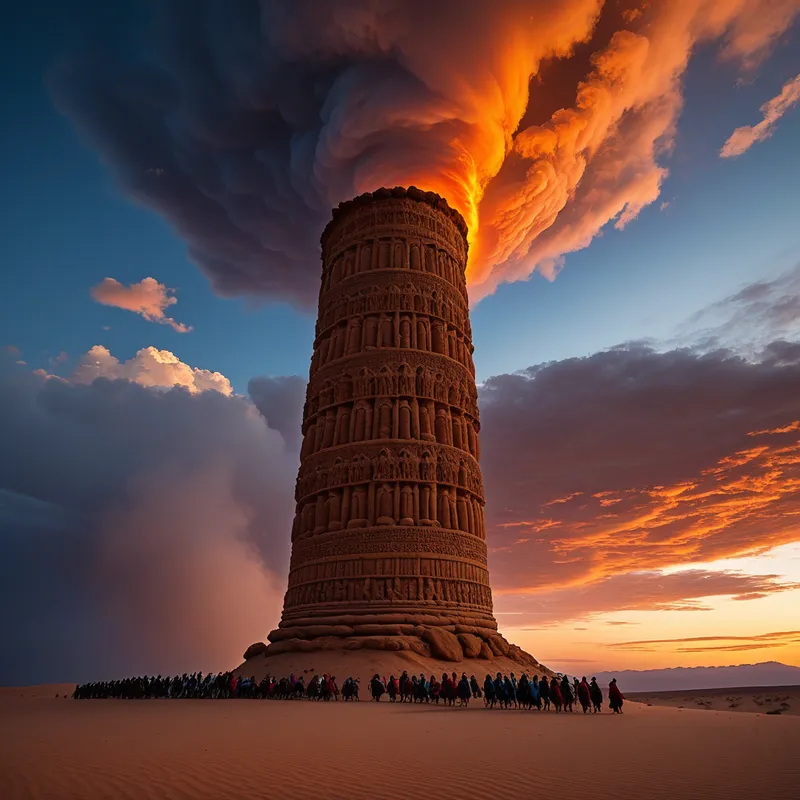
Not with a crash of thunder, but with a silent gathering. From [the horizon](/myths/the-horizon “Myth from Various culture.”/), a great mass of cloud descends, settling between the camp of the freed and the camp of the pursuers. It is a pillar, but not of stone. It is a pillar of vapor and shadow, dense and impenetrable. To the Egyptians, it is a wall of utter darkness, a confusion of senses, a loss of way. To [the Israelites](/myths/the-israelites “Myth from Abrahamic culture.”/), it is a shield, glowing with a soft, diffuse light. That night, the cloud becomes a pillar of fire, a column of contained sunrise burning in [the desert](/myths/the-desert “Myth from Biblical culture.”/) dark, holding back the night both literal and metaphorical.
And [the sea](/myths/the-sea “Myth from Greek culture.”/) parts.
This is the pattern. They move when it moves. They stop when it rests. It is not a map, but a moving destination. Through the scorching wastes of Zin, where thirst cracks the tongue, the Cloud is there. At the bitter waters of [Marah](/myths/marah “Myth from Biblical culture.”/), it is there. When hunger gnaws and they cry out for the flesh-pots of Egypt, it is there. It descends upon the [Tabernacle](/myths/tabernacle “Myth from Biblical culture.”/), filling the tent with a presence so dense Moses himself cannot enter. It is guidance without explanation, presence without form, a promise made visible. It leads them not by a straight road, but by a necessary one—through terror, through doubt, through the very belly of desolation—toward a land only whispered of in promises.
Cultural Origins & Context
This narrative is woven into the foundational epic of the Hebrew people: [the Exodus](/myths/the-exodus “Myth from Abrahamic culture.”/). It belongs to the Torah, specifically the books of Exodus and Numbers. These texts were compiled and edited over centuries, drawing from oral traditions that likely originated in the Late Bronze Age. The story was not mere history; it was liturgical identity, recited during festivals like Passover to answer the core question: “Who are we?”
The Pillar’s primary tellers were the priestly and prophetic custodians of tradition. Its function was multifaceted. Politically, it legitimized the leadership of Moses and Aaron by showing divine sanction. Theologically, it solved the profound problem of a transcendent, invisible God interacting with a tangible people. How does the Infinite lead the finite? The Pillar was the answer—a kenosis, a self-emptying of divine form into a navigable symbol. Sociologically, it provided a narrative anchor for a group undergoing radical, traumatic transition from the structured oppression of slavery to the terrifying freedom of self-determination. The Cloud was the visible sign of the covenant, a mobile Tabernacle for a people not yet home.
Symbolic Architecture
The Pillar of Cloud and Fire is a master [symbol](/symbols/symbol “Symbol: A symbol can represent an idea, concept, or belief, serving as a powerful tool for communication and understanding.”/) of paradoxical [presence](/symbols/presence “Symbol: Presence in dreams often signifies awareness or acknowledgment of something significant in one’s life.”/). It is the manifestation of the [Ruach](/myths/ruach “Myth from Hebrew culture.”/) in its most tangible, yet elusive, form.
It is the divine rendered as a process, not a place; as a verb of becoming, not a noun of being.
Psychologically, it represents [the Self](/myths/the-self “Myth from Jungian culture.”/)—the central, organizing [archetype](/symbols/archetype “Symbol: A universal, primordial pattern or prototype in the collective unconscious that shapes human experience, behavior, and creative expression.”/) of the [psyche](/myths/psyche “Myth from Greek culture.”/) in Jungian thought—as it guides the conscious ego through the [wilderness](/symbols/wilderness “Symbol: Wilderness often symbolizes the untamed aspects of the self and the unconscious mind, representing a space for personal exploration and discovery.”/) of individuation. The Cloud signifies the unknown, the numinous, and the mysterious [nature](/symbols/nature “Symbol: Nature symbolizes growth, connectivity, and the primal forces of existence.”/) of the guiding principle itself. We cannot grasp it, only follow it. The Fire within it symbolizes the transformative [energy](/symbols/energy “Symbol: Energy symbolizes vitality, motivation, and the drive that fuels actions and ambitions.”/), the purifying [insight](/symbols/insight “Symbol: A sudden, deep understanding of a complex situation or truth, often arriving unexpectedly and illuminating hidden connections.”/), and the passionate will required for the [journey](/symbols/journey “Symbol: A journey in dreams typically signifies adventure, growth, or a significant life transition.”/). It is light in darkness, but a light that does not dispel the surrounding [mystery](/symbols/mystery “Symbol: An enigmatic, unresolved element that invites curiosity and exploration, often representing the unknown or hidden aspects of existence.”/)—it illuminates only the next step.
The Pillar’s dual nature—cloud by day, fire by [night](/symbols/night “Symbol: Night often symbolizes the unconscious, mystery, and the unknown, representing the realm of dreams and intuition.”/)—speaks to the adaptability of [guidance](/symbols/guidance “Symbol: The act of receiving or seeking direction, advice, or leadership in a dream, often representing a need for clarity, support, or a higher purpose on one’s life path.”/). In the glaring [clarity](/symbols/clarity “Symbol: A state of mental transparency and sharp focus, often representing resolution of confusion or attainment of insight.”/) of day ([consciousness](/symbols/consciousness “Symbol: Consciousness represents the state of awareness and perception, encompassing thoughts, feelings, and experiences.”/)), we need the cloud: shade, mystery, protection from the harsh, desiccating light of literalism and rational overload. In the darkness of [night](/symbols/night “Symbol: Night often symbolizes the unconscious, mystery, and the unknown, representing the realm of dreams and intuition.”/) (the unconscious, fear, the unknown), we need the fire: warmth, [vision](/symbols/vision “Symbol: Vision reflects perception, insight, and clarity — often signifying the ability to foresee or understand deeper truths.”/), courage, a [beacon](/symbols/beacon “Symbol: A guiding light or signal that provides direction, warning, or hope, often representing guidance, safety, or a call to action.”/) that holds the shadows at bay.
The Dreamer’s Resonance
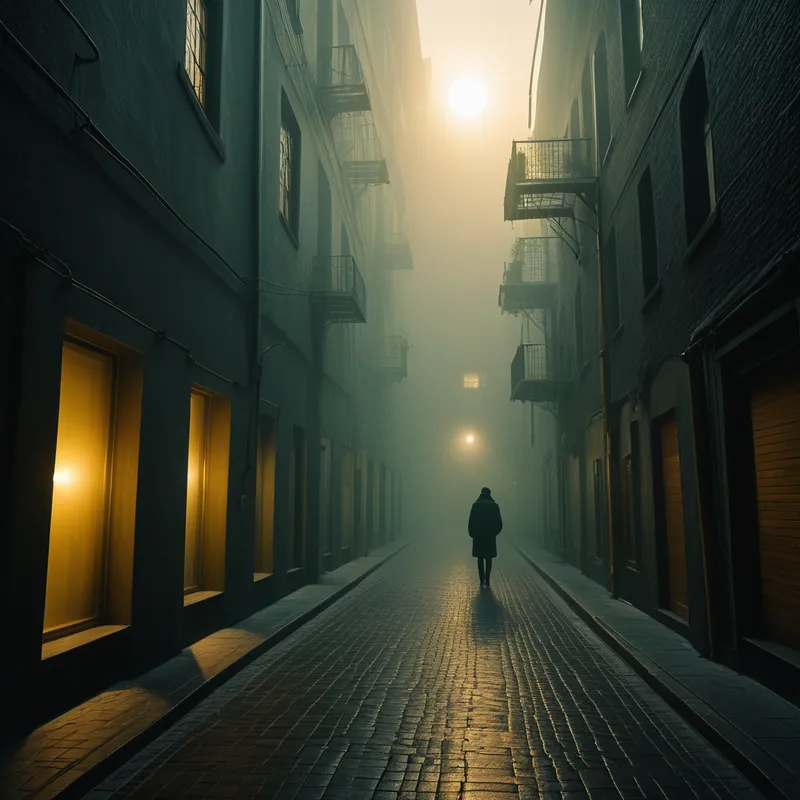
When this myth stirs in the modern psyche, it often manifests in dreams of navigation through obscurity. The dreamer may find themselves in a dense fog in a familiar city, or lost in a vast, trackless landscape. The critical element is the emergence of a guiding phenomenon: a strangely consistent patch of mist, a corridor of light in a forest, a singular streetlamp that remains lit in a blackout, or a glowing doorway in an endless hallway.
Somatically, this dream pattern correlates with a psychological process of disorientation followed by surrendered trust. [The ego](/myths/the-ego “Myth from Jungian culture.”/) is in a state of transition—having left an old, constricting structure (a job, a relationship, a belief system) but not yet arrived at a new one. The anxiety is palpable; it is the “wilderness.” The appearance of the guiding image signals that the deeper, Self-regulating psyche is activating. The process is not about knowing the path, but about developing the capacity to discern the guide. The dream invites the dreamer to move away from the need for a full-map consciousness and toward a faith in moment-by-moment, intuitive navigation. It is the somatic feeling of a knot in the stomach beginning to loosen, not because the external problem is solved, but because an internal compass has been sighted.
Alchemical Translation
The alchemical journey, like the Exodus, is one of [separatio](/myths/separatio “Myth from Alchemical culture.”/) (leaving Egypt), [nigredo](/myths/nigredo “Myth from Alchemical culture.”/) (the chaotic, dark wilderness), and ultimately albedo (purification and illumination) on [the way](/myths/the-way “Myth from Taoist culture.”/) to [the philosopher’s stone](/myths/the-philosophers-stone “Myth from Alchemical culture.”/) ([the Promised Land](/myths/the-promised-land “Myth from Biblical culture.”/), or the integrated Self). The Pillar is the central operator in this psychic transmutation.
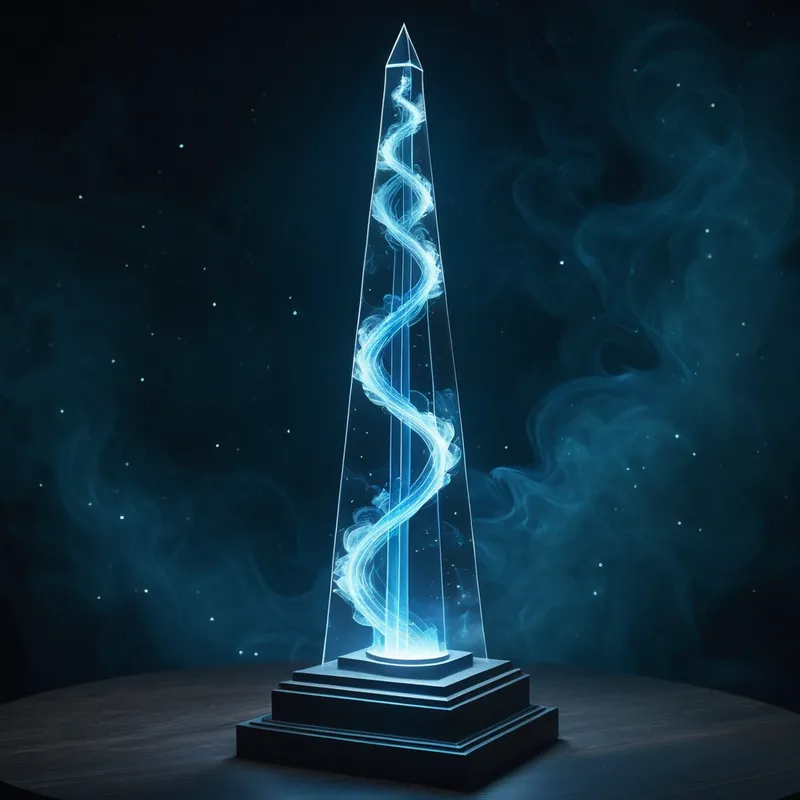
The Cloud is the vessel of the prima materia—the chaotic, undefined psychic stuff—through which the fire of consciousness must pass to be transformed.
For the modern individual, the myth models this: first, one must have the courage to leave the “Egypt” of unconscious identification—be it with societal expectations, familial scripts, or personal complexes. This plunge into the wilderness is the nigredo, a necessary dissolution. Here, the old, slave-minded ego wavers and complains, longing for the familiar bondage. The arising of the “Pillar” is the emergence of a new organizing principle from the Self. It does not provide easy answers; it provides a mode of travel.
The alchemical work is to learn its language. To move when it moves—to act on intuition and synchronicity. To rest when it rests—to practice patience and introspection. To accept that guidance often comes as cloud (obscurity, paradox, mystery) by day, requiring faith, and as fire (passionate conviction, sudden insight) by night, requiring courage. The goal is not to reach a geographical location, but to internalize the Pillar itself—to become a person who can navigate by the marriage of mystery and [inner light](/myths/inner-light “Myth from Buddhist culture.”/), whose very presence provides a orienting point in the chaos for themselves and, perhaps, for others. The [Promised Land](/myths/promised-land “Myth from Biblical culture.”/), then, is not a place you find, but a state of being you carry, forged in the faithful following of the guiding mystery through your own personal wilderness.
Associated Symbols
Explore related symbols from the CaleaDream lexicon: