
Philomela Myth Meaning & Symbolism
A princess is silenced by violence, yet finds a voice through art, weaving her trauma into a tapestry that demands justice and transforms her being.
The Tale of Philomela
Hear now a tale not of glorious heroes, but of a silence that screamed, and a voice found not in the throat, but in the hands. In the fair city of Athens, there lived a king, Pandion, who had two daughters as radiant as the dawn: Procne and Philomela. Procne was given in marriage to Tereus, a lord of distant, rugged Thrace, and she departed for his rocky kingdom. Years passed, and a deep loneliness settled upon Philomela. Her longing for her sister was a physical ache, a hollow in [the world](/myths/the-world “Myth from Tarot culture.”/).
Moved by his wife’s grief, Tereus sailed to Athens to fetch Philomela for a visit. But when he beheld her—her beauty like a sudden, perfect melody in his harsh hall—a dark fire ignited in his blood. The voyage home was not a journey across [the sea](/myths/the-sea “Myth from Greek culture.”/), but into a private hell. Upon landing in the wilds of Thrace, far from any path, Tereus dragged Philomela into a hidden, wooded hut. There, he committed an unspeakable violence against her. And when her terror found its voice in curses, invoking the gods as witnesses to his crime, a greater horror was conceived.
To seal her silence, the tyrant drew his sword. But he did not take her life. He took her tongue. With a brutal stroke, he severed it from her mouth, casting the flesh into the bloody earth. He left her there, imprisoned in the stone hut, guarded by his men, believing her story was now buried forever in mute flesh. He returned to Procne, spinning a lie that Philomela had perished on the journey.
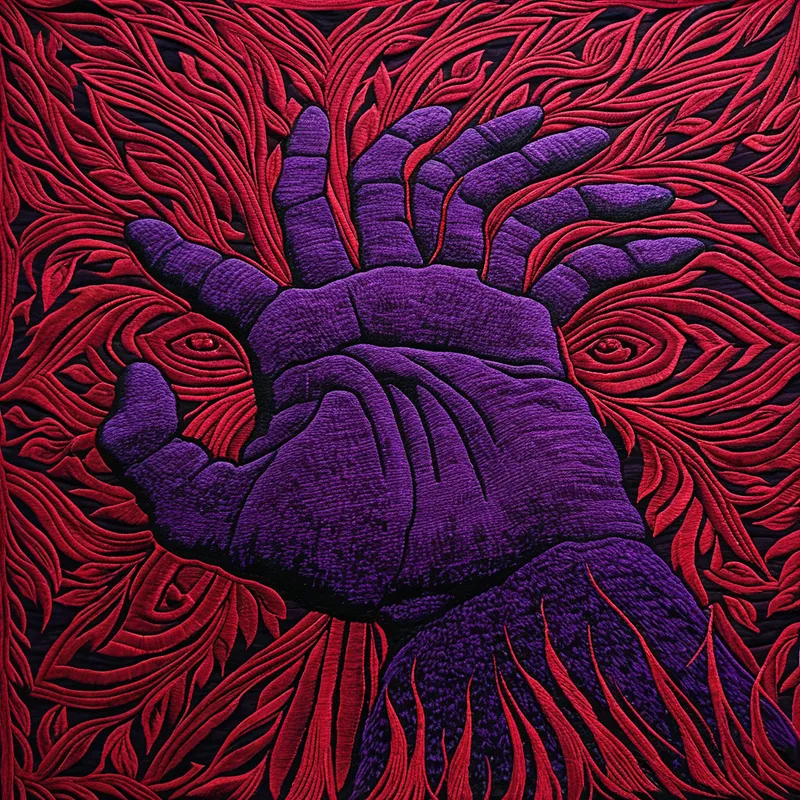
But the human spirit is a cunning artisan. Locked in her stone womb, drowning in grief and rage, Philomela’s mind became a furious loom. She had no voice, but she had hands. She had no words, but she had thread. Over countless sunrises, she begged from her guards the tools of a weaver: a frame, wool, and dyes. With fingers that remembered their purpose, she began to weave. Not patterns of flowers or beasts, but a narrative in crimson and purple. Into the fabric, she threaded the truth: her own form, Tereus’s savage shape, the hut, the crime. Her tapestry became her tongue, her shuttle a piercing cry.
When it was complete, she folded it, a compacted scream, and with gestures of desperate pleading, convinced an old servant woman to carry this woven testimony to the one person who would understand—Queen Procne. Procne received the cloth, perhaps expecting a gift. She unfurled it. And in the silent language of the loom, she heard her sister’s scream. The truth struck her like lightning, burning away all wifely duty. In the secret rites of the Bacchae, she found Philomela, and the sisters’ reunion was a storm of tears and fury.
Their vengeance was born of a madness that mirrors the crime. Procne’s heart had turned to stone, and in its cold furnace, a terrible plan was forged. She took her own son by Tereus, the boy Itylus, and with Philomela’s aid, she slew him. They butchered his body and served it to Tereus at a feast, a king dining on his own lineage. When Tereus demanded to see his son, Procne revealed the ghastly truth: “You have him within you.”
A roar shattered the palace. Tereus seized his axe, and the sisters fled, their feet barely touching [the earth](/myths/the-earth “Myth from Hindu culture.”/). As he gained on them, ready to deliver a final, bloody [justice](/myths/justice “Myth from Tarot culture.”/), the very fabric of the world took pity. The gods transformed them all. Tereus became the hoopoe, a bird forever armed with a sharp beak, chasing through thickets. Procne became the nightingale, who hides in dense foliage and sings a haunting, mournful song. And Philomela, the one who lost her human voice, became the swallow, who flies free and fearless, but whose voice is a restless, chattering twitter—a permanent echo of the speech that was stolen.
Cultural Origins & Context
This harrowing myth comes to us primarily from the Roman poet Ovid in his [Metamorphoses](/myths/metamorphoses “Myth from Greek culture.”/), though it has older, fragmentary Greek origins. It is a story told not to glorify, but to warn and to articulate the unspeakable. In the patriarchal structure of the ancient world, where a woman’s honor and voice were tightly controlled, the myth of Philomela acts as a dark vessel for cultural anxieties about betrayal within the family ([xenia](/myths/xenia “Myth from Greek culture.”/)), the violence that underpins some power dynamics, and the terrifying potential for revenge when natural bonds are perverted.
It functions as a foundational horror story, exploring the extreme consequences of violating sacred trusts—that of host to guest, husband to wife, brother-in-law to sister. The transformation at the end is not a reward, but a cosmic punctuation mark, an eternal embodiment of a trauma so profound it alters the very nature of the beings involved. It was a tale that acknowledged the reality of brutality while also, crucially, affirming that truth cannot be permanently silenced; it will find a medium, be it thread, song, or flight.
Symbolic Architecture
At its core, this is a myth about the violent imposition of silence and the ingenious, often terrifying, reclamation of voice. The severed [tongue](/symbols/tongue “Symbol: Represents communication, self-expression, and the power of words.”/) is the ultimate [symbol](/symbols/symbol “Symbol: A symbol can represent an idea, concept, or belief, serving as a powerful tool for communication and understanding.”/) of stolen agency and narrative control. Tereus does not just assault Philomela; he attempts to erase her [story](/symbols/story “Symbol: The symbol of ‘Story’ represents the narrative woven through our lives, embodying experiences, lessons, and emotions that shape our identities.”/) from the world.
The tapestry, then, is the psyche’s non-negotiable demand to testify. When the mouth is sealed, the hands will speak. When language is stolen, art becomes the dialect of the soul.
The loom is her salvaged [consciousness](/symbols/consciousness “Symbol: Consciousness represents the state of awareness and perception, encompassing thoughts, feelings, and experiences.”/). Weaving, a traditionally feminine and domestic art, is subverted into a [weapon](/symbols/weapon “Symbol: A weapon in dreams often symbolizes power, aggression, and the need for protection or defense.”/) of [truth](/symbols/truth “Symbol: Truth represents authenticity, honesty, and the quest for knowledge beyond mere appearances.”/)-telling and a tool for psychic survival. The resulting [tapestry](/symbols/tapestry “Symbol: The tapestry represents interconnected stories, creativity, and the weaving of personal and collective experiences into a cohesive narrative.”/) is more than [evidence](/symbols/evidence “Symbol: Proof or material that establishes truth, often related to justice, guilt, or validation of beliefs.”/); it is a crystallized [piece](/symbols/piece “Symbol: A ‘piece’ in dreams often symbolizes a fragment of the self or a situation that requires integration, reflection, or understanding.”/) of her traumatized self, externalized so it can be witnessed. The revenge—the murder of Itylus—represents the horrifying, inevitable corruption that unprocessed [trauma](/symbols/trauma “Symbol: A deeply distressing or disturbing experience that overwhelms the psyche, often manifesting in dreams as unresolved emotional wounds or psychological injury.”/) and rage [birth](/symbols/birth “Symbol: Birth symbolizes new beginnings, transformation, and the potential for growth and development.”/). It is the [shadow](/symbols/shadow “Symbol: The ‘shadow’ embodies the unconscious, repressed aspects of the self and often represents fears or hidden emotions.”/) of the initial violence, showing how victimhood, when utterly consumed by [fury](/symbols/fury “Symbol: An intense, overwhelming rage that consumes the dreamer, often representing suppressed anger or a primal emotional eruption.”/), can morph into a new form of monstrosity. The final metamorphoses freeze this toxic dynamic in [nature](/symbols/nature “Symbol: Nature symbolizes growth, connectivity, and the primal forces of existence.”/): perpetual [chase](/symbols/chase “Symbol: Dreaming of a chase often symbolizes avoidance of anxiety or confrontation, manifesting as fleeing from something threatening or overwhelming in one’s waking life.”/), hidden sorrow, and fragmented speech.
The Dreamer’s Resonance
To dream in the pattern of Philomela is to be in the grip of a profound psychological process centered on a stolen voice and a desperate search for a medium. The dreamer may experience somatic sensations of constriction in the throat, a feeling of being gagged or mute, or a powerful, frustrated energy in the hands.
The dream landscape might feature enclosed spaces (the hut), images of severed or bleeding mouths, or the frantic, focused act of creating something—writing indecipherable text, drawing frantic diagrams, or weaving intangible threads. This is the [psyche](/myths/psyche “Myth from Greek culture.”/) actively working to externalize a truth that feels trapped inside, a trauma or a creative impulse that has been suppressed or violated. The dream is the loom of the unconscious, beginning the work of weaving the raw, painful material of experience into a form that can eventually be seen and understood, even if it feels horrifying in its initial shape.
Alchemical Translation
The individuation journey modeled here is brutal but clear: it is the transmutation of unspeakable suffering into authentic expression. The [prima materia](/myths/prima-materia “Myth from Alchemical culture.”/), the base matter, is the traumatic event itself—the betrayal, the violation, the enforced silence. The first, crucial alchemical stage is not escape, but the containment and crafting of the experience within the vas ([the vessel](/myths/the-vessel “Myth from Alchemical culture.”/))—here, Philomela’s imprisoned body and mind, and later, the frame of her loom.
The goal is not to return to an innocent state before the crime, for that is impossible. The goal is to transform the lead of victimhood into the gold of a voice that is irrevocably one’s own, even if that voice is forever altered.
Her weaving is the opus, [the great work](/myths/the-great-work “Myth from Alchemical culture.”/). It is the conscious, painstaking process of giving form to the formless pain. This act itself is the beginning of liberation, for it moves the experience from the purely internal and somatic into the realm of symbol and story. The revenge plot and metamorphosis represent the perilous stages of this process—the danger of being consumed by [the shadow](/myths/the-shadow “Myth from Jungian culture.”/), of letting the trauma define one’s entire being in a reactive way (the vengeful murderer, the eternally chasing bird).
The ultimate alchemical gold, however, is found in [the swallow](/myths/the-swallow “Myth from Greek culture.”/)’s flight. Philomela does not get her old voice back. She gains a new mode of being. Her expression is different, restless, and aerial. The transmutation is complete when the individual no longer speaks from the trauma alone, but through the unique, liberated identity forged in its fire. The voice that emerges is not the one that was stolen, but a truer, more essential one—born of silence, woven in darkness, and carried on [the wind](/myths/the-wind “Myth from Various culture.”/).
Associated Symbols
Explore related symbols from the CaleaDream lexicon:
- Nest
- Missing Tooth
- Shattered Jaw
- Pierced Tongue
- Forgotten Fire Ant
- Harmonic Songbird
- Cerulean Chat
- Starlit Nightingale
- Haunting Lark
- Grieving Swallow
- Joyful Wren
- Mellow Dickybird
- Harmonious Lark
- Precious Budgerigar
- Birdhouse
- Frida Kahlo’s Palette
- Glued Pages
- Joyful Lark
- Faded Tattoo
- Nesting Birds
- Itchy Crawl
- Redemption
- Rash
- Trauma
- Outcast
- Victim