Phanes Myth Meaning & Symbolism
The story of the first god, Phanes, who emerges from a cosmic egg to bring light, order, and the seeds of all life into the primal darkness.
The Tale of Phanes
Before time had a name, there was only the Chaos—a yawning, silent, and boundless night. It was not empty, but full of a potential so dense and dreaming it was indistinguishable from nothingness. From this womb of unbeing, the first desire stirred. Not a god’s desire, for there were no gods, but the universe’s own longing for itself. This longing gathered, condensed, and crystallized into a single, perfect point: Chronos, serpentine and endless, coiling upon itself in the dark.
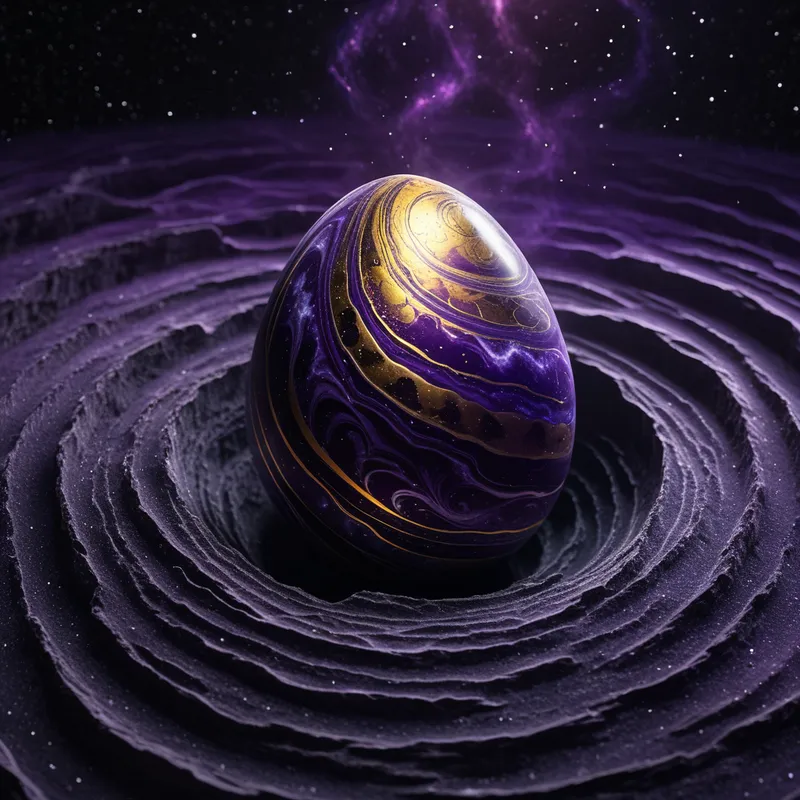
And Chronos labored. From its own essence, it fashioned a mist, a shimmering substance called Ananke. Together, as one being, they spun a silvery, luminous cloud—the Aether. And within that cloud, they placed an egg. Not of shell and yolk, but of condensed possibility, a sphere of pure, argent potential. It hung in the abyss, a solitary moon in an eternal midnight.
Then, the waiting. The silence deepened, becoming a pressure, a prayer. Within the egg, the potential grew restless. It dreamed of form, of distinction, of song. The pressure built until the very fabric of the void hummed with imminent birth.
With a sound that was both a crack of thunder and the first note of a symphony, the egg split.
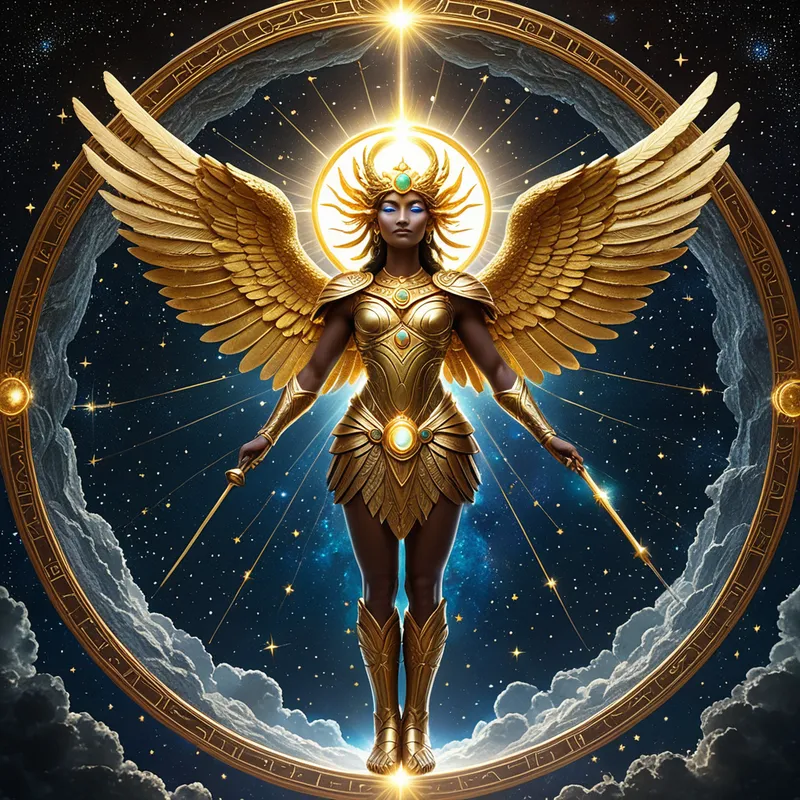
And from it, spilling rivers of liquid light and swirling nebulae, he emerged. He was the first to be born, and so they called him Phanes. He was male and female, the seed and the womb. His body was adorned with the heads of beasts—a bull, a lion, a serpent—and his golden wings, vast and shimmering, beat for the first time, scattering the primal darkness with gusts of stardust. In his hands, he held the symbols of his sovereignty: a blazing torch to illuminate what was, and a royal scepter to command what would be.
He looked, and where his gaze fell, light remained. He spoke, and his voice was the law that separated the heavy from the light, the moist from the dry. He moved, and in his wake, the swirling chaos began to dance in patterns—the first rhythms of time and season. Within him, he carried the seeds of all things yet to come: the gods, the titans, the animals, and humanity itself, all folded within his radiant form like the layers of a divine onion.
He was the Protogonos, the First-Born, the beautiful, the shining one. He did not conquer the darkness through battle, but simply by being. His emergence was the universe’s first act of self-recognition, a flash of consciousness in the sleeping mind of the All. And as he took his first breath in that newborn Aether, the great work was begun. The blueprint was drawn in light. The story was now inevitable.
Cultural Origins & Context
This myth is not from the common hearth of Homer or Hesiod. It belongs to the secret, ecstatic stream known as Orphism. These were not state-sanctioned tales for public festivals, but sacred narratives recited during initiatory rites, written on thin gold leaves buried with the dead to guide their souls. The “Rhapsodic Theogony,” a later compilation of these teachings, is our primary source for the story of Phanes.
Orphic myth was performative and psychological. It was not merely about how the world was made, but about who we are. By tracing creation back to a radiant, androgynous deity of light and intellect (Phanes), rather than a chthonic earth goddess (Gaia) or violent sky god (Ouranos), the Orphics posited a profound cosmology: the human soul (psyche) is a divine spark, a fragment of that primordial light, tragically trapped in a material body (soma) through a fall. To know the story of Phanes was to remember one’s own origin and destiny. His myth provided a map of the soul’s descent and, potentially, its ascent back to its luminous source.
Symbolic Architecture
Phanes is not a creator who works with external material. He is creation unfolding from within. The cosmic egg symbolizes the state of undifferentiated wholeness, the unus mundus or psychic totality before consciousness arises. Phanes’ emergence is the moment of primordial differentiation, the birth of the conscious ego from the unconscious.
The first light is not cast upon the world, but is the world recognizing itself from within.
His androgyny represents the union of opposites (male/female, active/passive) that precedes all creation. The animal heads signify his mastery over all instinctual, primal energies. The torch and scepter are the twin powers of consciousness: illumination (the ability to see and know) and ordering (the ability to structure and govern). Most critically, he contains all subsequent generations within himself. He is not followed by creation; he is its source and its unfolding blueprint. This makes him a symbol of the primordial archetype itself, the latent pattern of the entire psyche before life experience draws out its specific contours.
The Dreamer’s Resonance
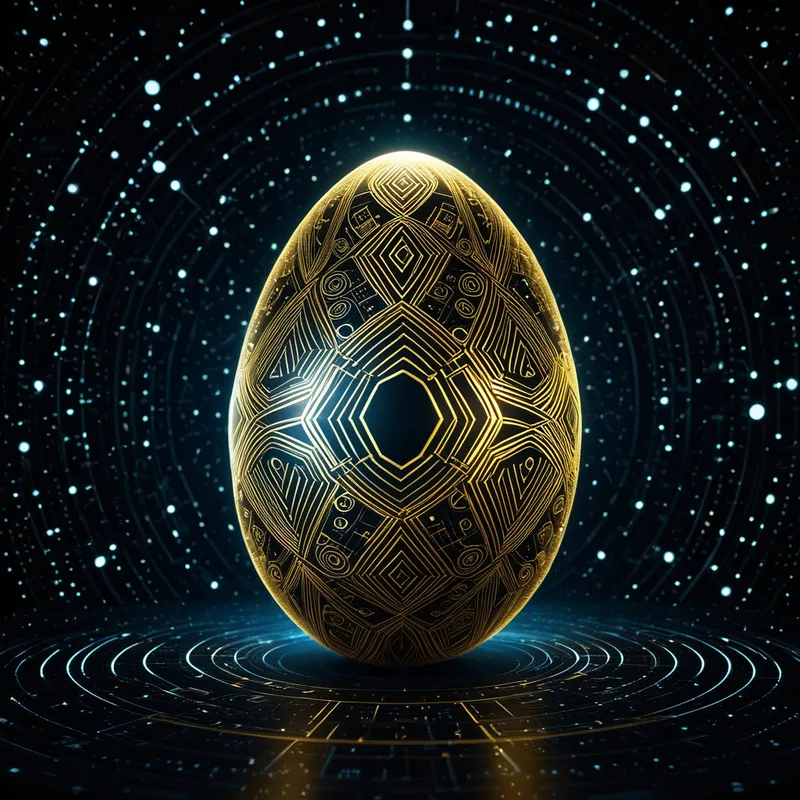
When the archetype of Phanes stirs in the modern unconscious, it often manifests in dreams of profound, self-generated beginnings. One might dream of being inside a cave, a womb, or a sealed room, from which one must break out not by force, but by an inner radiance that dissolves the walls. There is a somatic feeling of pressure followed by release, of a chrysalis splitting.
This is the psyche signaling a stage of profound self-birth. It is not about achieving something new from the outside, but about allowing something ancient and intrinsic within to finally emerge into the light of awareness. The dreamer may be on the cusp of recognizing a core, creative identity that has been latent—a talent, a sexual orientation, a spiritual knowing, or a fundamental truth about one’s nature that has been “folded up” inside, waiting for its moment to unfurl. The conflict in the dream is rarely with an external monster, but with the remaining “shell” of old self-concepts, familial expectations, or societal conditioning that must be cracked open from within.

Alchemical Translation
The journey of Phanes is the ultimate model for the alchemical process of individuation. The prima materia is the Chaos of our unexamined life—the swirl of potentials, traumas, and inherited patterns. The long incubation in the egg is the often-frustrating period of introspection, therapy, or creative gestation, where everything feels dark and compressed.
The cracking of the egg is the critical moment of insight, the “Aha!” where a piece of the Self, previously hidden and total, becomes conscious and distinct. Phanes, the luminous child, is the filius philosophorum, the newly born consciousness that is both a product of the psyche and its rightful ruler.
To become oneself is not to build a new edifice, but to remember the original blueprint written in light within the soul’s core.
The modern individual’s “alchemical work” is to enact this myth inwardly: to withdraw from purely external identification (the outer darkness), to endure the fertile confusion of the egg (the nigredo), and to courageously allow the inner, organizing light—one’s own unique law and creative fire—to emerge and impose its order on the inner chaos. We do not find our true self; we unveil it, as Phanes unveiled the cosmos, by the simple, sovereign act of coming into being. The goal is not to become a god, but to become truly, wholly human—a microcosm that reflects the macrocosm’s first, glorious act of self-creation.
Associated Symbols
Explore related symbols from the CaleaDream lexicon: