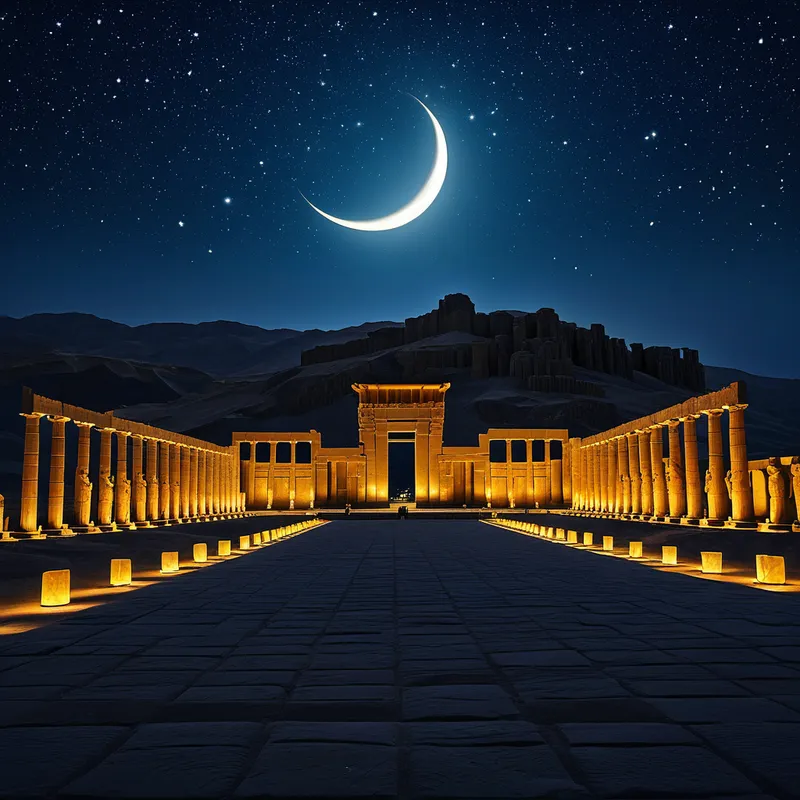
Persepolis Myth Meaning & Symbolism
The myth of Persepolis is the story of a king building a cosmic throne to mirror heaven, a testament to ambition, order, and the inevitable dialogue with fate.
The Tale of Persepolis
Listen, and hear the tale of the Throne of Jamshid, the Persepolis. It did not begin with stone and mortar, but with a vision in the heart of a king. He looked upon the raw, sun-baked plain at the foot of the Kuh-e Rahmat and saw not earth, but a blank page for a divine scripture. He dreamed of a city that was not a city, but a mirror held up to the cosmos itself—a place where the order of the heavens would be made manifest on earth.
The air grew thick with the scent of cedar from Lebanon, the tang of gold from Sardis, and the sweat of ten thousand souls. The mountain itself groaned as it was asked to give up its bones, transformed into vast terraces and stairways that did not merely climb, but ascended. Artisans from every corner of the known world gathered, their hands guided by a single, terrifying will: to carve eternity. They gave stone the softness of linen, depicting endless processions of gift-bearers, immortal guards with the bodies of bulls and the heads of kings—the mighty [lamassu](/myths/lamassu “Myth from Mesopotamian culture.”/)—and the serene, ever-watchful symbol of the Faravahar.
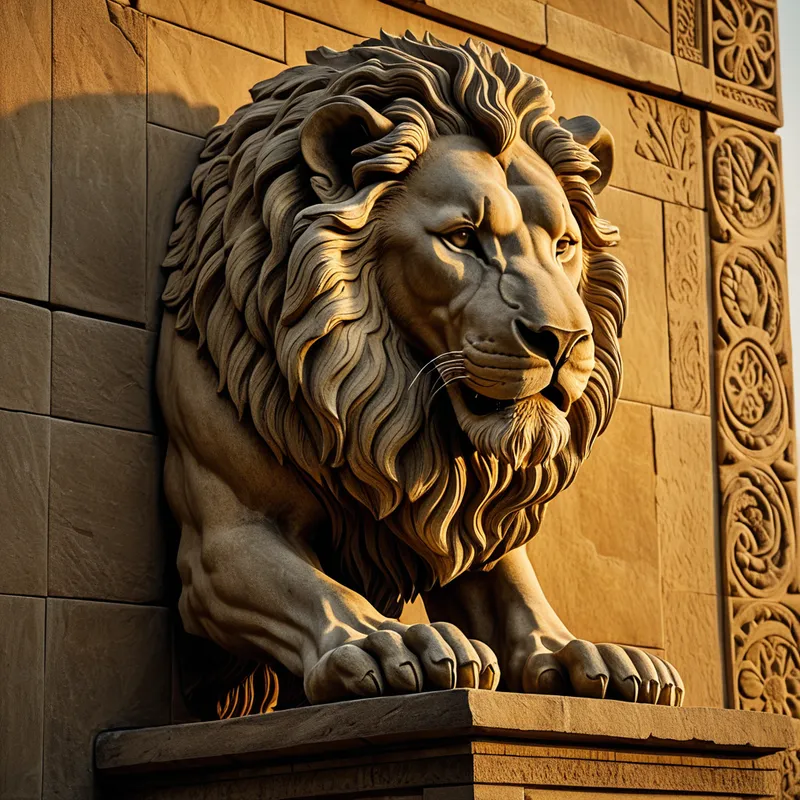
Within the Hall of a Hundred Columns, the shadows were held at bay by a forest of stone pillars, each crowned with twin-headed beasts. Here, the King of Kings would sit, not upon a mere chair, but upon the axis of [the world](/myths/the-world “Myth from Tarot culture.”/), receiving the loyalty of nations as the sun received tribute from the stars. The Apadana staircase told a silent, eternal story of harmony: lions, symbols of royal power and the sun, locked in a sacred, stylized combat with bulls, emblems of earthly fertility and [the moon](/myths/the-moon “Myth from Tarot culture.”/). It was not a battle of annihilation, but a dance of cosmic balance, the very rhythm of creation and sovereignty made visible.
For generations, the dream held. The granaries overflowed, the fountains ran with wine during festivals, and the fire—the sacred Atar—burned perpetually in its sanctuary. Persepolis was the undeniable proof: that a man, through will, piety, and divine favor, could build a piece of the eternal on the shifting sands of time. It was the perfect, ordered answer to the chaos of [the desert](/myths/the-desert “Myth from Biblical culture.”/).
Then, a new fire appeared on [the horizon](/myths/the-horizon “Myth from Various culture.”/). It was not the clean, contained flame of the altar, but a hungry, spreading fire of conquest. It came with the tramp of foreign boots and the clang of alien steel. The dream, so heavy in stone, proved weightless against this new reality. The libraries of cuneiform, the tapestries, the very beams of the palaces themselves were fed to the flames. The great fire that night was not one of sacrifice, but of consumption. The heavens, which the city had sought to mirror, watched impassively as its reflection was shattered. The silence that followed was not the silence of peace, but the profound, echoing silence of a question that had received its final, devastating answer.
Cultural Origins & Context
The story of Persepolis is not a single, codified myth from a sacred text, but a living, historical mythos that emerged from the heart of the Achaemenid Empire. Its “myth” is the myth of empire-building itself, narrated not by bards but by architects, sculptors, and administrators. It was passed down through the very ruins, through the reliefs that served as imperial propaganda, and later, through the lamentations of poets like Ferdowsi</ab title=“Persian poet”> in the <abbr title=“The Persian “Book of Kings,” an epic poem by Ferdowsi”>Shahnameh, where it is remembered as [Takht](/myths/takht “Myth from Persian/Islamic culture.”/)-e Jamshid.
Its societal function was multifaceted. For the empire, it was the ultimate symbol of Farr, the divine right and splendor of the king. It was a administrative and ceremonial nerve center, designed to awe subject nations during the Nowruz (New Year) festivities, demonstrating the power and inclusivity of the King of Kings. For the Persian [psyche](/myths/psyche “Myth from Greek culture.”/), it became an enduring archetype of pinnacle and fall, a concrete lesson in the Zoroastrian principle of the fragility of the material world (getig) in the face of time and falsehood (druj). It transformed from a political capital into a cultural memory of lost grandeur and a meditation on vanitas.
Symbolic Architecture
At its core, the myth of Persepolis is an epic of the Ruler [Archetype](/symbols/archetype “Symbol: A universal, primordial pattern or prototype in the collective unconscious that shapes human experience, behavior, and creative expression.”/) confronting its own limits. The [city](/symbols/city “Symbol: A city often symbolizes community, social connection, and the complexities of modern life, reflecting the dreamer’s relationships and societal integration.”/) is a monumental [projection](/symbols/projection “Symbol: The unconscious act of attributing one’s own internal qualities, emotions, or shadow aspects onto external entities, people, or situations.”/) of the ordered psyche—[the ego](/myths/the-ego “Myth from Jungian culture.”/)‘s attempt to [structure](/symbols/structure “Symbol: Structure in dreams often symbolizes stability, organization, and the framework of one’s life, reflecting how one perceives their environment and personal life.”/) the vast, chaotic contents of the unconscious (the empire of disparate nations and instincts) into a harmonious, beautiful, and permanent whole.
The throne is not where the king sits, but the point where cosmic order and human will converge, until the cosmos shifts.
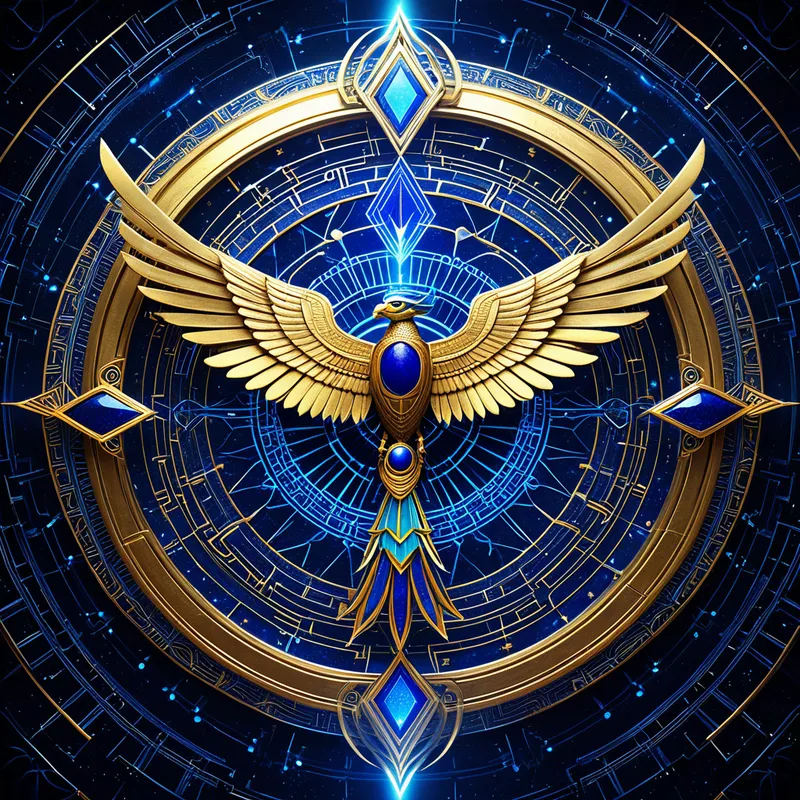
The Faravahar hovering over the gates is the [symbol](/symbols/symbol “Symbol: A symbol can represent an idea, concept, or belief, serving as a powerful tool for communication and understanding.”/) of this aspiration: the divine mandate and the [soul](/symbols/soul “Symbol: The soul represents the essence of a person, encompassing their spirit, identity, and connection to the universe.”/)‘s [journey](/symbols/journey “Symbol: A journey in dreams typically signifies adventure, growth, or a significant life transition.”/) toward [truth](/symbols/truth “Symbol: Truth represents authenticity, honesty, and the quest for knowledge beyond mere appearances.”/) (Asha). The Apadana reliefs of gift-bearers represent the [integration](/symbols/integration “Symbol: The process of unifying disparate parts of the self or experience into a cohesive whole, often representing psychological wholeness or resolution of internal conflict.”/) of the “other”—the subdued, acknowledged, and offered aspects of the inner and outer world. Yet, the [lion](/symbols/lion “Symbol: The lion symbolizes strength, courage, and authority, often representing one’s inner power or identity.”/)-[bull](/symbols/bull “Symbol: The bull often symbolizes strength, power, and determination in many cultures.”/) [motif](/symbols/motif “Symbol: A recurring thematic element, pattern, or design in artistic or musical works, representing underlying ideas or emotional currents.”/) reveals the psychological [tension](/symbols/tension “Symbol: A state of mental or emotional strain, often manifesting physically as tightness, pressure, or unease, signaling unresolved conflict or anticipation.”/) beneath the order. It is the necessary, eternal struggle between the solar, conscious principle (the [lion](/symbols/lion “Symbol: The lion symbolizes strength, courage, and authority, often representing one’s inner power or identity.”/)-[king](/symbols/king “Symbol: A symbol of ultimate authority, leadership, and societal order, often representing the dreamer’s inner power or external control figures.”/)) and the lunar, instinctual, fertile forces of the unconscious (the [bull](/symbols/bull “Symbol: The bull often symbolizes strength, power, and determination in many cultures.”/)). The city’s existence depends on this dynamic tension, not its [resolution](/symbols/resolution “Symbol: In arts and music, resolution refers to the movement from dissonance to consonance, creating a sense of completion, release, or finality in a composition.”/).
The ultimate, devastating symbol is the fire set by Alexander. This is not merely an historical act, but the [eruption](/symbols/eruption “Symbol: A sudden, violent release of pent-up energy or emotion from beneath the surface, often representing transformation or crisis.”/) of the [Shadow](/symbols/shadow “Symbol: The ‘shadow’ embodies the unconscious, repressed aspects of the self and often represents fears or hidden emotions.”/). It represents everything the ordered, civilized, “eternal” Persepolis denied: [chaos](/symbols/chaos “Symbol: In Arts & Music, chaos represents raw creative potential, uncontrolled expression, and the breakdown of order to forge new artistic forms.”/), [impermanence](/myths/impermanence “Myth from Buddhist culture.”/), rage, and the unstoppable force of time. The myth teaches that any psychic order which becomes too rigid, too identified with its own permanence, invites its own destruction by the very forces it excluded.
The Dreamer’s Resonance
To dream of Persepolis is to dream of one’s own inner citadel. Dreaming of wandering its vast, empty halls signifies a confrontation with the architecture of [the Self](/myths/the-self “Myth from Jungian culture.”/). The dreamer may be auditing their own values, beliefs, and the “empire” they have built of their personality and achievements. It is a somatic experience of grandeur tinged with profound loneliness.
A dream of the city under construction points to a phase of active ego-building and conscious integration—a demanding, ambitious period of psychic labor. Conversely, dreaming of its burning is a powerful, often alarming, signal of a necessary deconstruction. The psyche is initiating a controlled (or uncontrollable) burn of outdated structures. This can correlate with life crises—the end of a career, the collapse of a long-held identity, a profound betrayal. The body may respond with feelings of panic, heat, or a crushing weight lifting. The dream is an initiation into the truth of impermanence, forcing a dialogue with one’s own hubris and vulnerability.
Alchemical Translation
The alchemical journey modeled by Persepolis is the full cycle of [Nigredo](/myths/nigredo “Myth from Alchemical culture.”/), Albedo, Citrinitas, and [Rubedo](/myths/rubedo “Myth from Alchemical culture.”/) projected onto the soul’s landscape. The initial vision and construction represent the Albedo—the ambitious whitening, the attempt to create a pure, ordered, and glorious psychic kingdom from the raw matter of one’s potential.
The true gold is not found in the preservation of the palace, but in the ashes that remember its shape.
The city’s zenith is the illusory Citrinitas, the yellowing of success, where the ego mistakes its creation for the final, golden Self. The conflagration is the essential, brutal return to the Nigredo—the blackening. This is not a failure, but the crucial stage of mortificatio, where the inflated structure must be broken down to its essential components. The ego’s grand project is dissolved in the acid of reality and time.
The final stage, the Rubedo or reddening, is not the rebuilding of the city. That would be mere repetition. It is the integration of the ruin. It is the modern individual walking among the broken columns, no longer as a king, but as a humble witness. The wholeness achieved is not of a perfect, static order, but of a consciousness that contains both the memory of grandeur and the fact of its dust. The Self that emerges knows it is both [the architect](/myths/the-architect “Myth from Various culture.”/) and the arsonist, the ruler and the refugee, eternally building and eternally letting go. The legacy is no longer in the unassailable stone, but in the enduring symbol—the Faravahar—that continues to fly, detached from any earthly throne, guiding the soul toward an order that transcends all palaces.
Associated Symbols
Explore related symbols from the CaleaDream lexicon: