
Persephone's Flowers Myth Meaning & Symbolism
A goddess, picking flowers, is abducted into the underworld, initiating a cycle of life, death, and profound psychological transformation.
The Tale of Persephone’s Flowers
The world was young and golden, and in the island meadows of Sicily, the air hung heavy with the scent of a thousand blossoms. Here, Demeter’s daughter, Persephone, known then as Kore, danced with her Oceanid companions. Their laughter was the sound of spring itself, a careless music that echoed across the hills. She was the very soul of the untrammeled earth, her feet bare on the warm soil, her fingers brushing the petals of violet, crocus, and rose.
On this day, the sun seemed brighter, the flowers more vivid. A strange, intoxicating fragrance, sweeter than any before, wove through the familiar scents. Persephone, drawn from her friends, followed it to a secluded spot. And there it was: a flower of such stunning beauty it seemed to hold its own light. A narcissus, a hundred blooms upon one stem, a trick of the earth crafted by the will of Hades himself. As she reached out, her delicate fingers closing around the stem, the ground beneath her did not yield—it roared.
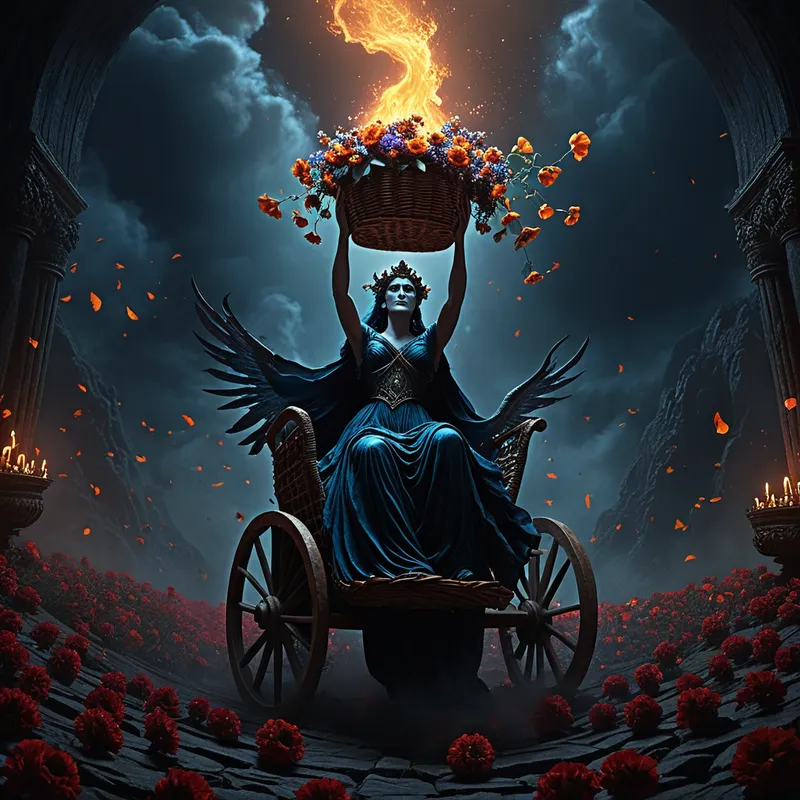
The fertile meadow cracked open with a sound like thunder. From the abyss, a chariot of blackest obsidian erupted, drawn by steeds whose breath was mist and shadow. And in the chariot stood Hades, his form majestic and terrible. In one swift, irrevocable motion, he seized the maiden. Her cry was swallowed by the chasm. The basket of flowers fell, scattering blossoms across the torn earth. The chariot plunged back into the darkness, and the earth sealed itself shut, leaving only a silent, empty meadow and the fading echo of a scream.
Above, the sun dimmed. Demeter’s grief, a cold wind, swept across the world. She searched, a torch in each hand, her form a vortex of despair, while the earth grew hard and barren. No seed sprouted; no tree bore fruit. Mortality itself began to wither.
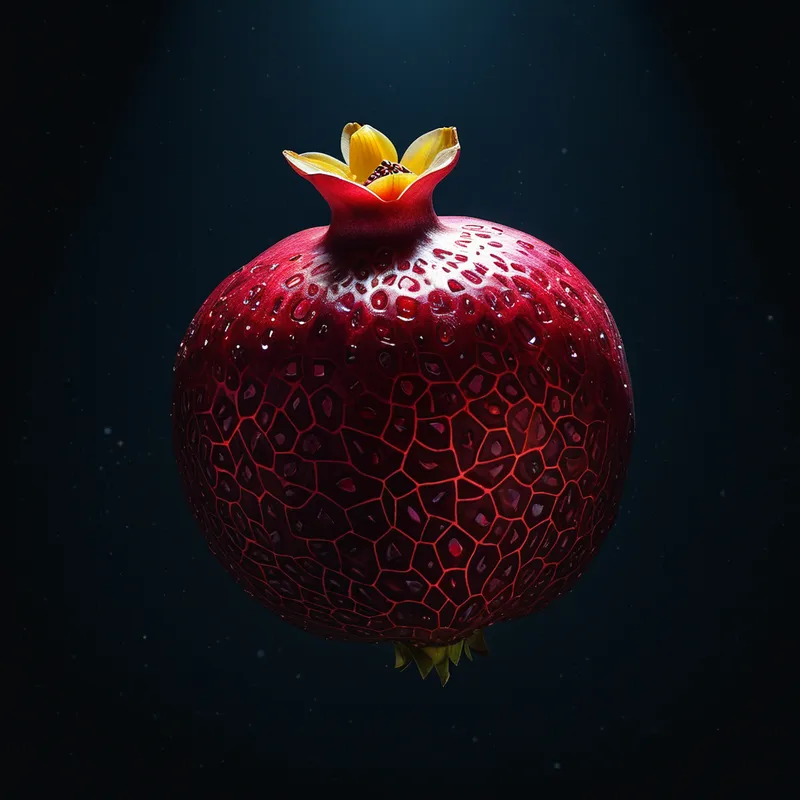
Far below, in the sunless halls of Erebus, Persephone sat, a queen in a kingdom of ghosts. She refused all sustenance, a fast of protest, her heart a frozen seed. Yet, in a moment of profound transition—whether by trickery, loneliness, or a dawning recognition of her own power—she accepted a gift from her captor-king: a pomegranate. She ate six of its glistening, blood-red seeds.
This simple act bound her. When Hermes, the messenger, finally descended to bring her back, the law of the Chthonic gods was invoked. She who has tasted the food of the dead must remain among the dead. A compromise was struck in the cold halls of Olympus. For each seed consumed, a month of the year she would reign as Queen beside Hades. The rest, she could walk again in the light with her mother.
And so, she emerged. Where her feet touched the barren ground, grass surged and flowers burst from the soil. But the maiden Kore was gone. In her place walked Persephone, the Queen who had seen the heart of the world, who carried the darkness within her, and who now held the secret of life’s return within her very being.
Cultural Origins & Context
This central myth, most comprehensively told in the Homeric Hymn to Demeter (c. 7th century BCE), was not mere entertainment. It was the sacred narrative underpinning the most revered of Greek mystery cults: the Eleusinian Mysteries. For over a millennium, initiates traveled to Eleusis to undergo rites that promised a blessed afterlife, with the story of Demeter and Persephone as their template. The myth was performed, chanted, and enacted, its details guarded by sacred oath. It functioned as a societal anchor, explaining the inescapable cycle of the seasons—the descent into barren winter and the jubilant return of spring—as a divine drama of loss, grief, and negotiated return. It gave a face, a mother’s love, and a daughter’s transformation to the terrifying mysteries of death and rebirth that every agricultural society lived and died by.
Symbolic Architecture
The myth is a perfect symbolic map of the psyche’s most necessary and painful journey. Persephone is the nascent consciousness, the innocent ego content in the sunny meadow of the known world. The narcissus is the lure of the Self, a beauty so profound it promises wholeness but also necessitates a shattering of the current state. To pluck it is to invoke one’s own destiny.
The flower is the call; the abduction is the answer. One does not find the depths by looking—one is taken by them.
Hades is not a mere villain, but the personification of the unconscious itself—the rich, fertile, yet terrifying realm of all we have repressed, forgotten, or never known. His kingdom is not a place of punishment, but of potential. The pomegranate seeds are the ultimate symbol of conscious choice within the unconscious realm. They represent the assimilation of shadow material. By eating them, Persephone does not merely submit; she integrates a part of that dark kingdom into her very substance. She claims a portion of the underworld as her own, transforming from a victim of the dark to its sovereign.
The Dreamer’s Resonance
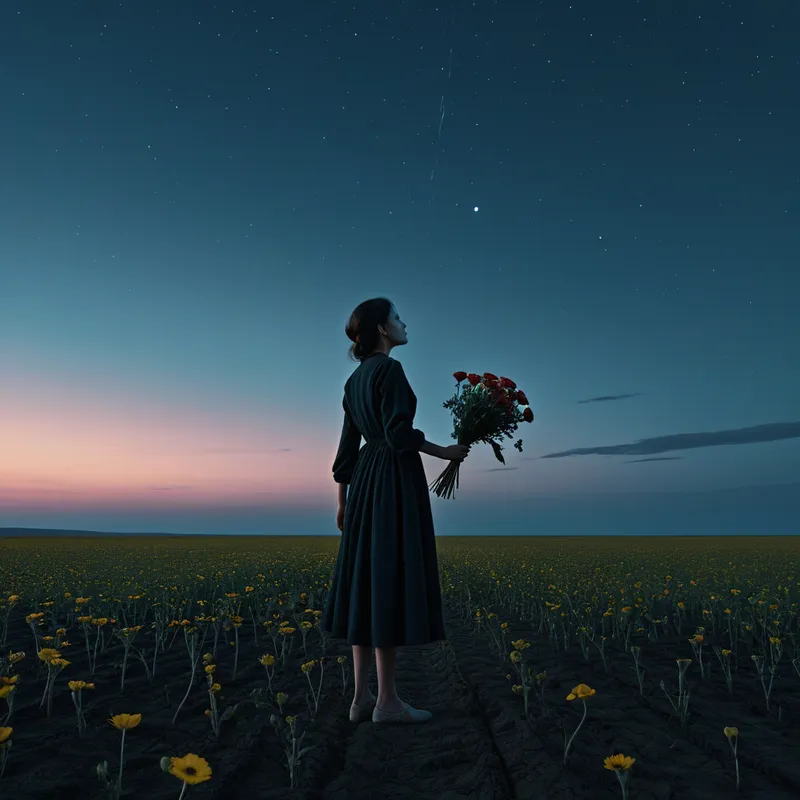
When this myth stirs in modern dreams, it signals a profound initiation underway. Dreaming of a singular, mesmerizing flower in an empty field speaks to a soul-deep calling, often felt as both beautiful and frightening. Dreams of sudden chasms, of being pulled underground, or of finding oneself in elegant but sunless halls mirror the psyche’s necessary descent. This is not a descent into pathology, but into depth.
The somatic experience is often one of weight, stillness, or cold—a feeling of being grounded in the most literal, earthy sense. Psychologically, the dreamer may be in a period of depression, introversion, or creative dormancy that feels involuntary, like an abduction. They are in the grip of a process larger than their conscious will. The dream asks: What is the narcissus you are reaching for? What part of your life has cracked open? And what nourishment—what pomegranate seeds—are you being offered in the darkness that you might, hesitantly, accept?
Alchemical Translation
The alchemical journey of the myth models the process of individuation with stark clarity. The nigredo, or blackening, is the abduction itself—the dissolution of the conscious personality’s safe world. The maiden-ego must die. The albedo, or whitening, is Persephone’s fast and her eventual acceptance of the pomegranate seeds—a purification and a beginning of recognition in the dark.
The return is not to the old meadow, but to a world made meaningful by the memory of the dark. The Queen walks where the Maiden danced.
The final stage, the rubedo or reddening, is her cyclical return. She is not rescued back to her old self. She is released as a new entity: the integrated Queen who contains both light and dark, growth and decay. For the modern individual, this translates to the hard-won wisdom that follows a crisis. We are taken by life—by loss, illness, betrayal, or simply the slow creep of meaninglessness. In that underworld, we are offered a choice: to wither in refusal or to consciously take in a piece of that experience, to let it change our fundamental composition. The triumph is the realization that we are now sovereigns of a larger realm. We carry the fertile darkness within us, and from it, we can consciously choose to bring life, creativity, and compassion back into our world, season after season. We become, like Persephone, the hinge between worlds.
Associated Symbols
Explore related symbols from the CaleaDream lexicon: