
Pele's Tears Myth Meaning & Symbolism
Volcanic glass formed from the fiery tears of Pele, the Hawaiian goddess of volcanoes, embodying her passion, grief, and the creative power of destruction.
The Tale of Pele’s Tears
Listen, and let the wind carry you to the Big Island when the earth was young and the fire of creation still ran hot and restless beneath the skin of the world. Here, the heartbeat of the land is the goddess Pele. She is not a gentle spirit of the hearth, but a being of raw, untamed power. Her hair is the smoke that plumes from the summit, her voice the thunderous roar of splitting rock, her body the molten, life-giving, and life-taking river of lava.
Her story is one of passion and profound loneliness. She journeyed across the Pacific, digging with her great Pāoa, seeking a home, a place where her creative fire could settle. Each island she formed was beautiful, but none could contain her spirit. Finally, she came to Hawaiʻi, to the vast slopes of Kīlauea. Here, she plunged her staff deep, and the earth opened in welcome, offering her the fiery pit of Halemaʻumaʻu.
Yet, a home does not cure a lonely heart. Pele, in her fiery sovereignty, fell in love. Her desire was as intense and consuming as her lava. But the objects of her passion—whether a mortal chief or a handsome demigod—were often fleeting, unable to withstand the heat of her nature, or were lost to her through betrayal or fate. In these moments of shattering loss, when her rage had spent itself in cataclysmic eruptions that reshaped the land, a deeper, quieter emotion would surface.
She would stand on the newly cooled, jagged plains of her own making, the steam of creation still hissing around her ankles. Looking out over the blackened, fertile land and the endless, indifferent sea, a sorrow too vast for words would overcome her. It was a grief not just for a lost lover, but for the eternal cycle of her existence: to create through destruction, to give life through a force that incinerates, to be both the womb and the pyre of the islands.
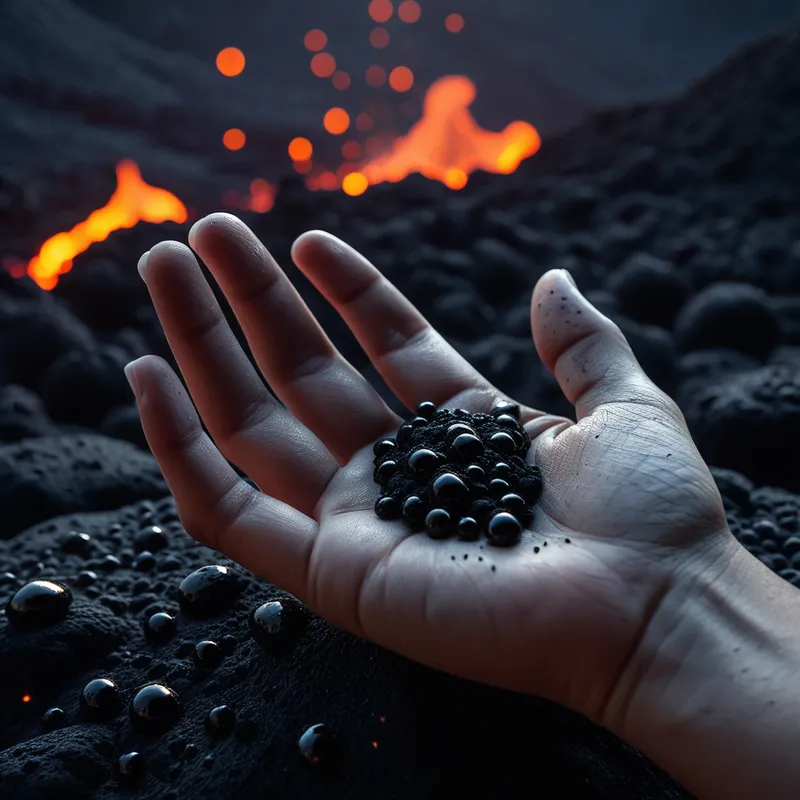
From her eyes, tears would fall. But these were no ordinary tears. They were born of the divine fire within her. As they streamed down her cheeks, they crystallized in the cool air, hardening instantly into droplets of pure, glossy black glass. They fell amidst the cinders and the rough ʻaʻā lava, these perfect, fragile jewels—Pele’s Tears. They littered the new earth, scattered like a constellation of frozen sorrow, each one a captured moment of the goddess’s immeasurable passion and pain.
Cultural Origins & Context
This myth is not a relic of a forgotten past but a living narrative woven into the very geology of Hawaiʻi. It originates from the Kanaka Maoli oral tradition, passed down through generations of kāhuna and storytellers. The story functions on multiple levels: as an etiological myth explaining the presence of obsidian droplets on volcanic slopes, as a theological insight into the complex nature of the primary deity, and as a profound piece of environmental ethics.
Pele is not a distant, omnipotent figure but an ʻaumakua (family or personal god) for many, and a palpable, present force for all. The myth was told not merely for entertainment but as a way to understand the terrifying and awe-inspiring volcanic activity that constantly reshaped their world. It personified the unpredictable power of the land, teaching respect (kapu) and illustrating that creation and destruction, love and rage, generosity and violence, are inseparable twins. To find a tear of Pele was to hold a tangible piece of this sacred, emotional landscape—a reminder that the land itself feels and remembers.
Symbolic Architecture
The symbolic power of Pele’s Tears lies in their paradoxical nature. They are a perfect alchemical image.
The most profound creations are often born not from joy, but from the conscious engagement with, and solidification of, our deepest sorrows.
The tear is the universal symbol of grief, of liquid emotion released. The volcanic glass (obsidian) is a tool—sharp, useful for cutting, a mirror for scrying. Pele’s Tears fuse these opposites. The goddess’s emotional outpouring (water) meets her essential fiery nature (fire) and is transformed into a permanent, solid artifact (earth), cooled by the air. This is the full elemental cycle contained in a single moment of feeling.
Psychologically, Pele represents the raw, creative-destructive libido of the unconscious—the fiery core of the Self that can both build and burn down our internal landscapes. Her tears symbolize what happens when this raw power encounters the limits of its own desire: it metabolizes its frustration and loss into something new. The tear is not the grief itself, but the product of grief that has been fully felt and passed through the transformative fire of consciousness. It is emotion made artifact, pain made precious.
The Dreamer’s Resonance
When this myth pattern appears in modern dreams, it seldom manifests as a literal vision of a volcanic goddess. Instead, the dreamer may find themselves in a landscape of stark, recent ruin—perhaps a house burned to its foundation, or a career in ashes. The air is cool and quiet after a storm. The initial panic has passed, replaced by a hollow, aching stillness.
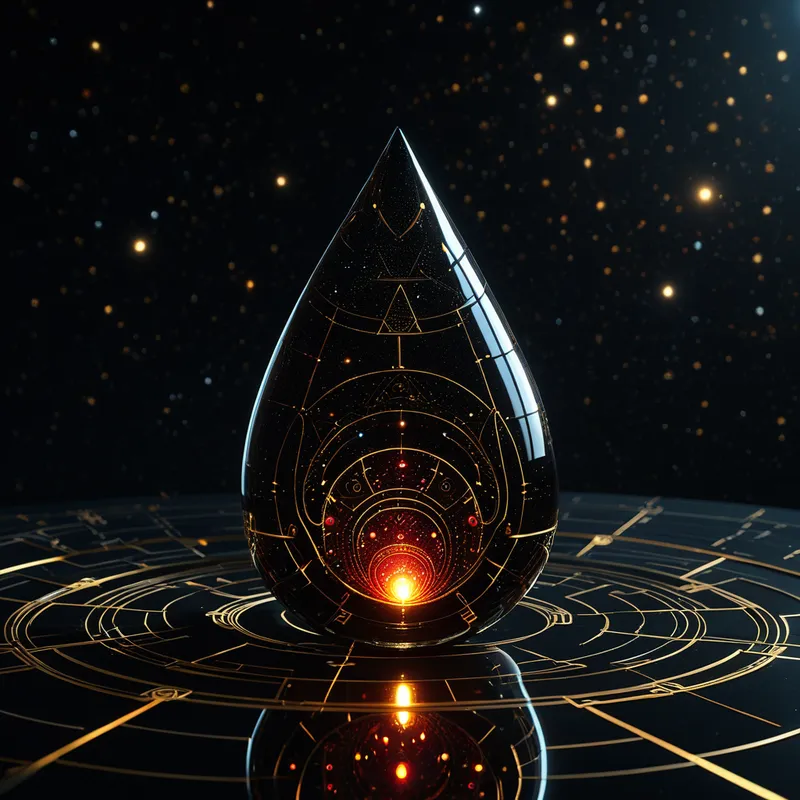
In this stillness, the dreamer looks down. Amidst the gray debris, they see something glinting. They reach down and pick up a small, perfectly formed object of great beauty and strange solidity—a gem, a polished stone, a piece of enigmatic technology. It feels cool and significant in the hand. This is the dream equivalent of finding Pele’s Tears. The psyche is signaling that within the devastation of a life event—a profound loss, a failed project, the end of a relationship—a process of psychic crystallization has occurred. The intense emotional heat of the experience has been alchemized into a new, durable core of understanding, a piece of nascent Self that did not exist before the “eruption.”
The somatic feeling is crucial: not the heat of the lava, but the cool solidity of the glass. The transformative work is done. What remains is to recognize and collect these fragments of insight from the scorched earth of one’s old life.

Alchemical Translation
The individuation process modeled by this myth is not one of avoiding the fire, but of learning to stand in the aftermath of our own eruptions and recognize the treasures formed there. Our modern psyche, like Pele, contains volcanic forces: repressed rage, passionate desires, creative urges that can feel destructive to our settled lives. We often fear these “Pelean” aspects, trying to cap the volcano. But the myth instructs otherwise.
The first alchemical stage is Caldera: allowing the eruption to happen. This is the confrontation with shadow, the admission of jealousy, rage, or desire so intense it feels it will consume everything. It is psychologically messy and dangerous.
The second is Weeping: the descent from pure, externalized rage into the vulnerable, internal state of grief and acknowledgment. This is the crucial turning point—the move from acting-out to feeling-through. It is the sacred sorrow for what was lost in the fire, including parts of oneself.
The final stage is Crystallization: the patient waiting as the emotional heat dissipates, and then searching the cooled landscape of the newly configured psyche. Here, one finds the “tears”—the sharp, clear insights, the resilient new values, the compassionate understanding of one’s own nature forged in the trial.
To individuate is to become both the volcano and the jeweler—to have the courage to erupt, the humility to weep, and the awareness to gather the black glass of wisdom from the fields of your own destructions.
We do not become Pele by being endlessly fiery. We approach her wholeness by honoring the full cycle: our capacity to destroy, to grieve our destructions, and from that alchemical union, to create something enduring and true. To hold a piece of Pele is to hold a covenant with your own deepest, most turbulent self, agreeing that even from its tears, something of piercing beauty and utility can be born.
Associated Symbols
Explore related symbols from the CaleaDream lexicon: