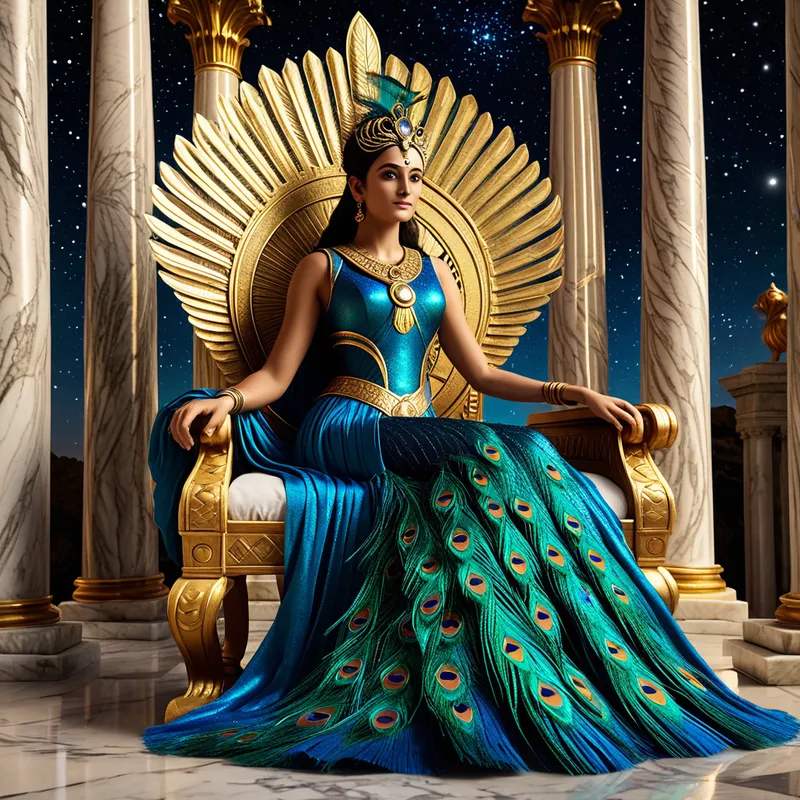
Peacock of Hera Myth Meaning & Symbolism
A story of how the goddess Hera transformed the hundred eyes of her slain watchman, Argus, into the shimmering tail of her sacred peacock.
The Tale of the Peacock of Hera
Hear now a story woven from the threads of jealousy, devotion, and a beauty born of profound sorrow. It begins not on sun-drenched Olympus, but in the mortal realm, where a secret was trying to breathe.
The secret was Io. Once a priestess of Hera, she was now a heifer with soft brown eyes, wandering the flower-strewn meadows. A transformation not of her choosing, but a desperate disguise bestowed by Zeus to hide his latest infidelity from his ever-watchful queen. But Hera, whose sovereignty is the sanctity of marriage, is not so easily deceived. Her suspicion, a cold mist, descended from the mountain. She knew the heifer’s true form. And so, she devised a prison more perfect than any bronze cage.
She summoned Argus [Panoptes](/myths/panoptes “Myth from Greek culture.”/), her most loyal servant. He was a being of quiet vigilance, a gentle giant whose body was a living fortress of sight. A hundred eyes stared out from his flesh, and the genius of his form was this: while fifty eyes kept their watch upon [the world](/myths/the-world “Myth from Tarot culture.”/), the other fifty rested in soft, dreaming slumber. He was perpetual wakefulness incarnate. Hera placed the trembling heifer Io into his care. “Guard her,” the goddess commanded, her voice the sound of closing gates. And Argus did. He led Io to a secluded grove, and there he stood, a silent sentinel. His countless eyes traced the path of every bee, noted [the fall](/myths/the-fall “Myth from Biblical culture.”/) of every leaf. No secret could escape that ring of sight. Io, in her bovine form, could only low softly, her human consciousness trapped, her despair as deep as the ocean.
On Olympus, Zeus saw his lover’s plight and his fury was a silent thunder. He called his swift son, [Hermes](/myths/hermes “Myth from Global/Universal culture.”/), the master of tricks and thresholds. “Go,” said the cloud-gatherer. “Lull the watcher to sleep and free her.”
Hermes, donning the guise of a simple shepherd, descended. He found Argus seated on a sun-warmed rock, his eyes like a constellation upon his skin. Hermes did not draw a weapon. Instead, he drew out his shepherd’s pipe, the syrinx. He began to play. The melody he spun was not of Olympus, but of [the earth](/myths/the-earth “Myth from Hindu culture.”/) itself—the whisper of reeds by a river, the sigh of [the wind](/myths/the-wind “Myth from Various culture.”/) through lonely places, the distant, drowsy hum of summer noon. It was the music of forgetting. One by one, the bright stars of Argus’s eyes began to dim. The waking fifty grew heavy, and the sleeping fifty sank deeper into dreams. The giant’s head nodded. His formidable watch was failing.
As the last eye fluttered shut, Hermes’ movement was a blur. A single, merciful strike from his sword, and Argus Panoptes, the all-seeing, was seen no more. He slumped to the earth, his hundred lights extinguished. The grove fell silent but for the pipe’s fading echo.
When the news reached Hera, her grief was not a mortal weeping, but a divine and terrible stillness. She descended to the grove and looked upon the form of her faithful servant, slain for guarding her rightful interest. Her sorrow was immense, but a goddess does not merely mourn; she transmutes. From the deep well of her loss, she drew forth a act of creation. She gently gathered the hundred eyes from the fallen Argus, and with a touch both tender and sovereign, she placed them. Not back into a giant’s flesh, but onto the tail feathers of her most cherished bird, the peacock. There, they were reborn. No longer weary organs of ceaseless watch, they became jewels of cosmic spectacle—iridescent, shimmering orbs of blue, green, and gold, staring out forever in a silent, magnificent fan. The peacock, once simply beautiful, was now sacred, a living monument to loyalty lost and eternally remembered. In that moment, the peacock became the Peacock of Hera, and its cry was said to be a lament for Argus, a sound of startling beauty born from irrevocable loss.

Cultural Origins & Context
This myth, primarily preserved in the works of the Roman poet Ovid in his [Metamorphoses](/myths/metamorphoses “Myth from Greek culture.”/), is a late, literary weaving of older Greek threads. The figure of Argus Panoptes appears in earlier fragments, such as in [Homer](/myths/homer “Myth from Greek culture.”/), often as a guardian of Io. The peacock itself, native to Asia, was a symbol of exotic luxury and regality imported into the Greek world, later becoming intimately associated with Hera, especially in her great sanctuary at Argos.
The story functioned on multiple levels. On one hand, it was an aetiological myth, explaining the origin of the peacock’s spectacular plumage. On a deeper societal level, it reinforced the cosmic order. It illustrated the perpetual tension between Zeus’s transgressive, generative impulses and Hera’s role as the enforcer of boundaries, law, and the sacred contract of marriage. The myth was told not to vilify Hera as merely jealous, but to honor her domain. Her act of transformation following Argus’s death demonstrated that even in defeat or grief, her power—the power of consecration and enduring legacy—remained absolute. The peacock, strutting in her sanctuaries, was a constant, dazzling reminder of her sovereignty and the high cost of loyalty in a cosmos ruled by conflicting divine wills.
Symbolic Architecture
The myth’s core is an [alchemy](/symbols/alchemy “Symbol: A transformative process of purification and creation, often symbolizing personal or spiritual evolution through difficult stages.”/) of [perception](/symbols/perception “Symbol: The process of becoming aware of something through the senses. In dreams, it often represents how one interprets reality or internal states.”/), [loss](/symbols/loss “Symbol: Loss often symbolizes change, grief, and transformation in dreams, representing the emotional or psychological detachment from something or someone significant.”/), and [integration](/symbols/integration “Symbol: The process of unifying disparate parts of the self or experience into a cohesive whole, often representing psychological wholeness or resolution of internal conflict.”/). Argus Panoptes represents total, fragmented [awareness](/symbols/awareness “Symbol: Conscious perception of self, surroundings, or internal states. Often signifies awakening, insight, or heightened sensitivity.”/). His hundred eyes symbolize a [consciousness](/symbols/consciousness “Symbol: Consciousness represents the state of awareness and perception, encompassing thoughts, feelings, and experiences.”/) scattered, unable to achieve a unified focus. He sees everything, and thus truly sees nothing in [depth](/symbols/depth “Symbol: Represents profound layers of consciousness, hidden truths, or the unknown aspects of existence, often symbolizing introspection and existential exploration.”/); he is pure external vigilance, a [psyche](/myths/psyche “Myth from Greek culture.”/) dominated by the paranoid, watchful ego.
The eyes of Argus are the burden of unintegrated perception—seeing all threats, missing the essence.
His slaying by Hermes, [the psychopomp](/myths/the-psychopomp “Myth from Various culture.”/) and god of transitions, is necessary. It represents the “killing” of this scattered, defensive mode of consciousness. The pipe’s lullaby is the call of the unconscious, the numinous, which the hyper-vigilant ego must eventually surrender to. This [death](/symbols/death “Symbol: Symbolizes transformation, endings, and new beginnings; often associated with fear of the unknown.”/), however, is not an end but a offering.
Hera’s act is the pivotal [transmutation](/symbols/transmutation “Symbol: A profound, alchemical process of fundamental change where one substance or state transforms into another, often representing spiritual evolution or personal metamorphosis.”/). She does not resurrect the old form. She takes the raw [material](/symbols/material “Symbol: Material signifies the tangible aspects of life, often representing physical resources, desires, and the physical world’s influence on our existence.”/) of sacrificed watchfulness (the eyes) and integrates it into a new, holistic [symbol](/symbols/symbol “Symbol: A symbol can represent an idea, concept, or belief, serving as a powerful tool for communication and understanding.”/) of [beauty](/symbols/beauty “Symbol: This symbol embodies aesthetics, harmony, and the appreciation of life’s finer qualities.”/) and display. The peacock’s [tail](/symbols/tail “Symbol: A tail in dreams can symbolize instincts, connection to one’s roots, or the hidden aspects of personality.”/) is no longer about paranoid observation but about glorious, awe-inspiring [presentation](/symbols/presentation “Symbol: A presentation in a dream can symbolize the act of revealing or showcasing one’s ideas, emotions, or status, reflecting the dreamer’s current life circumstances or relationships.”/). The “eyes” are now part of a magnificent whole, a display of divine splendor and regal [identity](/symbols/identity “Symbol: Identity represents the sense of self, encompassing personal beliefs, cultural background, and social roles.”/).
Grief, when touched by sovereignty, does not merely preserve the past; it re-members it into a new and radiant form.
Psychologically, this is the [movement](/symbols/movement “Symbol: Movement symbolizes change, progress, and the dynamics of personal growth, reflecting an individual’s desire or need to transform their circumstances.”/) from a complex—here, the victimized, watchful stance of the betrayed spouse or [guardian](/symbols/guardian “Symbol: A protector figure representing safety, authority, and guidance, often embodying parental, societal, or spiritual oversight.”/)—into a symbol of personal power and acknowledged value. The peacock becomes the [emblem](/symbols/emblem “Symbol: A symbolic design representing identity, authority, or ideals, often used in heraldry, logos, or artistic expression.”/) of [the Self](/myths/the-self “Myth from Jungian culture.”/), integrating the painful, watchful experiences (the eyes) into the beautiful, cohesive [pattern](/symbols/pattern “Symbol: A ‘Pattern’ in dreams often signifies the underlying structure of experiences and thoughts, representing both order and the repetitiveness of life’s situations.”/) of one’s identity.
The Dreamer’s Resonance
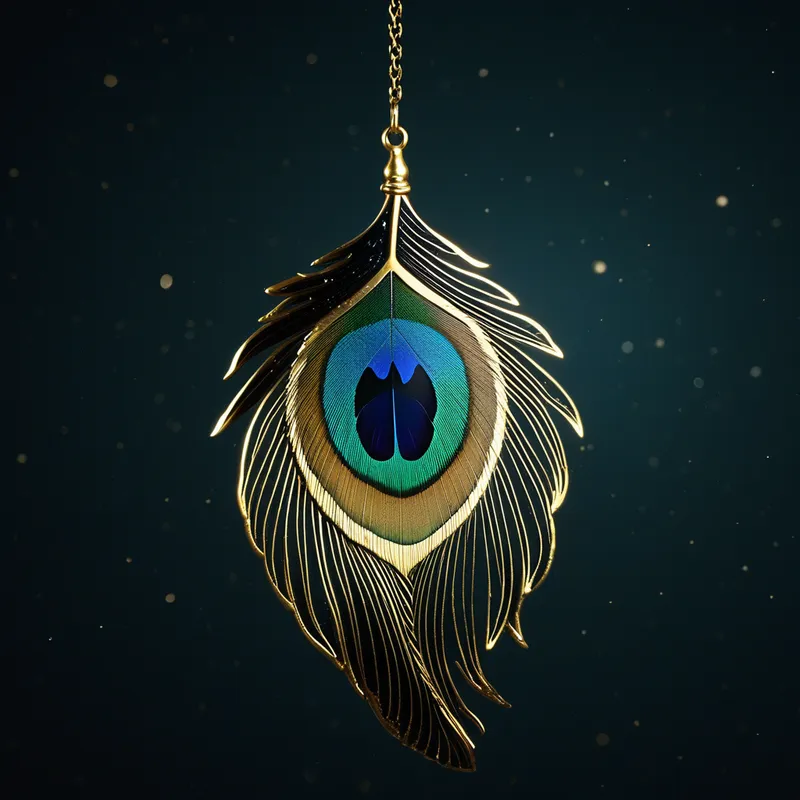
When this myth stirs in the modern unconscious, it may manifest in dreams of being watched by countless eyes, or of discovering iridescent feathers that feel both beautiful and unnerving. One might dream of a magnificent, silent bird displaying its tail in a shadowy courtyard, or of trying to close dozens of eyes on one’s own skin.
Such dreams often signal a process of integrating a period of hyper-vigilance, paranoia, or grief. The dreamer may be emerging from a situation that required constant defensive awareness—a betrayal, a loss, a time of intense scrutiny. The somatic feeling can be one of exhaustion giving way to a strange, shimmering tension. The psyche is performing Hera’s alchemy: it is gathering the fragmented, painful pieces of a watchful, wounded state and preparing to reconstitute them. The dream peacock’s cry—often described as harsh or jarring—mirrors the uncomfortable but necessary acknowledgment of the loss that precedes this transformation. The dream is an announcement that the raw material of suffering is being prepared for a display of newfound, hard-won wholeness.
Alchemical Translation
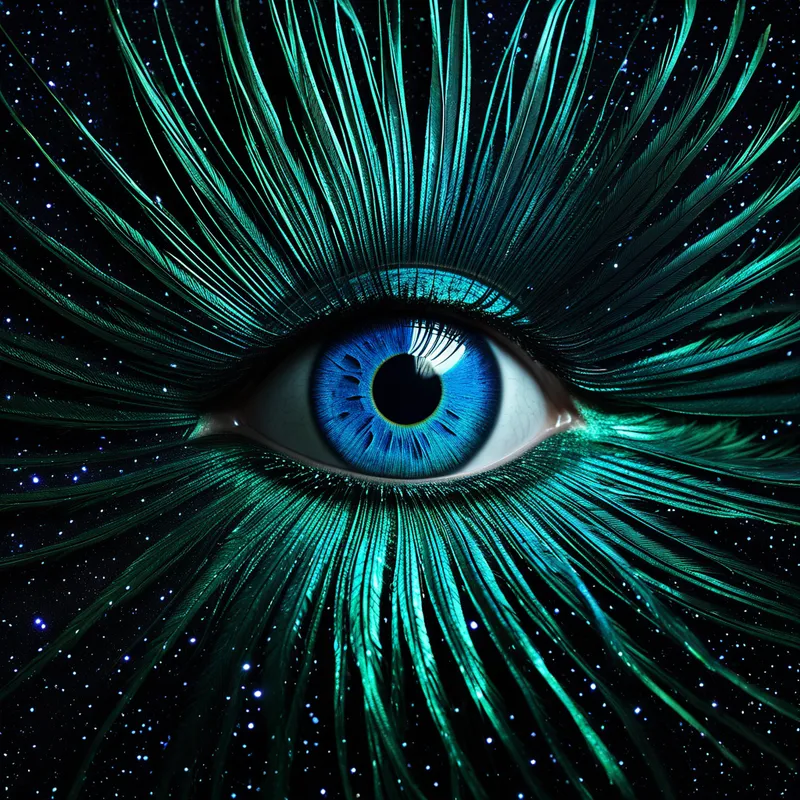
For the individual on the path of individuation, the Peacock of Hera models a crucial stage of psychic transmutation. We all have our inner Argus—the part of us that stands guard, wounded and watchful after a betrayal, a failure, or a profound disappointment. This guardian complex sees threats everywhere and binds our energy in constant defense. The first step in the alchemy is the Hermes-driven dissolution: we must allow this rigid, exhausted structure to be “lulled to sleep” and dismantled. This may come through therapy, art, crisis, or a numinous experience that breaks our old patterns of perception.
The death of Argus feels like a defeat, the final loss of a protective mechanism. But here, Hera’s archetype as the Ruler takes over. The conscious ego, in its mature, sovereign aspect (not the defensive one), must now perform the goddess’s work. It must consciously gather the shards of that experience—the pain, the insight, the vigilance—and refuse to let them merely be scars.
Individuation demands we become the artist of our own wounds, weaving them into the tapestry of our authority.
The alchemical translation is the active, creative work of taking those “eyes”—the painful lessons, the hard-won awareness—and arranging them into your “tail.” Your tail is your public facing, your displayed identity, your life’s work. It is not about hiding the wounds, but transforming them into your most striking feature, your wisdom, your unique perspective that commands respect. The peacock does not hide its eyes; it fans them out for all to see, transformed into breathtaking beauty. So too does the individuated self integrate its darkest, most watchful sufferings into a displayed complexity that is the very signature of its depth, resilience, and sovereign power. The cry remains, a testament to the cost, but the display becomes the meaning.
Associated Symbols
Explore related symbols from the CaleaDream lexicon: