Paradise Garden Myth Meaning & Symbolism
A divine garden of perfect order is fractured by a single act of transgression, casting humanity into a world of longing and remembrance.
The Tale of Paradise Garden
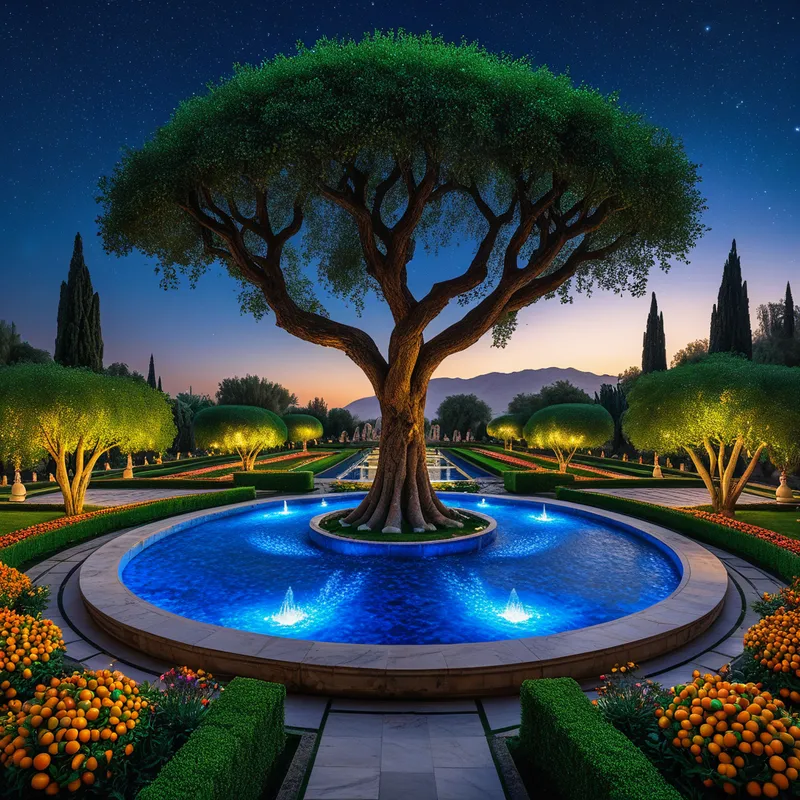
In the time before time, when [the world](/myths/the-world “Myth from Tarot culture.”/) was a breath held in the palm of the Divine, there was a garden. Not a garden of earth and toil, but a garden of essence and intention—[Jannah](/myths/jannah “Myth from Islamic culture.”/), a sanctuary woven from light, fragrance, and perfect, flowing order.
Its walls were not of stone, but of peace. Within, the air was neither hot nor cold, but carried the scent of cloves, roses, and wet earth after a sacred rain. At its heart roared a fountain of pure, white light—the Salsabil. From this radiant source, four mighty rivers burst forth, carving channels of milk, honey, wine, and [water](/myths/water “Myth from Chinese culture.”/) through the landscape, dividing the garden into a perfect, living quadrant. Between them grew the Tree of Immortality, its branches heavy with fruit that shimmered like captured stars, its roots drinking deeply from all four streams.
Into this perfected geometry, the Khalīq placed two beings: Adam and Eve. They were not visitors, but the garden’s conscious soul, made from its clay and animated by the breath of the al-Khāliq. They knew no hunger, no thirst, no shame. Their only duty was to dwell in grateful awareness, to name the essence of all things, and to leave one tree untouched—a single axis of mystery in a world of luminous clarity.
But the garden had a shadow. Shaytan, cast out for his pride, beheld this perfect order and saw only a flaw to exploit. He did not come with fire and fury, but as a whisper in the perfect silence, a curl of smoke in the clear air. He spoke to the longing that sleeps in every heart made for eternity: the longing to know, completely, to possess the knowledge that defines the boundaries of one’s world. “Does your Lord forbid you this tree,” came the insistent murmur, “lest you become angels, or become immortals?”
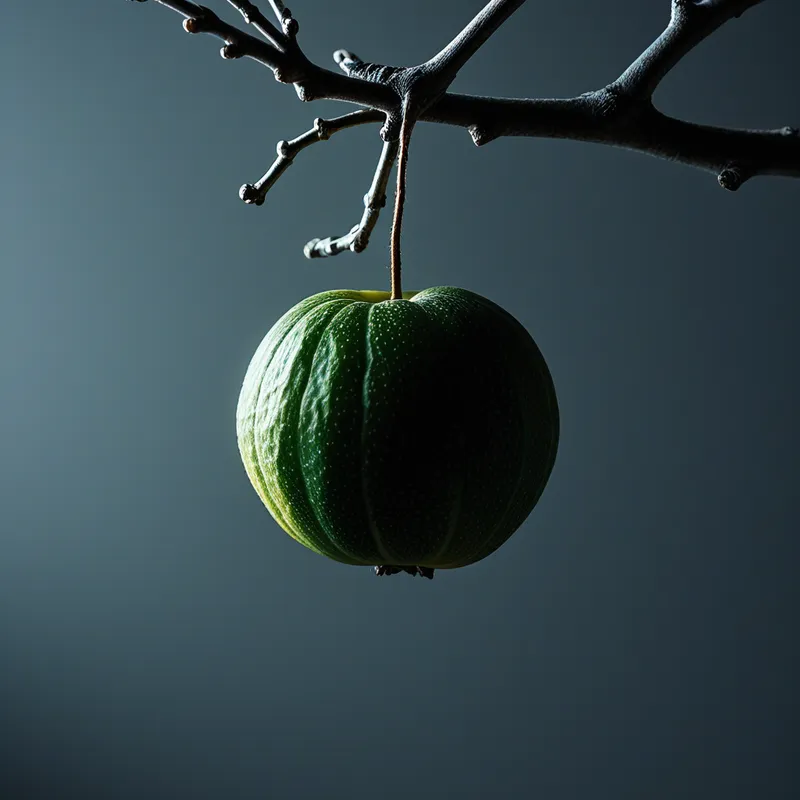
The fruit hung, a perfect, glowing orb. It was not evil, but it was other—the one [thing](/myths/thing “Myth from Norse culture.”/) that was not given, the one door that was not to be opened. In reaching for it, the hand did not just pluck a fruit; it reached across a divine boundary. The moment the skin broke under their teeth, the garden’s music faltered. The perfect symmetry fractured. They saw their own forms, separate and vulnerable, and the first feeling they knew was not sin, but exposure. The walls of peace now felt like walls of confinement. The same light that had nourished them now judged them.
And so, the descent began. Not a violent ejection, but a gentle, terrible unfolding. The ground of the garden softened beneath their feet, becoming the rough, uncertain soil of [the earth](/myths/the-earth “Myth from Hindu culture.”/). The four rivers faded into the mythic sources of the world’s great waters. The tree receded into a memory, a story told beside campfires. They were cast out, not into hell, but into time—into a world of cycles, of labor, of distance, and of a longing so deep it would shape every human heart thereafter: the longing for the garden, for the remembered wholeness, for the scent of that first, sacred rain.
Cultural Origins & Context
This narrative, deeply embedded in the Islamic tradition, is also a scion of an older, Persian rootstock. The concept of the pairi-daeza (literally “walled garden”) is a foundational Persian archetype, a microcosm of the ordered universe and a royal symbol of sovereignty over chaos. When this Persian aesthetic and cosmological vision met the Abrahamic prophetic tradition, the Paradise Garden was born in its fullest mystical expression.
It was passed down not merely as a theological fact, but as a living, sensory reality in poetry, miniature painting, and garden design. The poets Ferdowsi, Rumi, and Hafez used the garden as the supreme metaphor for the soul’s state—its separation, its yearning, and its potential reunion. In society, the myth functioned as a compass. It oriented the community toward an ideal of inner and outer harmony (asl), reminded them of the fragility of spiritual equilibrium, and offered the promise of return not as a reward, but as the soul’s natural homecoming.
Symbolic Architecture
The [Paradise](/symbols/paradise “Symbol: A perfect, blissful place or state of being, often representing ultimate fulfillment, harmony, and transcendence beyond ordinary reality.”/) Garden is not a [location](/symbols/location “Symbol: The symbol of ‘Location’ signifies a sense of place, context, and the environment in which experiences unfold.”/), but a state of [consciousness](/symbols/consciousness “Symbol: Consciousness represents the state of awareness and perception, encompassing thoughts, feelings, and experiences.”/). Its symbolic [architecture](/symbols/architecture “Symbol: Architecture in dreams often signifies structure, stability, and the framing of personal identity or life’s journey.”/) is a precise map of the integrated [psyche](/myths/psyche “Myth from Greek culture.”/).
The Four Rivers represent the confluence of the essential [life](/symbols/life “Symbol: The symbol of ‘Life’ represents a journey of growth, interconnectedness, and existential meaning, encompassing both the joys and challenges that define human experience.”/) energies or qualities of existence—sustenance (milk), pleasure ([honey](/symbols/honey “Symbol: A sweet, viscous substance produced by bees, symbolizing natural sweetness, reward, and nourishment.”/)), inspiration ([wine](/symbols/wine “Symbol: Wine often symbolizes celebration, indulgence, and the deepening of personal connections, but it can also represent excess and escape.”/)), and purity ([water](/symbols/water “Symbol: Water symbolizes the subconscious mind, emotions, and the flow of life, representing both cleansing and creation.”/)). They flow from a single, central [source](/symbols/source “Symbol: The origin point of something, often representing beginnings, nourishment, or the fundamental cause behind phenomena.”/), symbolizing the unified Self from which all aspects of our being emanate.
The Central [Tree](/symbols/tree “Symbol: In dreams, the tree often symbolizes growth, stability, and the interconnectedness of life.”/) is the [axis](/symbols/axis “Symbol: A central line or principle around which things revolve, representing stability, orientation, and the fundamental structure of reality or consciousness.”/) mundi, the connecting pillar between the divine [realm](/symbols/realm “Symbol: The symbol of ‘Realm’ often signifies the boundaries of one’s consciousness, experiences, or emotional states, suggesting aspects of reality that are either explored or ignored.”/) and the [human](/symbols/human “Symbol: The symbol of a human represents individuality, complexity of emotions, and social relationships.”/) [realm](/symbols/realm “Symbol: The symbol of ‘Realm’ often signifies the boundaries of one’s consciousness, experiences, or emotional states, suggesting aspects of reality that are either explored or ignored.”/), between [eternity](/symbols/eternity “Symbol: The infinite, timeless state beyond human life and measurement, often representing the ultimate or divine.”/) and time. Its prohibition marks the necessary [boundary](/symbols/boundary “Symbol: A conceptual or physical limit defining separation, protection, or identity between entities, spaces, or states of being.”/) that defines a conscious self. To be everything, to know everything, is to be nothing. The boundary creates the possibility of [relationship](/symbols/relationship “Symbol: A representation of connections we have with others in our lives, often reflecting our emotional state.”/), [choice](/symbols/choice “Symbol: The concept of choice often embodies decision-making, freedom, and the multitude of paths available in life.”/), and ultimately, love.
The Fall, then, is not a crime but a necessary descent. The soul cannot know itself as a soul if it never leaves the home of the soul.
Shaytan here is not a mere [villain](/symbols/villain “Symbol: A character representing opposition, moral corruption, or suppressed aspects of self, often embodying fears, conflicts, or societal threats.”/), but the personification of the nafs al-ammārah—the “commanding self” or the egoic [impulse](/symbols/impulse “Symbol: A sudden, powerful urge or drive that arises without conscious deliberation, often linked to primal instincts or emotional surges.”/) that insists on absolute autonomy, on breaking wholeness into a [piece](/symbols/piece “Symbol: A ‘piece’ in dreams often symbolizes a fragment of the self or a situation that requires integration, reflection, or understanding.”/) it can possess. The [exile](/symbols/exile “Symbol: Forced separation from one’s homeland or community, representing loss of belonging, punishment, or profound isolation.”/) is into the realm of duality (good/evil, self/other, joy/suffering), which is the only [arena](/symbols/arena “Symbol: An arena symbolizes a space for competition, public scrutiny, or performing under pressure.”/) where consciousness can be forged and individuation can begin.
The Dreamer’s Resonance
When this myth stirs in the modern unconscious, it rarely appears as a literal garden. It manifests as a profound, somatic sense of homesickness for a place you have never known. You may dream of finding a hidden, perfectly peaceful room in a chaotic house. You may dream of a pristine, untouched natural spring in the midst of an urban wasteland. You may dream of eating a fruit that fills you with both ecstasy and devastating shame.
Psychologically, these dreams signal a confrontation with the paradise complex—the deep, often unconscious belief that wholeness, peace, and fulfillment exist elsewhere (in the past, in a future achievement, in another person). The dream is the psyche pointing to the source of a current alienation. The somatic feeling—often a deep ache in the chest or a sense of hollow yearning—is the body remembering its original, integrated state before the “fall” into fragmentation, trauma, or societal conditioning. It is [the Self](/myths/the-self “Myth from Jungian culture.”/) reminding [the ego](/myths/the-ego “Myth from Jungian culture.”/) of its origin.
Alchemical Translation
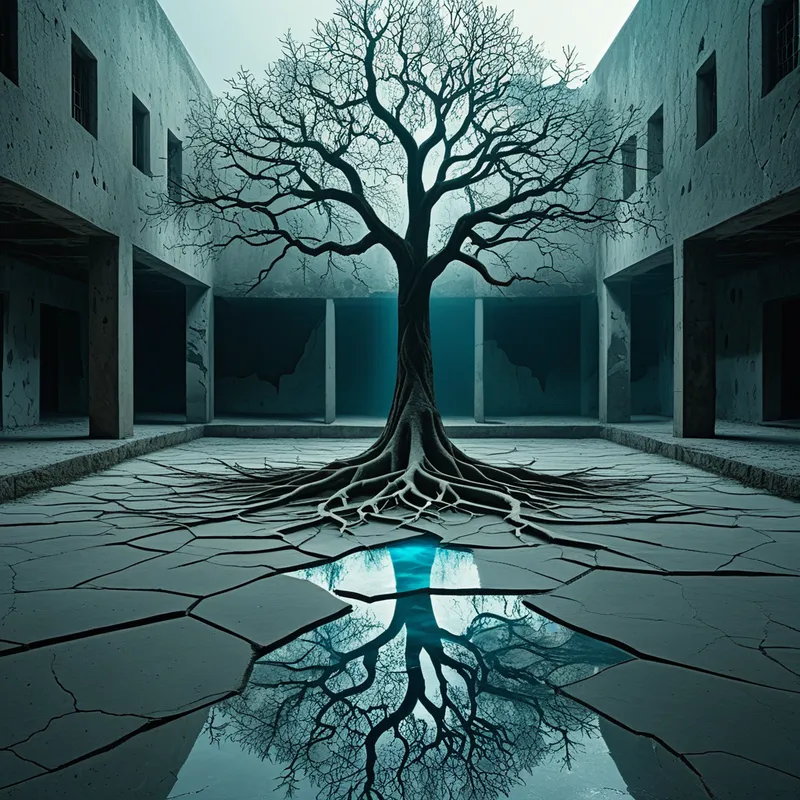
The alchemical work modeled by this myth is not about “getting back to the garden.” That is the nostalgia of the Innocent. The true transmutation is about carrying the consciousness of the garden into the field of exile.
[The first stage](/myths/the-first-stage “Myth from Alchemical culture.”/), [separatio](/myths/separatio “Myth from Alchemical culture.”/), is already complete: we are here, in the world of time and duality. The next stage is [nigredo](/myths/nigredo “Myth from Alchemical culture.”/), the confronting of [the shadow](/myths/the-shadow “Myth from Jungian culture.”/)—our personal Shaytan, the voice of pride, resentment, and compulsive desire that led to our personal “falls” from integrity.
The alchemical miracle is in the conjunctio. We must find the four rivers within. We must identify the sources of our true nourishment (milk), our genuine joy (honey), our creative passion (wine), and our emotional clarity (water). We must trace them back, not to a physical place, but to their origin in our own center—the Salsabil fountain of the present-moment Self.
The return to Paradise is not a spatial journey, but a restoration of perception. It is to see, through the eyes of longing, that the garden was never left behind; its walls were the horizons of a limited consciousness.
To eat of the Tree of Immortality after [the fall](/myths/the-fall “Myth from Biblical culture.”/) is to achieve a sacred paradox: to fully embrace one’s mortal, temporal life with all its labors and separations, and in that very embrace, to touch the eternal. The garden is rebuilt not behind walls of peace, but in the heart that has made peace with exile, understanding that the longing itself is the proof, and the path, back home.
Associated Symbols
Explore related symbols from the CaleaDream lexicon: