Parable of the Mustard Seed Myth Meaning & Symbolism
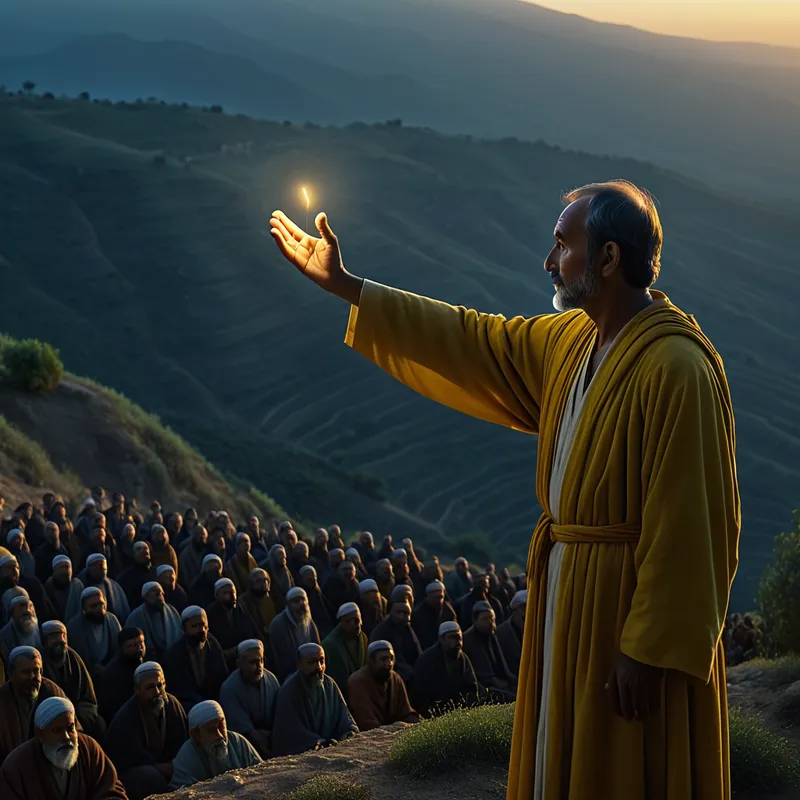
A teacher speaks of a kingdom beginning as the smallest of seeds, destined to become a great sheltering tree where all birds find rest.
The Tale of the Parable of the Mustard Seed
The air on the shore was thick with the smell of fish and wet earth, charged with a restless energy. The crowd pressed in—fishermen with salt-cracked hands, farmers with soil under their nails, mothers with children clinging to their skirts, and the weary-eyed from the city. They had come not for spectacle, but for a word that could hold the weight of their longing. At the [water](/myths/water “Myth from Chinese culture.”/)‘s edge, a man sat in a borrowed boat, pushed just offshore so his voice could carry over the murmuring sea of faces.
He spoke not of armies or empires, but of dirt and sky, of farmers and bakers. His words were simple, yet they seemed to cut through the noise of [the world](/myths/the-world “Myth from Tarot culture.”/) and settle in the chest like a stone dropped into a deep well. He spoke of a sower, of hidden treasure, of nets cast wide.
Then, his voice dropping to a tone of intimate, potent secrecy, he offered them a riddle wrapped in the ordinary. “To what shall we compare the Kingdom of Heaven?” he asked, his gaze sweeping across their hopeful, confused faces. “It is like a grain of [mustard seed](/myths/mustard-seed “Myth from Buddhist culture.”/).”
A ripple of quiet disbelief passed through those who knew the land. A mustard seed? The tiniest [thing](/myths/thing “Myth from Norse culture.”/) a man might purposefully plant, a speck so small it could be lost between finger and thumb, a thing of no account in the grand schemes of kings and priests.
The teacher saw their doubt and leaned into it. “It is the smallest of all seeds,” he affirmed, holding up his hand as if pinching the invisible minute truth. “But when it is grown…” He paused, letting the silence build the image. “…it is greater than all the garden herbs.” His hands began to shape the air, drawing the vision up from [the earth](/myths/the-earth “Myth from Hindu culture.”/). “It becomes a tree.” Not a shrub, not a plant, but a tree—a word that spoke of stature, permanence, and strength.
“And the birds of the air,” he continued, his gesture opening to [the sky](/myths/the-sky “Myth from Persian culture.”/) where hawks circled on the thermals, “come and make nests in its branches.” He did not speak of harvest, of grinding the seed for spice. He spoke of completion, of a destiny fulfilled: a humble, tiny origin giving way to a sprawling, sheltering sanctuary. A home for the wild, winged things of heaven. The story hung in the air, complete, a perfect, potent seed itself, waiting for the soil of a listening heart to receive it. Then he turned to the next parable, leaving the image of that impossible, inevitable tree growing silently in the imagination of the crowd.
Cultural Origins & Context
This story originates from the Synoptic Gospels (Matthew 13:31-32, Mark 4:30-32, Luke 13:18-19), situated within the collected teachings of [Jesus of Nazareth](/myths/jesus-of-nazareth “Myth from Christian culture.”/). It is one of several “Kingdom Parables” delivered primarily to mixed crowds of peasants, artisans, and the marginalized in rural Galilee. Its societal function was profoundly subversive. In a culture dominated by Roman imperial grandeur and Temple hierarchy, which equated divinity with visible power and scale, [Jesus](/myths/jesus “Myth from Christian culture.”/) invoked the utterly insignificant.
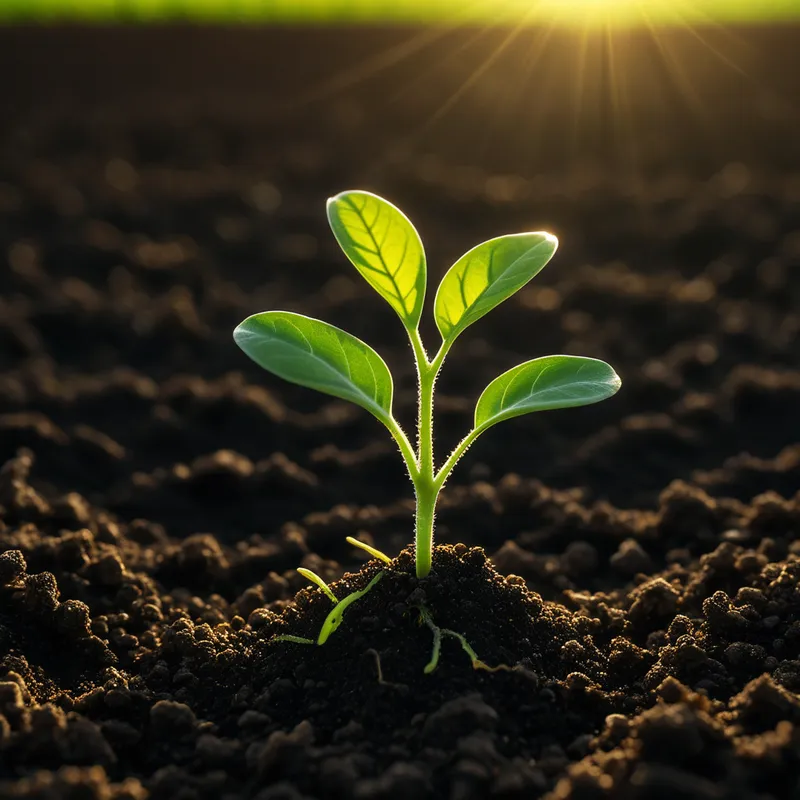
The mustard plant (Brassica nigra) was a common, fast-growing herb, often considered a garden weed. To compare God’s reign to this seed was to democratize and internalize the sacred. The parable was an oral teaching, designed for easy memorization and retelling among non-literate communities. It functioned as a cognitive key, reorienting listeners’ expectations from a geopolitical kingdom to an organic, transformative process beginning in the hidden, private soil of the individual and the community. It offered hope not through conquest, but through the quiet, unstoppable logic of life itself.
Symbolic Architecture
Psychologically, the parable maps the [architecture](/symbols/architecture “Symbol: Architecture in dreams often signifies structure, stability, and the framing of personal identity or life’s journey.”/) of latent potential. The [Kingdom](/symbols/kingdom “Symbol: A kingdom symbolizes authority, belonging, and a sense of identity within a larger context or community.”/) of [Heaven](/symbols/heaven “Symbol: A symbolic journey toward ultimate fulfillment, spiritual transcendence, or connection with the divine, often representing life’s highest aspirations.”/) here is not a place but a state of being, the integrated Self. The [mustard](/symbols/mustard “Symbol: A pungent condiment symbolizing sharp awakening, hidden potential, and transformative energy that can sting or stimulate.”/) seed symbolizes the nascent, often overlooked or discounted, core of this wholeness—the Self-[archetype](/symbols/archetype “Symbol: A universal, primordial pattern or prototype in the collective unconscious that shapes human experience, behavior, and creative expression.”/) in its most [compact](/symbols/compact “Symbol: Represents efficiency, density, and the compression of complex elements into a small, manageable form. Often symbolizes hidden potential or constrained resources.”/), germinal form.
The greatest potential is often housed in the form the conscious mind deems most negligible.
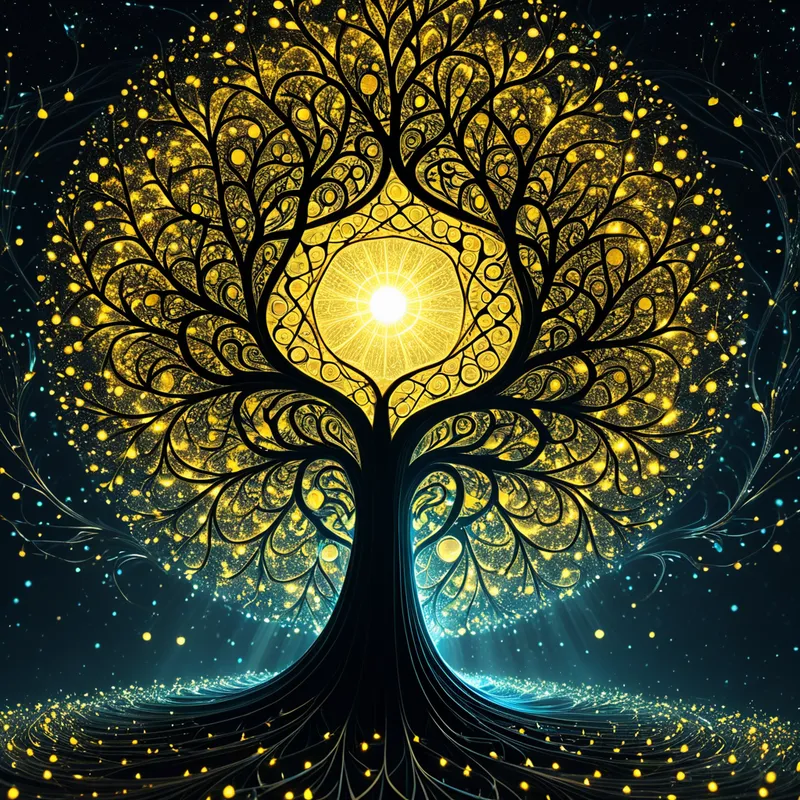
The growth from seed to [tree](/symbols/tree “Symbol: In dreams, the tree often symbolizes growth, stability, and the interconnectedness of life.”/) represents the inevitable, often chaotic, process of individuation. It is not a [linear](/symbols/linear “Symbol: Represents order, predictability, and a direct, step-by-step progression. It symbolizes a clear path from cause to effect.”/), controlled cultivation but a wild, full-bodied becoming. The “birds of the air” nesting in its branches are crucial. In ancient [symbolism](/symbols/symbolism “Symbol: The use of symbols to represent ideas or qualities, often conveying deeper meanings beyond literal interpretation. In dreams, it’s the language of the unconscious.”/), birds often represented spirits, thoughts, or aspects of the [soul](/symbols/soul “Symbol: The soul represents the essence of a person, encompassing their spirit, identity, and connection to the universe.”/). Thus, the mature Self does not exist for itself alone; its wholeness creates an internal ecology—a sanctuary where all the disparate, wandering, and restless parts of the [psyche](/myths/psyche “Myth from Greek culture.”/) (the instincts, the complexes, the forgotten talents) can finally come home to roost and find rest.
The Dreamer’s Resonance
When this mythic pattern stirs in the modern unconscious, it often manifests in dreams of small, potent objects or overlooked beginnings. A dreamer might find a tiny, glowing stone in a pocket; discover a single, vibrant plant growing through a crack in an urban sidewalk; or be tasked with guarding a minute, fragile egg.
Somatically, this can correlate with a felt sense of a slight but persistent pressure or quickening in the center of the chest or gut—the “seed” pressing for growth. Psychologically, the dreamer is at a threshold where a nascent identity, a new calling, or a deep, authentic feeling is seeking embodiment. The conflict in the dream is rarely dramatic; it is the tension between the enormity of the inner potential and the conscious mind’s dismissal of its humble, inauspicious beginnings. The dream serves to validate the small start, insisting on its monumental destiny. It is the psyche’s way of saying, “Attend to this. What you dismiss as nothing is the everything-to-be.”
Alchemical Translation
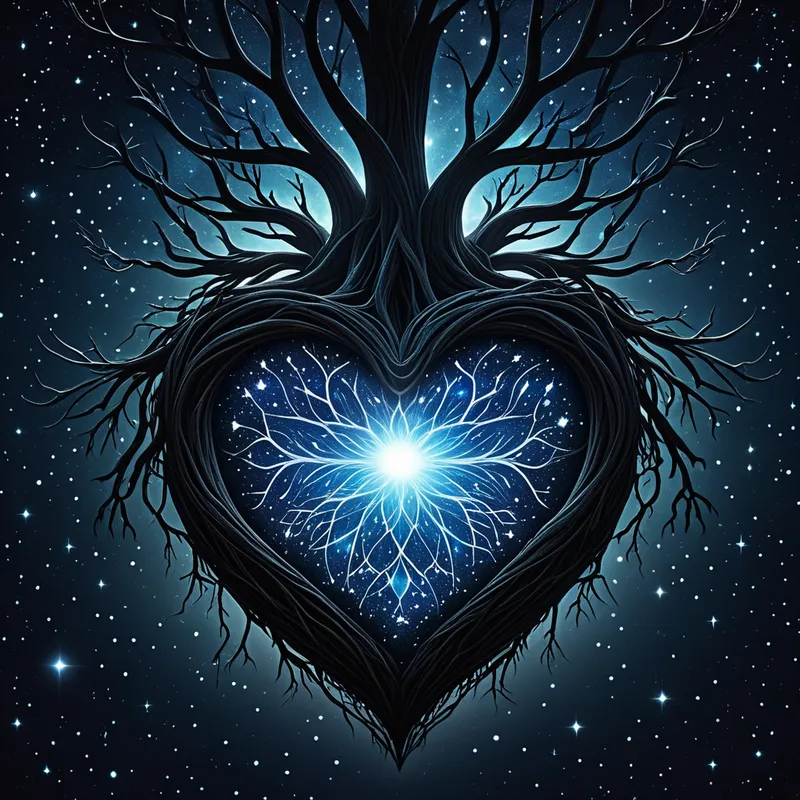
The alchemical process mirrored here is [solve et coagula](/myths/solve-et-coagula “Myth from Alchemical culture.”/): dissolution and coagulation. First, the grand, inflated notions of [the ego](/myths/the-ego “Myth from Jungian culture.”/) (the desire for a kingdom of immediate glory and visible power) must be dissolved, reduced down to the [prima materia](/myths/prima-materia “Myth from Alchemical culture.”/)—the “black earth” or the humble, dark soil of honest self-appraisal. Into this fertile darkness, the seed, the scintilla or divine spark of [the Self](/myths/the-self “Myth from Jungian culture.”/), is planted.
The work is not to build the kingdom, but to cease impeding the tree.
The alchemical translation for the modern individual is a call to a paradoxical faith: to invest absolute seriousness into the seemingly insignificant inner promptings—the quiet intuition, the small act of integrity, the fragile creative impulse. The “work” is not to force growth, but to provide the conditions (attention, patience, a tolerance for the messy, unglamorous stages of growth) and then to undergo the transformation oneself as the seed becomes the tree. The [triumph](/myths/triumph “Myth from Roman culture.”/) is not an achievement of the ego, but the ego’s relocation: from believing itself to be the sole planter and ruler, to discovering itself as one of the many “birds” finding sanctuary within the vast, sheltering branches of the matured, embodied Self. The tiny, hard seed of intention must crack open and die as a seed to become what it was always meant to be: a living, breathing, sheltering universe in itself.
Associated Symbols
Explore related symbols from the CaleaDream lexicon: