Papatūānuku's Cloak Myth Meaning & Symbolism
A primal myth of separation between Earth Mother and Sky Father, whose grief-stricken parting creates the world and cloaks her in living memory.
The Tale of Papatūānuku’s Cloak
In the time before time, there was no light, no wind, no space for life to breathe. There was only the close, warm, silent dark of an eternal embrace. Papatūānuku, the Earth, lay pressed against [Ranginui](/myths/ranginui “Myth from Maori culture.”/), the Sky. Their love was so profound, so complete, that not a sliver of emptiness existed between them. They were one world, one being, wrapped in a cocoon of potential.
Within that intimate darkness, their children were born. The gods of forest, sea, wind, and war stirred in the cramped space between their parents. They grew in the warmth, but they grew restless. They lived in perpetual night, never knowing the feel of open air on their skin, never seeing their own forms. The whisper of Tāne Mahuta rustled through the dark, “We are stifled. We cannot become what we are meant to be.” The restless surge of Tangaroa echoed the thought. Even Rongo, god of peace, longed for room to grow.
A great council was held in the gloom. The children debated, their voices muffled by the flesh of their parents. Some, like Rūaumoko, still unborn, wished to remain in the warmth. Others, like [Haumia-tiketike](/myths/haumia-tiketike “Myth from Maori culture.”/), knew they needed light. But the decision fell to the strongest. [Tūmatauenga](/myths/tmatauenga “Myth from Maori culture.”/) argued for violent separation, but it was Tāne Mahuta who took action.
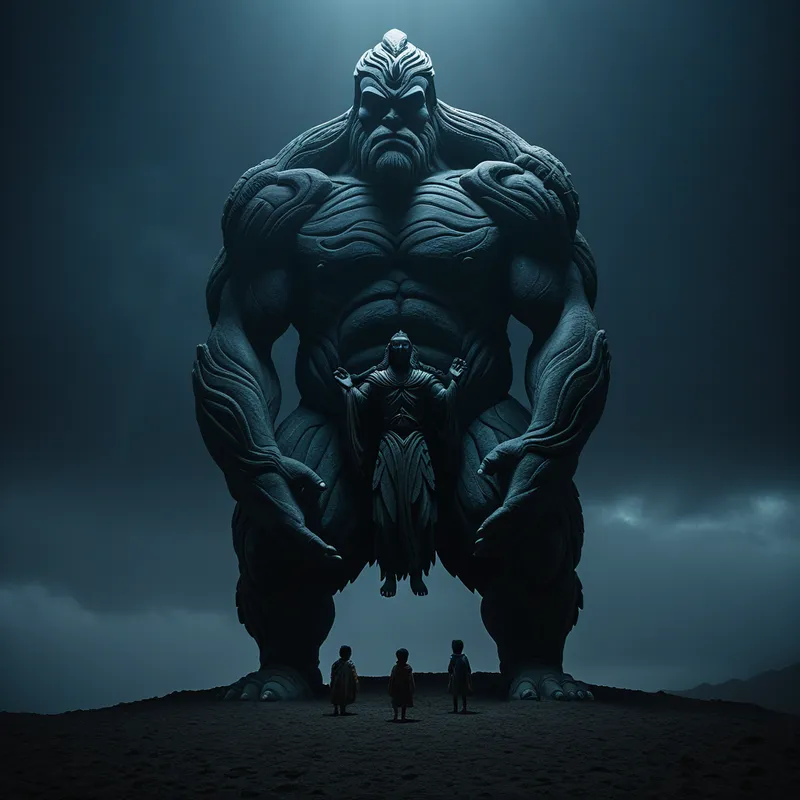
Planting his feet upon his mother, Papatūānuku, and bracing his mighty shoulders against his father, Ranginui, Tāne began to push. The sound was a groan that shook the universe—the creaking of cosmic sinew, the tearing of a bond older than thought. He pushed with the relentless, upward striving of all trees that would ever be. He pushed until his muscles were stone and his breath was the first wind.
And then, with a sigh that became the first dawn, they were parted.
Ranginui was forced upwards, into the vast, cold expanse. Papatūānuku remained below, suddenly exposed and bereft. Light, terrible and beautiful, flooded the space between them. The children gasped, seeing each other and the world for the first time. But their joy was cut short by a sound—a deep, resonant weeping that rose from the earth itself. It was Papatūānuku, mourning the loss of her beloved. From the new sky, Ranginui wept in return, his tears falling as the first rain.
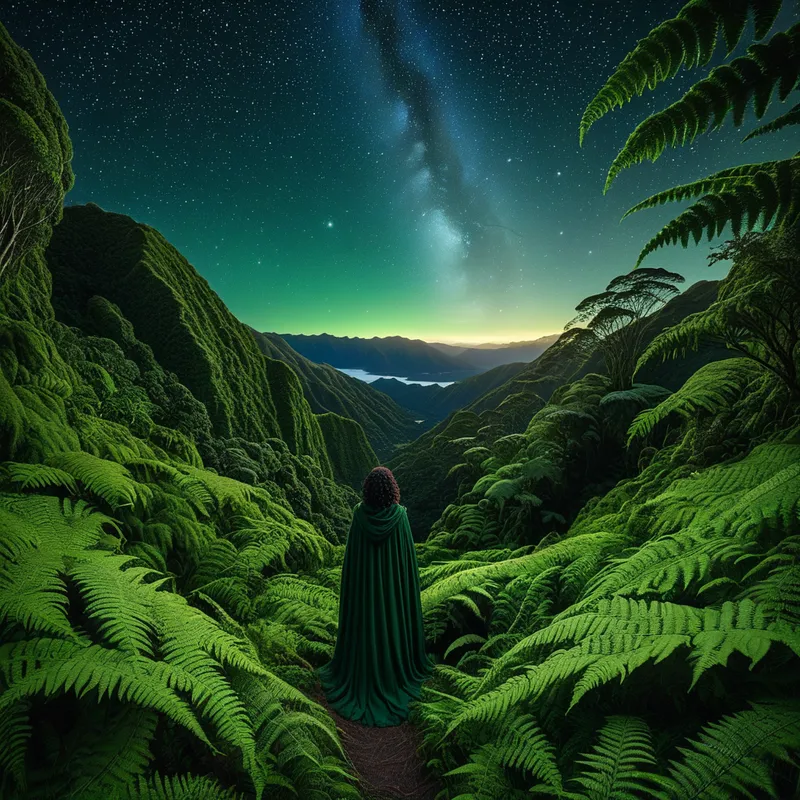
Seeing his mother’s grief, her naked sorrow under the glaring light, Tāne Mahuta was moved. He could not reunite them, for the world now existed in their separation. But he could comfort her. From his own essence, he fashioned a garment. He took the seeds of life and planted them upon her body. He clothed her in a magnificent cloak: a living tapestry of ponga and mighty Tāne, of creeping vines and sweet-scented flowers. He draped her in forests, padded her with soft moss, and adorned her with glistening lakes and rushing rivers. This was Papatūānuku’s Cloak—not to hide her, but to honor her. To hold the memory of the embrace within the reality of the separation. To make her loneliness beautiful, and in that beauty, to give life to all things.
Cultural Origins & Context
This cosmogonic narrative is central to Māori worldview, transmitted orally through generations by tohunga (priestly experts) and skilled storytellers. It is not merely a “story of how the world began” but the foundational template for understanding existence, relationship, and responsibility. The myth was recited in whai kōrero, woven into waiata, and enacted in ritual to affirm the sacred connection between the people and the land (whenua).
Its societal function is profound. It establishes Papatūānuku as a literal ancestor, making all of geography kin. It explains the origin of natural phenomena—rain is Ranginui’s tears, forests are Tāne’s gift, earthquakes are the stirring of the unborn child Rūaumoko. Most importantly, it frames the human condition within a drama of necessary separation, enduring connection, and the ethical imperative of care. We live in the space created by that primal division, and our duty is to tend to our mother’s cloak.
Symbolic Architecture
The myth is a masterclass in symbolic [depth](/symbols/depth “Symbol: Represents profound layers of consciousness, hidden truths, or the unknown aspects of existence, often symbolizing introspection and existential exploration.”/). The primal embrace represents undifferentiated [consciousness](/symbols/consciousness “Symbol: Consciousness represents the state of awareness and perception, encompassing thoughts, feelings, and experiences.”/), the unconscious unity of the psyche where all potentials exist but nothing is distinct. The children are the nascent archetypal forces—thoughts, drives, talents—that cannot develop without [space](/symbols/space “Symbol: Dreaming of ‘Space’ often symbolizes the vastness of potential, personal freedom, or feelings of isolation and exploration in one’s life.”/), without the light of consciousness.
The birth of the individual psyche is always a act of sacred violence, a separation from the unconscious womb that is both a liberation and a profound loss.
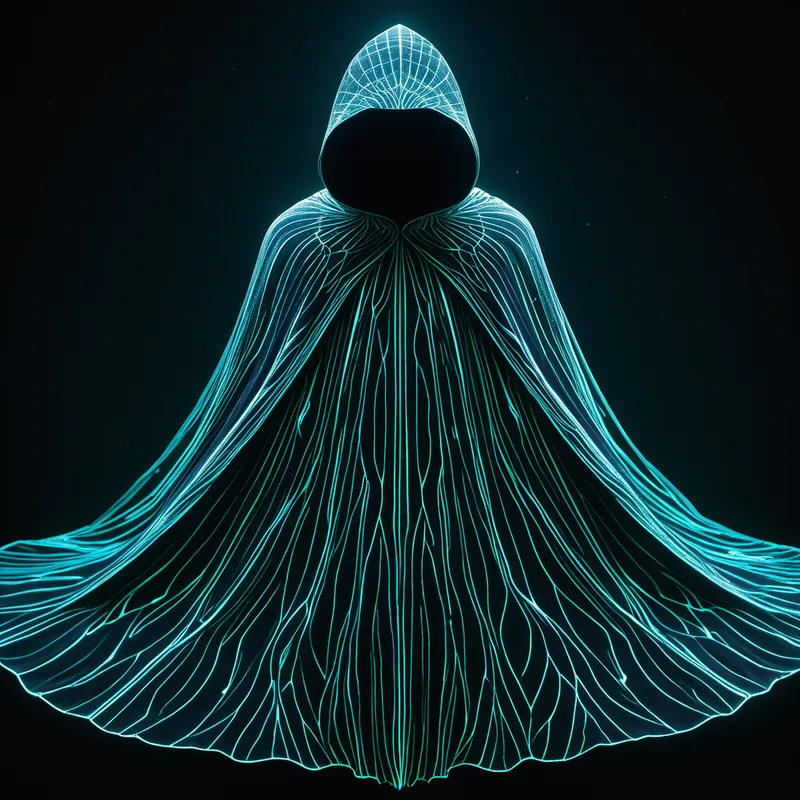
The [Cloak](/symbols/cloak “Symbol: A garment that conceals identity, protects from elements, or signifies authority and transformation in dreams.”/) is the central [symbol](/symbols/symbol “Symbol: A symbol can represent an idea, concept, or belief, serving as a powerful tool for communication and understanding.”/) of reconciliation. It is not a reversal of the [separation](/symbols/separation “Symbol: A spiritual or mythic division between realms, states of being, or consciousness, often marking a transition or loss of connection.”/), but its alchemical transformation. Tāne does not try to glue his parents back together; he transmutes the raw [material](/symbols/material “Symbol: Material signifies the tangible aspects of life, often representing physical resources, desires, and the physical world’s influence on our existence.”/) of [grief](/symbols/grief “Symbol: A profound emotional response to loss, often manifesting as deep sorrow, yearning, and a sense of emptiness.”/) (Papatūānuku’s exposed [body](/symbols/body “Symbol: The body in dreams often symbolizes the dreamer’s self-identity, personal health, and the relationship they have with their physical existence.”/)) into a [matrix](/symbols/matrix “Symbol: A dream symbol representing the fundamental structure of reality, consciousness, or the self. It often signifies feelings of being trapped, controlled, or questioning the nature of existence.”/) for [life](/symbols/life “Symbol: The symbol of ‘Life’ represents a journey of growth, interconnectedness, and existential meaning, encompassing both the joys and challenges that define human experience.”/). The [Cloak](/symbols/cloak “Symbol: A garment that conceals identity, protects from elements, or signifies authority and transformation in dreams.”/) symbolizes the cultivated [relationship](/symbols/relationship “Symbol: A representation of connections we have with others in our lives, often reflecting our emotional state.”/) with the [source](/symbols/source “Symbol: The origin point of something, often representing beginnings, nourishment, or the fundamental cause behind phenomena.”/). It is the ego’s conscious [effort](/symbols/effort “Symbol: Effort signifies the physical, mental, and emotional energy invested toward achieving goals and personal growth.”/) to honor, adorn, and care for the unconscious ground from which it sprang—through creativity, relationship, and mindful living. It turns bare, painful [awareness](/symbols/awareness “Symbol: Conscious perception of self, surroundings, or internal states. Often signifies awakening, insight, or heightened sensitivity.”/) into a habitable, meaningful world.
The Dreamer’s Resonance
When this myth stirs in modern dreams, it often manifests as somatic experiences of profound separation or envelopment. One might dream of being trapped in a suffocatingly close, dark space (the primal embrace), yearning to break free. Conversely, one might dream of being suddenly exposed on a vast, barren plain, naked and shivering under a cold, distant sky (the moment of separation), longing for cover.
These dreams signal a critical phase in psychological development. The “claustrophobic” version suggests the dreamer’s psyche is ripe for differentiation—a need to separate from an engulfing relationship, internalized parent, or outgrown identity. The “agoraphobic” version speaks to the aftermath of such a rupture: a feeling of being unmoored, unsupported, and emotionally raw. The healing image, the resolution the dream seeks, is the spontaneous appearance of the Cloak—perhaps as a sudden growth of a garden, being wrapped in a comforting, heavy garment, or finding shelter in a dense, living forest. This symbolizes the psyche’s innate movement toward self-care and integration following necessary fracture.
Alchemical Translation
The individuation process mirrors this myth exactly. We all begin psychologically fused with our internal and external “parents”—our familial complexes, cultural norms, and instinctual patterns. To become ourselves, we must perform our own Tāne Mahuta act: we must push against these confines to create psychic space. This is often experienced as rebellion, crisis, or a painful awakening that feels like a betrayal of old loyalties.
The ensuing grief is not a mistake but a vital component. It is the Ranginui and Papatūānuku within us weeping for the lost unity. The alchemical work is in the fashioning of the Cloak.
Individuation is not achieved by returning to the womb of the unconscious, but by weaving a cloak of conscious life from its very substance.
This is the translation: we take the raw material of our pain, our history, our primal attachments, and we “plant” them with the seeds of conscious choice, creative act, and personal meaning. We cloak our vulnerable, newly-separated self with the garments of our own identity—our values, our art, our nurtured relationships, our hard-won wisdom. We adorn our inner landscape so beautifully that the separation is no longer a barren wound, but the very condition for a flourishing, authentic life. We learn to live in the world-as-cloak, honoring the source while fully inhabiting the created space.
Associated Symbols
Explore related symbols from the CaleaDream lexicon:
- Earth — The body of Papatūānuku, the primal mother and foundation of all life, representing the physical and unconscious ground of being.
- Sky — Ranginui, the separated father, representing consciousness, distance, perspective, and the source of nourishing tears (rain).
- Forest — The primary substance of the Cloak, woven by Tāne Mahuta, symbolizing growth, shelter, and the conscious cultivation of life from the earth.
- Separation — The central, traumatic act that creates the world, representing the necessary psychological differentiation from the parental/unconscious matrix.
- Grief — The weeping of the primal parents, the essential emotional consequence of separation that waters the new world and must be integrated.
- Rain — The tears of Ranginui, symbolizing the ongoing connection and nourishment that flows from consciousness (sky) to the unconscious (earth) after separation.
- Tree — Tāne Mahuta as the agent of separation and creation, representing upward striving, structural support, and the mediator between earth and sky.
- Mother — Papatūānuku as the archetypal source, the one who is cloaked, representing the nurturing, vulnerable, and foundational aspect of the psyche.
- Cloak — The myth’s core artifact: the living garment of forest and life, symbolizing protection, honor, transformation of grief, and the beautiful, cultivated interface between self and source.
- Love — The primal force that first binds and, through its transformation, ultimately creates the world, representing the enduring connection that persists through and because of separation.
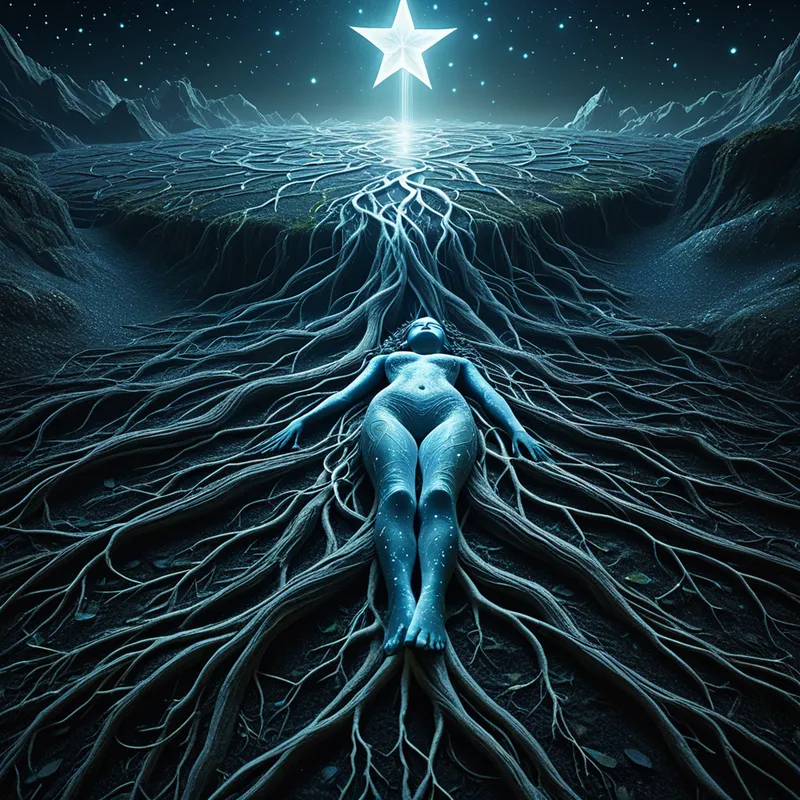
- Root — The hidden connections of Papatūānuku that remain even after separation, symbolizing the inescapable, anchoring links to our origins and the unconscious.
- Creation — The entire process—embrace, separation, grief, cloaking—that brings the phenomenal world into being, modeling the psyche’s own journey toward creating a livable reality.