Palm Sunday Myth Meaning & Symbolism
A king enters his city not on a warhorse, but on a donkey, hailed by crowds who will soon turn, revealing the deep paradox of sacred power.
The Tale of Palm Sunday
The air over [the Mount of Olives](/myths/the-mount-of-olives “Myth from Biblical culture.”/) was thick with the scent of crushed olives and expectation. Spring had painted the hills in desperate green, and the city of [Jerusalem](/myths/jerusalem “Myth from Biblical culture.”/), a hive of white stone and zeal, shimmered in the valley below, swollen with pilgrims for the Passover. A tension hummed in the very dust—the tension of a held breath, of a nation waiting for a spark.
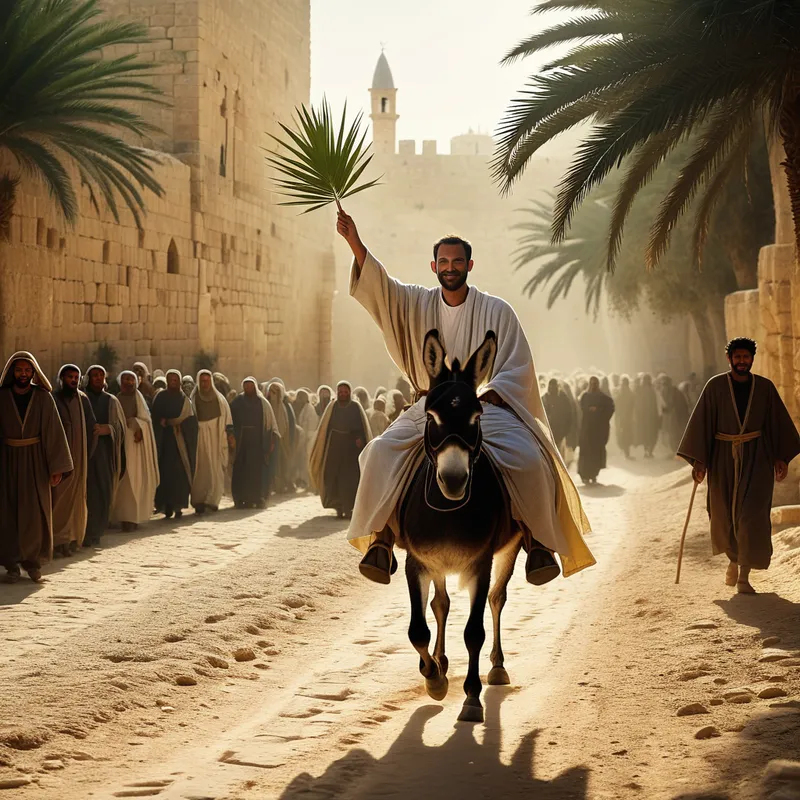
And he came from the east, from Bethany, not with an army, but with a quiet procession. At its center rode a man whose eyes held the stillness of deep waters. His name was Yeshua. He did not ride a stallion caparisoned for war, the symbol of empire and crushing force. He rode the colt of a donkey, an animal of peace, of humble burden, its unbroken back a testament to a different kind of kingship.
Word flew ahead of him, a wind through dry grass. “The prophet from Nazareth! He who called [Lazarus](/myths/lazarus “Myth from Christian culture.”/) from the tomb!” The road began to fill. They came from the city gates, from the surrounding villages, a river of humanity surging up the slope. A cry went up, torn from the throat of a thousand hopes: “Hosanna!” Save us! “Blessed is he who comes in the name of the Lord!”
This was no ordered parade. It was an eruption of raw, collective longing. They tore branches from the date palms lining [the way](/myths/the-way “Myth from Taoist culture.”/)—not the victorious laurel of Rome, but the frond of pilgrimage and sustenance. They flung their own cloaks onto the rocky path, making a living, ragged carpet for the donkey’s hooves. The air filled with the rustle of palm leaves waved like banners, with the deafening roar of acclamation. For a shimmering, suspended hour, he was their king—the son of David, the one who would restore the kingdom.
He saw the city spread before him, its walls gleaming, its temple a crown of gold. And as the shouts of “Hosanna” crested around him, he wept. His tears were not of joy, but of a profound, prescient sorrow. He spoke words that cut through the celebration like a cold wind: a prophecy of siege, of stones laid upon stones, of peace hidden from eyes that did not see. The crowd, lost in its fever-dream of imminent revolution, scarcely heard. The donkey plodded forward, carrying its quiet rider through the gate, into the heart of the storm. The [triumph](/myths/triumph “Myth from Roman culture.”/) was complete, and it was already ending. The palms would wilt. The cloaks would be gathered, stained with dust. The same voices that shouted “Hosanna” would soon be shaped to a different, darker cry. The king had entered his city, and the stage was set for the final, terrible act.
Cultural Origins & Context
This story is anchored in the Passion Week narratives of the four canonical Gospels. It functions as the dramatic threshold, the point of no return in the story of Yeshua. Historically, it sits at the volatile intersection of Jewish messianic hope, embodied in the pilgrimage feast of Passover (celebrating liberation from tyranny), and the overwhelming political power of the Roman occupation.
The act of recounting this tale was, from the beginning, liturgical and confessional. It was not first written as neutral history but proclaimed in early Christian worship as the pivotal moment when [Jesus](/myths/jesus “Myth from Christian culture.”/) publicly accepted—and radically redefined—the role of Messiah. The details are rich with scriptural allusion, primarily to the prophecy in [Zechariah](/myths/zechariah “Myth from Christian culture.”/) 9:9: “See, your king comes to you, righteous and victorious, lowly and riding on a donkey.” For the early community, this was the key: their king’s victory was inseparable from his lowliness. The story served to explain the scandal of the crucifixion—how the hailed king could end up executed as a criminal. It was a mythic lens through which to interpret catastrophic defeat as paradoxical triumph.
Symbolic Architecture
The myth’s power lies in its dense weave of contradictory symbols, a masterclass in sacred [paradox](/symbols/paradox “Symbol: A contradictory yet true concept that challenges logic and perception, often representing unresolved tensions or profound truths.”/).
The true king is revealed not by what he takes, but by what he refuses: the crown of power, for the crown of purpose.
The Donkey is the central, shocking [symbol](/symbols/symbol “Symbol: A symbol can represent an idea, concept, or belief, serving as a powerful tool for communication and understanding.”/). It is the anti-[chariot](/symbols/chariot “Symbol: The chariot signifies control, direction, and power in one’s journey through life.”/). In the Ancient Near East, a [king](/symbols/king “Symbol: A symbol of ultimate authority, leadership, and societal order, often representing the dreamer’s inner power or external control figures.”/) riding a donkey signified he came in [peace](/symbols/peace “Symbol: Peace represents a state of tranquility and harmony, both internally and externally, often reflecting a desire for resolution and serenity in one’s life.”/) (horses were for war). This [choice](/symbols/choice “Symbol: The concept of choice often embodies decision-making, freedom, and the multitude of paths available in life.”/) dismantles the expectation of a militaristic liberator. Psychologically, the donkey represents the embodied, humble, and stubborn [vehicle](/symbols/vehicle “Symbol: Vehicles in dreams often symbolize the direction in life and the control one has over their journey, reflecting personal agency and decision-making.”/) of [the Self](/myths/the-self “Myth from Jungian culture.”/)—the part of us that bears burdens patiently and moves forward not with flash, but with inevitable, plodding resolve.
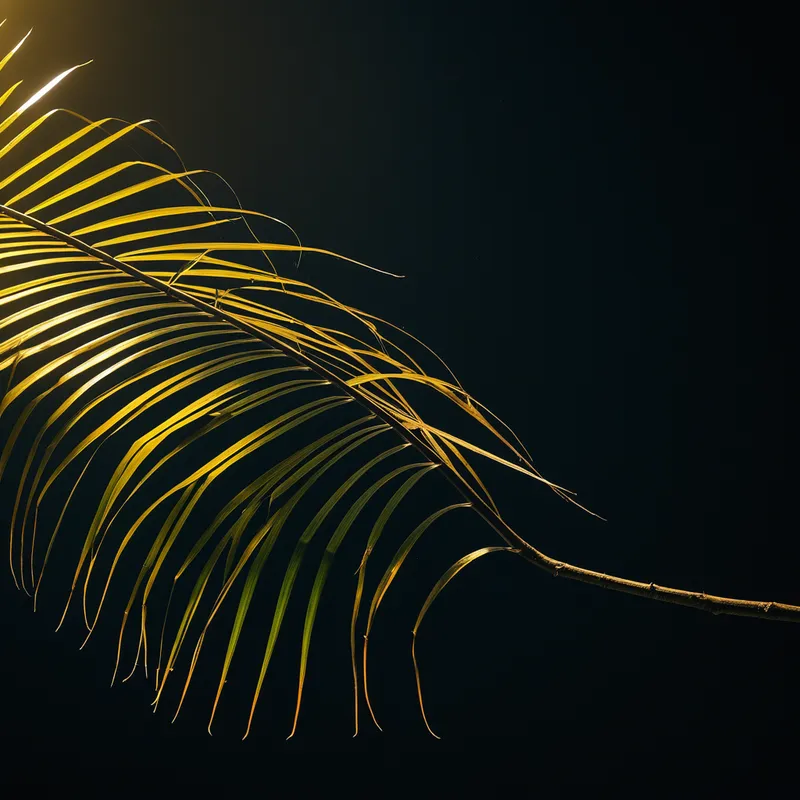
The [Palm](/symbols/palm “Symbol: The palm tree symbolizes resilience, victory, and peace, often associated with tropical climates.”/) Branches are multivalent. They are symbols of victory, yes, but also of [pilgrimage](/symbols/pilgrimage “Symbol: A spiritual or transformative journey toward a sacred destination, representing personal growth, devotion, and the search for meaning.”/) (pilgrims carried lulav bundles during [Sukkot](/myths/sukkot “Myth from Jewish culture.”/)). More deeply, they represent the fickle, seasonal [aspect](/symbols/aspect “Symbol: A distinct feature, quality, or perspective of something, often representing a partial view of a larger whole.”/) of collective [energy](/symbols/energy “Symbol: Energy symbolizes vitality, motivation, and the drive that fuels actions and ambitions.”/)—the crowd’s enthusiasm that is vibrant and green one day, dried and discarded the next. They are the outer acclaim that cannot be internalized as [identity](/symbols/identity “Symbol: Identity represents the sense of self, encompassing personal beliefs, cultural background, and social roles.”/).
The Cloaks cast upon the road are perhaps the most intimate symbol. A [cloak](/symbols/cloak “Symbol: A garment that conceals identity, protects from elements, or signifies authority and transformation in dreams.”/) was a person’s portable [property](/symbols/property “Symbol: Property often represents one’s personal value, possessions, or self-worth.”/), their shelter and dignity. To lay it down was an act of profound personal submission and [homage](/symbols/homage “Symbol: A respectful tribute or acknowledgment to someone or something influential, often in artistic or cultural forms.”/). It represents the offering up of one’s outer identity, one’s social [persona](/symbols/persona “Symbol: The social mask or outward identity one presents to the world, often concealing the true self.”/), to be tread upon by the sacred. It is a willing sacrifice of [the ego](/myths/the-ego “Myth from Jungian culture.”/)’s protections.
The Crowd’s Shift from “Hosanna!” to “Crucify!” is not mere [betrayal](/symbols/betrayal “Symbol: A profound violation of trust in artistic or musical contexts, often representing broken creative partnerships or artistic integrity compromised.”/); it is the mythic depiction of the [psyche](/myths/psyche “Myth from Greek culture.”/)’s [resistance](/symbols/resistance “Symbol: An object or tool representing opposition, struggle, or the act of pushing back against external forces or internal changes.”/) to its own transformation. The crowd is the collective within us that desires a quick, external salvation—a [hero](/symbols/hero “Symbol: A hero embodies strength, courage, and the ability to overcome significant challenges.”/) to slay our dragons for us. When the hero instead presents a [path](/symbols/path “Symbol: The ‘path’ symbolizes a journey, choices, and the direction one’s life is taking, often representing individual growth and exploration.”/) of [inward](/symbols/inward “Symbol: A journey toward self-awareness, introspection, and the exploration of one’s inner world, thoughts, and unconscious mind.”/) sacrifice and [vulnerability](/symbols/vulnerability “Symbol: A state of emotional or physical exposure, often involving risk of harm, that reveals authentic self beneath protective layers.”/), that same collective energy turns in rage and [rejection](/symbols/rejection “Symbol: The experience of being refused, excluded, or dismissed by others, often representing fears of inadequacy or social belonging.”/).
The Dreamer’s Resonance
To dream of this pattern is to be at a psychic crossroads where an inner truth is seeking conscious acknowledgment, but is met with ambivalence. You may dream of being hailed or celebrated for an accomplishment that feels unearned or misattributed. You may dream of riding something humble through a cheering crowd, feeling a profound disconnect between the outer adulation and your inner quiet—or dread.
Somatically, this can feel like a tightness in the chest—the weight of expectation. Psychologically, you are navigating the tension between the role [the world](/myths/the-world “Myth from Tarot culture.”/) (or your own inner “crowd”) demands of you and the quieter, more authentic calling of your essential nature. The dream signals that a central aspect of your being (the kingly Self) is preparing to enter the fortified city of your conscious life, but it knows this entrance will lead to conflict, to the death of old structures. The waving palms in a dream are the seductive, temporary rewards of conformity; the donkey is the stubborn, authentic instinct you must follow anyway.
Alchemical Translation
The Palm Sunday myth is a precise map of the alchemical [nigredo](/myths/nigredo “Myth from Alchemical culture.”/), the blackening, the beginning of the [Magnum Opus](/myths/magnum-opus “Myth from Alchemical culture.”/) through apparent catastrophe.
The process begins with The Conscious Acknowledgment (The Entry). The individual, often after a period of preparation (the ministry in [the wilderness](/myths/the-wilderness “Myth from Biblical culture.”/)), must consciously decide to bring their deepest, most integrated Self (the king on the donkey) into the heart of their personal world—their relationships, career, and self-concept (Jerusalem). This is not an aggressive takeover, but a vulnerable presentation.
This triggers The Inflation and Subsequent Betrayal (The Acclamation). The ego, and the internalized voices of family and society (the crowd), may initially celebrate this new energy. “Hosanna! You’ve found your purpose!” But this celebration is based on a misunderstanding. They expect this new king-Self to conquer external problems and bring glory. When it becomes clear that the king’s true purpose is to dismantle the ego’s defenses (to cleanse [the temple](/myths/the-temple “Myth from Jewish culture.”/) of mercenary impulses) and submit to a transformative sacrifice, the inner crowd turns. The cheers become the critical inner voices: “This is foolish vulnerability. You will be destroyed.”
The alchemical gold is forged in the space between the hosanna and the cry to crucify—in the steadfast journey from one to the other.
The triumphant entry is, therefore, the first step toward the crucifixion, which in turn is the necessary prelude to [the resurrection](/myths/the-resurrection “Myth from Christian culture.”/). Psychically, one must allow the authentic Self to be hailed, then betrayed, and then sacrificed by the demands of the old order. The wilting palms represent the death of the hope for easy, acclaim-filled transformation. The true alchemical work—the dissolution, purification, and recombination—begins only after the parade is over and the dust settles on the road to [Golgotha](/myths/golgotha “Myth from Christian culture.”/). To walk this path is to understand that true kingship is the sovereignty gained not over others, but over one’s own reactions to rejection, the power found in unwavering commitment to a purpose that the world cannot comprehend, riding humbly into the heart of the storm.
Associated Symbols
Explore related symbols from the CaleaDream lexicon: