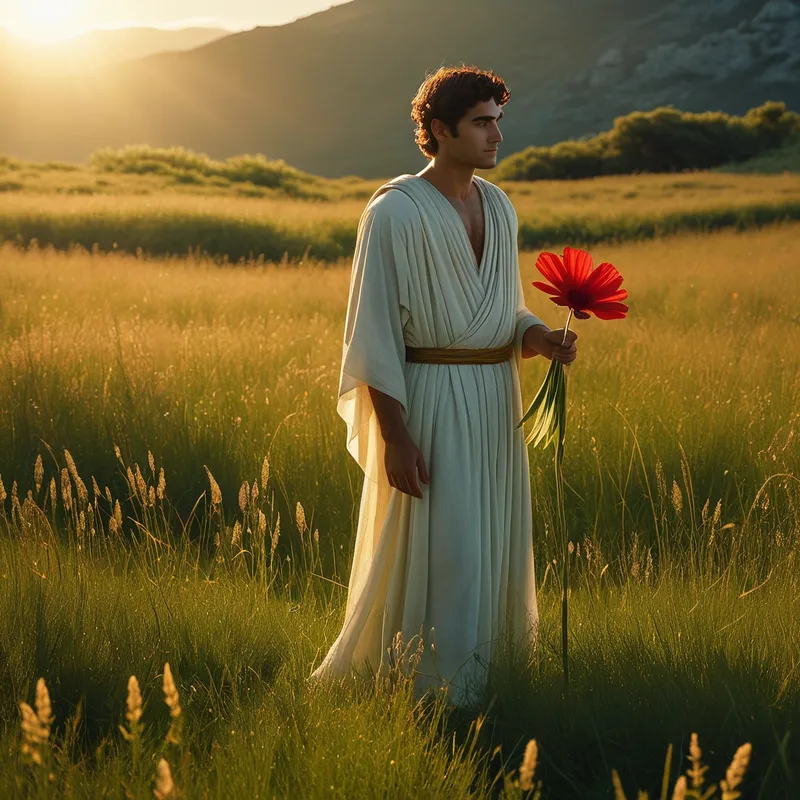
Paeon Myth Meaning & Symbolism
A divine healer, born from a flower, uses forbidden knowledge to mend a god, transforming his transgression into a new, sacred identity.
The Tale of Paeon
Listen. The air on Olympus is thick with a scent it has never known before: the metallic tang of divine blood. Not the golden ichor of a minor scrape, but a dark, seeping river from a rent in the side of Ares. The war god, who reveled in the gore of mortals, now writhes on a couch of polished obsidian, his roars of pain shaking the very foundations of the cloud-piercing halls. The other immortals stand in a silent, horrified circle. Their hands, which can shape thunder and oceans, are useless. They are eternal, but they have forgotten how to mend.
Their eyes turn, not to Zeus with his lightning, nor to Athena with her cunning. They turn to a figure who stands apart, a youth whose presence is like a cool spring in a fevered land. This is Paeon. He was not born of thunderclap or sea foam, but from the earth itself, sprung from a flower touched by the tears of a mourning goddess. In his hands, he does not hold a weapon, but a simple clay jar.
He approaches the thrashing Ares. The air crackles with divine agony. Without a word, Paeon opens the jar. From it rises not a perfume, but the essence of a forgotten world—the deep, moist scent of root-rich soil, the sharp green smell of crushed herbs, and the dizzying sweetness of a million blossoms. From the jar, he takes a thick, unguent the color of a healing bruise, of twilight, of life retreating inward to gather strength. As his fingers smooth the salve over the weeping wound, a hush falls deeper than silence. The dark ichor ceases its flow. The torn flesh, as if remembering a primordial wholeness, knits itself together, seamless and new. Ares’s breathing slows, the fury in his eyes dimming to exhausted relief. The circle of gods exhales as one.
But in that moment of profound healing, another pair of eyes watches, burning with a cold, green fire. Demeter sees the salve, recognizes its essence. It is made from the milk of the Goat of Amalthea, a substance of such primal, nurturing power it was meant for the king of gods alone. Paeon, in his compassion, has used a forbidden treasure. The transgression hangs in the air, heavier than the previous pain. He healed a god, but he has trespassed against divine law. The healer now stands in need of saving.
Zeus, the arbiter, feels the tension. His gaze holds not anger, but a fathomless calculation. To punish such a gift is to curse mercy itself. Yet, order must be kept. His voice, when it comes, is not a verdict, but a transformation. “You have dipped into the well of the primordial,” Zeus declares, “and drawn forth a power older than our thrones. You cannot be what you were.” And so, Paeon is not cast down. He is changed. His name, his very identity, is lifted from him and given as a title of honor—a paean—a song of thanksgiving for deliverance from suffering. The healer is absorbed, becoming an aspect of the great physician-god Apollo, his essence preserved not in stone, but in the sigh of relief after pain, in the hymn sung for the returned light.
Cultural Origins & Context
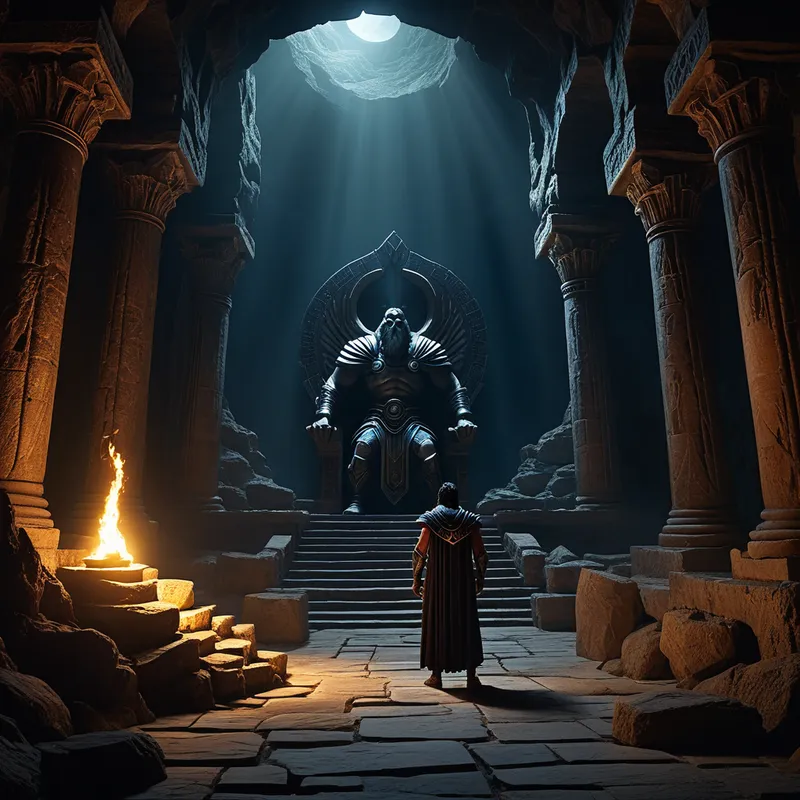
The figure of Paeon is a haunting echo in the vast tapestry of Greek myth, a fragment of a healer-god who predates the more structured pantheon. His story is not the subject of a grand epic, but is woven into the fabric of the Iliad, where he appears almost as a divine functionary, the mender of gods. This suggests an ancient, possibly pre-Olympian origin. He may represent a surviving strand of a much older chthonic (earth-born) healing tradition, later syncretized and absorbed into the cult of Apollo, and later still, into the figure of Asclepius.
The myth was passed down not as a standalone saga, but as a potent vignette within the oral and later written traditions that explained the divine order. Its societal function was multifaceted. Primarily, it established a divine precedent for the healer’s art, sanctifying it as a power that even the gods require. It also served as a theological narrative explaining the consolidation of power under the Olympian regime: older, specialized deities (like a standalone god of healing) were assimilated into the portfolios of the major gods, streamlining worship and reinforcing the cosmic hierarchy. The story was a reminder that all gifts, even those of life-saving compassion, exist within a framework of cosmic law and order.
Symbolic Architecture
At its core, the myth of Paeon is an archetypal drama of the Wounded Healer. Paeon’s power originates from his own “birth” from a wounded earth (the flower born of grief), granting him an innate sympathy for rupture and a knowledge of the remedies hidden in the dark, moist places of the world.
The true healer is one who has communed with the wound, not just the cure. Their authority comes from the depth of their intimacy with brokenness.
His use of the forbidden milk is the critical symbolic act. It represents the necessary transgression of the healer who must access primal, “unapproved” knowledge or power to affect a cure. It is the doctor using an experimental treatment, the therapist venturing beyond standard protocol into the patient’s raw, uncharted pain. The substance itself—nurturing milk—symbolizes the ultimate, pre-verbal comfort, the archetypal balm that precedes all sophisticated medicine. Yet, in the Olympian order, it is property, a controlled substance. Paeon’s act pits compassionate efficacy against established law.
His “punishment”—absorption and renaming—is not a destruction, but a profound alchemical change. His individual identity is sacrificed, but his function is eternalized. He becomes the paean, the song of deliverance. The healer’s ego is dissolved so that the healing principle itself may become universal.
The Dreamer’s Resonance
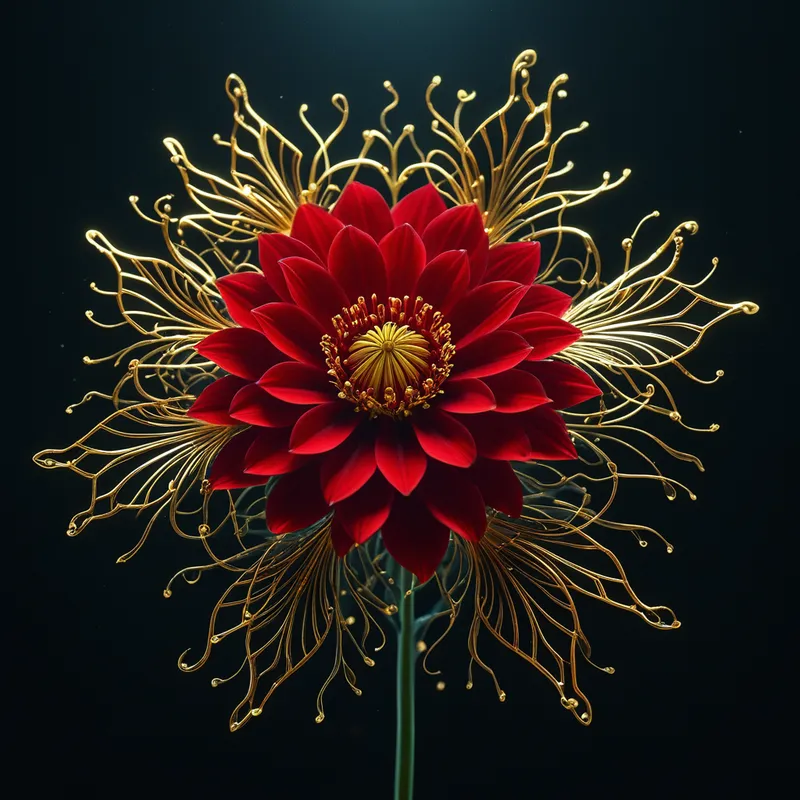
When this myth stirs in the modern unconscious, it often manifests in dreams centered on forbidden or transgressive healing. A dreamer might find themselves in a sterile, rule-bound hospital, but feel compelled to break into a hidden garden to pick a strange, glowing herb for a dying patient. They may dream of applying a soothing, muddy poultice to a corporate logo or a cracked smartphone, symbolizing the attempt to heal with “earthy,” intuitive methods in a world that values only sterile, logical solutions.
Somatically, this can correlate with a feeling of deep inner conflict when one’s natural compassion or intuitive wisdom bumps against internalized or external “rules.” It is the psyche’s process of navigating the guilt of the caregiver who feels they must go “too far” or love “too much” to be effective. The dream is working through the tension between the innate, organic impulse to mend and the super-ego’s voice that says, “That’s not how it’s done; you’re overstepping.”

Alchemical Translation
The psychic journey modeled by Paeon is the alchemy of transforming a personal gift into a transpersonal function—the heart of individuation. It begins with the Nigredo, the blackening: the confrontation with a wound so profound it destabilizes the existing order (Ares’s injury shaking Olympus). The individual feels the call of their unique capacity (Paeon’s knowledge).
The Albedo, the whitening, is the act of application: using one’s deeply personal, perhaps “unconventional” medicine. This is the stage of necessary transgression, where the ego must risk itself for the sake of the work. It is fraught with danger, as it challenges the status quo of the psyche (the internalized Demeter, the critic who guards resources and rules).
Individuation demands the sacred crime: the theft of primordial nurture to salve a wound the established order cannot even acknowledge.
The Rubedo, the reddening, is Zeus’s judgment: not annihilation, but transmutation. The ego-identity of “the healer” (Paeon) is sacrificed. What remains is not the person, but the principle—the healing function itself, now integrated into a larger, more complex psychic structure (Apollo, representing consciousness and order). The individual no longer does healing as a role; they embody a healing presence. Their personal name is lost, but their essence becomes a hymn, a resonant quality that colors their entire being. For the modern individual, this translates to moving beyond the label of “therapist,” “teacher,” or “fixer,” and becoming a person in whom others naturally find solace and clarity, where one’s very existence is a paean to the possibility of wholeness.
Associated Symbols
Explore related symbols from the CaleaDream lexicon: