Ozymandias Myth Meaning & Symbolism
A king's boundless pride erects a monument to his own glory, only for time and the desert to reduce it to a shattered, forgotten warning.
The Tale of Ozymandias
Hear now a tale not carved in enduring marble, but whispered on [the wind](/myths/the-wind “Myth from Various culture.”/) that scours the bones of [the earth](/myths/the-earth “Myth from Hindu culture.”/). It speaks of a land where the sun is a hammer and the earth an anvil—a desert of timeless, golden silence.
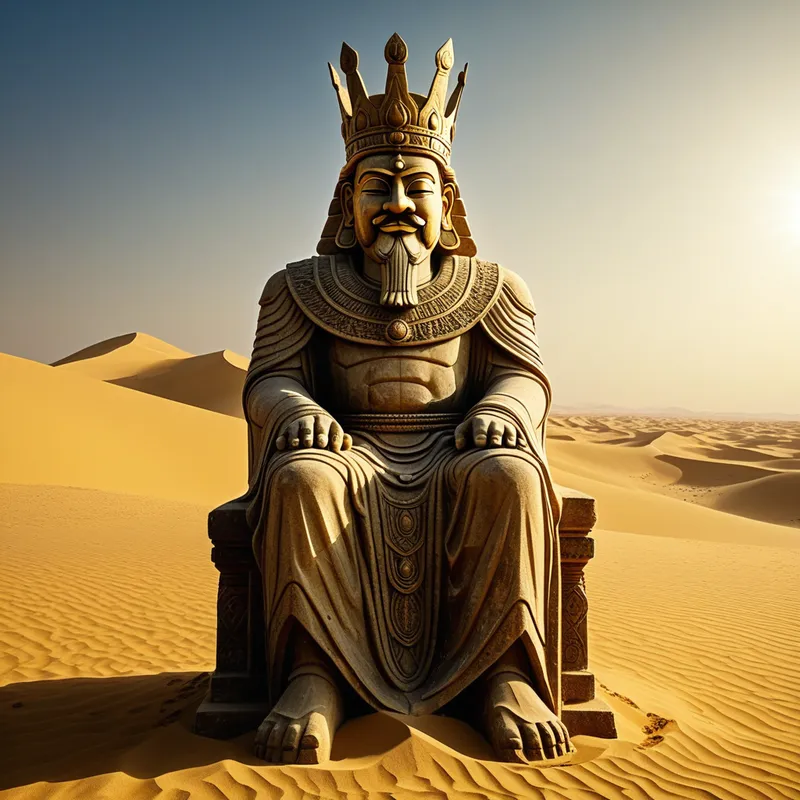
In this realm of sand and sky ruled Ozymandias. His will was law, his word shaped cities from the dust, and his gaze commanded armies that darkened [the horizon](/myths/the-horizon “Myth from Various culture.”/). His heart was a furnace of ambition, burning with a fire he believed could outlast the stars. “All that exists shall know my name,” he declared to the empty heavens. “My glory shall be the only truth the future remembers.”
So he summoned the greatest sculptors from conquered kingdoms. “Build me a likeness,” he commanded, “that will strike awe into the hearts of men for ten thousand years. Make my frown and wrinkled lip, my sneer of cold command, so potent that the very sand will shrink from it. Place it where the two infinities meet—the endless desert and the eternal sky—so that all who pass will know the might of the one who ruled here.”
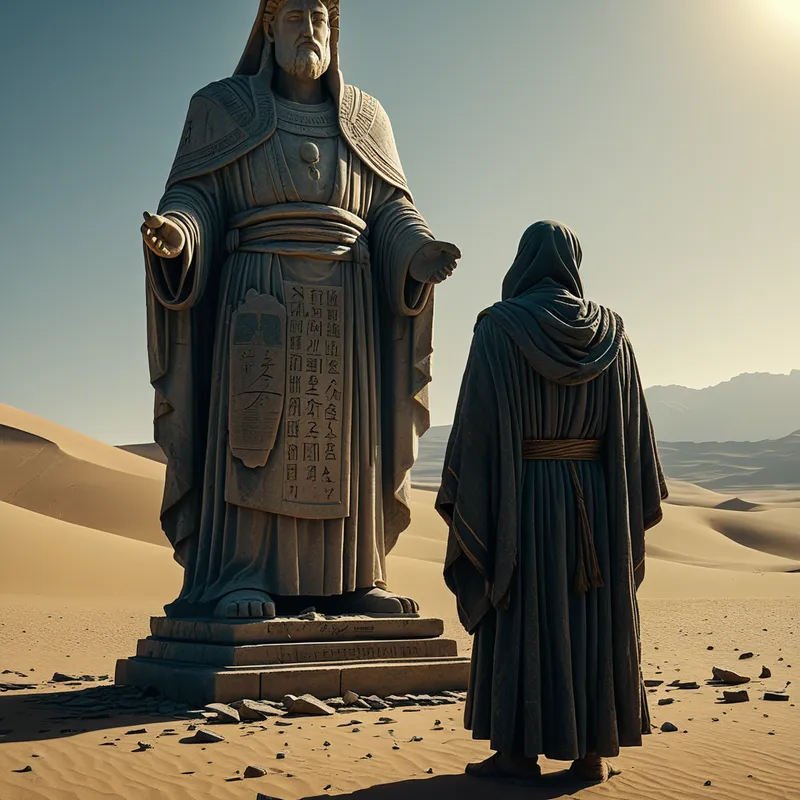
For years they labored, these masters of stone, until the colossus was complete. A throne for the legs, a torso like a mountain, and a visage so fierce and proud it seemed to defy the sun itself. At its base, words were cut deep into the pedestal, an inscription to echo through the ages: “My name is Ozymandias, King of Kings; Look on my Works, ye Mighty, and despair!”
And for a time, it stood. Caravans would halt, travelers would fall silent, and even the wind seemed to still before the monument to a king’s soul. Ozymandias looked upon it and saw eternity made stone.
But [the desert](/myths/the-desert “Myth from Biblical culture.”/) is patient. It holds a memory longer than any king. Grain by grain, the wind began its work. The fierce sun cracked the stone. The cold nights contracted its heart. Seasons turned, unnoticed, into centuries.
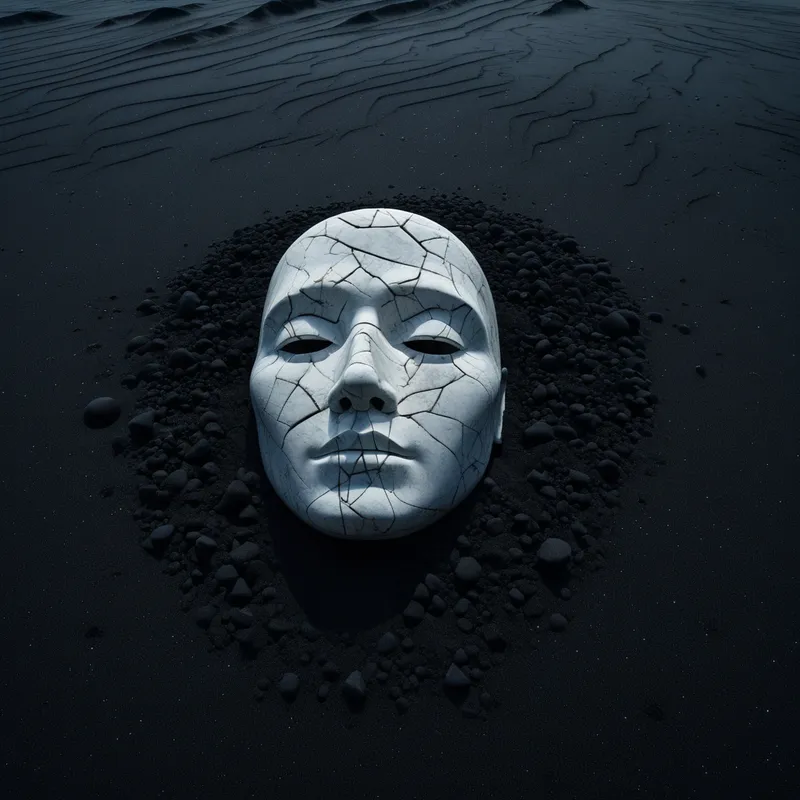
Now, the traveler who finds this place sees a different truth. The colossal legs, broken, stand alone in the waste. Nearby, half-sunk in the shifting sand, lies the shattered visage. The frown, the wrinkled lip, the sneer of cold command—all remain, but they are a mockery, a mask worn by oblivion. The sculptor’s hand mocked those passions well, which now survive, stamped on these lifeless things. And the words on the pedestal? They remain, clear and cruel, proclaiming a boast to the empty air, surrounded by nothing. The lone and level sands stretch far away, an ocean of time that has swallowed the works, the king, and all his despair. Only the whisper remains.
Cultural Origins & Context
The tale we know as “Ozymandias” is, in truth, a fascinating cultural refraction. It is not a myth born directly on the slopes of Olympus, but a Herodotean echo, filtered through the Romantic imagination. The core originates with the Greek historian Diodorus Siculus, who recorded an inscription at the mortuary temple of the Egyptian [Pharaoh](/myths/pharaoh “Myth from Egyptian culture.”/) Ramesses II (whom the Greeks called Ozymandias). This historical fragment—a king’s boast beside ruins—was the seed.
It was the English poet Percy Bysshe Shelley who, in 1818, transmuted this archaeological note into a timeless mythic poem. Shelley, operating within the Romantic tradition that was deeply engaged with classical themes, did not invent a new god or hero, but crystallized an eternal pattern. He gave the Greek fascination with hubris and [nemesis](/myths/nemesis “Myth from Greek culture.”/) a new, starkly modern landscape: not the court of a tragedian, but the indifferent theatre of geological time. In this, he made it profoundly “Greek” in spirit, if not in literal origin. Its societal function shifted from a religious warning to a philosophical and political one—a stark critique of imperial overreach and the vanity of temporal power, themes that resonated deeply in the post-Napoleonic age and continue to echo today.
Symbolic Architecture
The myth of Ozymandias is a perfect, chilling [symbol](/symbols/symbol “Symbol: A symbol can represent an idea, concept, or belief, serving as a powerful tool for communication and understanding.”/) of the [psyche](/myths/psyche “Myth from Greek culture.”/)‘s encounter with the limits of [the ego](/myths/the-ego “Myth from Jungian culture.”/). The colossal [statue](/symbols/statue “Symbol: A statue typically represents permanence, ideals, or entities that are revered.”/) is the Ego made [monument](/symbols/monument “Symbol: A structure built to commemorate a person, event, or idea, often representing legacy, memory, and cultural identity.”/), a desperate attempt to render the transient self permanent and significant against the backdrop of the unconscious and time itself.
The monument is not to the man, but to his blindness. It is the ego’s declaration of independence from nature, psyche, and death.
Ozymandias represents the ruling [archetype](/symbols/archetype “Symbol: A universal, primordial pattern or prototype in the collective unconscious that shapes human experience, behavior, and creative expression.”/) in its most inflated state, believing its domain is absolute. The desert symbolizes the vast, impersonal psyche—the Self in its raw, untamed form—which is ultimately indifferent to the ego’s claims of sovereignty. The “shattered visage” is the inevitable encounter with the [shadow](/symbols/shadow “Symbol: The ‘shadow’ embodies the unconscious, repressed aspects of the self and often represents fears or hidden emotions.”/) of that [inflation](/symbols/inflation “Symbol: A dream symbol representing feelings of diminishing value, loss of control, or expansion beyond sustainable limits in one’s life or psyche.”/): ruin, irrelevance, and the mocking laughter of [reality](/symbols/reality “Symbol: Reality signifies the state of existence and perception, often reflecting one’s understanding of truth and life experiences.”/). The [inscription](/symbols/inscription “Symbol: A permanent mark, carving, or writing on a surface, often carrying messages, records, or artistic expression meant to endure.”/) is the poignant, tragic core: the ego’s [story](/symbols/story “Symbol: The symbol of ‘Story’ represents the narrative woven through our lives, embodying experiences, lessons, and emotions that shape our identities.”/) about itself, preserved and perfect, while the [reality](/symbols/reality “Symbol: Reality signifies the state of existence and perception, often reflecting one’s understanding of truth and life experiences.”/) it describes has vanished. It is the ultimate [dissociation](/symbols/dissociation “Symbol: A psychological separation from one’s thoughts, feelings, or identity, often experienced as a journey away from the self during trauma or stress.”/) between self-[image](/symbols/image “Symbol: An image represents perception, memories, and the visual narratives we create in our minds.”/) and [truth](/symbols/truth “Symbol: Truth represents authenticity, honesty, and the quest for knowledge beyond mere appearances.”/).
The Dreamer’s Resonance
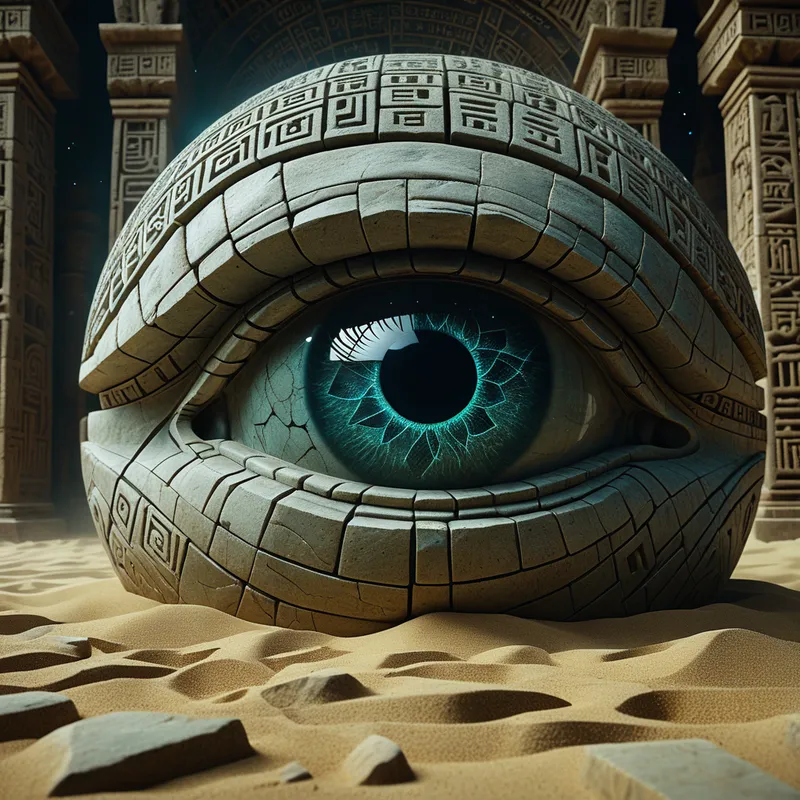
When this myth stirs in the modern dreamer, it often manifests not as a desert, but as a feeling. It is the dream of a towering, empty skyscraper you once built, now derelict. It is the profound embarrassment of finding an old, grandiose diary entry. It is the somatic sense of a vast, hollow space behind the breastbone where pride once resided.
Psychologically, this dream pattern signals a necessary and painful process of deflation. The psyche is dismantling an outdated, inflated self-structure—a career identity that has become a prison, a belief in one’s own unassailable rightness, or a project meant to cement a legacy. The dreamer is going through the somatic unraveling of hubris. The “lone and level sands” that stretch away in the dream represent the terrifying yet freeing expanse of potential that opens when a false, rigid identity collapses. It is the ego’s winter, a necessary barrenness that precedes a more authentic spring.
Alchemical Translation
The alchemical journey modeled here is the mortificatio and ablutio—the killing and washing of the king. For the modern individual seeking individuation, the [triumph](/myths/triumph “Myth from Roman culture.”/) is not in building the statue, but in witnessing its ruin.
The first, unconscious stage is the inflation: we build our colossus, be it our professional [persona](/myths/persona “Myth from Greek culture.”/), our ideological certainty, or our narrative of personal triumph. The alchemical fire is the heat of our own ambition. The crucial, transformative stage begins with the crack: a failure, a betrayal, an act of time that reveals the fragility of our construction. This is the [nigredo](/myths/nigredo “Myth from Alchemical culture.”/), [the dark night of the soul](/myths/the-dark-night-of-the-soul “Myth from Christian Mysticism culture.”/), where the prized identity turns to ash and dust.
The alchemical gold is not found in the monument’s survival, but in the humbling clarity of its absence. One becomes ruler not by commanding the desert, but by understanding one’s place within it.
The final transmutation is the integration of [the void](/myths/the-void “Myth from Buddhist culture.”/). The ego, having seen its most grandiose project reduced to a warning, can now relate to [the Self](/myths/the-self “Myth from Jungian culture.”/) (the endless desert) not as a master to a slave, but as a conscious part to the mysterious whole. The boast “Look on my Works, and despair!” is alchemized into a quieter, wiser knowledge: “Look on the works of time, and understand.” The individual no longer seeks to stamp their name on eternity, but learns to read the names eternity has written in the sand. They exchange the brittle crown of the tyrant-king for the more durable, if less glorious, sovereignty of the one who knows the measure of things.
Associated Symbols
Explore related symbols from the CaleaDream lexicon: