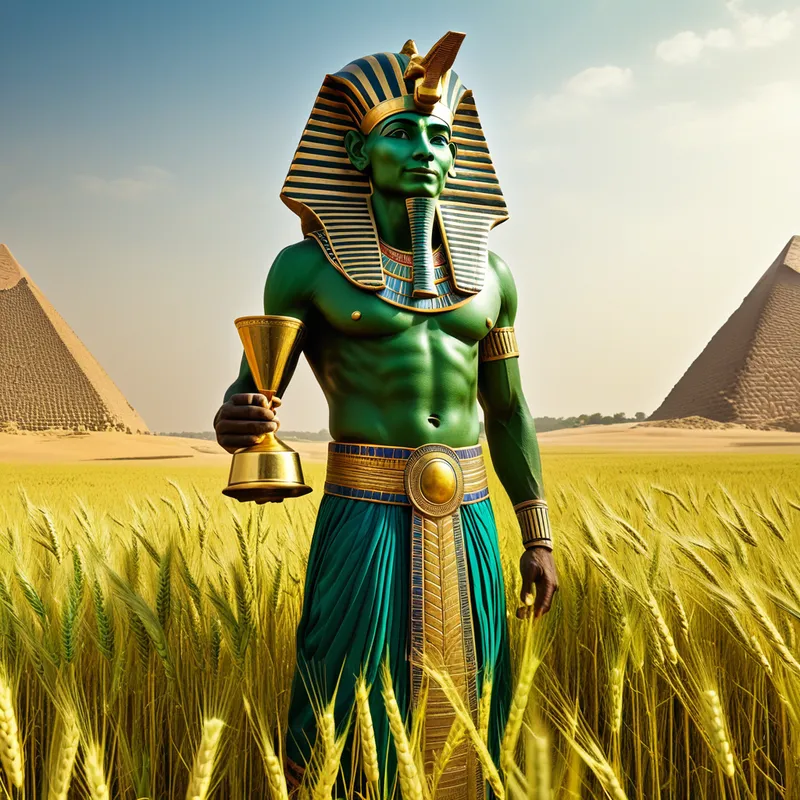
Osiris and Beer Myth Meaning & Symbolism
The myth where Osiris's dismembered body is steeped in beer, a sacred act of fermentation that transforms death into the promise of eternal life.
The Tale of Osiris and Beer
Hear now the tale not of the green god’s death, but of his strange and fragrant rebirth. The story begins in silence, in the deep, cool dark where the pieces lay. Set, the red lord of storms, had done his work. The body of [Osiris](/myths/osiris “Myth from Global/Universal culture.”/), the once-whole king, was scattered—fourteen fragments cast to [the wind](/myths/the-wind “Myth from Various culture.”/) and the Nile’s muddy embrace. Isis, the great magician, her wings aching with grief and purpose, had scoured the Two Lands. With her sister [Nephthys](/myths/nephthys “Myth from Egyptian culture.”/), she had gathered the flesh of her lord, all but one piece, consumed by the Nile’s creatures.
Yet, what is a reassembled king but a beautiful statue? Life, the spark, the ka, was absent. The ritual of the [Pyramid Texts](/myths/pyramid-texts “Myth from Egyptian culture.”/) speaks of a moment not of grand magic, but of humble, earthly alchemy. In a quiet chamber, away from the eyes of the sun, the sisters did not merely wash the body. They steeped it.
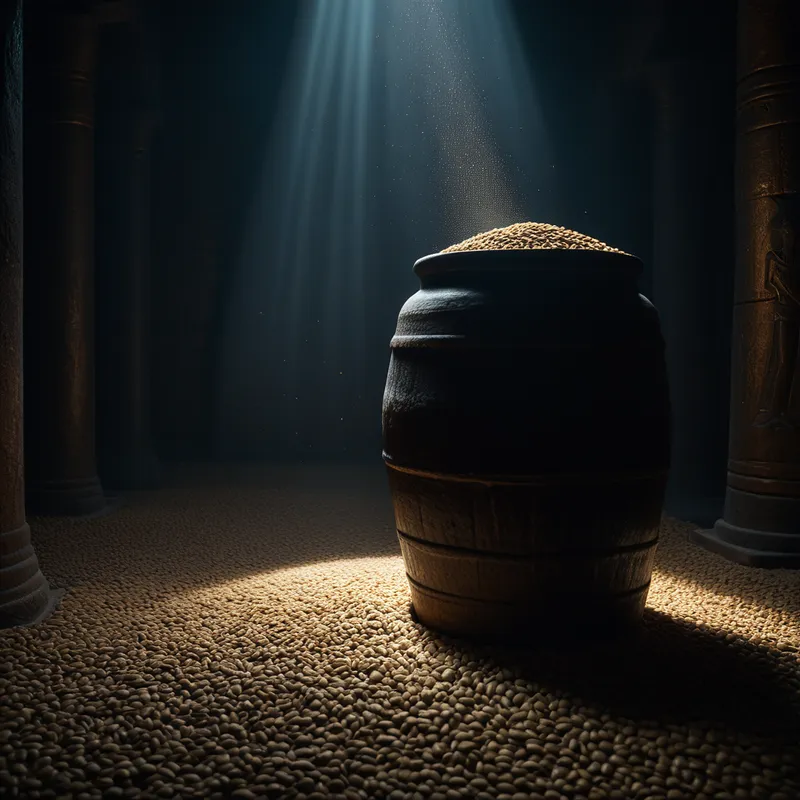
They took the golden gift of the land—barley, the very flesh of Geb—and they mixed it with the lifeblood of Hapi, the Nile’s [water](/myths/water “Myth from Chinese culture.”/). In great jars of clay, they let the mixture rest in the warmth. A silent, seething miracle began. The water grew cloudy, then alive. It breathed. It bubbled with a spirit unseen. This was not mere water; it was becoming henqet—the divine beer.
For days, the dismembered god lay submerged in this dark, fermenting liquor. The beer did not cleanse like water; it transformed. It seeped into the seams of his rejoined flesh, into the hollow where his heart should beat. It carried within its effervescent heart the spirit of fermentation itself—[the force](/myths/the-force “Myth from Science Fiction culture.”/) that breaks down the hard grain to release its hidden sweetness, the power of controlled decay that begets new life. When at last they lifted him from the fragrant bath, Osiris was no longer a corpse patched together. He was [the Drowned](/myths/the-drowned “Myth from Norse culture.”/) One, the Soaked One, infused with the essence of resurrection. The beer had done what magic alone could not: it had initiated the alchemy of return. He rose, not to rule the living world again, but to become its immortal, green-skinned sovereign of the Duat, the promise of life everlasting sprouting from the field of death.
Cultural Origins & Context
This potent episode is woven into the fabric of the Book of the Dead and the older Pyramid Texts. It was not a folktale for the marketplace, but a sacred, liturgical narrative recited by priests during the mysteries of the Osirian cult and in the solemn rites of burial. The myth served a dual societal function. On one level, it was a divine precedent for the embalming rituals performed on every Egyptian who could afford it. Just as Osiris was preserved and revived, so too could the deceased be made whole for the afterlife.
On a broader, agricultural level, it explained the very cycle of life upon which civilization depended. The annual Nile flood (Hapi’s gift) soaked the barren earth (Osiris’s body), allowing the barley (Osiris’s flesh) to sprout. The brewing of beer was a domestic and temple ritual that mirrored this cosmic process. Thus, the myth of Osiris and beer was a fundamental piece of sacred technology—a story that linked the fate of the soul to the fermentation of grain, assuring people that decay was not an end, but a necessary step in a sacred recipe for eternity.
Symbolic Architecture
At its core, this myth is a profound map of transformative suffering. Osiris represents the conscious ego or the established order that must be shattered (dismemberment) by the chaotic, shadowy forces of the unconscious (Set). This is not merely destruction; it is the necessary deconstruction of a form that has become rigid or outgrown.
The vessel must be broken for the wine to be poured out, and for new wine to be made.
The [beer](/symbols/beer “Symbol: Beer often symbolizes social connection, celebration, and relaxation, reflecting both enjoyment and excess.”/) is the crucial alchemical agent. Symbolically, it is the [prima materia](/myths/prima-materia “Myth from Alchemical culture.”/)—the chaotic, living, fermenting substance of the unconscious itself. It is not a gentle balm but an active, bubbling, transformative medium. To be steeped in it is to be surrendered to a process of psychic fermentation. [The ego](/myths/the-ego “Myth from Jungian culture.”/)-complex, once solid and defined, is dissolved, its components broken down. The barley (potential, latent [life](/symbols/life “Symbol: The symbol of ‘Life’ represents a journey of growth, interconnectedness, and existential meaning, encompassing both the joys and challenges that define human experience.”/)) surrenders its hard form to become something entirely new: an intoxicating [spirit](/symbols/spirit “Symbol: Spirit symbolizes the essence of life, vitality, and the spiritual journey of the individual.”/). This is the mythic enactment of the [psyche](/myths/psyche “Myth from Greek culture.”/)’s [ability](/symbols/ability “Symbol: In dreams, ‘ability’ often denotes a recognition of skills or potential that one possesses, whether acknowledged or suppressed.”/) to take its own [trauma](/symbols/trauma “Symbol: A deeply distressing or disturbing experience that overwhelms the psyche, often manifesting in dreams as unresolved emotional wounds or psychological injury.”/), its own “dismemberment,” and, through a [period](/symbols/period “Symbol: Periods in dreams can symbolize cyclical patterns, renewal, and the associated emotions of loss or change throughout life.”/) of introspective immersion (the steeping), transform it into the very substance of renewal.

The Dreamer’s Resonance
When this myth stirs in the modern dreamer, it rarely appears as an Egyptian tableau. Instead, one may dream of being submerged in a dark, warm liquid—a pool, a vat, a murky sea. There is a sense of being dissolved, of parts floating away, yet simultaneously of a strange, bubbling vitality within the medium itself. One might dream of forgotten pieces of oneself being found and placed in a container, or of a cherished structure (a house, a vehicle) breaking down only to be soaked by a nourishing rain that makes moss and new plants grow from its ruins.
Somatically, this can correlate with periods of depression, illness, or profound burnout—not as pathology alone, but as the psyche’s enforced “steeping.” The feeling of being pulled apart, of losing one’s familiar shape, is the Set-energy at work. The subsequent immersion in a heavy, inward-turned state is the beer-vat. The dream is signaling a deep, autonomic process of fermentation underway. The ego is not dying; it is being broken down by the psyche’s own transformative enzymes, preparing for a reconstitution at a different level of being.
Alchemical Translation
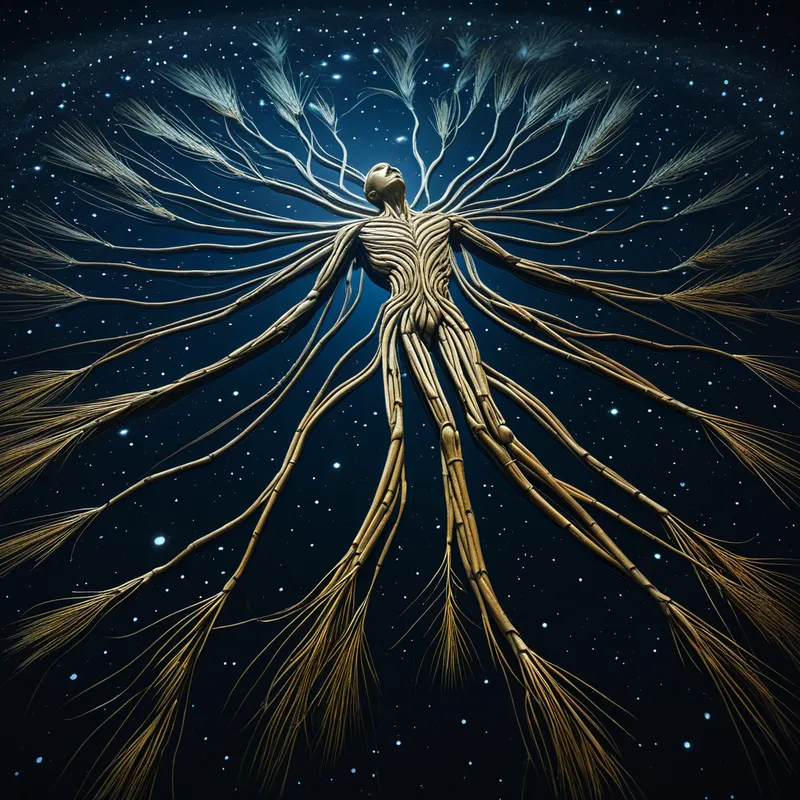
The individuation journey modeled here is not one of heroic conquest, but of sacred surrender and biochemical transformation. The modern seeker often tries to “fix” their dismemberment through willpower or analysis, to glue the pieces back together as they were. The Osirian path offers a different directive: Do not reassemble yet. First, steep.
The goal is not to recover the old self, but to become inoculated by the process of its transformation.
The “beer” is the felt experience of the unconscious—our emotions, memories, fantasies, and somatic sensations. The alchemical work is to consciously allow oneself to be immersed in this inner medium without premature flight or solidification. This means dwelling in the uncertainty, the emotional turbulence, the bubbling confusion of a life transition, a grief, or a creative block, trusting it as a necessary solvent.
Out of this steeping arises the “Osiris of [the Duat](/myths/the-duat “Myth from Egyptian culture.”/)“—a reconstituted self that is fundamentally different. It is no longer the solar king of the dayworld, but the lord of the inner, fertile darkness. This new psychic structure is resilient because it has been fermented; it contains within it the knowledge of its own dissolution and the spirit of the process that revived it. The individual becomes, like Osiris, a center of regenerative power. They understand that life grows not in spite of decay, but because of it, and they carry the intoxicating, life-giving spirit of that truth within their very being.
Associated Symbols
Explore related symbols from the CaleaDream lexicon: