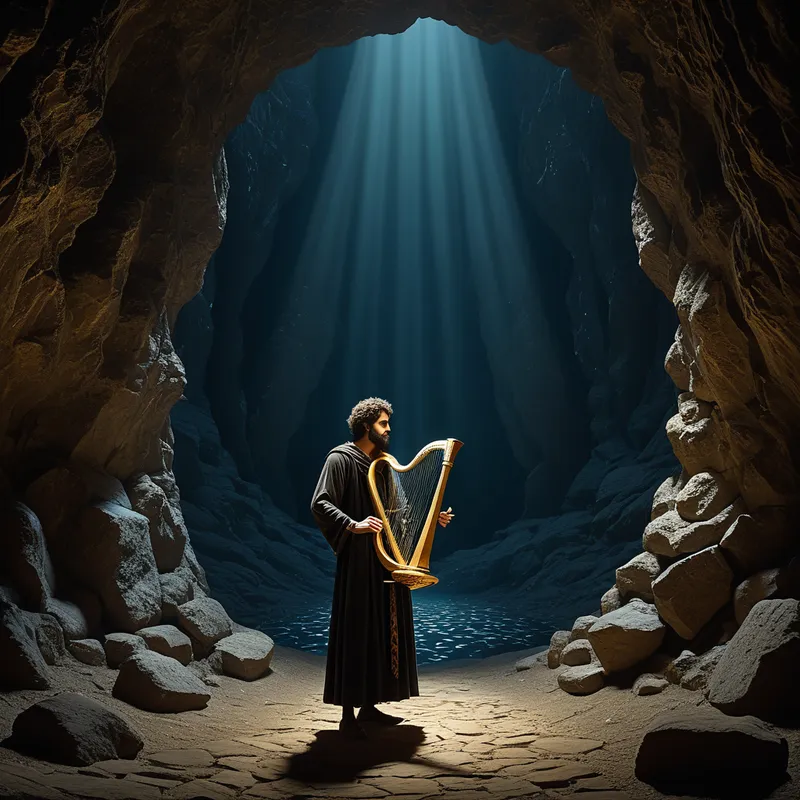
Orpheus descending into the Un Myth Meaning & Symbolism
A poet descends into the land of the dead to retrieve his lost love, armed only with music, but fails by looking back.
The Tale of Orpheus descending into the Un
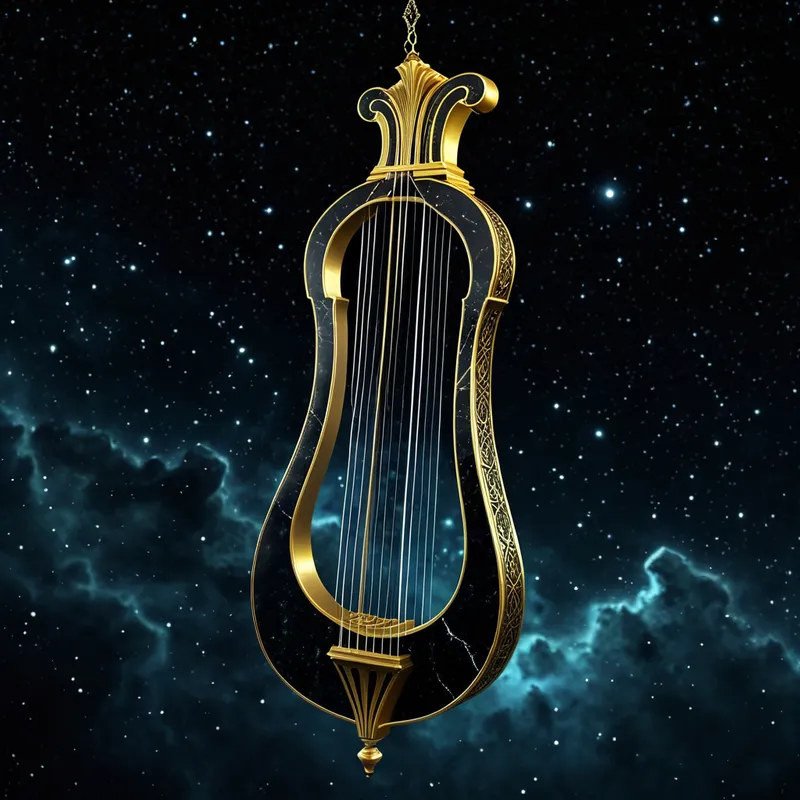
Hear now the song of the poet whose melody could tame the wild heart of [the world](/myths/the-world “Myth from Tarot culture.”/), and whose grief shook the foundations of [the earth](/myths/the-earth “Myth from Hindu culture.”/) itself. His name was [Orpheus](/myths/orpheus “Myth from Global/Universal culture.”/), son of a Muse, and his voice was not his own but a gift from the gods, channeled through the strings of his lyre. When he played, rivers ceased their flow to listen. Oaks would uproot their ancient feet and shuffle closer. The very stones softened to hear his harmonies.
But his greatest music was born of his love for Eurydice. Their union was a perfect chord, a harmony so complete it seemed to defy the mortal scale. Yet [the Fates](/myths/the-fates “Myth from Greek culture.”/), who spin and cut the threads of life, are jealous of such perfection. In a sun-dappled meadow, Eurydice trod upon a viper. Its bite was a single, dissonant note. Her light was extinguished, and her shade was drawn down the long, cold path to the realm of [Hades](/myths/hades “Myth from Greek culture.”/).
Orpheus’s world shattered into silence. The music died in his throat, leaving only a howl of wind. But within that void, a resolve was forged—not of steel, but of sound. He would not accept the decree. He would go to the land where all songs end and sing a new one into being.
His journey was a descent into the absolute negation of life. He found the entrance at Taenarum, a mouth of shadow in the living rock. Down he went, past the [Lethe](/myths/lethe “Myth from Greek culture.”/) and the Cocytus, his lyre his only torch. The shades flocked to him, drawn by the first living sound they had heard since death. He charmed [the ferryman](/myths/the-ferryman “Myth from Various culture.”/), Charon, with a lament so pure it paid his passage. He stood before the throne of Hades and his queen, [Persephone](/myths/persephone “Myth from Greek culture.”/), in the heart of the Un.
There, in that hall of eternal dusk, Orpheus did not demand. He offered. He poured out his grief not as a plea, but as a testament. He sang of love, of its beauty and its brutal severance. He sang so truthfully that the cold hearts of [the underworld](/myths/the-underworld “Myth from Greek culture.”/) kings thawed. The Erinyes, the relentless Furies, wept black tears. For a moment, the machinery of death itself paused, captivated.
Hades spoke, his voice like grinding stone. He would grant this boon. Eurydice could follow Orpheus back to the world of light. But on one condition, absolute and final: he must not turn to look upon her until they had both reached the upper air. If he glanced back, she would be lost forever.
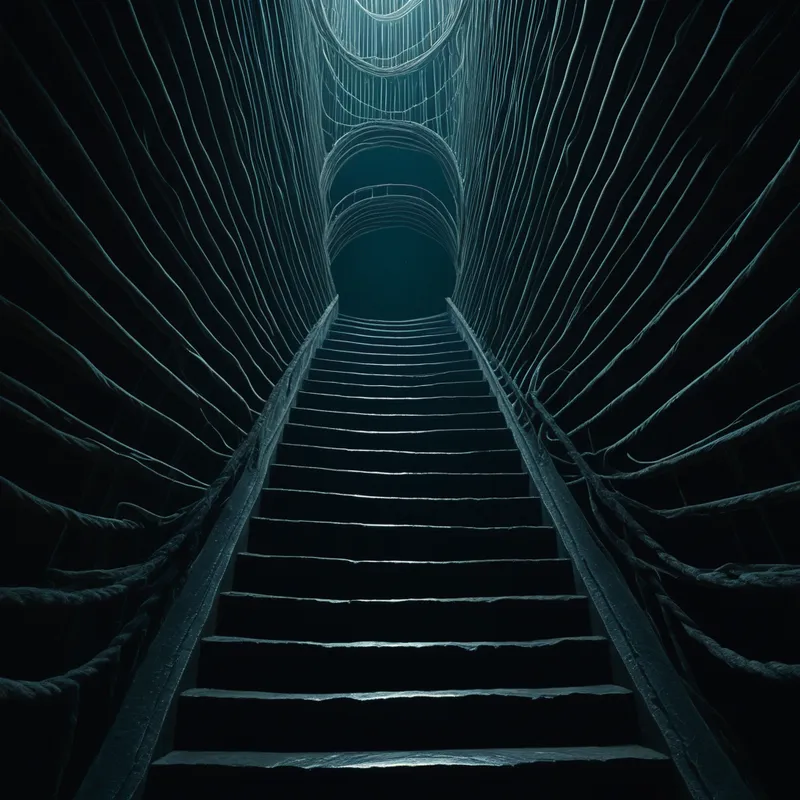
Hope, a fragile, trembling note, sounded once more. Orpheus turned and began the ascent, the silence behind him a heavier burden than any darkness. Was she there? Was her footfall just a echo of his own desperate hope? The path was long, the darkness absolute. With every step, doubt grew, a cacophony drowning out the memory of the god’s command. Just as the first grey hint of daylight filtered down, just as he crossed the final threshold, terror and love overcame him. He turned.
And there she was. His Eurydice, her form already dissolving, her eyes meeting his with an infinite sorrow that was not accusation, but recognition. A whisper—“Farewell”—was swallowed by the shadows. The [underworld](/myths/underworld “Myth from Greek culture.”/) reclaimed its own. Orpheus stood alone in the light, empty-handed, the silence now complete and eternal.

Cultural Origins & Context
The myth of Orpheus is a cornerstone of the ancient Greek storytelling tradition, with roots likely stretching back into pre-Homeric oral poetry. It was not a single, canonical text but a living story, retold and reshaped by poets like Hesiod and, most famously, the Roman poet Ovid in his [Metamorphoses](/myths/metamorphoses “Myth from Greek culture.”/), and the poet Virgil in his Georgics. It was a central narrative for the Orphic Mysteries, religious movements that promised initiates a better fate in the afterlife through ritual, asceticism, and the teachings attributed to Orpheus.
Societally, the myth functioned on multiple levels. It was a profound exploration of the power of art (mousikē) to confront even the most immutable laws of nature and divinity. It was also a foundational tragedy, teaching about the human condition: the sublime power of love, the devastating nature of loss, and the tragic flaw (hamartia)—often interpreted as passionate doubt or impulsive love—that can undo even the most heroic endeavor. It served as an etiological myth for the origin of certain rivers and natural features, and ultimately, for the enduring, sorrowful song of the nightingale.
Symbolic Architecture
At its core, the descent of Orpheus is a map of the [psyche](/myths/psyche “Myth from Greek culture.”/)’s [journey](/symbols/journey “Symbol: A journey in dreams typically signifies adventure, growth, or a significant life transition.”/) into its own [depths](/symbols/depths “Symbol: Represents the subconscious, hidden emotions, or foundational aspects of the self, often linked to primal fears or profound truths.”/). The Un is not merely a physical place of the dead; it is the unconscious, the [realm](/symbols/realm “Symbol: The symbol of ‘Realm’ often signifies the boundaries of one’s consciousness, experiences, or emotional states, suggesting aspects of reality that are either explored or ignored.”/) of [shadow](/symbols/shadow “Symbol: The ‘shadow’ embodies the unconscious, repressed aspects of the self and often represents fears or hidden emotions.”/), [memory](/symbols/memory “Symbol: Memory symbolizes the past, lessons learned, and the narratives we construct about our identities.”/), and all that has been lost or repressed. Eurydice represents the [anima](/symbols/anima “Symbol: The feminine archetype within the male unconscious, representing soul, creativity, and connection to the inner world.”/), the [soul](/symbols/soul “Symbol: The soul represents the essence of a person, encompassing their spirit, identity, and connection to the universe.”/)-[image](/symbols/image “Symbol: An image represents perception, memories, and the visual narratives we create in our minds.”/), or a vital [aspect](/symbols/aspect “Symbol: A distinct feature, quality, or perspective of something, often representing a partial view of a larger whole.”/) of [the self](/myths/the-self “Myth from Jungian culture.”/) that has become trapped in the unconscious through [trauma](/symbols/trauma “Symbol: A deeply distressing or disturbing experience that overwhelms the psyche, often manifesting in dreams as unresolved emotional wounds or psychological injury.”/)—the “bite” of [life](/symbols/life “Symbol: The symbol of ‘Life’ represents a journey of growth, interconnectedness, and existential meaning, encompassing both the joys and challenges that define human experience.”/).
The journey to the underworld is always a journey to retrieve a lost part of the soul.
Orpheus’s [weapon](/symbols/weapon “Symbol: A weapon in dreams often symbolizes power, aggression, and the need for protection or defense.”/) is not force but art—the disciplined, beautiful [expression](/symbols/expression “Symbol: Expression represents the act of conveying thoughts, emotions, and individuality, emphasizing personal communication and creativity.”/) of authentic feeling. His [music](/symbols/music “Symbol: Music in dreams often symbolizes the harmony between the conscious and unconscious mind, illustrating emotional expression and communication.”/), which pacifies the guardians of the deep, symbolizes the power of conscious, creative expression to navigate the chaotic and resistant elements of the inner world. The [condition](/symbols/condition “Symbol: Condition reflects the state of being, often focusing on physical, emotional, or situational aspects of life.”/)—do not look back—is the central, agonizing [symbol](/symbols/symbol “Symbol: A symbol can represent an idea, concept, or belief, serving as a powerful tool for communication and understanding.”/) of the myth. It represents the necessity of [faith](/symbols/faith “Symbol: A profound trust or belief in something beyond empirical proof, often tied to spiritual conviction or deep-seated confidence in people, ideas, or outcomes.”/) in the unconscious process, of trusting that what has been retrieved is following, even when it cannot be seen or controlled by the conscious ego. To “look back” is to attempt to prematurely grasp, to assert egoic control over a process that requires surrender, thus ensuring its failure.
The Dreamer’s Resonance
When this mythic pattern stirs in modern dreams, it signals a profound process of retrieval and mourning. The dreamer may find themselves in labyrinthine tunnels, descending elevators that plunge too deep, or calling out for someone who is always just out of sight. The somatic feeling is one of weighted gravity, a pulling downward, often accompanied by anxiety and a poignant sense of longing.
Psychologically, this is the psyche initiating a necessary descent. It is the beginning of shadow-work, where one must go down into the “land of the dead”—the repository of unlived life, old grief, abandoned potentials, and traumatic memories—to recover a vital energy (the Eurydice aspect) that has been left behind. The dream state itself is the music of Orpheus, the non-rational medium that allows safe passage into these territories. The inevitable “turning” in the dream often mirrors a waking pattern of self-sabotage, where the individual, on the cusp of integrating a recovered insight or feeling, retreats into old doubt or intellectual analysis (“looking”) and loses the fragile connection.
Alchemical Translation
The Orphic journey is a supreme model of psychic alchemy, the opus contra naturam (work against nature) that seeks to transform leaden loss into golden wisdom. [The first stage](/myths/the-first-stage “Myth from Alchemical culture.”/), [nigredo](/myths/nigredo “Myth from Alchemical culture.”/), is the blackening: the death of Eurydice, the plunge into despair and the unconscious. Orpheus’s decision to descend is the active engagement with this darkness, the descensus ad inferos that is essential for any real transformation.
The failure is not in the looking back, but in the inability to sustain the tension of not-knowing. This tension is the crucible of the soul.
His music in the underworld represents the albedo, the whitening: the application of conscious art and feeling to the raw material of the unconscious, beginning to separate and purify. The conditional return with Eurydice is the elusive citrinitas, the yellowing or dawning of a new conscious attitude that incorporates the lost soul.
The final, tragic glance is often misinterpreted as mere failure. In the alchemical view, it is a necessary mortificatio, a second death. The old Orpheus, the one who believed he could rescue his joy unchanged from the realm of death, must die. The poet who emerges alone is not the same man who descended. He is initiated. His music is now irrevocably tinged with the knowledge of the Un, making it deeper, truer, and ultimately transformative for the world, even in its sorrow. The individuated self is not the one who successfully drags the past into the present, but the one who has fully conversed with loss and returned, hollowed out, yet capable of a more profound song. The soul is not retrieved as a possession, but redeemed through the courage of the journey itself.
Associated Symbols
Explore related symbols from the CaleaDream lexicon: