Orpheus and his lyre in Greek Myth Meaning & Symbolism
The poet who charmed all creation with his lyre, descended into the underworld for love, and failed by looking back, embodying art's power and its limits.
The Tale of Orpheus and his lyre in Greek
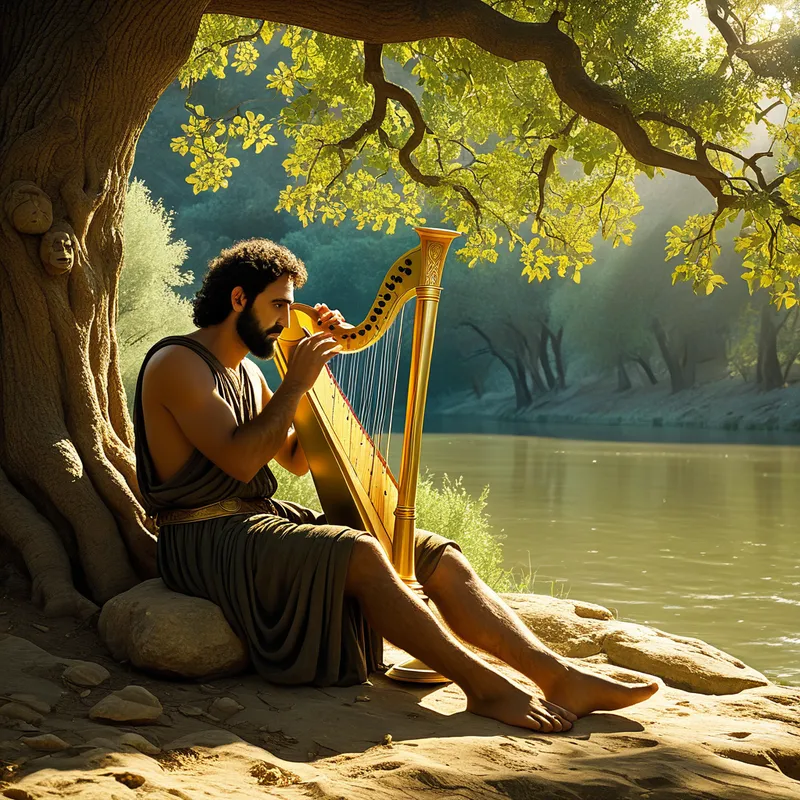
Hear now the song of the one who made the stones weep and the rivers stand still. In the wild, wine-dark lands of Thrace, where the rivers run swift and the oaks whisper old secrets, there lived a son of a Muse and a mortal king. His name was [Orpheus](/myths/orpheus “Myth from Global/Universal culture.”/), and from his mother he inherited a voice that was not his own, but a channel for [the music of the spheres](/myths/the-music-of-the-spheres “Myth from Greek culture.”/). His father gave him a lyre, and in his hands, it became a living [thing](/myths/thing “Myth from Norse culture.”/).
When Orpheus plucked the strings, a profound silence would fall. The fierce wolves would lay down their heads, panting softly. The birds would cease their chatter mid-flight, hovering on the air. The very trees—the stubborn oaks and the proud pines—would wrench their roots from [the earth](/myths/the-earth “Myth from Hindu culture.”/) and shuffle closer, their leaves trembling in rapture. The rivers changed their courses to linger at his feet, and stones, worn smooth by millennia, would roll to him like devoted hounds. His music was not entertainment; it was a revelation of the hidden harmony that binds all things.
His greatest harmony was found in Eurydice. Her laughter was the counterpoint to his melody, her step the rhythm to his song. But their duet was brutally severed. Fleeing the unwanted advances of a shepherd, Eurydice trod upon a nest of vipers in the tall grass. A single bite, a cold whisper of venom, and her light was extinguished. Her shade was ferried across the Acheron, leaving Orpheus in a world suddenly mute and monstrous.
His grief was a soundless scream. Then, it became a resolve more terrifying than any hero’s quest for glory. He would go where no living soul may tread and return. Taking only his lyre, he walked the path to [Hades](/myths/hades “Myth from Greek culture.”/). He passed the Cerberus, not with a sword, but with a lullaby that made all three heads droop in slumber. He stood finally in the ghastly hall of [Hades and Persephone](/myths/hades-and-persephone “Myth from Greek culture.”/), before the pale, assembled multitudes of the dead.
There, he sang. He did not plead with threats or heroic boasts. He sang of love. He sang of the cruel, beautiful paradox of Eurydice—a life in full bloom, cut down. He sang of the emptiness of the sun without her shadow, of the meaninglessness of song without its listener. His music was so pure, so utterly devoid of ego and full of true lament, that the iron hearts of [the underworld](/myths/the-underworld “Myth from Greek culture.”/) softened. The Erinyes, for the first time, wiped bloody tears from their cheeks. The wheel of [Ixion](/myths/ixion “Myth from Greek culture.”/) stopped its groaning turn. Hades himself, the Unsmiling One, bowed his head. [Persephone](/myths/persephone “Myth from Greek culture.”/), who knew the taste of seasonal loss, wept.
Moved by a compassion never before witnessed in that sunless realm, they granted his plea. Eurydice would follow him back to [the world](/myths/the-world “Myth from Tarot culture.”/) of light. But on one condition, a law of the deep places: he must not look back at her until they both had reached the upper air. If he turned, she would be lost forever.
The ascent was agony. He heard only the faintest rustle of her shade behind him on the steep, dark path. Doubt, that serpent of the mind, coiled around his heart. Was it her? Was it a trick? Had she stumbled? As the first grey hint of mortal daylight filtered down, a madness of uncertainty seized him. He had to know. He turned.
For one fractured, eternal moment, he saw her—not as the vibrant woman he knew, but as a wraith already fading, her eyes filled with a love now mingled with infinite sorrow. She did not cry out. She simply whispered “Farewell,” a sound softer than a falling leaf, and was drawn back into the depths, dissolving like mist in sudden sun.
His second loss was absolute. No music could charm the lords of the dead twice. He returned to the world, a hollow man. He wandered, his songs now dirges that made the trees shed their leaves in perpetual autumn. In his grief, he spurned the rites of Dionysus, and for this impiety, the [Maenads](/myths/maenads “Myth from Greek culture.”/) tore him apart, limb from limb. But even in death, his story was not silence. They cast his head and his lyre into [the river](/myths/the-river “Myth from Buddhist culture.”/) Hebrus, and as they floated downstream, the lips still murmured “Eurydice,” and the lyre, brushed by the reeds, played a final, haunting chord.

Cultural Origins & Context
The myth of Orpheus is a foundational stratum of Greek storytelling, with roots likely stretching back into pre-Homeric Thracian shamanic traditions. Thrace was considered a wild, mystical land to the Greeks, a fitting birthplace for a figure who blurred the lines between poet, priest, and magician. The earliest literary references appear in fragments from the 6th century BCE, and the tale was fully fleshed out by Roman poets like Virgil in his Georgics and Ovid in his [Metamorphoses](/myths/metamorphoses “Myth from Greek culture.”/).
Orpheus functioned as the mythical founder of Orphism, a significant religious and philosophical movement. Orphics believed in the divinity and immortality of the soul, its fall into a bodily prison, and its potential for purification and release through ascetic practices, rituals, and sacred poetry attributed to Orpheus. The myth was not mere entertainment; it was a sacred narrative performed in ritual contexts, teaching initiates about the soul’s journey, the perils of attachment, and the transformative power of sacred sound (the [logos](/myths/logos “Myth from Christian culture.”/)). It was passed down by bards and priests, a story that served as both theological doctrine and profound psychological map.
Symbolic Architecture
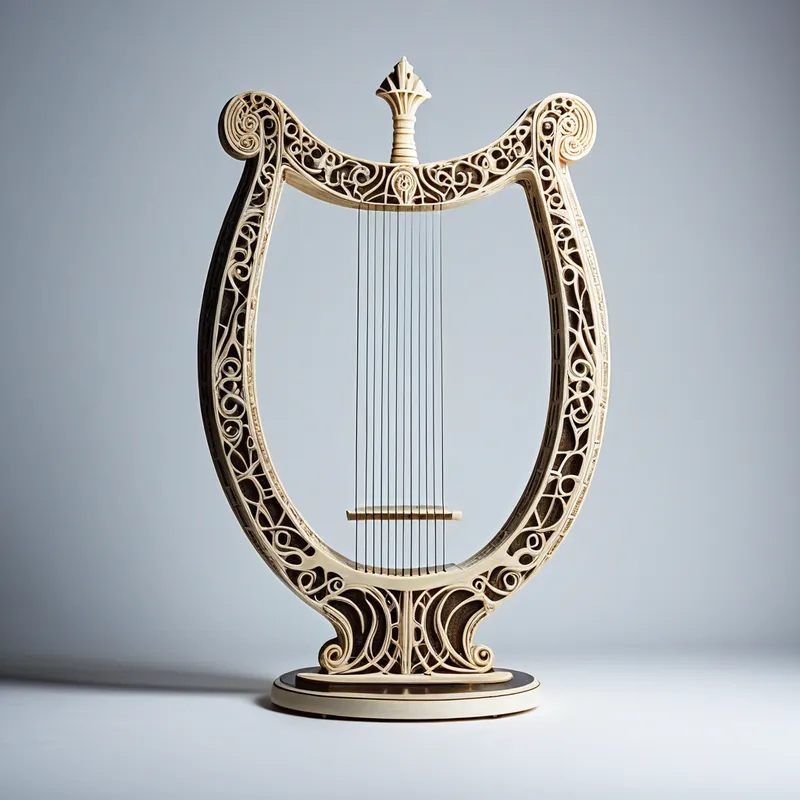
Orpheus represents the archetypal power of Art and Love as connective, animating forces. His [lyre](/symbols/lyre “Symbol: The lyre symbolizes harmony, creativity, and the connection between the divine and human experiences.”/) is the [instrument](/symbols/instrument “Symbol: An instrument symbolizes creativity, communication, and the means by which one expresses oneself or influences the world.”/) of this power—a [symbol](/symbols/symbol “Symbol: A symbol can represent an idea, concept, or belief, serving as a powerful tool for communication and understanding.”/) of [harmony](/symbols/harmony “Symbol: A state of balance, agreement, and pleasing combination of elements, often associated with musical consonance and visual or social unity.”/), the tuning of disparate elements (the strings) into a unified whole that resonates with the fundamental order of the [cosmos](/symbols/cosmos “Symbol: The entire universe as an ordered, harmonious system, often representing the totality of existence, spiritual connection, and the unknown.”/). His descent is not a heroic conquest but a vulnerable petition, modeling a [journey](/symbols/journey “Symbol: A journey in dreams typically signifies adventure, growth, or a significant life transition.”/) into the unconscious (the [underworld](/symbols/underworld “Symbol: A symbolic journey into the unconscious, representing exploration of hidden aspects of self, transformation, or confronting repressed material.”/)) not to slay, but to grieve, to retrieve what has been lost to the [depths](/symbols/depths “Symbol: Represents the subconscious, hidden emotions, or foundational aspects of the self, often linked to primal fears or profound truths.”/) of the [psyche](/myths/psyche “Myth from Greek culture.”/).
The backward glance is not a failure of love, but the triumph of the human psyche over divine law. It is the moment the soul chooses poignant, witnessed truth over a salvific lie.
Eurydice symbolizes the [anima](/symbols/anima “Symbol: The feminine archetype within the male unconscious, representing soul, creativity, and connection to the inner world.”/), the [soul](/symbols/soul “Symbol: The soul represents the essence of a person, encompassing their spirit, identity, and connection to the universe.”/)-[image](/symbols/image “Symbol: An image represents perception, memories, and the visual narratives we create in our minds.”/), or any beloved [aspect](/symbols/aspect “Symbol: A distinct feature, quality, or perspective of something, often representing a partial view of a larger whole.”/) of [life](/symbols/life “Symbol: The symbol of ‘Life’ represents a journey of growth, interconnectedness, and existential meaning, encompassing both the joys and challenges that define human experience.”/) that is suddenly and traumatically lost. The [condition](/symbols/condition “Symbol: Condition reflects the state of being, often focusing on physical, emotional, or situational aspects of life.”/)—do not look back—represents the absolute requirement of [faith](/symbols/faith “Symbol: A profound trust or belief in something beyond empirical proof, often tied to spiritual conviction or deep-seated confidence in people, ideas, or outcomes.”/) in the process of [integration](/symbols/integration “Symbol: The process of unifying disparate parts of the self or experience into a cohesive whole, often representing psychological wholeness or resolution of internal conflict.”/). One cannot forcibly retrieve a lost part of [the self](/myths/the-self “Myth from Jungian culture.”/) (a [trauma](/symbols/trauma “Symbol: A deeply distressing or disturbing experience that overwhelms the psyche, often manifesting in dreams as unresolved emotional wounds or psychological injury.”/), a [memory](/symbols/memory “Symbol: Memory symbolizes the past, lessons learned, and the narratives we construct about our identities.”/), a potential) while obsessively checking on its [condition](/symbols/condition “Symbol: Condition reflects the state of being, often focusing on physical, emotional, or situational aspects of life.”/). The psyche must be allowed to follow in its own time, in its own form. Orpheus’s turn is the inevitable [eruption](/symbols/eruption “Symbol: A sudden, violent release of pent-up energy or emotion from beneath the surface, often representing transformation or crisis.”/) of the conscious ego’s doubt, its need for validation, which shatters the delicate process of unconscious healing. His final dismemberment signifies the [dissolution](/symbols/dissolution “Symbol: The process of breaking down, dispersing, or losing form, often representing transformation, release, or the end of a state of being.”/) of the conscious [personality](/symbols/personality “Symbol: Personality in dreams often symbolizes the traits and characteristics of the dreamer, reflecting how they perceive themselves and how they believe they are perceived by others.”/) that occurs when art and love are utterly divorced from their [source](/symbols/source “Symbol: The origin point of something, often representing beginnings, nourishment, or the fundamental cause behind phenomena.”/), becoming only lament.
The Dreamer’s Resonance
To dream of the Orphic pattern is to be in a state of profound psychic retrieval. The dreamer may find themselves in a deep, labyrinthine place (a basement, a cave, a subway tunnel), following a sound or a faint light. They may be leading someone, or something, out. The core somatic sensation is one of intense, almost unbearable tension—a pull between forward motion and the compulsive need to look back.
This dream signals a process of reintegrating a lost or repressed part of the self. The “Eurydice” in the dream could be a childhood self, a forsaken talent, a buried trauma, or a neglected relationship. The dreamer is the Orpheus, attempting to bring this fragment into the light of consciousness. The anxiety of the dream mirrors the critical stage of this psychological work: the point where old doubts (“Is this real?” “Can I handle this?” “Am I making it worse?”) threaten to sever the connection and re-consign the material to the shadows. The dream is a rehearsal of that critical threshold of trust.

Alchemical Translation
The alchemical journey of Orpheus models the process of [nigredo](/myths/nigredo “Myth from Alchemical culture.”/) and the failed attempt at albedo. The loss of Eurydice is the [nigredo](/myths/nigredo “Myth from Alchemical culture.”/)—the descent into the blackness of utter despair, the massa confusa of the soul. His journey to Hades is the courageous application of the opus (the work), using the unique gift of the Self (his music/art) to confront and move the frozen, petrified structures of the inner world (the lords of the [underworld](/myths/underworld “Myth from Greek culture.”/)).
The true gold is not the rescued beloved, but the searing knowledge gained in the space between the turn and the second loss. It is the assimilation of the wound into the fabric of the creative self.
His conditional success represents the potential for albedo—the washing clean, the reunion of conscious and unconscious. But his turn is the crucial, tragic flaw in the experiment. In psychological terms, [the ego](/myths/the-ego “Myth from Jungian culture.”/) prematurely claims and defines the emerging content, trying to “look at it” and possess it with conscious understanding before the transformation is complete. This “look” fixes the fluid, transforming substance back into a ghost, a memory, a trauma—it re-traumatizes. The ultimate alchemical product, therefore, is not a saved Eurydice, but a transformed Orpheus. His dismemberment is a final, brutal solve (dissolution), and his eternal, murmuring voice in the river is the coagula (re-coagulation)—not as a whole man, but as a myth, a haunting song that forever flows through the collective psyche, teaching that the deepest beauty is often born from an irreparable crack in the heart’s vessel.
Associated Symbols
Explore related symbols from the CaleaDream lexicon: