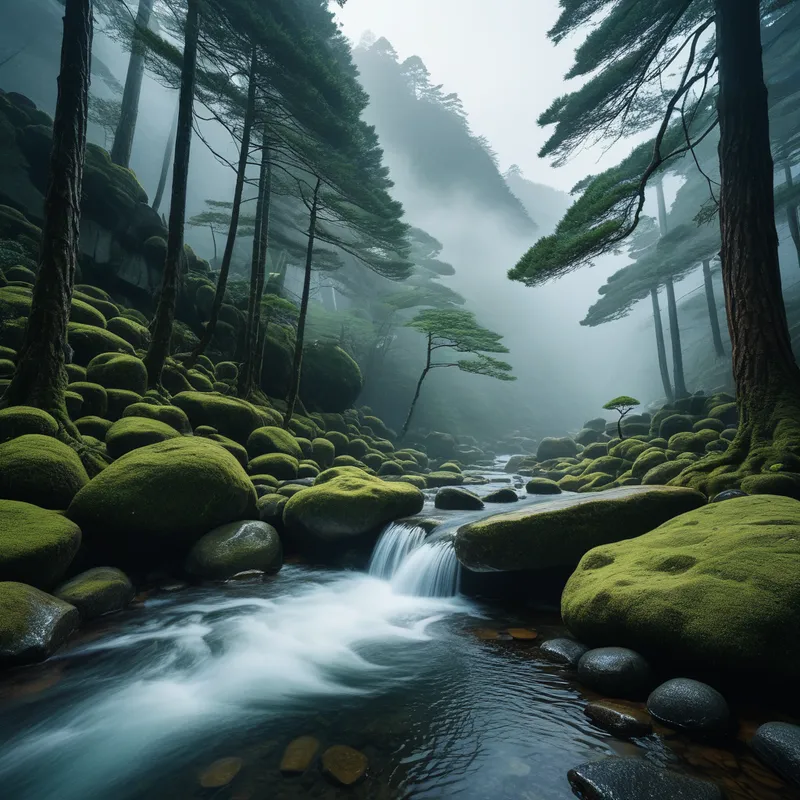
OnsenKami Myth Meaning & Symbolism
A myth of a wounded kami whose suffering becomes a sacred, healing spring, embodying the alchemy of pain into communal blessing.
The Tale of OnsenKami
Listen. In the deep time, when the mountains were young gods and the rivers were their silver thoughts, there walked a spirit of [the earth](/myths/the-earth “Myth from Hindu culture.”/). It was not one of the great, named kami of [the sky](/myths/the-sky “Myth from Persian culture.”/) or the storm, but a quieter one, a being of the deep stone and the secret warmth beneath [the world](/myths/the-world “Myth from Tarot culture.”/). Its name is lost, but its story is written in steam and mineral scent.
This kami loved the high places, the silent peaks where snow slept and eagles circled. It danced in the cold, clear streams that fell from cliffs, and its joy was the glitter of frost on pine needles. But the earth is a living body, and it knows pain. A great stirring happened in the belly of the world—a groan of rock, a fire in the deep. The mountain trembled, and a wound opened in its side. The kami, caught in this convulsion, was pierced not by stone, but by a shard of the earth’s own fiery anguish. A searing, mineral agony, a poison of heat and pressure, lodged in its essence.
Where once it flowed with the chill [water](/myths/water “Myth from Chinese culture.”/), now it burned. Its touch, which once brought the crispness of morning, now scalded. The clear streams fled from it; the creatures of the forest hid. The kami became a [thing](/myths/thing “Myth from Norse culture.”/) of pain, a wandering fever in the shape of a spirit. It dragged itself from vale to vale, its form flickering like a guttering coal, leaving patches of scorched earth and a smell of [sulfur](/myths/sulfur “Myth from Alchemical culture.”/) in its wake. It was an exile, not by decree, but by its own unbearable nature.
For years uncounted, it wandered, a blight upon the land it loved. Its suffering bled into the water tables, turning pure springs bitter. It came to a forgotten valley, a deep cleft shadowed by ancient cedars. Its strength was gone. The pain was all that remained. With a final sigh that was not breath but a release of its core, the kami laid itself down upon a bed of moss and river stones. It did not seek death, for a kami does not die as we do. It sought an end to the torment.
And there, as its conscious form dissolved into the ache, something miraculous began. The searing pain within it—that shard of the earth’s fire—began to bleed out. But it did not bleed as destruction. It bled as a slow, steady weeping. From the very spot where its heart would be, a new spring bubbled forth. Not cold and clear, but warm, then hot, clouded with minerals, fragrant with the scent of stone and life. The water pooled, then spilled over the rocks, creating terraces of steaming, vibrant color.
The kami was gone, and yet it was utterly present. Its agony had been alchemized. Its body was the basin; its breath was the steam; its transformed pain was the healing heat. Where it had once brought blight, it now offered solace. Animals, and later humans, would come to these waters. The weary would soak and find their stiffness eased. The wounded would bathe and find their scars softened. The valley, once forgotten, became a yorishiro, a dwelling place for a new kind of divinity: the OnsenKami. The spirit of the hot spring was born not from power, but from surrender; not from purity, but from the sacred transformation of profound suffering.
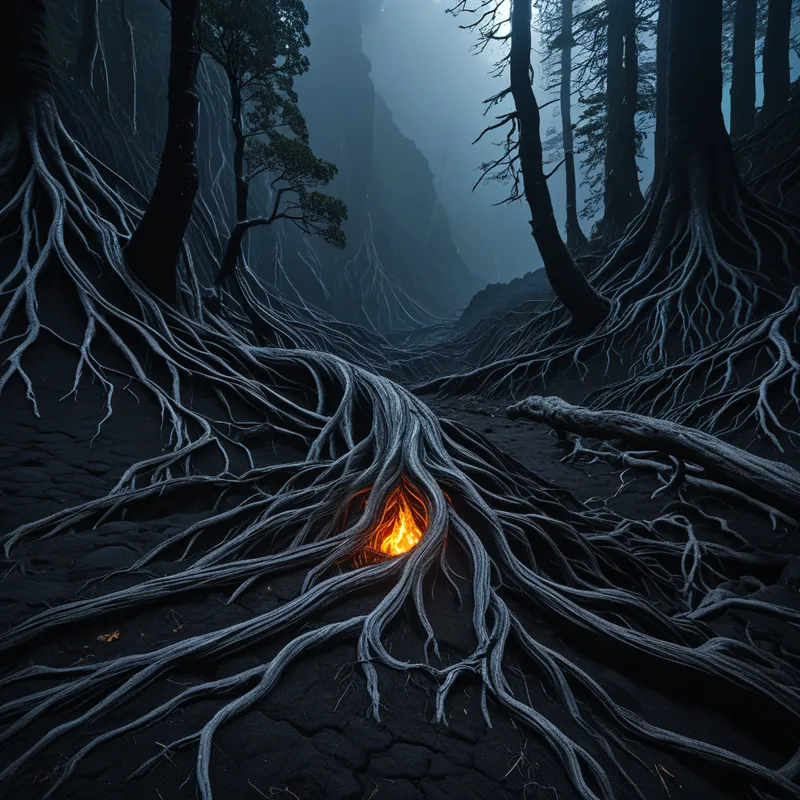
Cultural Origins & Context
The myth of the OnsenKami is not a single, codified story from a text like the Kojiki or Nihon Shoki. It is a folk belief, an mukashibanashi, that grew from the very landscape of Japan, a volcanic archipelago dotted with thousands of hot springs. This myth is the spiritual etiology crafted by communities to explain and sanctify the geothermal gifts of their land.
It was told by village elders, by kannushi and miko serving at small, local shrines near hot springs. Its function was deeply practical and cosmological. It explained why this particular water was hot and healing when others were cold. More importantly, it established a sacred protocol: the spring was not a mere resource, but the living body of a kami. This mandated respect, ritual purification before entering, and offerings of gratitude. The myth wove the therapeutic act of bathing into the fabric of <abbr title=“The “way of the kami”, the indigenous spirituality of Japan.”>Shinto practice, framing healing as a form of communion with a wounded, compassionate spirit. It transformed a geological phenomenon into a relational, spiritual encounter.
Symbolic Architecture
At its core, the myth is a profound map of alchemical transformation. The central [symbol](/symbols/symbol “Symbol: A symbol can represent an idea, concept, or belief, serving as a powerful tool for communication and understanding.”/) is the hot spring itself: a place where the inner fire of the [earth](/symbols/earth “Symbol: The symbol of Earth often represents grounding, stability, and the physical realm, embodying a connection to nature and the innate support it provides.”/) (unconscious, primal [energy](/symbols/energy “Symbol: Energy symbolizes vitality, motivation, and the drive that fuels actions and ambitions.”/), often [trauma](/symbols/trauma “Symbol: A deeply distressing or disturbing experience that overwhelms the psyche, often manifesting in dreams as unresolved emotional wounds or psychological injury.”/)) meets the cleansing element of [water](/symbols/water “Symbol: Water symbolizes the subconscious mind, emotions, and the flow of life, representing both cleansing and creation.”/) ([consciousness](/symbols/consciousness “Symbol: Consciousness represents the state of awareness and perception, encompassing thoughts, feelings, and experiences.”/), [emotion](/symbols/emotion “Symbol: Emotion symbolizes our inner feelings and responses to experiences, often guiding our actions and choices.”/), flow). The result is not an [explosion](/symbols/explosion “Symbol: An explosion symbolizes sudden change, unchecked emotions, or profound transformation, often reflecting repressed anger or anxiety that manifests destructively.”/), but a therapeutic seepage.
The wounded kami represents any core [aspect](/symbols/aspect “Symbol: A distinct feature, quality, or perspective of something, often representing a partial view of a larger whole.”/) of [the self](/myths/the-self “Myth from Jungian culture.”/)—a talent, an [identity](/symbols/identity “Symbol: Identity represents the sense of self, encompassing personal beliefs, cultural background, and social roles.”/), a deep feeling—that has been traumatized or poisoned by experience. This “poison” is often what makes us feel exiled, too intense, or damaging to our own environments and relationships. The kami’s wandering is the [psyche](/myths/psyche “Myth from Greek culture.”/)’s desperate, often destructive, search for [relief](/symbols/relief “Symbol: Relief signifies release from tension or discomfort, often representing emotional healing and liberation from burdens.”/) from this inner conflict.
The most profound healing does not come from extracting the poison, but from transmuting it into the very medium of cure.
The [climax](/symbols/climax “Symbol: The peak moment in a narrative or musical composition, representing resolution, transformation, or ultimate expression.”/)—the laying down and [dissolution](/symbols/dissolution “Symbol: The process of breaking down, dispersing, or losing form, often representing transformation, release, or the end of a state of being.”/)—is the critical [juncture](/symbols/juncture “Symbol: A critical point of decision, transition, or convergence where paths, choices, or timelines meet, demanding action or reflection.”/) of surrender. It is not suicide, but [the ego](/myths/the-ego “Myth from Jungian culture.”/)’s relinquishment of control over the pain. It is the [moment](/symbols/moment “Symbol: The symbol of a ‘moment’ embodies the significance of transient experiences that encapsulate emotional depth or pivotal transformations in life.”/) one stops fighting the wound and instead listens to it. The transformation occurs not through force, but through this radical [acceptance](/symbols/acceptance “Symbol: The experience of being welcomed, approved, or integrated into a group or situation, often involving validation of one’s identity or actions.”/). The hot spring that emerges is the symbol of the gift that can only be born from the wound. The kami’s former, individual identity is sacrificed, but in return, it becomes a [source](/symbols/source “Symbol: The origin point of something, often representing beginnings, nourishment, or the fundamental cause behind phenomena.”/) of [life](/symbols/life “Symbol: The symbol of ‘Life’ represents a journey of growth, interconnectedness, and existential meaning, encompassing both the joys and challenges that define human experience.”/) and healing for an entire [community](/symbols/community “Symbol: Community in dreams symbolizes connection, support, and the need for belonging.”/). Its power is now relational and generative.
The Dreamer’s Resonance
When this myth stirs in the modern unconscious, it often manifests in dreams of transformative waters. To dream of discovering a hidden hot spring, especially one that is murky, overly hot, or strangely colored, signals a somatic confrontation with buried pain that is seeking expression. The dreamer may be in a phase where their old coping mechanisms (the “cold streams”) are failing, and a more intense, mineral-rich emotional content is forcing its way to the surface.
Dreams of being scalded or healed by such waters point directly to the process at hand. The scalding is the fear of the pain’s intensity; the healing is the intuitive knowledge of its potential value. The setting is crucial—a liminal, natural space, often at night or in deep mist, indicating this is a process occurring at [the threshold](/myths/the-threshold “Myth from Folklore culture.”/) of conscious understanding. The body in the dream is the guide; feelings of heaviness dissolving, stiffness easing, or conversely, burning discomfort, are the psyche’s direct communication about the state of this inner alchemy. The dream is an invitation to stop wandering and to allow the painful thing to finally “weep” its truth.
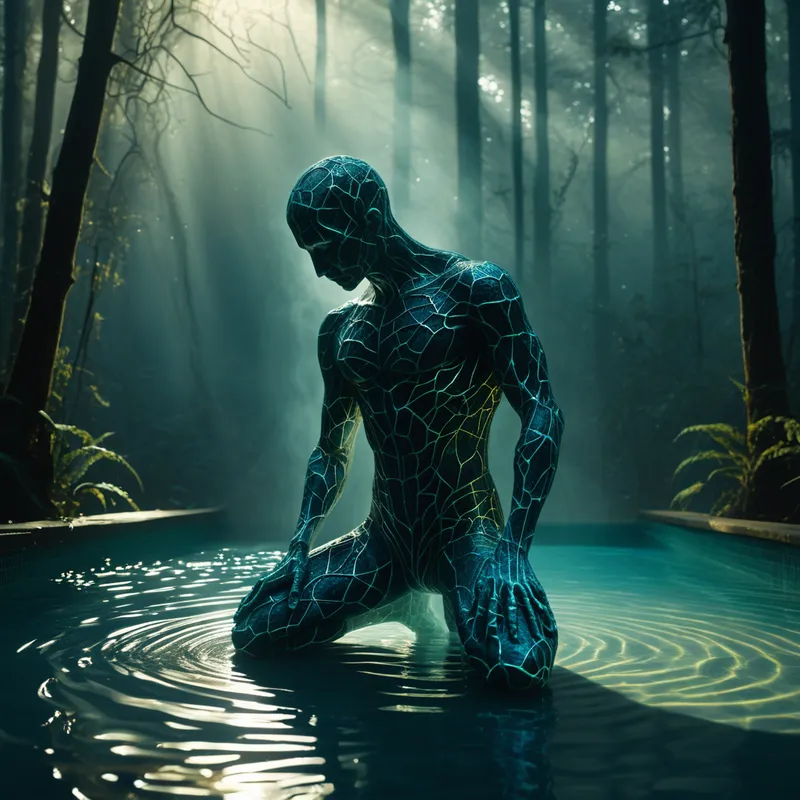
Alchemical Translation
For the individual on the path of individuation, the OnsenKami myth models the stage where one must confront the “wounded god” within—the noble aspect of the self that carries a curse. This could be a creative gift that feels blocked by shame, a capacity for love scarred by betrayal, or a powerful drive tainted by guilt.
The first step, the wandering exile, is necessary. It is the period of suffering that proves the old life is untenable. The alchemical work begins with the conscious decision to “lie down” in the valley—to create a sacred container (through therapy, ritual, art, or deep reflection) where the wound can be fully felt without the imperative to immediately fix it. This is the surrendero.
The psyche’ geothermal gift—your unique capacity to heal yourself and others—is forged in the precise pressure of the pain you thought would destroy you.
The transmutation is not an intellectual act but a somatic, chemical one within the psyche. The fire of the trauma, when allowed to flow into the waters of conscious feeling and expression, precipitates the “minerals”—the wisdom, empathy, resilience, and unique perspective that become your contribution. You are no longer just the person with the wound. You become the source of the spring. Your healed, or healing, self becomes a yorishiro for others. Your experience, once isolating, becomes a communal resource. The myth teaches that our deepest curses, when met with sacred surrender, are the raw materials for our most vital blessings.
Associated Symbols
Explore related symbols from the CaleaDream lexicon: