Odín's Sacrifice Myth Meaning & Symbolism
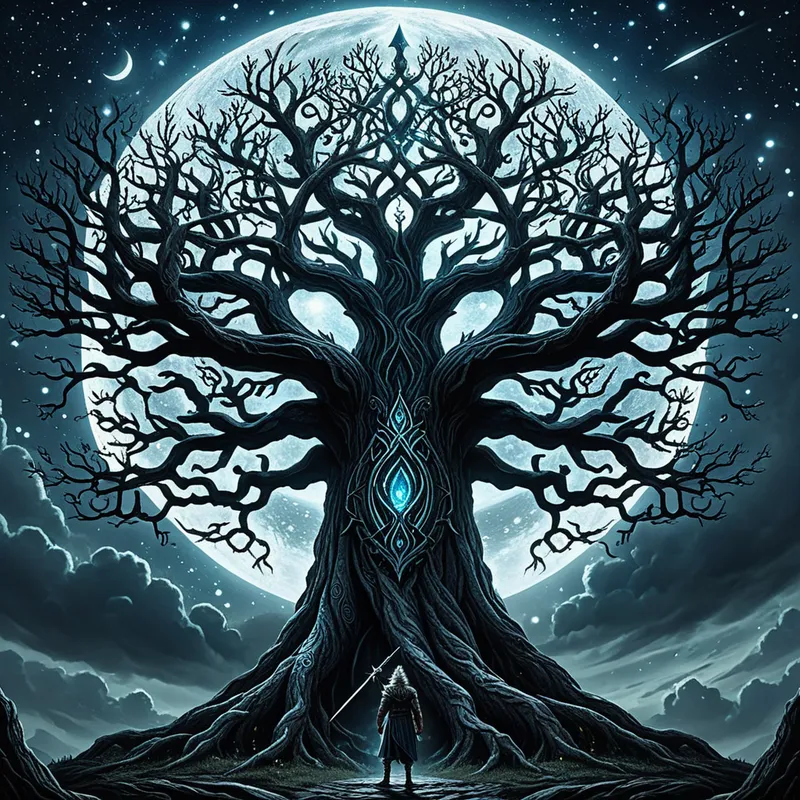
The All-Father hangs himself on Yggdrasil for nine nights, pierced by a spear, to gain the runes and the wisdom of the cosmos.
The Tale of Odín’s Sacrifice
Hear now a tale from the roots of [the world](/myths/the-world “Myth from Tarot culture.”/), whispered by [the wind](/myths/the-wind “Myth from Various culture.”/) in the high branches and echoed in the deep wells. It is not a tale of thunderous battle, though it birthed the power to win them. It is a tale of stillness, of a terrible price paid in the silent dark between the worlds.
In the time before time was fully woven, Odín sat upon his high seat, [Hliðskjálf](/myths/hliskjlf “Myth from Norse/Germanic culture.”/). He saw the [threads of fate](/myths/threads-of-fate “Myth from Greek culture.”/) spun by the Nornir at the well of Urðr. He saw the coming twilight of the gods, the great unraveling of [Ragnarök](/myths/ragnark “Myth from Norse culture.”/). A hunger awoke in him then, not for meat or mead, but for the marrow of existence itself. He hungered for the wisdom to see the pattern whole, to grasp the very bones of reality. This wisdom was held by the [Yggdrasil](/myths/yggdrasil “Myth from Global/Universal culture.”/) itself, in the secret language of the cosmos—[the runes](/myths/the-runes “Myth from Norse culture.”/).
But the [runes](/myths/runes “Myth from Norse culture.”/) would not be taken. They could only be earned. They demanded a king’s ransom, and the king was Odín.
Driven by a fury of seeking, the All-Father journeyed to the heart of all things. He stood before the mighty ash, its branches holding [the nine worlds](/myths/the-nine-worlds “Myth from Norse culture.”/), its roots delving into wells of memory and destiny. There was no ceremony, no audience of gods. There was only the tree, the wind, and the resolve of a one-eyed god.
He took his own spear, [Gungnir](/myths/gungnir “Myth from Norse culture.”/), the unerring. He did not raise it against a foe. He offered himself upon it. With a cry that was both a surrender and a command, he hung himself upon a great limb of Yggdrasil. He was Odín, the Hanged God. He pierced his own side with [Gungnir](/myths/gungnir “Myth from Norse culture.”/)’s point. No friend gave him drink. No kin gave him bread.
For nine nights and nine days, the lord of the Æsir hung between heaven and earth, between life and death. The winds of Jötunheimr scoured him. The mists of Ásgarðr could not comfort him. He stared into [the abyss](/myths/the-abyss “Myth from Kabbalistic culture.”/) below the root, and the abyss stared back. His agony was a fire that burned away everything but the seeking. He died to himself, a sacrifice to himself.
On the ninth night, as the final veil of his old understanding tore away, a vision blazed forth. From the depths of his suffering, from the well of his own spilled being, light erupted. Not the light of the sun, but the cold, clear, terrible light of primal knowledge. The runes—shapes of power, keys to creation and dissolution—reared up before his inner eye. They screamed their names into the silence of his soul. He saw them. He knew them. He caught them.
With a final, wrenching effort, he reached down from the tree and seized the runes. The knowledge flooded into him, and he fell from the tree, reborn. He was no longer just Odín, the chieftain. He was Odín, the master of magic (seiðr), the lord of the gallows, the bearer of the hidden word. He had paid the price, and the cosmos yielded its secret alphabet.
Cultural Origins & Context
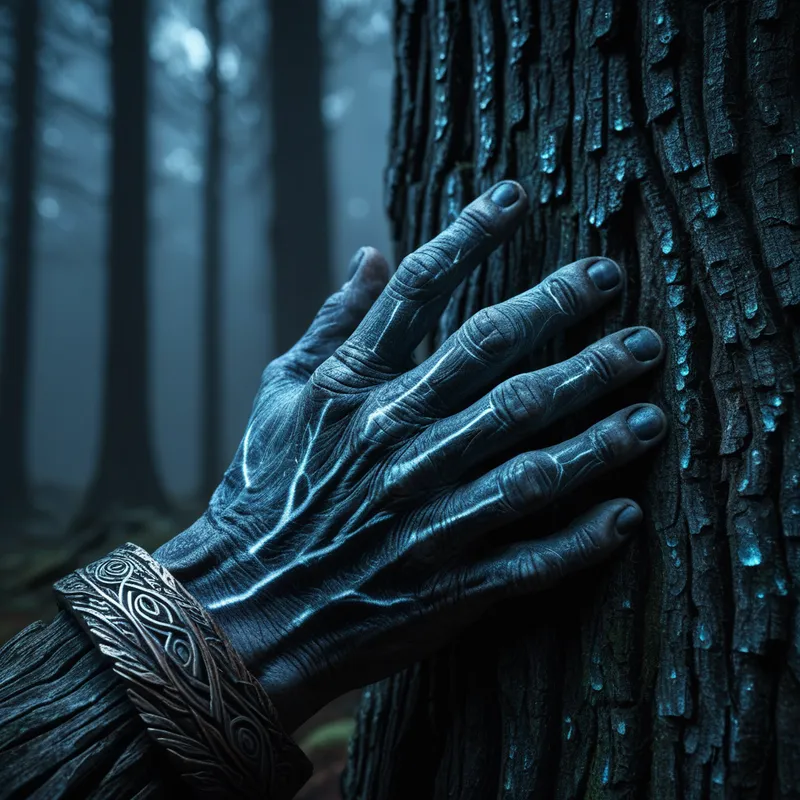
This myth, found in the Old Norse poem Hávamál (“The Sayings of the High One”), is a cornerstone of the Eddic tradition. It was not a story for the marketplace, but for the hall in deep winter, or for the initiate. It was Odín’s own song, a first-person account embedded in a collection of gnomic wisdom. This tells us much: the myth was considered a source of ultimate, hard-won truth, a template for the relationship between the seeker and the sought.
In a culture that valued blunt courage and tangible glory, this myth presents a paradoxical, interior heroism. It reflects the complex role of Odín as a god of ecstasy and terror, of poetry and battle-frenzy, of sovereignty and the outlaw’s gallows. The myth served multiple societal functions. For the warrior, it modeled a different kind of strength: the endurance to face the unknown within. For the skald (poet), it was the divine origin story of their craft, as the runes gifted the power to bind and loose reality with words. For the community, it reinforced the harsh Norse cosmological truth: nothing of true value comes without a proportionate cost. Wisdom, like a good harvest, requires a sowing of [the self](/myths/the-self “Myth from Jungian culture.”/).
Symbolic Architecture
At its core, Odín’s ordeal is an archetypal map of the [psyche](/myths/psyche “Myth from Greek culture.”/)’s [journey](/symbols/journey “Symbol: A journey in dreams typically signifies adventure, growth, or a significant life transition.”/) to wholeness. The [tree](/symbols/tree “Symbol: In dreams, the tree often symbolizes growth, stability, and the interconnectedness of life.”/), Yggdrasil, is the [axis](/symbols/axis “Symbol: A central line or principle around which things revolve, representing stability, orientation, and the fundamental structure of reality or consciousness.”/) of the self, the [structure](/symbols/structure “Symbol: Structure in dreams often symbolizes stability, organization, and the framework of one’s life, reflecting how one perceives their environment and personal life.”/) of one’s entire being and worldview. To hang upon it is to suspend one’s ordinary [identity](/symbols/identity “Symbol: Identity represents the sense of self, encompassing personal beliefs, cultural background, and social roles.”/), one’s ego, in a state of critical [vulnerability](/symbols/vulnerability “Symbol: A state of emotional or physical exposure, often involving risk of harm, that reveals authentic self beneath protective layers.”/).
The sacrifice is not of something external, but of the very lens through which the self views the world. The ego must be pierced to see beyond its own horizons.
The [spear](/symbols/spear “Symbol: The spear often symbolizes power, aggression, and the drive to protect or conquer.”/), Gungnir, represents focused will and penetrating [consciousness](/symbols/consciousness “Symbol: Consciousness represents the state of awareness and perception, encompassing thoughts, feelings, and experiences.”/) turned [inward](/symbols/inward “Symbol: A journey toward self-awareness, introspection, and the exploration of one’s inner world, thoughts, and unconscious mind.”/). The nine nights signify a [gestation](/symbols/gestation “Symbol: A period of development and preparation before a significant birth or emergence, symbolizing potential, transformation, and the journey toward manifestation.”/), a complete cycle of [dissolution](/symbols/dissolution “Symbol: The process of breaking down, dispersing, or losing form, often representing transformation, release, or the end of a state of being.”/) in the [womb](/symbols/womb “Symbol: A symbol of origin, potential, and profound transformation, representing the beginning of life’s journey and the unconscious source of creation.”/) of the unconscious. Odín is not fighting an external [monster](/symbols/monster “Symbol: Monsters in dreams often symbolize fears, anxieties, or challenges that feel overwhelming.”/), but enduring the monstrous, formless potential of his own unexplored [depths](/symbols/depths “Symbol: Represents the subconscious, hidden emotions, or foundational aspects of the self, often linked to primal fears or profound truths.”/). His lack of [food](/symbols/food “Symbol: Food in dreams often symbolizes nourishment, both physical and emotional, representing the fulfillment of basic needs as well as deeper desires for connection or growth.”/) and drink signifies a severing from the nourishing but limiting patterns of consensus [reality](/symbols/reality “Symbol: Reality signifies the state of existence and perception, often reflecting one’s understanding of truth and life experiences.”/)—the “known world.”
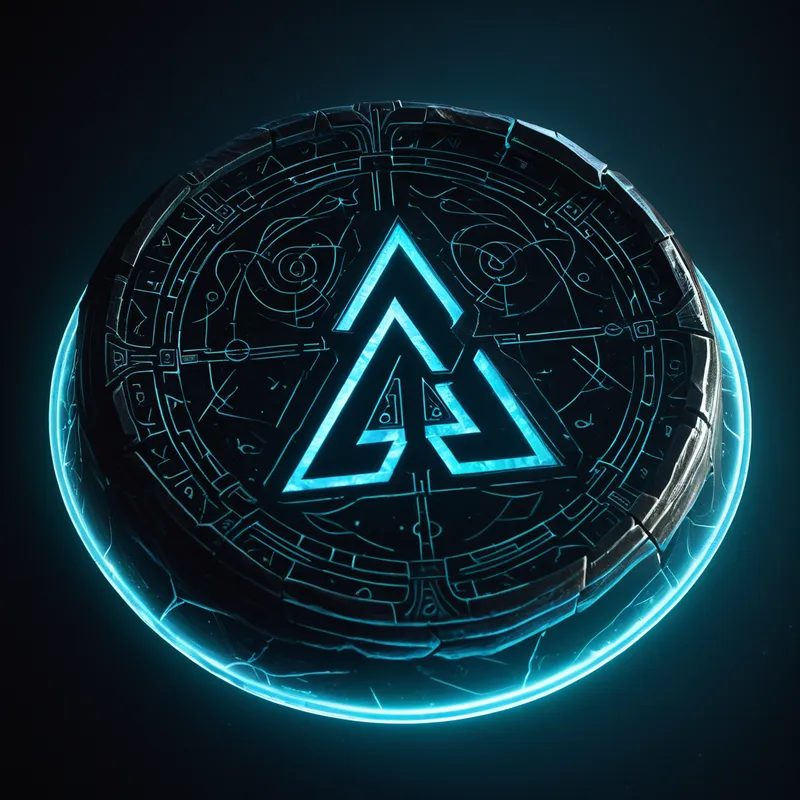
The runes that he wins are the fundamental patterns of meaning. They are not mere letters, but the psychic DNA of reality. To gain them is to achieve [gnosis](/symbols/gnosis “Symbol: Direct, intuitive spiritual knowledge or enlightenment that transcends ordinary understanding, often associated with mystical experiences and esoteric traditions.”/)—direct, experiential [knowledge](/symbols/knowledge “Symbol: Knowledge symbolizes learning, understanding, and wisdom, embodying the acquisition of information and enlightenment.”/) of the laws that govern [life](/symbols/life “Symbol: The symbol of ‘Life’ represents a journey of growth, interconnectedness, and existential meaning, encompassing both the joys and challenges that define human experience.”/), [death](/symbols/death “Symbol: Symbolizes transformation, endings, and new beginnings; often associated with fear of the unknown.”/), and transformation. This is the ultimate goal of the sage: not just to know facts, but to become knowing.
The Dreamer’s Resonance
When this myth stirs in the modern dreamer, it often manifests as a profound somatic and psychological initiation. One does not simply dream of hanging on a tree. One dreams of being suspended in a void, tethered to a central pillar of light or a vast network. One dreams of a piercing insight—sometimes literal, sometimes metaphorical—that arrives with pain but brings irrevocable clarity.
The body may feel it as a period of intense fatigue, illness, or depression that feels purposeless, a “dark night of the soul.” Psychologically, it is the process that precedes a major life reorientation: the end of a career, the collapse of a long-held identity, a spiritual crisis. The dreamer is in the “nine nights” phase. The old self is dying, starved of its former certainties. [The ego](/myths/the-ego “Myth from Jungian culture.”/) feels sacrificed. The resonant feeling is one of terrifying liminality—no longer what you were, not yet what you will become. The dream is the psyche’s affirmation that this agony is not meaningless annihilation, but the necessary precondition for a download of new, foundational wisdom. It is the self preparing to catch its own runes.
Alchemical Translation
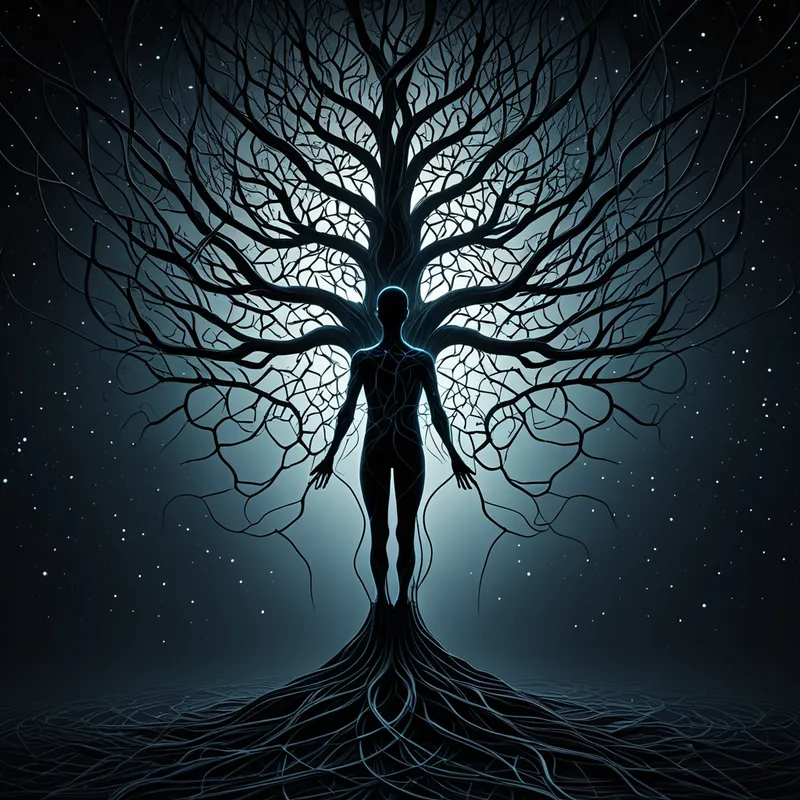
The alchemical process mirrored here is the [nigredo](/myths/nigredo “Myth from Alchemical culture.”/)—the blackening, the putrefaction. It is the stage where the base matter of the personality is dissolved in its own suffering. Odín’s journey is the ultimate model of psychic transmutation for the individual seeking individuation.
First, there is the Calling—an unbearable hunger for deeper meaning, a sense that one’s current knowledge is insufficient for the challenges of life or the approach of one’s own personal Ragnarök. Then, the Voluntary Descent: one must willingly “hang up” one’s social [persona](/myths/persona “Myth from Greek culture.”/), career identity, or cherished beliefs on the tree of introspection. This is an active choice to enter a state of crisis.
The crucible of transformation is not forged in action, but in the still, painful tension of being acted upon by a truth larger than the self.
The Piercing is the confrontation with [the shadow](/myths/the-shadow “Myth from Jungian culture.”/)—the spear of honest self-reflection that wounds the ego’s self-image. The Gestation is the endurance of the ensuing chaos, the faith to remain in the darkness without fleeing back to easier, older lies.
Finally, the Seizure is the active integration. The wisdom gained in the darkness does not float down gently; it must be grasped with fierce intention. The reborn individual falls from the tree not as the same person who climbed it, but as one who has rewritten their own foundational code. They possess an inner rune-hoard: a hard-won, embodied understanding of their own nature and their place in the pattern of things. They have performed the alchemy of turning suffering into sovereignty, and ignorance into an unshakable, if often bittersweet, wisdom.
Associated Symbols
Explore related symbols from the CaleaDream lexicon: