
Obatala in the New World Myth Meaning & Symbolism
The Yoruba creator god Obatala endures the Middle Passage, his divine essence fragmented and remembered, forging a new sacred reality in an alien land.
The Tale of Obatala in the New World
Listen. The story begins not with a birth, but with a forgetting.
In the world-that-was, [Obatala](/myths/obatala “Myth from Yoruba culture.”/) was the architect of form. From the sacred breath of [Olodumare](/myths/olodumare “Myth from Yoruba culture.”/), he sculpted the hills and valleys of the human body, pouring consciousness into vessels of clay. He was clarity. He was order. He was the cool, white calm at the center of creation.
Then came the great rupture. The world screamed and tilted. The Middle Passage was not a sea but a devouring mouth, a chasm in the order of things. And into that chasm, Obatala was thrown. Not in his full majesty, but as a whisper in the heart, a fragment of a name on a trembling tongue. The iron shackles did not just bind wrists; they bound memory. The groaning timbers of the ship were a prison for the spirit. The salt spray did not cleanse; it sought to erase.
In the hold, in the darkness thick with grief and terror, the memory of Obatala flickered. It was a coolness against fevered brows. It was the imagined feel of white cloth, pure and clean. It was the shape of a calabash bowl, a vessel that once held only clear water. The god was dismembered, not in body, but in story. His whiteness became not just purity, but the pallor of loss, the blank page of an unwritten future.
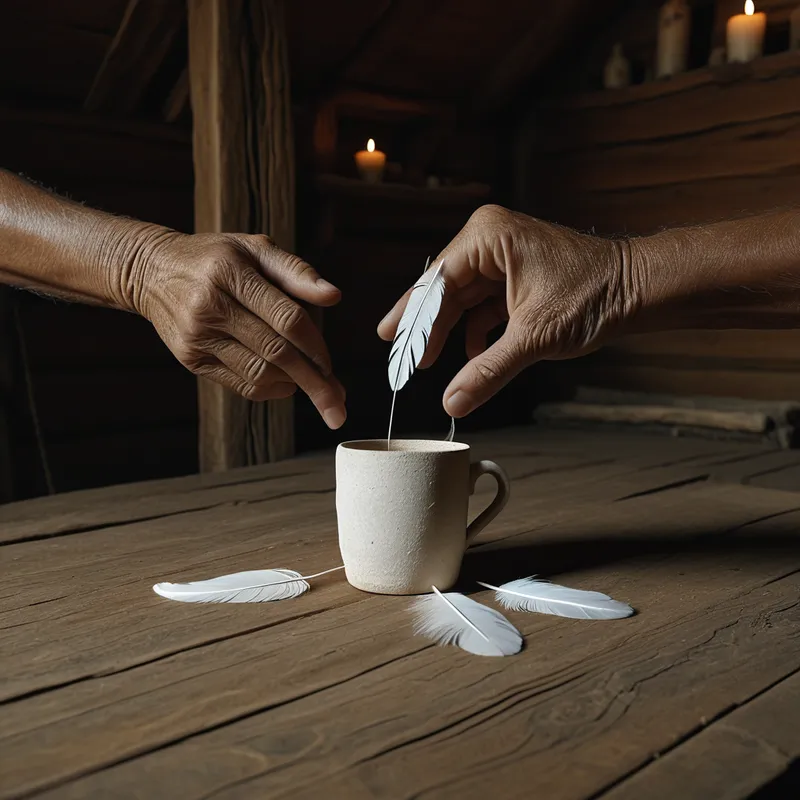
When the ship reached the new, harsh shore, the memory was planted in bitter soil. It was whispered over sick children in languages that were being beaten into silence. It was hummed in work songs, the rhythm a desperate prayer for the patience of the elder, for the clarity of the sage. They could not build his temples from stone. So they built them from need. A white stone placed carefully in the corner of a cabin. A bowl of fresh water set out under the moon. A piece of cloth, laundered to brightness against all odds, worn on a Friday.
Obatala, in this new world, was no longer just the sculptor of bodies. He became the sculptor of souls from the shards of a shattered past. His creation was now an act of fierce, quiet reassembly. His whiteness was the space of sanctuary carved out within a world of brutality. His calm was not passive, but an active, monumental resistance—the refusal to let the core self be corrupted by the chaos that surrounded it. The god of order had been exiled to the kingdom of disorder, and there, in the hearts of his people, he began the slow, miraculous work of creating a new kind of sacredness.
Cultural Origins & Context
This mythic narrative emerges from the crucible of the African Diaspora, specifically from the traditions of the Yoruba people and their descendants in the Americas—in Cuba as Santería or Regla de Ocha, in Brazil as Candomblé, and in various forms across the Caribbean and the Southern United States. It is not a single, codified story from an ancient text, but a living, breathing theological understanding born from historical trauma and spiritual genius.
The myth was passed down not by bards in courts, but by elders in secrecy, by practitioners in ceremonies, and by the very rituals that sustained it. It was told in the alignment of sacred objects, in the attributes of the Orishas, and in the explanatory myths that adapted the Yoruba pantheon to a new reality. Its societal function was multifaceted: it was a theodicy, explaining the presence of suffering and injustice; it was a map of resilience, showing how identity could survive fragmentation; and it was a manual for psychic survival, encoding the values of patience, purity, and inner peace as revolutionary acts in a world designed to provoke rage and despair.
Symbolic Architecture
At its core, the myth of Obatala in the New World is a profound [allegory](/symbols/allegory “Symbol: A narrative device where characters, events, or settings represent abstract ideas or moral qualities, conveying deeper meanings through symbolic storytelling.”/) for the [fragmentation](/symbols/fragmentation “Symbol: The experience of breaking apart, losing cohesion, or being separated into pieces. Often represents disintegration of self, relationships, or reality.”/) and reconstitution of [identity](/symbols/identity “Symbol: Identity represents the sense of self, encompassing personal beliefs, cultural background, and social roles.”/) under extreme duress. Obatala represents the essential, core self—[the principle](/symbols/the-principle “Symbol: A fundamental truth, law, or doctrine that serves as a foundation for a system of belief, behavior, or reasoning, often representing moral or ethical standards.”/) of [consciousness](/symbols/consciousness “Symbol: Consciousness represents the state of awareness and perception, encompassing thoughts, feelings, and experiences.”/), integrity, and moral order.
The journey across the ocean is not a voyage between continents, but a descent into the shadow, where all that is familiar is stripped away, and the self must be remembered from its barest essence.
The Middle [Passage](/symbols/passage “Symbol: A passage symbolizes transition, movement from one phase of life to another, or a journey towards personal growth.”/) symbolizes the ultimate psychic catastrophe, the ego’s annihilation. The “whiteness” of Obatala is deeply symbolic. It is not a racial marker, but an alchemical signifier of refinement, [separation](/symbols/separation “Symbol: A spiritual or mythic division between realms, states of being, or consciousness, often marking a transition or loss of connection.”/) from impurity, and the blank slate from which new meaning must be painstakingly inscribed. His association with physical challenges in some [stories](/symbols/stories “Symbol: Stories symbolize the narratives of our lives, reflecting personal experiences and collective culture.”/) translates here into the psychological and social constraints of bondage and oppression. His triumph is not one of overpowering force, but of indomitable [presence](/symbols/presence “Symbol: Presence in dreams often signifies awareness or acknowledgment of something significant in one’s life.”/). He models a consciousness that cannot be dissolved, only temporarily obscured, and which returns through the acts of [memory](/symbols/memory “Symbol: Memory symbolizes the past, lessons learned, and the narratives we construct about our identities.”/), [ritual](/symbols/ritual “Symbol: Rituals signify structured, meaningful actions carried out regularly, reflecting cultural beliefs and emotional needs.”/), and meticulous care.
The Dreamer’s Resonance
When this mythic pattern stirs in the modern dreamer, it often signals a profound process of psychic reassembly. The dreamer may experience dreams of being in a vast, featureless space (the ocean), feeling fragmented, or searching for lost, pure parts of themselves. There may be potent images of white objects—a garment, a room, a light—that feel both comforting and achingly distant.
Somatically, this can feel like a deep fatigue coupled with a quiet, persistent pull toward order—a need to clean, organize, or simplify one’s external environment as a reflection of an internal process. Psychologically, it is the work of integrating a “diaspora” within the self: collecting the parts of one’s identity that have been exiled by trauma, shame, life transitions, or societal pressure. The dreamer is undergoing the Obatala process: moving from a state of disorientation and loss to a state of self-creation, building a cohesive identity not from what was given, but from what was faithfully remembered and consciously chosen.

Alchemical Translation
For the individual on the path of individuation, Obatala’s journey is a masterclass in psychic transmutation. The first stage is the necessary dissolution—the Middle Passage. This is the often-painful deconstruction of the persona, the breakdown of old ego structures that no longer serve, often triggered by crisis, loss, or deep introspection.
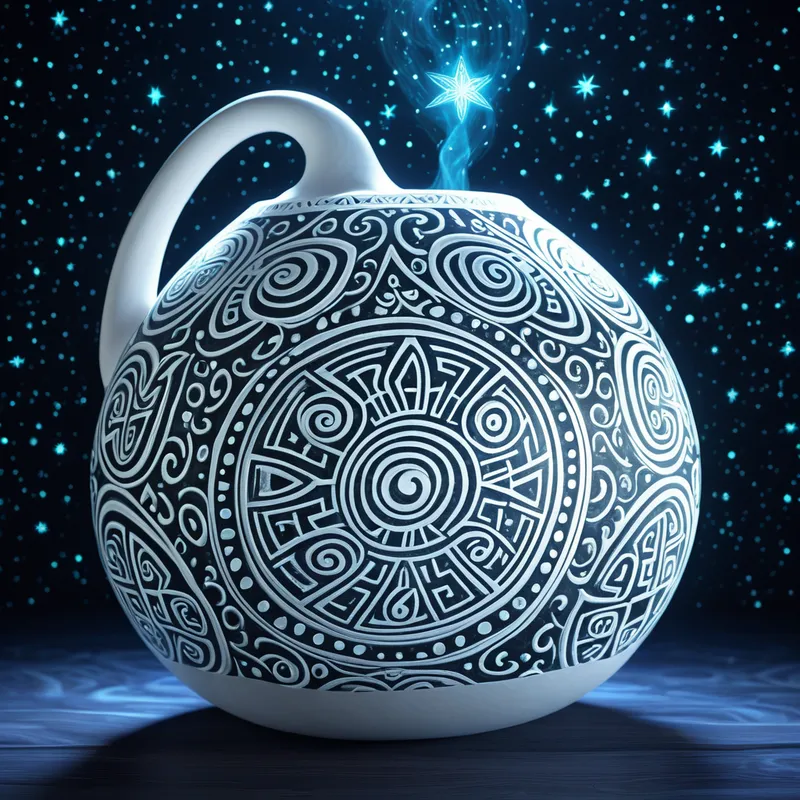
The calabash of the self is shattered. The work is not to mourn the pieces, but to recognize each fragment as a sacred relic of the whole.
The second stage is the separation—the preservation of the core “white” essence amidst the chaos. This is the practice of discernment: identifying what is truly, innately you versus what has been imposed by culture, family, or trauma. It is the cultivation of inner peace and patience as a container for the process.
The final stage is the coagulation—the building of the shrine in the new land. This is the active, creative reassembly of a new, more authentic personality. It is the conscious ritual of building a life that reflects your true values, integrating the lessons of the shadow (the journey) with the clarity of the spirit (Obatala’s wisdom). The new self is not a return to an old innocence, but a hard-won creation, imbued with the resilience forged in the passage. The individual becomes both the sculptor and the sculpted, the rememberer and the remembered, creating a sovereign inner order from the raw materials of their experience.
Associated Symbols
Explore related symbols from the CaleaDream lexicon:
- Ocean — Represents the vast, unconscious realm of trauma, memory, and the perilous journey of the self from a known state to an unknown one, the medium of the Middle Passage.
- Water — Symbolizes the fluidity of memory, the tears of grief, and the essential, cleansing purity that Obatala embodies and offers for spiritual refreshment.
- White — While not a standalone symbol, it imbues others; it is the color of Obatala, representing purification, separation from chaos, clarity of mind, and the blank slate for new creation.
- Memory — The central act of the myth; the spiritual technology of recalling and reassembling fragmented identity, culture, and divinity against forces of erasure.
- Ritual — The practical, embodied means by which the memory of Obatala is sustained and made real, from simple offerings to complex ceremonies, creating order within disorder.
- Clay — Connects to Obatala’s original role as shaper of human forms, symbolizing the malleable material of the self and the physical body that endures and is reshaped by experience.
- Vessel — The calabash, cup, or even the human body as a container for spirit, memory, and sacred essence that must be protected and kept pure on the journey.
- Root — The connection to ancestral origin, the source in Yorubaland that is physically severed but spiritually remembered and nourished in new soil.
- Patience — The cardinal virtue of Obatala, representing the slow, deliberate, and non-reactive strength required to endure suffering and enact lasting creation.
- Order — The divine principle Obatala embodies, the internal architecture of peace and morality constructed within external reality’s chaos.
- Spirit World — The enduring realm of the Orishas and ancestors, which remains intact and accessible through memory and ritual despite physical displacement.
- Rebirth — The ultimate promise of the myth; not a return to a lost past, but the forging of a new, resilient consciousness and culture from the fragments of the old.