Nyxt Myth Meaning & Symbolism
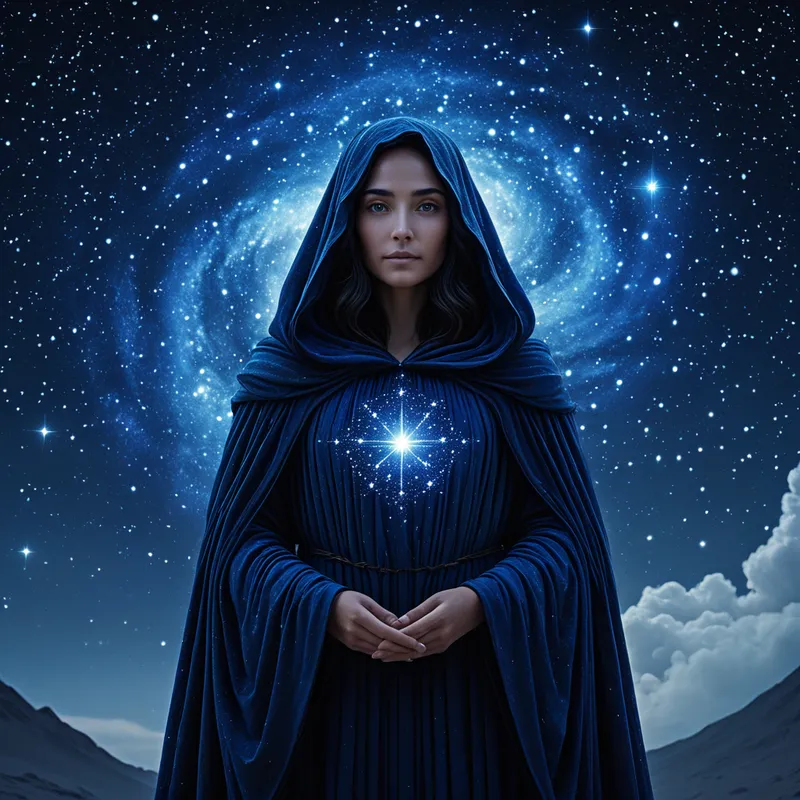
The primordial goddess of night, Nyxt births both dreams and terrors from her starry cloak, representing the essential, creative darkness that precedes all light.
The Tale of Nyxt
Before the sun first drew breath, before the mountains knew their names, there was a silence so profound it was a presence. This was the realm of Nyxt, born from the swirling mist of Chaos herself. She was not an absence, but a substance—a velvet cloak of infinite depth, a womb of potentiality.
She dwelt in a palace of black marble at the western edge of [the world](/myths/the-world “Myth from Tarot culture.”/), where [the river](/myths/the-river “Myth from Buddhist culture.”/) [Lethe](/myths/lethe “Myth from Greek culture.”/) whispers into nothing. Her chariot was drawn by shadow-steeds, and as she rode forth, she drew her great veil across [the sky](/myths/the-sky “Myth from Persian culture.”/), a blanket embroidered with the first, hesitant stars. [The world](/myths/the-world “Myth from Tarot culture.”/) held its breath. The clamor of day ceased; the sharp edges of things softened and blurred into her embrace.
From her union with her brother Erebus, the very air of [the underworld](/myths/the-underworld “Myth from Greek culture.”/), mighty children were born. But they were not like the golden children of Hemera, who would follow her. From the deepest folds of her being came Ananke, the inescapable coil of destiny. From her sighs came Eris, she who sows the seeds of rivalry. From the quiet terror at the heart of her domain came the Erinyes, with serpents for hair and eyes that wept blood.
Yet, she was also the mother of gentle [Hypnos](/myths/hypnos “Myth from Global/Universal culture.”/), whose touch was softer than down, and his twin, the radiant [Morpheus](/myths/morpheus “Myth from Greek culture.”/), shaper of forms. She birthed the Horai and the gentle [Moirai](/myths/moirai “Myth from Greek culture.”/), who worked their threads by her hearth. In her, terror and tenderness were one; the nightmare and the sweet dream shared the same source.
Even the king of gods, Zeus himself, knew to tread softly in her presence. It is said that when the goddess Hera conspired against [Heracles](/myths/heracles “Myth from Greek culture.”/), Zeus in his fury threatened all who were involved. But when he learned the plot was hatched in the deep halls of Nyxt, his anger cooled. He dared not pursue vengeance into her realm. For Nyxt was older than Olympus, a power from the time before order, and her ancient authority commanded a fear that was also reverence. She was the one force he would not command, the one darkness into which his lightning would not flash.
And so, each evening, as Hemera’s light faded, Nyxt would emerge once more. She did not conquer the day; she received it, folding it gently into her boundless depths, reminding all that from her creative void, everything—light and life, dream and doom—first stirred.
Cultural Origins & Context
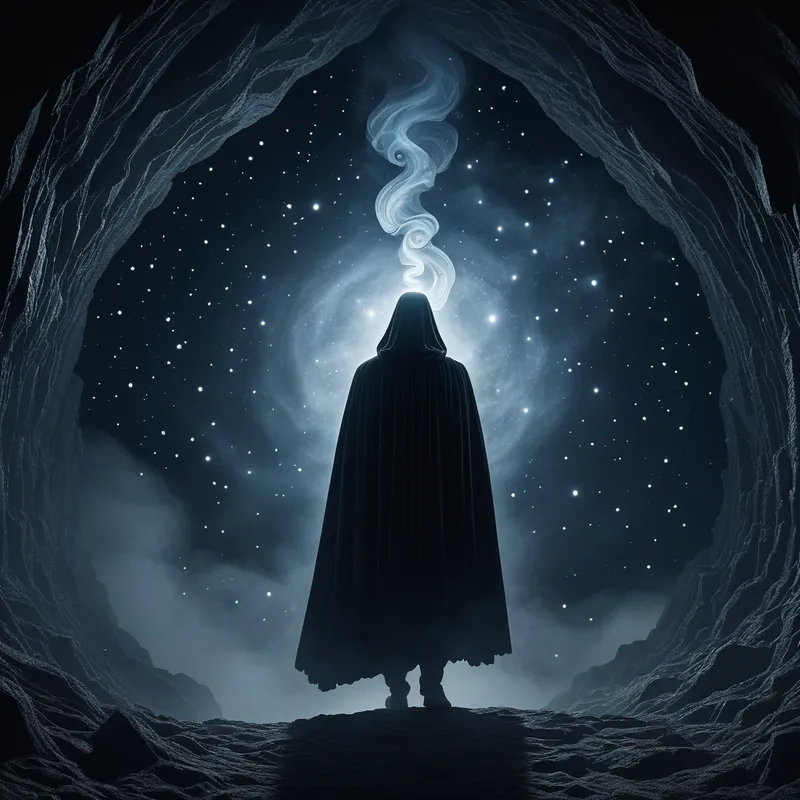
The figure of Nyxt emerges from the very oldest layers of Greek religious thought, preserved in the cosmogonic poetry of Hesiod’s Theogony (c. 700 BCE). She is a protogenoi, a “first-born” elemental deity, preceding the anthropomorphic Olympians by generations. Her origins in Chaos place her at the root of the cosmic family tree.
Her worship was not characterized by the grand temples and public festivals of the Olympians. Instead, it was numinous, private, and deeply awe-inspiring. Orphic hymns and fragmentary prayers suggest she was invoked in nocturnal rituals, her name spoken with a mixture of dread and profound respect. She represented the necessary, cyclical counterpart to day, an elemental truth that could not be personified away into a wholly benign figure. Her myth served as a cultural acknowledgment of the autonomous, creative, and terrifying power of the unseen—the darkness that is not mere emptiness, but a generative field from which both blessings and curses are born.
Symbolic Architecture
Nyxt is the archetypal [symbol](/symbols/symbol “Symbol: A symbol can represent an idea, concept, or belief, serving as a powerful tool for communication and understanding.”/) of the primordial ground of being, the unconscious [prima materia](/myths/prima-materia “Myth from Alchemical culture.”/) from which [consciousness](/symbols/consciousness “Symbol: Consciousness represents the state of awareness and perception, encompassing thoughts, feelings, and experiences.”/) itself crystallizes. She is not evil, but prior to the moral dichotomies of light and dark, good and evil. She is the [condition](/symbols/condition “Symbol: Condition reflects the state of being, often focusing on physical, emotional, or situational aspects of life.”/) of possibility.
She is the womb of all potentials, where the unformed thoughts, the unmade decisions, and the unlived lives reside in a state of fertile latency.
Her children represent the full [spectrum](/symbols/spectrum “Symbol: A continuum of possibilities, representing diversity, transition, and the full range of existence from one extreme to another.”/) of what emerges from the unconscious. The gentle Hypnos and the shaping Morpheus symbolize the integrative, restorative, and revelatory functions of the [psyche](/myths/psyche “Myth from Greek culture.”/). Ananke and the Erinyes, however, embody the impersonal, often terrifying, laws of consequence and the [psyche](/myths/psyche “Myth from Greek culture.”/)’s self-punishing [guilt](/symbols/guilt “Symbol: A painful emotional state arising from a perceived violation of moral or social standards, often tied to actions or inactions.”/) that arise when natural order is violated. Nyxt contains them all, making her a complete portrait of the unconscious: a [source](/symbols/source “Symbol: The origin point of something, often representing beginnings, nourishment, or the fundamental cause behind phenomena.”/) of creativity, wisdom, [fate](/symbols/fate “Symbol: Fate represents the belief in predetermined outcomes, suggesting that some aspects of life are beyond human control.”/), and [terror](/symbols/terror “Symbol: An overwhelming, primal fear that paralyzes and signals extreme threat, often linked to survival instincts or deep psychological trauma.”/).
Her power over even Zeus is perhaps the most potent symbol. It signifies that the rational, ordering, conscious ego (the Zeus principle), no matter how powerful, has its limits. It is born from and must return to, and ultimately cannot control, the deeper, older [reality](/symbols/reality “Symbol: Reality signifies the state of existence and perception, often reflecting one’s understanding of truth and life experiences.”/) of the unconscious (the Nyxt principle).
The Dreamer’s Resonance
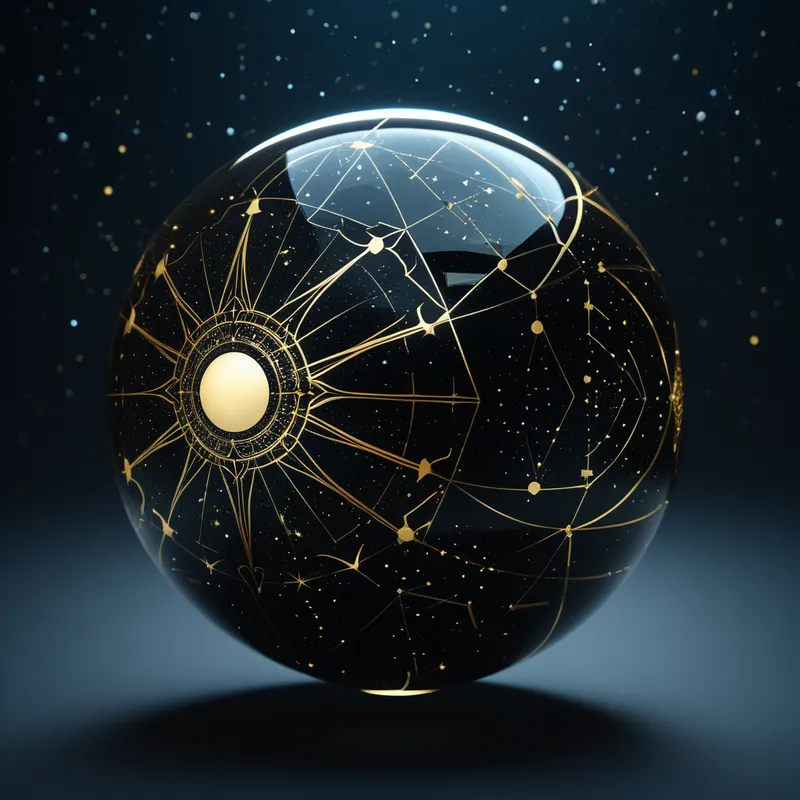
When the archetype of Nyxt stirs in the modern dreamer, it often manifests not as a literal goddess, but as an atmosphere or landscape. Dreams of vast, star-filled voids; of being in a profoundly deep, dark, yet comforting space; of exploring endless caverns or the bottom of a tranquil night sea—these are encounters with the Nyxtian realm.
This is the psyche signaling a descent into the foundational layers of [the self](/myths/the-self “Myth from Jungian culture.”/). The somatic feeling is often one of weightlessness, silence, or awe rather than panic. It can precede a period of intense incubation, where a new idea, feeling, or life direction is gestating in the darkness, unseen by the conscious mind. Conversely, dreams where this darkness feels oppressive or swarms with monstrous forms (her other children) indicate a confrontation with repressed shadow material—the Eris and Erinyes within—that is demanding integration. The dream is [the threshold](/myths/the-threshold “Myth from Folklore culture.”/) of her palace.

Alchemical Translation
The individuation process, the alchemical journey of becoming whole, is profoundly modeled by the myth of Nyxt. The work is not simply about moving toward the light of consciousness, but about developing a conscious relationship with the essential darkness from which one came.
The first stage of the great work is the nigredo, the blackening. This is not a failure, but a necessary return to the Nyxtian state—a dissolution of worn-out conscious attitudes into the fertile void of the unconscious.
To integrate the Nyxt archetype is to learn to dwell creatively in uncertainty, in the “not-knowing.” It is to honor the periods of fallowness, depression, or confusion as potentially generative returns to the source, rather than pathologies to be eliminated with immediate light. It is to acknowledge that the most profound insights and the most terrifying fears share a common root in our primordial psychic substance.
The [triumph](/myths/triumph “Myth from Roman culture.”/) is not defeating the night, but, like the mythic cosmos, establishing a respectful rhythm with it. The conscious ego (the day) learns to relinquish control at its appointed time, trusting that in the descent into the Nyxtian depths, the seeds of renewal are being sown. The individual becomes a vessel capable of holding both the brilliant clarity of Hemera and the profound mystery of Nyxt, understanding that true wholeness requires honoring the creative power of the primordial dark.
Associated Symbols
Explore related symbols from the CaleaDream lexicon: