Numi-Torum Sky God Khanty Myth Meaning & Symbolism
The myth of Numi-Torum, the sky father who descends to shape the world, embodying the sacred tension between celestial order and earthly chaos.
The Tale of Numi-Torum Sky God Khanty
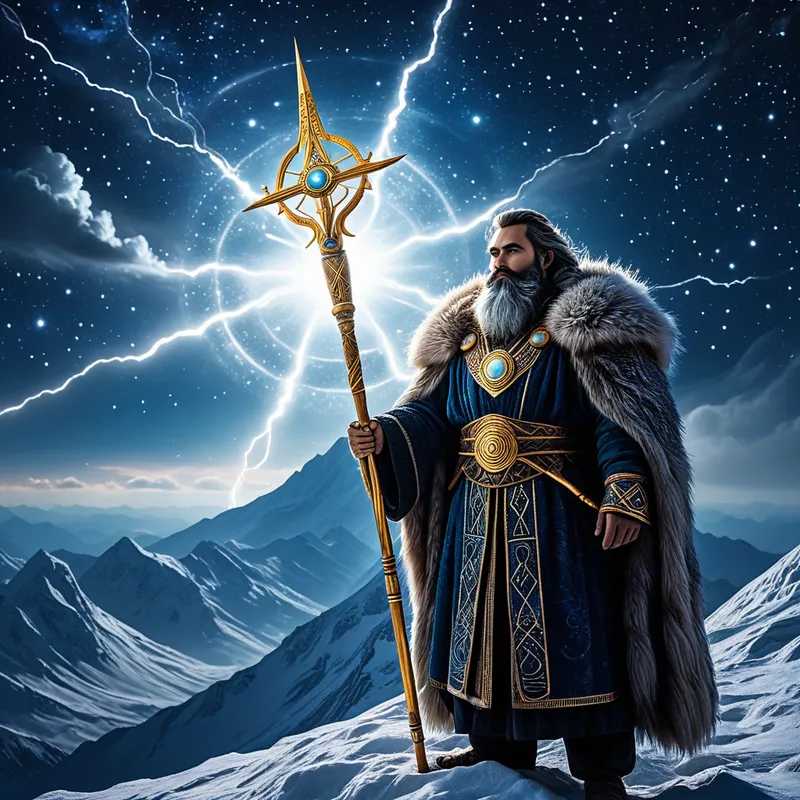
Listen. Before the rivers learned their names, when the world was a dark, churning soup beneath a lid of stone, the sky was a silent, watchful vault. And in that vault lived Numi-Torum, the Old Man of the Sky. His breath was the wind that had not yet found the earth. His thoughts were the stars, not yet fixed in their places.
He looked down upon the watery chaos, upon Kul-Otyr, the Lord of the Underworld, who writhed in the depths like a great, blind worm. There was no up or down, only a seething potential that ached for form. Numi-Torum’s heart, a furnace of silent purpose, kindled. He would not rule from a distance. He would descend.
He called to his brother, the golden Khos-Torum, and to his silver sister, the Etpos-Oyka. “Hold the light and the tide,” he commanded. “I go to make a place for your journeys.” And he stepped down, not on earth, for there was none, but on the very fabric of possibility. Where his foot first pressed, a great Por Mountain surged upward, a pillar of stone and ice piercing the stone-lid of the sky, shattering it into the dome we know.
From the summit of Por, Numi-Torum took a staff of living light. He thrust it into the murk, and where it touched, land coagulated—the endless taiga. He breathed upon the waters, and they flowed in courses, becoming the mighty Ob River. He set his children, the spirits of forest and stream, to guard these places.
But the world was still unstable. Kul-Otyr, from the dark below, sent chaos upward—disease, discord, the unruly beasts of the deep forest. The earth bucked and trembled. Numi-Torum saw that law imposed from above was not enough. The world needed a mediator, a creature born of both the mud and the starlight.
So he took the clay of the new earth and the frost of the high air and fashioned the first man and woman. Into them, he breathed not just life, but a sacred task: to be the stewards of the balance. Yet they were frail, easily led astray by the whispers of Kul-Otyr. Numi-Torum needed a bridge, a voice that could travel between the realms.
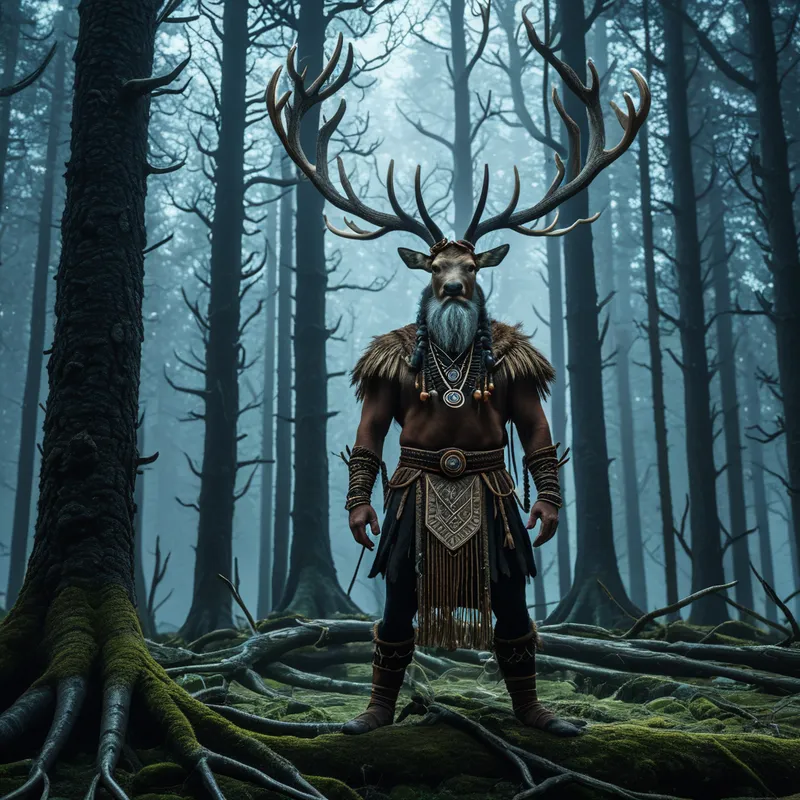
He chose a man of pure heart, one who could hear the sigh of the trees and the song of the river. In a dream, Numi-Torum gave him a drum made from the skin of a sacred reindeer and the wood of the world tree. He gave him the gift of ecstasy, the flight of the soul. Thus, the first yatyr was born. Through the shaman’s drumming and journeying, the will of the Sky Father could be known, the ravages of the Underworld Lord healed, and the fragile order of the Middle World preserved. Numi-Torum did not retire to his sky. He remained, watching from Por, his presence the very reason the sky does not fall.
Cultural Origins & Context
This mythos originates from the Khanty and Mansi peoples, indigenous Ob-Ugric communities of Western Siberia. Their world is defined by the vast taiga and the great river systems, a environment of profound beauty and extreme harshness. The myth of Numi-Torum was not a single story in a book, but a living cosmology passed down through generations of oral tradition, recited by elders and shamans around winter fires. Its function was deeply pragmatic and sacred: it explained the origin of the world they inhabited, established the hierarchical structure of the cosmos (the celestial, terrestrial, and underworld realms), and, most importantly, prescribed the rituals necessary for survival. The myth justified the central role of the shaman as the essential conduit for maintaining cosmic and social equilibrium, for healing illness (seen as an attack by lower-world spirits), and for ensuring successful hunting—the direct intervention of Numi-Torum through his intermediary.
Symbolic Architecture
At its core, the myth of Numi-Torum is a profound [blueprint](/symbols/blueprint “Symbol: A blueprint represents the foundational plan or design for something, often symbolizing potential, structure, and the mapping of one’s inner self or future.”/) for the [architecture](/symbols/architecture “Symbol: Architecture in dreams often signifies structure, stability, and the framing of personal identity or life’s journey.”/) of [consciousness](/symbols/consciousness “Symbol: Consciousness represents the state of awareness and perception, encompassing thoughts, feelings, and experiences.”/). Numi-Torum represents [the principle](/symbols/the-principle “Symbol: A fundamental truth, law, or doctrine that serves as a foundation for a system of belief, behavior, or reasoning, often representing moral or ethical standards.”/) of Order itself—not as a cold, detached lawgiver, but as an engaged, paternal [consciousness](/symbols/consciousness “Symbol: Consciousness represents the state of awareness and perception, encompassing thoughts, feelings, and experiences.”/) that structures [chaos](/symbols/chaos “Symbol: In Arts & Music, chaos represents raw creative potential, uncontrolled expression, and the breakdown of order to forge new artistic forms.”/) into a livable world. His descent from the sky is the descent of [awareness](/symbols/awareness “Symbol: Conscious perception of self, surroundings, or internal states. Often signifies awakening, insight, or heightened sensitivity.”/) into the unconscious, formless potential of the psyche.
The sky god must touch the earth, or the self remains an abstract, uninhabited ideal.
Kul-Otyr is not pure evil, but the necessary, chaotic, and often destructive force of the undifferentiated unconscious—the [realm](/symbols/realm “Symbol: The symbol of ‘Realm’ often signifies the boundaries of one’s consciousness, experiences, or emotional states, suggesting aspects of reality that are either explored or ignored.”/) of instincts, raw passions, and unintegrated [shadow](/symbols/shadow “Symbol: The ‘shadow’ embodies the unconscious, repressed aspects of the self and often represents fears or hidden emotions.”/) [material](/symbols/material “Symbol: Material signifies the tangible aspects of life, often representing physical resources, desires, and the physical world’s influence on our existence.”/). The world-[mountain](/symbols/mountain “Symbol: Mountains often symbolize challenges, aspirations, and the journey toward self-discovery and enlightenment.”/) Por is the central [axis](/symbols/axis “Symbol: A central line or principle around which things revolve, representing stability, orientation, and the fundamental structure of reality or consciousness.”/), the [spine](/symbols/spine “Symbol: The spine symbolizes strength, support, and the foundational structure of one’s life and identity.”/) of the individual psyche, connecting the [heights](/symbols/heights “Symbol: Represents ambition, fear, or spiritual elevation. Often symbolizes life challenges or a desire for perspective.”/) of spiritual aspiration (Sky) with the [depths](/symbols/depths “Symbol: Represents the subconscious, hidden emotions, or foundational aspects of the self, often linked to primal fears or profound truths.”/) of instinct and bodily existence ([Underworld](/symbols/underworld “Symbol: A symbolic journey into the unconscious, representing exploration of hidden aspects of self, transformation, or confronting repressed material.”/)). Humanity, in this [schema](/symbols/schema “Symbol: A mental framework organizing knowledge and experience, shaping perception and behavior.”/), is born from the [marriage](/symbols/marriage “Symbol: Marriage symbolizes commitment, partnership, and the merging of two identities, often reflecting one’s feelings about relationships and social obligations.”/) of celestial [spirit](/symbols/spirit “Symbol: Spirit symbolizes the essence of life, vitality, and the spiritual journey of the individual.”/) and terrestrial matter, tasked with the impossible, sacred duty of maintaining the balance. The [shaman](/symbols/shaman “Symbol: A spiritual mediator who bridges the human and spirit worlds, often through altered states, healing, and guidance.”/)’s ecstatic [journey](/symbols/journey “Symbol: A journey in dreams typically signifies adventure, growth, or a significant life transition.”/) is the symbolic representation of the ego’s temporary [dissolution](/symbols/dissolution “Symbol: The process of breaking down, dispersing, or losing form, often representing transformation, release, or the end of a state of being.”/) and re-entry into these primal layers to negotiate, heal, and retrieve [knowledge](/symbols/knowledge “Symbol: Knowledge symbolizes learning, understanding, and wisdom, embodying the acquisition of information and enlightenment.”/).
The Dreamer’s Resonance
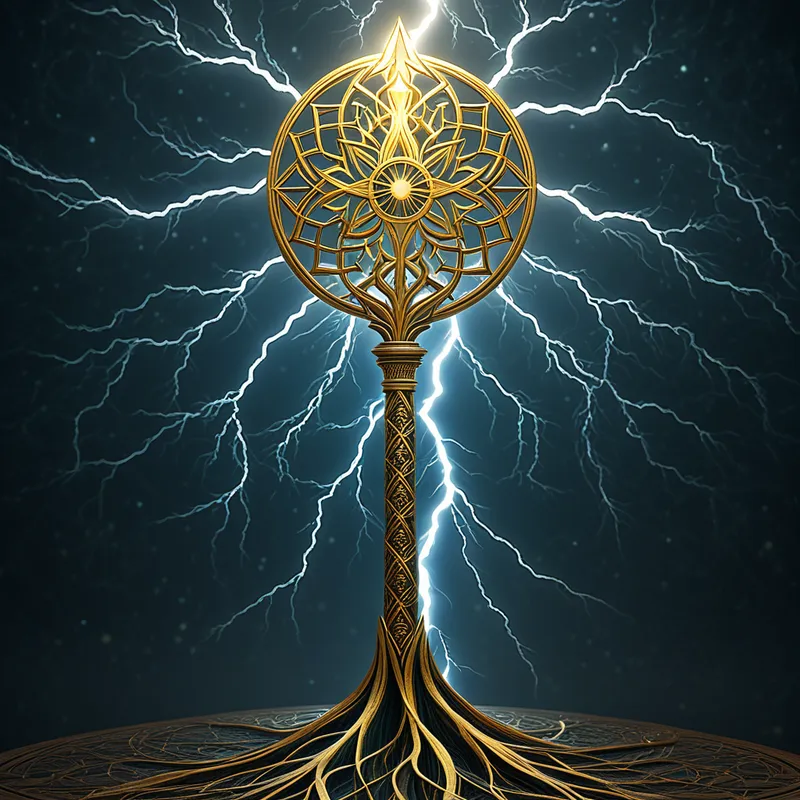
When this mythic pattern stirs in the modern dreamer, it often signals a profound crisis or opportunity in the psyche’s structural integrity. Dreams of a distant, authoritative, or silent father-figure in a high place may reflect an experience of a spiritual or moral principle that feels unreachable. Conversely, dreams of chaotic, churning waters, infestations, or crumbling foundations point to the uprising of the “Kul-Otyr” complex—a feeling of being undermined by unruly emotions, illness, or life circumstances that defy control.
The somatic experience can be one of vertigo (the unstable middle world) or oppressive weight (the stone-lid sky before its shattering). The emergence of a dream figure who acts as a guide, a messenger, or a drummer marks the psyche’s own attempt to generate its inner yatyr—a mediating function that can navigate between the rigid demands of the inner “ruler” and the terrifying chaos of the repressed. This is the dream-ego learning to make the shamanic journey, to confront the underworld of one’s personal history and biology to restore psychic equilibrium.
Alchemical Translation
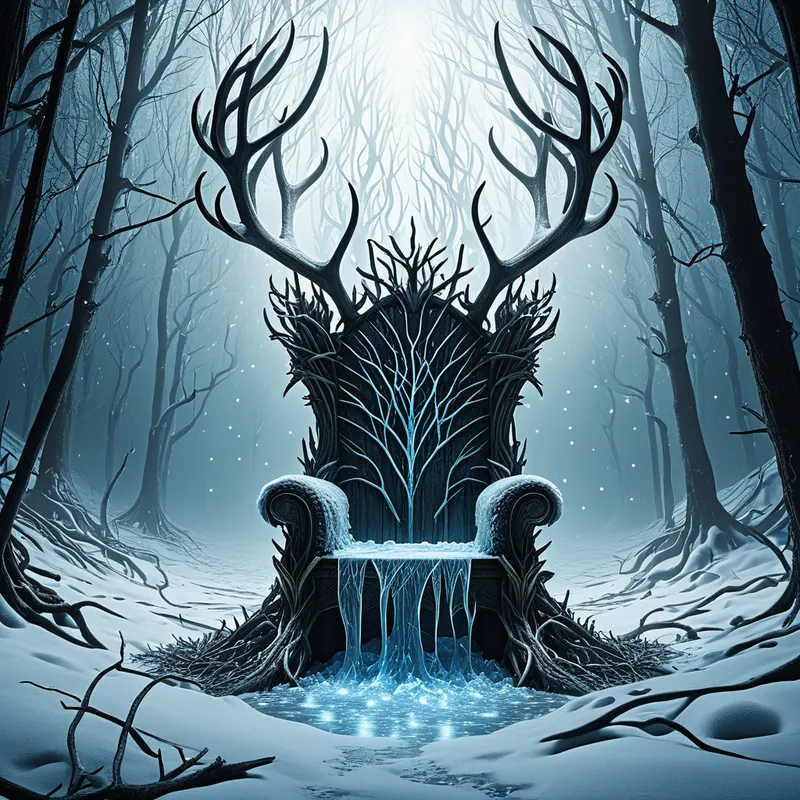
The individuation process modeled here is not one of ascending to live purely in the realm of Numi-Torum. It is the alchemical labor of building one’s own Por Mountain—a stable, conscious structure strong enough to channel and contain the tension between opposites.
Individuation is the shaman’s flight: it requires leaving the familiar village of the persona to treat with the terrifying gods and spirits of the interior.
The first stage is the descent of awareness (Numi-Torum’s stepping down): the conscious ego must turn its attention inward, into the murky, chaotic waters of the unconscious. The second is the act of creation through sacrifice: the lid of stone—our defensive rigidity, our old identifications—must be shattered to create space for a new psychic reality. The third is the acceptance of the mediator: we must acknowledge that the ego alone cannot rule. It must cultivate a relationship with the autonomous, mediating function of the psyche (the transcendent function, akin to the shaman) that can drum forth solutions from beyond its own logic. The ultimate goal is a sacred rulership where consciousness, like Numi-Torum, is firmly established, engaged, and compassionate, providing order not through suppression, but through a dynamic, lived relationship with the entire ecology of the self.
Associated Symbols
Explore related symbols from the CaleaDream lexicon:
- Sky — The realm of Numi-Torum, representing transcendent consciousness, cosmic order, paternal law, and the highest aspirations of the spirit.
- Mountain — The axis mundi of Por Mountain, symbolizing the stable center of the self, the connection between heaven and earth, and the arduous climb toward integration.
- River — The great Ob, shaped by the sky god, representing the flow of life, time, and psychic energy that must be directed and respected.
- Forest — The vast taiga, the created middle world, embodying the complex, untamed, and fertile realm of the personal unconscious and earthly existence.
- Spirit — The myriad children of Numi-Torum, the animating forces of nature and the psyche, which require acknowledgment and ritual relationship.
- Ritual — The shaman’s drumming and journey, symbolizing the deliberate, repeated acts (internal or external) necessary to maintain psychic balance and commune with deeper forces.
- Shadow — The essence of Kul-Otyr and the underworld, representing the repressed, chaotic, and instinctual aspects of the self that must be confronted and integrated.
- Order — The primary gift and demand of Numi-Torum, the principle of structure, hierarchy, and conscious differentiation that makes a coherent life possible.
- Chaos — The primordial state and the domain of Kul-Otyr, the necessary, creative, and destructive force of undifferentiated potential against which order defines itself.
- Journey — The shaman’s ecstatic flight, mirroring the soul’s necessary voyages into the depths of the unconscious to retrieve healing and knowledge for the conscious self.
- Sacrifice — Numi-Torum’s descent and the shaman’s ordeal, representing the necessary giving up of a higher, detached position to engage with and transform lower, chaotic reality.
- God — The archetype of the supreme ruler and sky father, Numi-Torum himself, embodying the psychic authority that provides meaning, structure, and paternal containment.