Northern Lights Myth Meaning & Symbolism
The Northern Lights are the spirits of the dead playing a joyous, yet dangerous, game of football with a walrus skull across the frozen sky.
The Tale of Northern Lights
Listen, and let the cold truth of the long night settle in your bones. [The world](/myths/the-world “Myth from Tarot culture.”/) is dark, a vast bowl of obsidian pressed down upon the endless white. The only sounds are the groan of sea ice and the whisper of [the wind](/myths/the-wind “Myth from Various culture.”/) that carries the voices of those who walked here before. This is the time when [the sky](/myths/the-sky “Myth from Persian culture.”/) remembers.
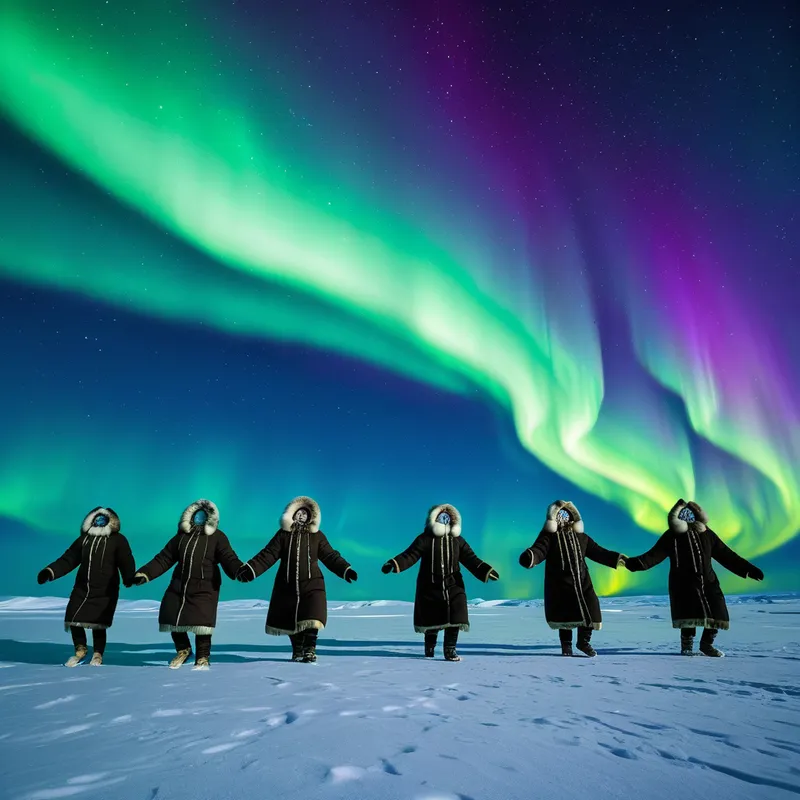
It begins not with a sound, but with a feeling—a prickling on the back of the neck, a sense of being watched from the very fabric of the air. Then, a faint, greenish glow, like the memory of sunlight on moss. It shivers at [the horizon](/myths/the-horizon “Myth from Various culture.”/), a hesitant breath. Then another. And another. Soon, the entire dome of the world is alive. Ribbons of emerald and amethyst, rose and gold, twist and billow like the hides of great, luminous spirits shaken out across the stars. This is Aqsarniit.
But this is no mere weather. Lean closer to the fire and hear the truth. Those are not curtains of light. They are the Tupilait, the spirits of the ancestors. They have climbed the great stairway of the wind to the land above the sky, a place of plenty where the sun never sets and the caribou are always fat.
And what do these joyful dead do in their eternal summer? They play. They gather in great, laughing throngs and they play a game of football. But their ball is no simple [thing](/myths/thing “Myth from Norse culture.”/) of hide. It is the skull of a mighty walrus. They kick it, they toss it, they chase its arc across the vault of heaven. The swirling, rushing lights are the trails of their parkas as they run. The shimmering pulses are the glow of the skull itself, tumbling end over end. Their shouts of joy are the crackling, hissing sound the lights sometimes make—a sound that carries down to the silent, frozen earth below.
But child, listen well. This game is not for the living to join. The stories warn: whistle at the dancing lights, and they will hear you. They will sweep down, drawn by your impertinence. Some say they might carry your spirit up to play with them forever, leaving your body empty on the ice. Others whisper that they might use your head as their new ball. So you watch in awe, in profound silence, understanding that this breathtaking beauty is a message from the other side—a reminder of the joy that awaits, and the absolute boundary between the living and the dead.
Cultural Origins & Context
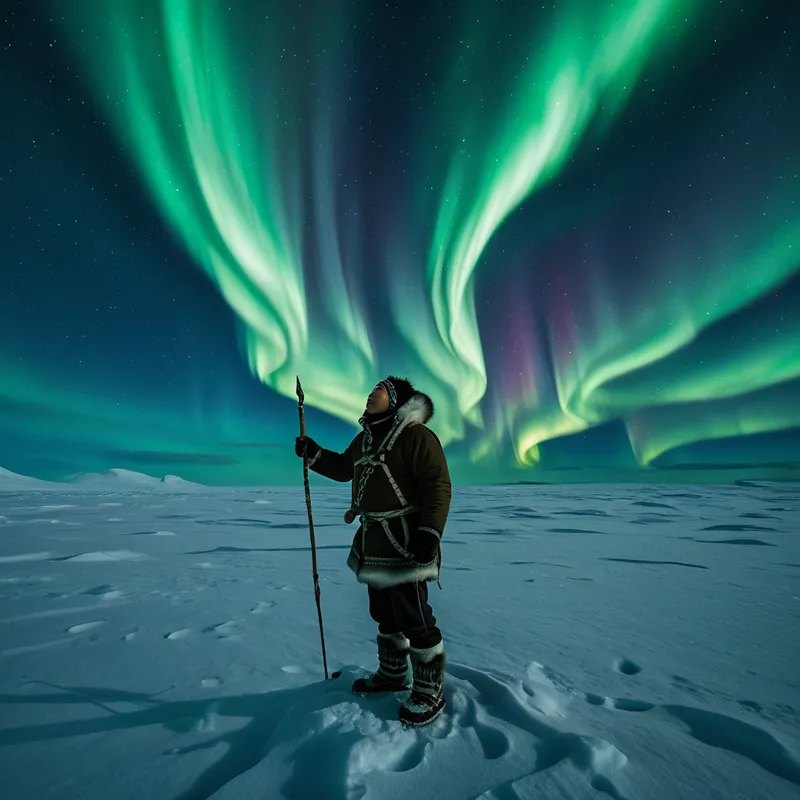
This myth, in its many regional variations across the Inuit world from Greenland to Alaska, was not mere entertainment for the endless winter nights. It was a vital piece of cosmological mapping and social instruction, passed down orally from elder to child by the light of a qulliq. The storyteller, often a grandparent or a respected hunter, was not just a narrator but a conduit for ancestral wisdom.
The myth served multiple, intertwined functions. Firstly, it explained the unexplainable in a pre-scientific world, transforming a terrifying atmospheric phenomenon into a narrative filled with familiar, cultural logic—games, hunting trophies (the walrus skull), and community. Secondly, it reinforced critical taboos and survival knowledge. The warning against whistling or waving at the lights taught children respect for the unseen world and disciplined them in the essential Arctic virtue of quiet observation. Most profoundly, it mediated the relationship with death. In an environment where mortality was a constant companion, the myth portrayed the afterlife not as a gloomy [underworld](/myths/underworld “Myth from Greek culture.”/), but as a place of vibrant, communal joy. The lights became a comforting, visible bridge to the beloved deceased, transforming grief into awe and fear into a respectful connection.
Symbolic Architecture
At its core, the myth of the Aqsarniit is a profound [symbol](/symbols/symbol “Symbol: A symbol can represent an idea, concept, or belief, serving as a powerful tool for communication and understanding.”/) of the permeable [boundary](/symbols/boundary “Symbol: A conceptual or physical limit defining separation, protection, or identity between entities, spaces, or states of being.”/) between worlds—the conscious and the unconscious, the living present and the ancestral past, the [human](/symbols/human “Symbol: The symbol of a human represents individuality, complexity of emotions, and social relationships.”/) [realm](/symbols/realm “Symbol: The symbol of ‘Realm’ often signifies the boundaries of one’s consciousness, experiences, or emotional states, suggesting aspects of reality that are either explored or ignored.”/) and the animistic [spirit world](/symbols/spirit-world “Symbol: A realm beyond the physical, inhabited by spirits, ancestors, or supernatural beings, often representing the unconscious, afterlife, or mystical connection.”/) that permeates Inuit cosmology.
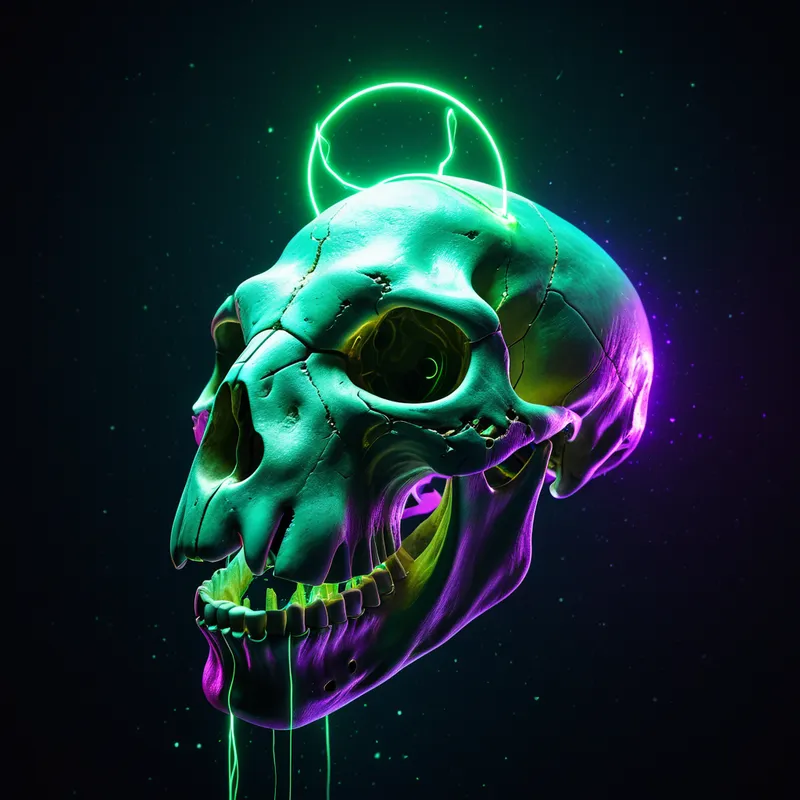
The [walrus](/symbols/walrus “Symbol: The walrus represents strength, endurance, and community, often associated with social ties and resourcefulness.”/) [skull](/symbols/skull “Symbol: The skull often symbolizes mortality, the afterlife, and the fragility of life.”/) is the central, shocking symbol. It is a relic of the hunt, an object of [death](/symbols/death “Symbol: Symbolizes transformation, endings, and new beginnings; often associated with fear of the unknown.”/) and sustenance, transformed into an [instrument](/symbols/instrument “Symbol: An instrument symbolizes creativity, communication, and the means by which one expresses oneself or influences the world.”/) of celestial play.
The ultimate alchemy is when the artifact of our survival—the skull of the consumed—becomes the toy of our transcendence.
This represents the complete cycle of [life](/symbols/life “Symbol: The symbol of ‘Life’ represents a journey of growth, interconnectedness, and existential meaning, encompassing both the joys and challenges that define human experience.”/): death (the hunted walrus) fuels life (the people who eat it), and that life, in turn, upon death, achieves a state of playful, luminous [eternity](/symbols/eternity “Symbol: The infinite, timeless state beyond human life and measurement, often representing the ultimate or divine.”/). The skull is no longer a grim [memento mori](/myths/memento-mori “Myth from Christian culture.”/); it is a [beacon](/symbols/beacon “Symbol: A guiding light or signal that provides direction, warning, or hope, often representing guidance, safety, or a call to action.”/) of ongoing existence. The spirits themselves symbolize integrated [memory](/symbols/memory “Symbol: Memory symbolizes the past, lessons learned, and the narratives we construct about our identities.”/). They are not ghouls, but joyful ancestors, indicating that a [life](/symbols/life “Symbol: The symbol of ‘Life’ represents a journey of growth, interconnectedness, and existential meaning, encompassing both the joys and challenges that define human experience.”/) well-lived in [harmony](/symbols/harmony “Symbol: A state of balance, agreement, and pleasing combination of elements, often associated with musical consonance and visual or social unity.”/) with the [community](/symbols/community “Symbol: Community in dreams symbolizes connection, support, and the need for belonging.”/) and the land leads to a positive post-mortem state. Their dangerous allure for the living represents the ever-present human temptation to escape the struggles of mortal [life](/symbols/life “Symbol: The symbol of ‘Life’ represents a journey of growth, interconnectedness, and existential meaning, encompassing both the joys and challenges that define human experience.”/)—to bypass the difficult [journey](/symbols/journey “Symbol: A journey in dreams typically signifies adventure, growth, or a significant life transition.”/) of individuation and leap prematurely into the unconscious (the [spirit](/symbols/spirit “Symbol: Spirit symbolizes the essence of life, vitality, and the spiritual journey of the individual.”/) world), which would result in psychic [dissolution](/symbols/dissolution “Symbol: The process of breaking down, dispersing, or losing form, often representing transformation, release, or the end of a state of being.”/) (death or madness).
The Dreamer’s Resonance
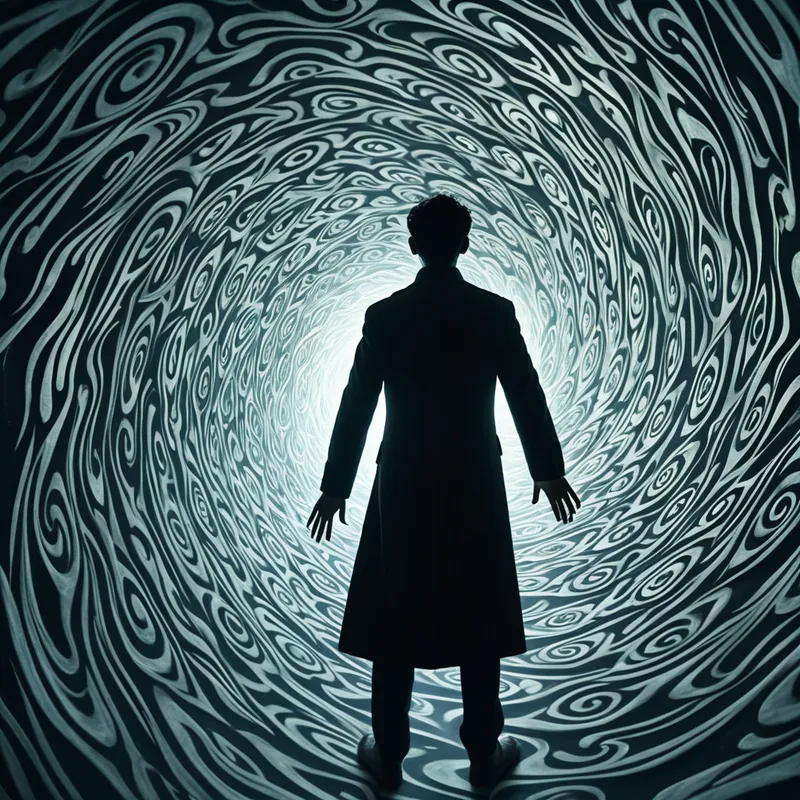
When this mythic pattern stirs in the modern dreamer, it rarely appears as a literal retelling. Instead, one might dream of mesmerizing, overwhelming patterns of light in the sky, of being irresistibly drawn upwards, or of playing a mysterious, high-stakes game with an object that is both familiar and sacred. Somatically, this can feel like a lifting sensation in the chest, a mix of awe and anxiety, or a thrilling vertigo.
Psychologically, this dream constellation signals an encounter with the transpersonal contents of the [psyche](/myths/psyche “Myth from Greek culture.”/)—what Jung called the archetypal or ancestral layer of the unconscious. The dancing lights are the allure of numinous insight, spiritual bypassing, or a fascination with the past (personal or collective) that threatens to overwhelm [the ego](/myths/the-ego “Myth from Jungian culture.”/). The warning in the myth translates directly: the dream ego is being tempted to “whistle”—to arrogantly engage with these profound forces without proper respect, containment, or grounding. The dream is a call to hold the tension between awe and discipline, to witness the beauty and power of the deep [psyche](/myths/psyche “Myth from Greek culture.”/) without being consumed by it. It is an invitation to acknowledge the “spirits”—the inherited patterns, traumas, and wisdom of our lineage—as active, potent forces in our inner sky.
Alchemical Translation
The individuation process modeled here is not one of slaying monsters, but of achieving a sacred relationship with the dead—that is, with all that has come before within us. The modern soul’s “Arctic night” is a period of isolation, depression, or existential cold where the familiar lights of the ego have faded. The appearance of the aurora is the first hint of [the Self](/myths/the-self “Myth from Jungian culture.”/), the greater, transpersonal psyche, announcing itself in stunning, incomprehensible beauty.
The alchemical work is in the response. The heroic task is the Inuit hunter’s stance: to stand firm in the mortal world, to feel the cold snow underfoot, and to observe the celestial dance without appropriation. One must resist the inflation of believing one can join the game (identifying with the archetypes) and the despair of turning away entirely (denying the unconscious).
True psychic integration occurs not when we become the spirit, but when we learn to live in respectful, silent dialogue with its luminous, dangerous play.
The walrus skull—the transformed burden—is key. In our process, it represents a past trauma, a loss, or a foundational sacrifice (our “hunt” for survival) that has hardened into a dead, weighty thing. The myth instructs that this very skull, through the long work of the spirit (the unconscious), can become the focal point of a new, joyful energy. The goal is not to discard our history, but to see it taken up by the larger forces of the psyche and put into a cosmic, playful motion, becoming a source of awe rather than shame. We achieve wholeness when we can look at the swirling, beautiful, terrifying lights of our own depth and understand we are both separate from them and eternally connected, in silent, awe-filled witness.
Associated Symbols
Explore related symbols from the CaleaDream lexicon: