
North Star/Polaris Myth Meaning & Symbolism
Across cultures, the unmoving North Star is a celestial axis, a divine nail, and a spiritual compass guiding souls through darkness toward destiny.
The Tale of North Star/Polaris
Listen. Before maps were drawn on parchment, before iron needles trembled toward the north, there was a hole in the sky.
The world was a dark and turning thing. The great black bowl of night spun endlessly, stars wheeling like scattered embers from a celestial fire, constellations dissolving and reforming in a dizzying dance. For the hunter on the tundra, the shepherd on the hill, the sailor on the wine-dark sea, this was terror. To look up and find no anchor, to have the very heavens themselves adrift—this was to be lost in the cosmos, a leaf upon a boundless ocean.
But in the northern vault, where the cold winds are born, the gods took pity. Or perhaps they grew weary of the chaos. With a sound that was not a sound, the spinning slowed. From the forge of creation, a single point of pure, condensed light was drawn—not the blazing fury of the Sun, nor the gentle borrowed glow of the Moon. This was a light of knowing. A light of place.
In the land of the icy fjords, they say the All-Father took the last nail used to secure the boundaries of the world and drove it, with a final, thunderous blow, into the skull of the sky. It held fast. Around this fixed point, the great bear Ursa Major began its eternal, lumbering circuit, forever chained to the post of the heavens.
Upon the endless grasslands, the people of the horse saw it differently. They whispered of a mighty Spirit who grew tired of the world’s wandering. This spirit plunged a spear of immaculate white fire so deep into the fabric of night that it pierced the axis upon which the universe turns. The spearhead remained, burning cold and clear, a lodestone for the soul. The shaft became the River of stars, down which the spirits of the great shamans would travel.
And on the vast, trackless oceans, the islanders watched the sky from their outrigger canoes. They saw not a nail or a spear, but the eye of a god. A single, unblinking eye, open in vigilant watchfulness while the other stars, its lesser kin, slept and danced. It was the eye of the great navigator-god, who had sailed the void before time began and left this, his unwavering gaze, as a gift so that his children would never be truly lost, even when the horizon vanished and the world was only wind and wave.
Thus, the hole in the sky was plugged. The wheel of stars found its hub. And every human who lifted their face from the mud and the toil could now find, in that northern silence, a fixed point. A promise. A silent, celestial “Here.”

Cultural Origins & Context
The myth of the unmoving northern star is not the property of a single culture, but a shared human discovery written in the night sky. Its origins are as old as astronomy itself, emerging independently among disparate peoples who all confronted the same existential problem: navigation in a seemingly chaotic cosmos.
For the Norse, Polaris was Leiðarstjarna, the "leading star," pivotal to their seafaring Journeys. In ancient China, it was Bei Ji, the pivot of heaven, around which the celestial bureaucracy of stars revolved, mirroring the imperial court on Earth. The Greeks knew it as Kynosoura, the "dog’s tail" of the Little Bear, but its constancy was noted by philosophers as a symbol of the eternal amidst the transient. For the Pawnee, it was the "Star That Does Not Walk Around," a chief who remained at his post while the other star-people danced the night sky.
This myth was passed down not in grand epics, but in practical knowledge: the elder teaching the young sailor how to find it between the "pointer" stars; the shaman pointing to it as the apex of the world Axis Mundi during initiation rites; the storyteller weaving it into tales of guidance and destiny. Its societal function was profoundly dual: it was a supremely practical tool for physical survival and a potent metaphysical symbol for spiritual survival. It taught that even in apparent chaos, there is an underlying Order.
Symbolic Architecture
At its core, the North Star myth is an archetypal projection of humanity’s need for orientation. It represents the discovery of an internal constant in an external universe of flux.
The true North Star is not in the sky, but in the psyche’s capacity to find a fixed point of meaning amidst the whirl of experience.
Psychologically, Polaris symbolizes the Self in the Jungian sense—the immutable center of the personality around which the complexes and constellations of the ego revolve. It is the antithesis of the Shadow, which is chaotic and hidden. The North Star is consciousness itself, the "I Am" that observes the turning world of thoughts, emotions, and desires without being swept away. The heroic act in this myth is not a slaying of monsters, but a profound act of perception: the recognition of the fixed point. It is the moment one stops identifying with the spinning stars—the fleeting passions and fears—and aligns with the silent, central observer.
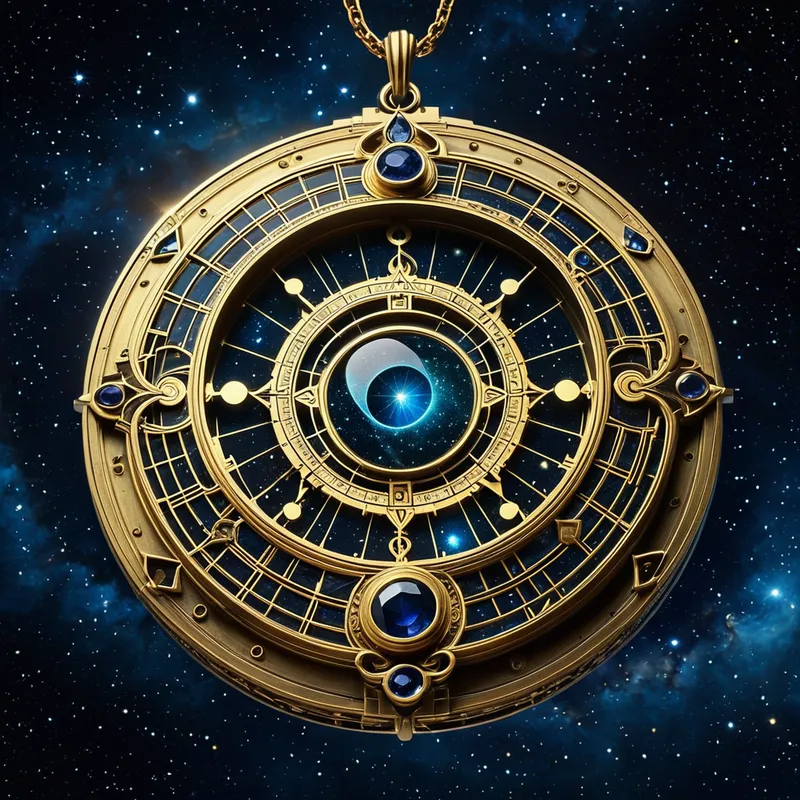
The Dreamer's Resonance
When the North Star appears in a modern dream, it seldom comes as a simple astronomical feature. It manifests as a somatic experience of oriented calm within profound disorientation.
You may dream of wandering in a labyrinthine Forest or a shifting city of unknown streets. Panic rises as every turn leads deeper into confusion. Then, you look up. Through a break in the canopy or between towering buildings, you see it: a single, steady point of light. No matter how you twist your dream-body, the light remains in the same position in the "sky" of your dream. A deep, physical sigh of relief follows. The dream may not provide a map, but it gives a bearing. This is the psyche signaling that amidst a life crisis, an identity shift, or moral confusion, the dreamer has unconsciously touched upon or is being reminded of their inner axis—a core value, a foundational truth, or the nascent sense of a guiding Destiny. The anxiety of the dream is the ego lost; the appearance of the star is the Self announcing its presence.

Alchemical Translation
The alchemical process mirrored in the North Star myth is that of coagulatio—the fixing of the volatile. In spiritual terms, it is the creation of the Philosopher's Stone, the incorruptible center.
The initial state is solve: dissolution. The individual is identified with the spinning stars—the moods, roles, and external demands that pull them in every direction. Life feels chaotic, reactive, without a center. The "night sea journey" is undertaken in this state. The alchemical fire is the heat of suffering, confusion, and seeking. Through this fire, the substance of the soul is agitated.
The crucible of disorientation is necessary to separate the fixed from the volatile within oneself.
The discovery of the inner Polaris is the coagulatio. It is the moment of insight where one identifies what is not them—the passing storms of emotion, the opinions of others, the fear of loss—and thereby discovers what is them: the unwavering witness, the central value that does not budge, the authentic voice beneath the noise. This is not a cessation of the spin; the stars continue their dance. But now, one’s life is organized around this fixed point. Choices gain direction. Suffering gains context. The individual is no longer a leaf on the ocean, but the navigator who, by keeping the star in sight, can steer through any storm. The myth teaches that individuation is not about becoming motionless, but about finding your true north so that all motion becomes a purposeful journey, not a dizzying fall.
Associated Symbols
Explore related symbols from the CaleaDream lexicon:
- Star — The quintessential symbol of guidance, destiny, and the pinpoint of consciousness in the vast darkness of the unknown, with Polaris being its most constant and trusted form.
- Journey — The North Star is the ultimate orienting symbol for any profound journey, providing direction when the path is obscured and the destination is unseen.
- Order — It represents the principle of cosmic and psychic order, the fixed axis around which the apparent chaos of life and the heavens finds its harmonious rotation.
- Axis Mundi — Polaris is frequently seen as the pinnacle of the world axis, the celestial pole that connects the heavens, earth, and underworld in a stable column of spiritual reality.
- Mountain — Like a peak that remains visible from great distances, the North Star is an unchanging landmark for the soul’s navigation across the plains of experience.
- Key — It functions as a metaphysical key to orientation, unlocking the ability to find one’s way through literal and psychological wilderness.
- Destiny — As the fixed point toward which all navigators set their course, it symbolizes a fated direction or calling that provides meaning to life’s voyage.
- Light — A specific, unwavering form of light that does not illuminate everything, but provides a critical reference point in the darkness, symbolizing conscious awareness itself.
- Sky — The necessary domain and canvas upon which the drama of celestial guidance is played out, representing the realm of spirit, ideals, and higher consciousness.
- God — In many traditions, the North Star is directly personified as a deity or the abode of a supreme being, representing divine constancy, watchfulness, and sovereignty.
- Spirit — It embodies the guiding spirit or higher self that remains constant despite the changes and trials of the earthly, material life.
- Circle — Polaris is the still center point around which the great circle of the celestial sphere turns, symbolizing the Self at the center of the wheel of life.
- Boron Star