Nezha the Child God Myth Meaning & Symbolism
A celestial child, born from a lotus, defies cosmic order and his own father, embodying the raw, transformative power of the unbound spirit.
The Tale of Nezha the Child God
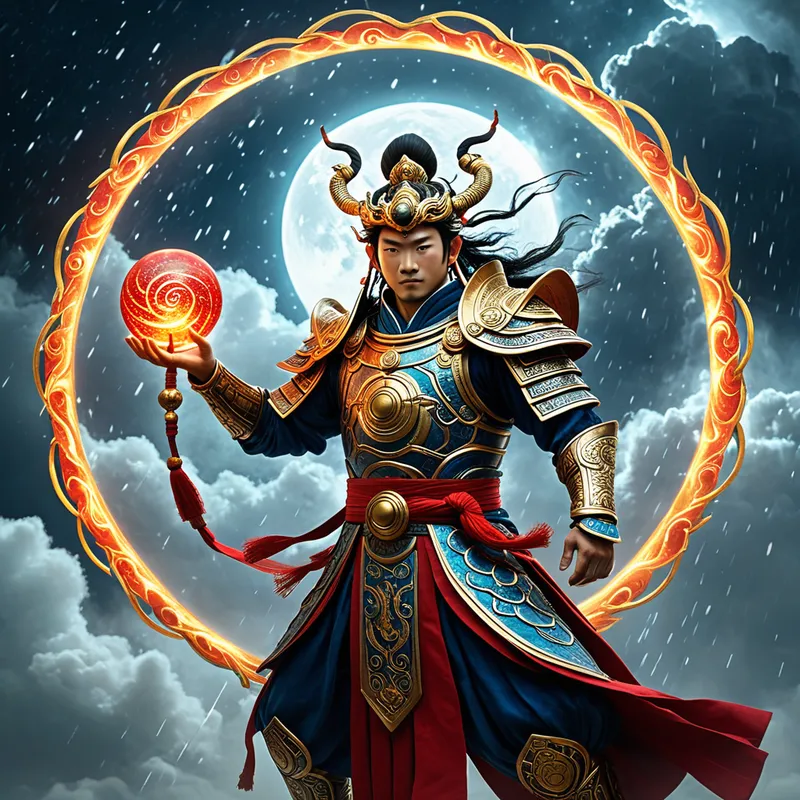
The sky over Chentang Pass was heavy with the scent of salt and impending thunder. In the general’s manor, Lady Yin, wife of the stalwart Li Jing, dreamed a dream of fire. A being of light entered her chamber, and she conceived not a child of flesh, but a mystery wrapped in stone—a glowing, warm meatball of jade-like substance. For three years and six months, it grew within her, a silent, weighty secret.
From this stone, he was born—not crying, but fully formed, a boy of impossible vitality, clutching in his small hand the Universe Ring and wrapped in the Red Armillary Sash, gifts from his true teacher, the immortal Taiyi Zhenren. They named him Nezha. He was not a son; he was a force of nature given human shape, a spark of pure, undomesticated spirit.
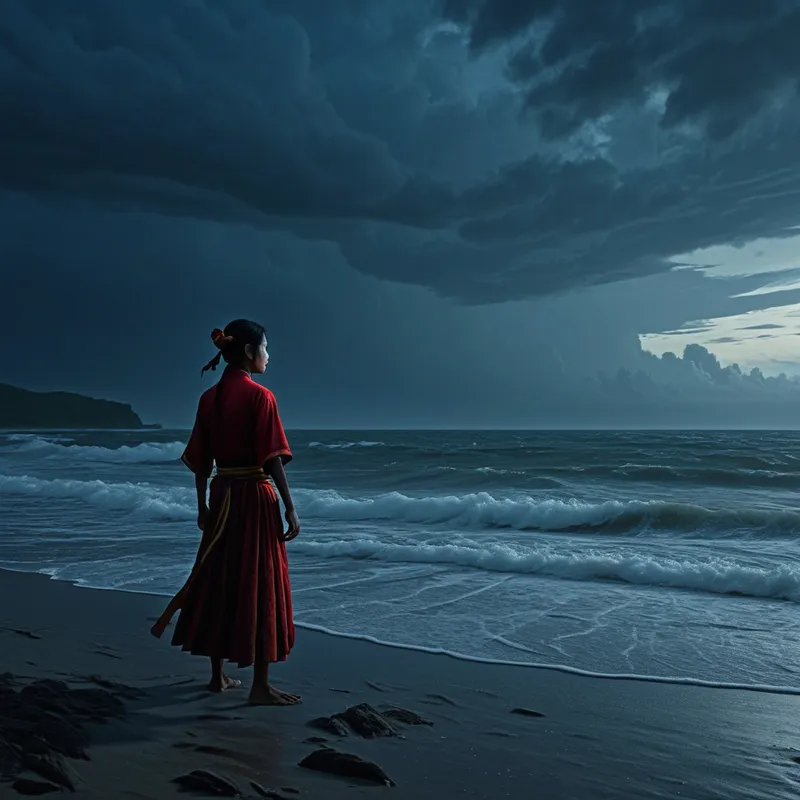
His childhood was a whirlwind of divine mischief. At seven, playing by the East Sea, he stirred the waters with his sash, shaking the crystal palace of the Dragon King Ao Guang. When the dragon’s son came to investigate, a conflict erupted in a spray of salt and scale. Nezha slew him. In the ensuing divine wrath, as the Dragon Kings threatened to flood the world and report the crime to the Jade Emperor, Nezha acted with the terrifying logic of a child-god. To spare his family and the people, he took his own life, stripping his flesh from his bones and returning it to his parents. “I give you back your body,” he declared, his spirit untethered, free, and blazing with righteous fury.
But this was not an end. It was a chrysalis. His teacher, Taiyi Zhenren, gathered the essence of the lotus flower and the purity of the lotus root. From these sacred plants, he forged for Nezha a new body—a body not of mortal lineage, but of celestial botany. Reborn from the lotus, Nezha arose more powerful than before, his destiny no longer bound by filial debt or earthly flesh. He became a divine warrior, a protector of the righteous, forever the child who challenged heaven, the rebel who died for his cause and was reborn through his essence.
Cultural Origins & Context
The myth of Nezha is a vibrant thread woven into the vast tapestry of Chinese folk religion, Taoism, and later, Buddhist-influenced narrative. Its earliest literary crystallizations appear in the Ming dynasty novels Fengshen Yanyi and Xiyouji, where he is a pivotal figure. However, his origins are older, rooted in oral tradition and the deification of local protective spirits.
The story was not merely entertainment; it was a societal pressure valve and a moral paradox. Told by storytellers in teahouses and enacted in temple operas, it presented the ultimate challenge to the Confucian bedrock of Chinese society: filial piety (xiao). Nezha’s rebellion against his father, Li Jing—who literally pursues his son’s spirit with a pagoda meant to suppress and control him—struck at the heart of patriarchal authority. Yet, Nezha’s final act of returning his flesh was also the ultimate, twisted fulfillment of that piety. The myth thus functioned as a container for the profound tension between individual spirit and social obligation, between raw divine power and structured cosmic order.
Symbolic Architecture
Nezha is the archetype of the Divine Child who is also the Holy Rebel. He represents the indomitable, pre-socialized spirit that enters a world of rigid structures—be it the family, society, or the cosmos itself—and refuses to be assimilated.
The true rebellion is not against a father, but against the fate assigned by the father’s world. It is the spirit’s declaration of its own sovereignty.
His birth from a stone egg signifies an origin outside normal biological lineage; he is a thought-form, a consciousness precipitated directly into matter. His weapons—the Universe Ring (encompassing all) and the Red Armillary Sash (binding all)—symbolize his inherent connection to cosmic principles. His primary conflict with the Dragon Kings of the Watery Deep is a classic mythic battle between the fiery, ascending, individual consciousness (Nezha) and the cold, deep, collective unconscious ruled by primordial powers (the Dragons).
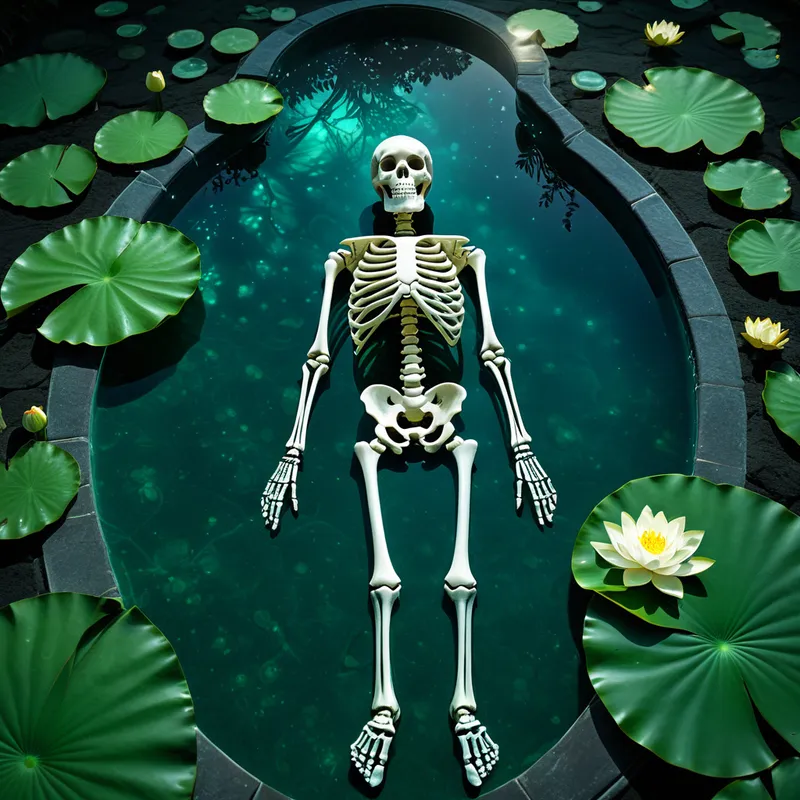
His suicide and lotus rebirth are the core alchemical sequence. The stripping of the flesh is the ultimate sacrifice of the persona—the socially compliant identity given by the parents. The lotus body is the new, self-created vehicle: pristine, rooted in mud (the unconscious), but rising unsullied into the air (consciousness), flowering in the light of individual purpose.
The Dreamer's Resonance
When the pattern of Nezha stirs in modern dreams, it signals a profound psychic uprising. The dreamer may be entangled in a “Li Jing” complex—an internal or external authority that demands suppression of one’s essential nature for the sake of order, tradition, or familial approval.
Dreams may feature a defiant child who possesses terrifying power, scenes of returning something (a gift, a body, a name) to a parental figure, or imagery of drowning in oceanic emotion (the Dragon King’s wrath) only to find a firm lotus root to stand upon. Somatically, this can feel like a fiery pressure in the chest, a claustrophobic sense of being trapped in a role, or a sudden, clean rage that feels alien yet deeply true.
This is the psyche’s rebellion against a life lived for others’ expectations. The Nezha dream is the soul’s declaration that the cost of belonging has become the cost of its own annihilation, and it would rather undergo a symbolic death than continue the charade.
Alchemical Translation
The Nezha myth is a precise map for the stage of individuation known as ego death and self-rebirth. The process begins with the recognition of the “stone egg” self—the feeling of being fundamentally different, a sealed potential waiting for activation.
The first confrontation is with the “Dragon Kings” of the personal unconscious: the swamp of repressed emotions, inherited traumas, and instinctual drives that threaten to flood the conscious mind if provoked. Nezha’s battle teaches that these forces cannot be ignored; they must be faced, and their princes (dominant complexes) must be challenged.
The central, brutal alchemy is the “return of flesh and bone.” Psychologically, this is the voluntary deconstruction of the false self. It is quitting the job that defines you but kills your spirit, leaving the relationship that provides security but demands your soul, or rejecting the internalized voice of the critical parent. It feels like suicide because it is the end of a world.
Rebirth is not granted; it is assembled from the essential materials of one’s own being, found in the mud of one’s deepest struggles.
Finally, the “lotus reconstruction” guided by the “Taiyi Zhenren” (the inner Sage or Self) occurs. The individual builds a new identity not from external roles, but from their own core values (the lotus root), purified experiences, and hard-won wisdom (the lotus petals). This new self is resilient, authentic, and serves a purpose aligned with one’s own intrinsic law, not the imposed law of the father’s tower.
Associated Symbols
Explore related symbols from the CaleaDream lexicon:
- Child — The untamed, pre-cultural spirit that possesses innate power and moral clarity, challenging the worn structures of the adult world.
- Fire — The transformative, purifying, and rebellious energy of Nezha’s essence, representing divine anger, vitality, and the spark of individual will.
- Water — The realm of the Dragon Kings, symbolizing the deep, emotional, collective unconscious that the fiery spirit must confront and navigate.
- Lotus — The symbol of rebirth from murky depths; the new, self-created body and identity that is beautiful, pure, and rooted in struggle.
- Father — The archetypal principle of law, order, and patriarchal authority against which the individual spirit must often define itself, sometimes through fierce opposition.
- Sacrifice — The necessary, brutal act of giving up the socially constructed self (flesh and bone) to preserve the core, essential spirit.
- Rebirth — The central promise of the myth: that through conscious self-sacrifice, a more authentic and powerful mode of being can be consciously constructed.
- Dragon — The primal, chaotic power of the untamed unconscious and the old cosmic order that the hero must subdue to establish a new equilibrium.
- Spirit — The indestructible essence of Nezha that survives bodily death, representing the eternal core of the individual beyond all physical and social forms.
- Hero — The one who acts for a cause beyond personal safety, challenging monstrous injustice and in doing so, redefining the boundaries of the possible.
- Bone — The fundamental structure, the unyielding truth of one’s being that is returned, signifying the relinquishment of inherited substance to claim self-sovereignty.
- Grief — The profound, oceanic emotion that follows the act of self-sacrifice, the necessary price for the severing of old, binding ties.