Mother of Waters Myth Meaning & Symbolism
A primordial being of immense power chooses self-sacrifice, dissolving her form to become the lifeblood of the world, teaching creation through dissolution.
The Tale of Mother of Waters
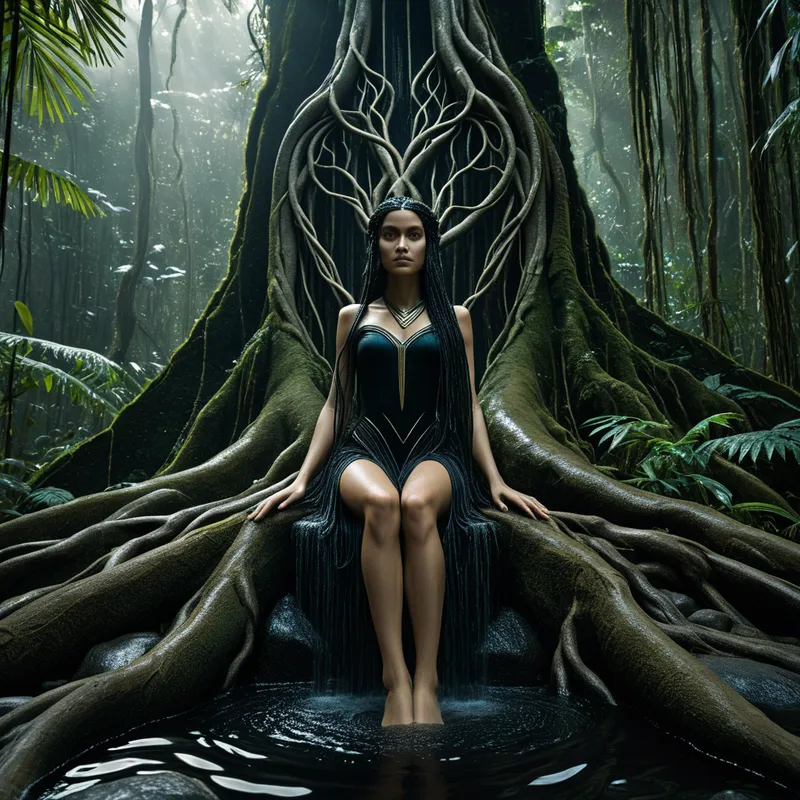
In the time before time, when the world was a great, dreaming green, there was a being of such power that the land itself was her body and the sky her breath. She was known as the Mother of Waters. She did not walk; the forest floor trembled with her presence. She did not speak; the wind carried her thoughts. Her form was vast and shifting—sometimes a woman of impossible height with skin like polished river stone, sometimes a presence felt in the cool dampness of the soil and the sigh of the canopy.
The world was whole under her watch, but it was a silent, static wholeness. The great trees stood sentinel, the stones held their ancient positions, but there was no flow, no change, no song except her own lonely hum that vibrated in the roots. She felt a longing deeper than any root could reach, a pull toward something she could not name—a need not for more being, but for becoming.
One day, the longing became a pain, a pressure building within her stone-like heart. It was the pain of potential, of life waiting to be born but having no passage. She looked upon her perfect, motionless world and knew it was not enough. A creation that does not create is a prison. The conflict was not against a monster or a rival, but against her own perfect, eternal form. To give life, she would have to give up herself.
So, she began to weep.
The first tear was a cataclysm. It fell from her eye, a sphere of liquid light, and where it struck the unyielding earth, it did not splash but sank, hissing and carving. It became a furrow, then a groove, then a channel. The second tear followed, and the third, until a river of her sorrow was flowing. The pain did not cease; it intensified, for she was unmaking her own body. She wept for the stillness, she wept for the longing, and she wept for the children she would never hold in arms that were now dissolving.
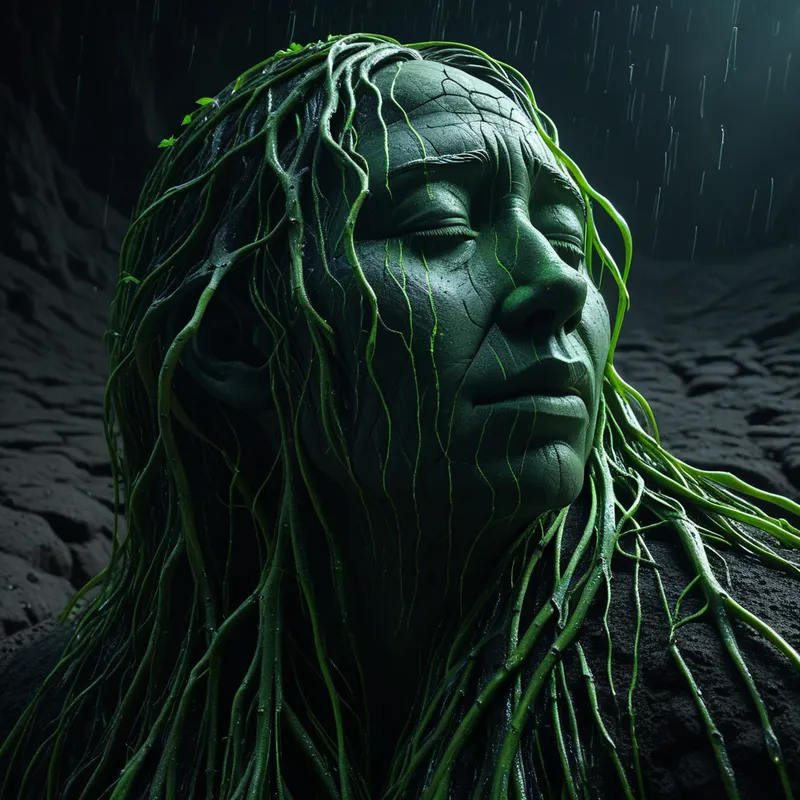
Her stone skin softened, cracked, and began to run in rivulets. Her great form slumped, not in defeat, but in a deliberate, agonizing surrender. She let the pressure within her break its vessel. Her body dissolved into a million silver threads—streams, creeks, and mighty rivers that raced to find the lowest places. Her hair became the black, cascading waterfalls. Her breath became the mist that rises at dawn. Her bones settled as the smooth, white stones on the riverbeds.
Where her waters touched, the static green erupted. Seeds that had slept for eons drank and split their shells. Fish sparked into being in the new currents. Birds came to drink and their throats found song for the first time. The world was no longer silent; it was a chorus fed by her sacrifice. She was no longer a being in the forest; she was the forest’s blood, its tears, its sweat, and its joy. The Mother of Waters had given her body so that everything else could have life.
Cultural Origins & Context
This myth finds its roots among numerous Indigenous peoples of the Amazon Basin, including the Tikuna, Desana, and others, where it is not merely a story but a foundational explanation of reality. It is a myth told not to entertain, but to orient. Elders and shamans (payés) would narrate it during rituals, at the initiation of young people, or when explaining the sacred nature of the rivers.
Its societal function is multifaceted. Firstly, it is an etiological narrative, explaining the origin of the Amazon’s vast, life-sustaining river systems. More importantly, it establishes a sacred, kinship-based relationship with the environment. The river is not a resource; it is the transformed body of a divine ancestor. This instills a profound ethic of respect, reciprocity, and care. To pollute the water is to desecrate a ancestor’s body. To take from the river requires gratitude and offering. The myth encodes the principle that true abundance flows from sacrifice and that the giver and the gift are ultimately one.
Symbolic Architecture
At its core, the myth of the Mother of Waters is a supreme allegory for the creative principle itself, which operates through a paradox: creation requires dissolution.
The vessel must break for the water to flow. The self must be given away to become the world.
Psychologically, the Mother represents the primal, containing Great Mother archetype in its most profound aspect. She is not just a nurturer who provides from an endless storehouse; she is the nurturer who becomes the provision through her own annihilation. Her “conflict” is the archetypal tension between stasis (eternal, perfect being) and generativity (becoming, which implies change and death). Her tears are not just water; they are the liquefaction of form, the emotional and spiritual release that makes growth possible. The rivers symbolize the directed flow of life energy (kene, or similar concepts), consciousness, and time itself, carving the path of destiny through the resistant landscape of inertia.
The Dreamer's Resonance
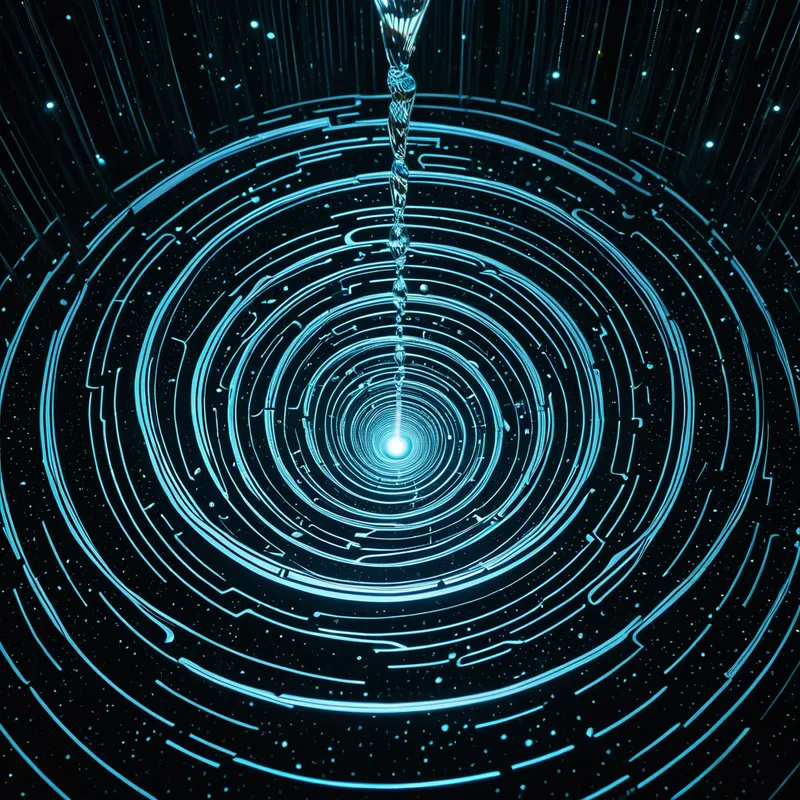
When this myth stirs in the modern dreamer, it often manifests as dreams of overwhelming floods, of being dissolved in water, or of discovering secret springs in the depths of one’s own house. It may appear as a dream of a powerful, sorrowful, or silent feminine figure associated with a body of water.
Somatically, this can correlate with a feeling of pressure building—an emotional or creative fullness that has no outlet. The psyche is signaling that a container, perhaps a rigid self-concept, a long-held role, or an unexpressed grief, is too small for the life wanting to emerge. The dream of dissolution is not a nightmare of annihilation, but a profound process of psychic hydraulics. The ego-structure, like the Mother’s stone skin, is being softened by the pressure of the unconscious (the longing, the unshed tears) so that a new, more fluid mode of being can flow forth. The dreamer is undergoing a necessary de-structuring, where old identities must break down to irrigate new potentials in the inner world.
Alchemical Translation
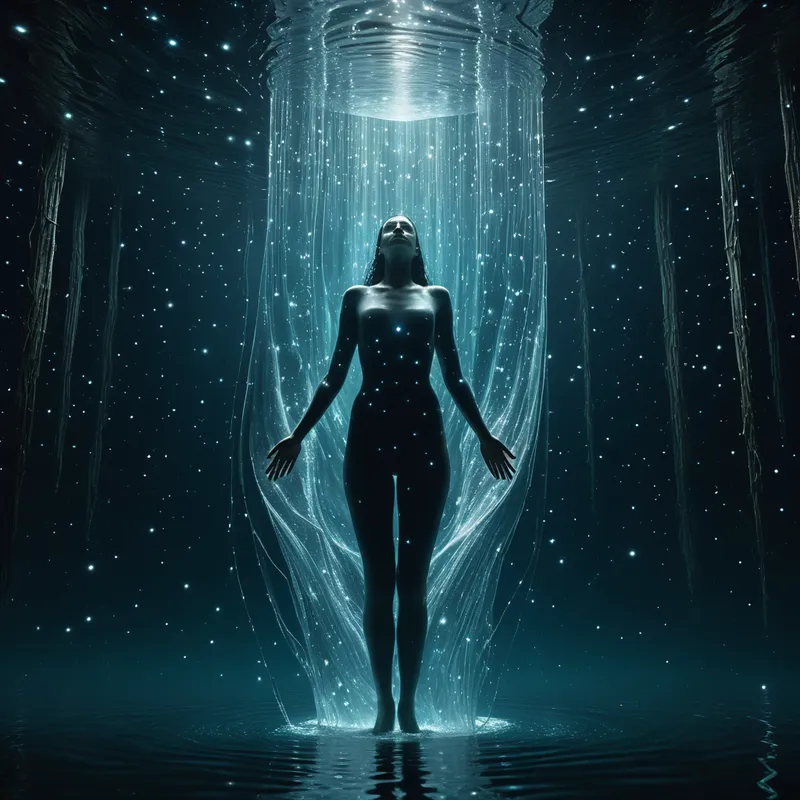
In the alchemy of individuation, the myth models the stage of solutio—the dissolving of fixed, rigidified elements in the “water” of the unconscious. For the modern individual, the “perfect, static world” is the constructed persona, the carefully managed life that is orderly but lifeless. The “longing” is the call of the Self, the totality of the psyche, which demands a more authentic, flowing existence.
The alchemical work is not to build a stronger fortress of the ego, but to learn the sacred art of dissolution, to let the tears of what is no longer viable carve new channels for the soul.
The triumph is not one of conquest, but of sublime surrender. The individual learns that true power lies not in holding one’s form against all change, but in the courage to let that form be transmuted for a larger purpose. One’s personal pains, failures, and “breakdowns” are not merely to be endured; they are the very waters that, when allowed to flow, can irrigate the barren landscapes of our lives, giving birth to compassion, creativity, and genuine connection. We become most ourselves not by defending our borders, but by allowing our essence to become a tributary to a greater whole. In this, we follow the path of the Mother: we find our eternal life not in permanence, but in becoming part of the endless, giving flow.
Associated Symbols
Explore related symbols from the CaleaDream lexicon: