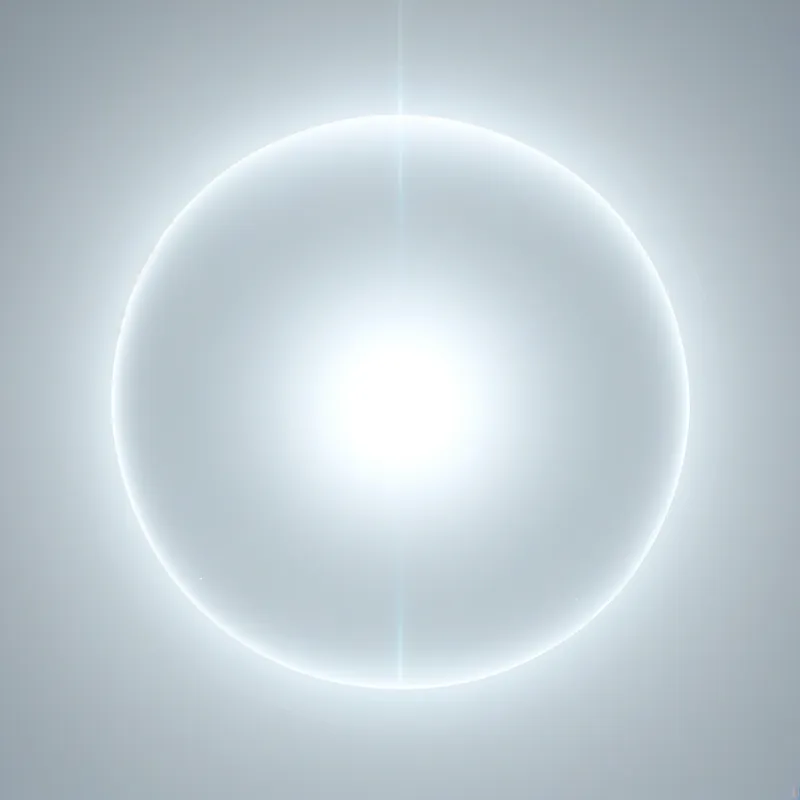
Monad Myth Meaning & Symbolism
The myth of the Monad is the story of the undivided One from which all multiplicity and the cosmos itself first emerged.
The Tale of Monad
Before the world was, there was no world. There was no sky to arch, no earth to lie beneath, no sea to churn. There was no darkness, for darkness is a thing that can be known, and there was nothing to know it. There was no light, for light is a dancer that needs a stage, and the stage was not yet built.
There was only the One.
Not a god with a beard and a temper. Not a titan of muscle and rage. It was a presence so complete, so utterly sufficient, that it needed no name. It was the Monad. Imagine a silence so profound it contains every possible song. Imagine a stillness so absolute that within it spins the seed of every whirlwind, every orbit, every beating heart. It was not large, for there was no space to be large within. It was not small, for there was nothing smaller to compare it to. It was simply… whole.
It rested in the womb of potential, a perfect, self-contained sphere of being. Within its boundless interior slept the blueprints of mountains and minnows, the melodies of thunder and whispered secrets, the forms of justice and love and sorrow. All was there, but all was one. Distinction was a dream not yet dreamed.
Then… a thought.
Or perhaps not a thought as we know it, but a stirring. A tension of perfection yearning to know itself. The Monad, in its infinite completeness, turned its awareness inward. And in that act of self-reflection, a mirror was held up to unity. For the first time, there was a seer and a thing seen, even though they were the same. A vibration rippled through the absolute stillness—a note so pure it was the father and mother of all sound.
From that vibration, from that first subtle crack in the egg of the All, the Dyad emerged. Where there was One, now there was Two: the knower and the known, the limit and the unlimited, the male and the female. It was not a rebellion, but an unfolding. A sigh of creation. The Monad, like a seed breaking its own shell, gave of itself to become other than itself.
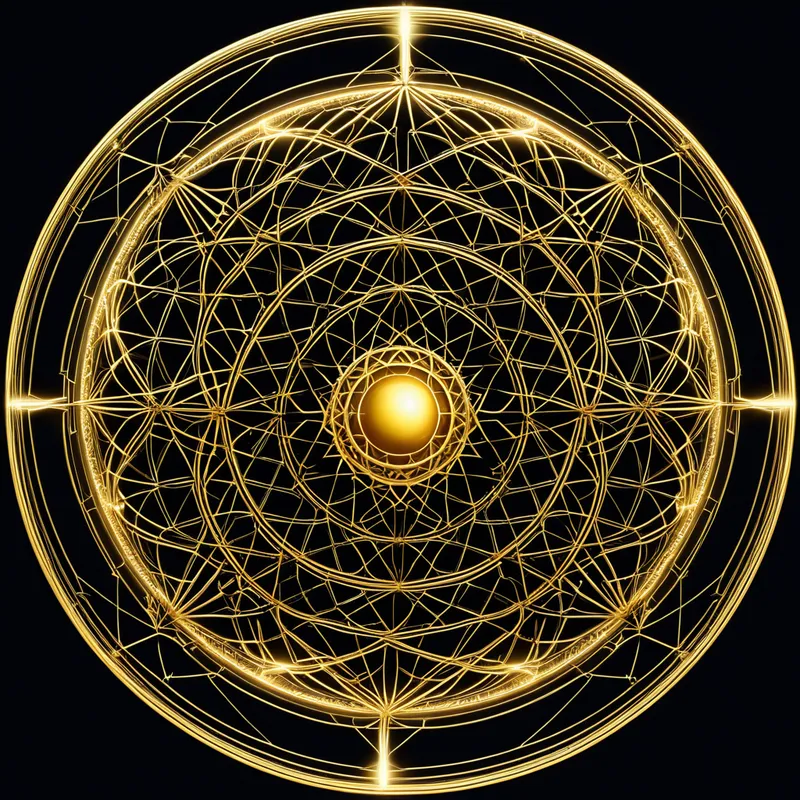
From this sacred tension between the One and the Two, number itself was born. Three, Four, and the cascading multitude. With number came harmony, and with harmony, form. The geometric solids crystallized from the chaos of potential. The Platonic Solids—the tetrahedron of fire, the cube of earth, the octahedron of air, the icosahedron of water, and the dodecahedron of the cosmos—spun into being. And from their dance, the elements emerged, and from the elements, the world we walk upon.
The tale ends not with a bang, but with a resonance. The Monad did not die or depart. It became the silent center of the turning wheel, the unmoved mover at the heart of all motion, the source note that hums within every atom of the grand symphony it authored.

Cultural Origins & Context
This is not a myth told around campfires with heroes and monsters. It is a philosophical and mystical narrative, born in the secretive schools of thinkers like Pythagoras and later refined by Plato and the Neoplatonists. It was passed down not by bards, but by initiates—students who swore oaths of secrecy to protect these profound cosmological truths.
Its societal function was not to explain the weather or justify kingship, but to answer the ultimate human questions: Where did everything come from? What is the fundamental nature of reality? For the Pythagoreans, number was divine, and the Monad was the divine source of number. It provided a metaphysical map, showing how the multiplicity and chaos of the sensory world emerged from a prior state of perfect, rational unity. This myth was the bedrock of a worldview that saw mathematics, music, and astronomy as sacred paths leading the soul back toward its origin in the One.
Symbolic Architecture
The Monad is the ultimate symbol of the primordial Self, the psychic totality that exists before the ego’s birth. It represents the state of unconscious wholeness we all carry within—a wholeness that must be broken to create a conscious life, yet a wholeness we spend our lives trying to remember and reclaim.
The Monad is the silence before the first word of your story, containing every chapter you will ever live.
The emergence of the Dyad symbolizes the fundamental psychic split that makes consciousness possible: subject and object, self and other, conscious and unconscious. This is the "fall" into awareness, into time, and into conflict. It is not a moral failure, but a necessary condition for experience. The geometric forms that follow represent the archetypal patterns—the deep, immutable psychic structures—that shape our perceptions, our relationships, and our destinies. The entire cosmogony is a metaphor for the structuring of a conscious psyche from the raw material of the unconscious.
The Dreamer's Resonance
When the myth of the Monad stirs in the modern dreamer, it often manifests not as a story, but as a state or a symbol. You may dream of a perfectly still, silent room at the center of a chaotic city. You may encounter a single, radiant object—a pearl, a crystal, a white stone—that feels profoundly significant and complete in itself. You might experience the somatic sensation of floating in warm, weightless darkness, utterly at peace.
These dreams signal a process of re-centering. They emerge during times of fragmentation, overwhelm, or existential confusion, when the conscious mind is lost in the "multitude" of life's demands and identities. The psyche is reaching back, past the noise of the Dyad and its conflicts, to touch the ground of being. It is a restorative immersion in the source, a reminder that beneath all your roles and struggles, you are, at your core, an undivided whole. The dream is an invitation to withdraw from the periphery of your life and commune with your inner singularity.
Alchemical Translation
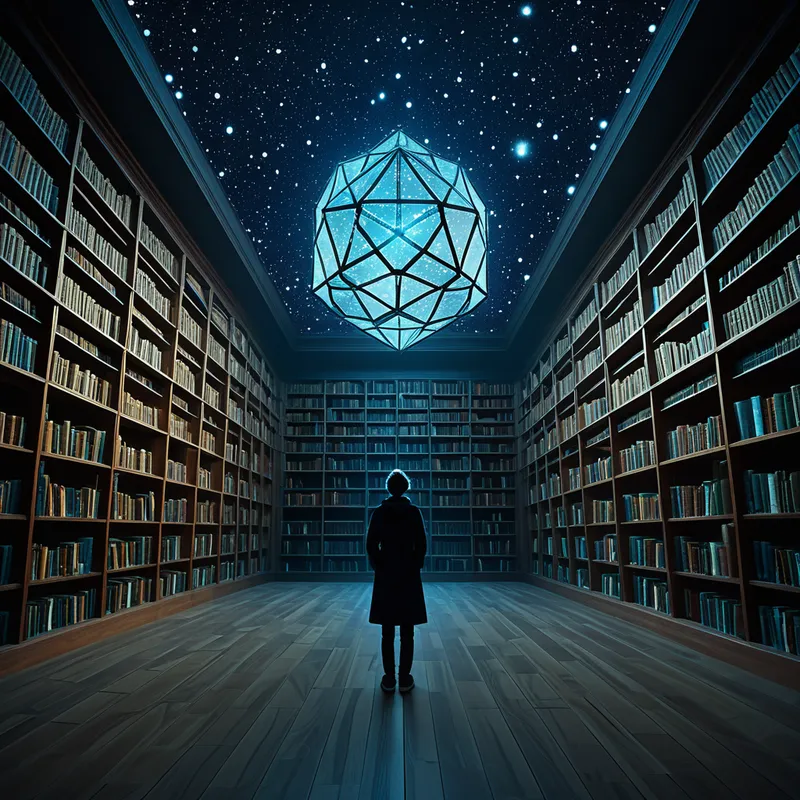
The individuation process—the alchemical work of becoming who you truly are—is modeled perfectly by this myth. We begin in a state of unconscious unity with the world (the Monad). Childhood’s end is the emergence of the Dyad: we become aware of our separation from parents, from nature, from parts of ourselves. We enter the long, often painful, phase of multiplicity—building personas, facing shadows, navigating the complex geometry of adult life.
The alchemical goal is not to regress to the unconscious Monad. It is to achieve a conscious unity. It is to undertake the journey back to the center, not as a naive child, but as a sage who has traversed the entire cosmos of experience.
The work is to become the Monad that knows itself, the circle that has consciously drawn its own circumference.
This is the unio mentalis, the union of the mind. You consciously integrate your contradictions (the Dyad), honor your unique inner patterns (the geometric forms), and order your psychic elements. You discover that your true center is not your ego, but that same silent, unmoved source from which your ego originally emanated. You realize you are not just a fragment of the universe, but a point where the universe has folded back upon itself to know its own nature. In reclaiming your singularity, you do not become isolated; you become the vessel through which the One experiences the Many. You complete the circle, becoming both the source and the expression, forever whole.
Associated Symbols
Explore related symbols from the CaleaDream lexicon: