
Milkweed Plant Myth Meaning & Symbolism
A myth of a selfless plant spirit whose sacrifice provides medicine, thread, and sustenance, modeling profound reciprocity with the living world.
The Tale of the Milkweed Plant
Listen. In the time before memory, when the world was still soft from dreaming, the people walked with a great hunger. It was not only a hunger of the belly, though game was scarce and the corn was young. It was a hunger of the spirit, a deep weariness that settled in the bones like a cold mist. Sickness walked among the lodges—a coughing sickness that stole the breath from the old and the young, a weakness that made the hunters’ arms tremble.
The plants and the animals saw this suffering. From the deep places, the council of the green beings gathered. The mighty Oak spoke of strength, but its medicine was for building, not for breath. The swift-running Deer offered its flesh, but this was a sustenance that would pass. One by one, the beings offered what they could, yet the people’s particular hunger remained.
Then, from the edge of the council, where the tall grasses whispered, came a voice both gentle and firm. It was Milkweed. She was not the tallest, nor the most brightly flowered. Her leaves were broad and humble, her stem bled a milky sap. “I have listened,” she said, her voice the sound of silk tearing on the wind. “I see the knot in their chests, the fire in their lungs. I will go.”
The others were silent. To go to the people meant to offer one’s very body, to enter the cycle of taking. “What will you give?” asked the ancient Stone.
“I will give my milk,” said Milkweed. “When their breath is caught in thorns, let them drink of my white blood. It will loosen the knot, though it may taste bitter. It will remind them that healing is not always sweet.”
“And what else?” whispered the Wind.
“I will give my children,” she said, gesturing to the long pods that hung from her sides. “Not for eating, but for dreaming. Inside these cradles, I wrap my seeds in the softest hair, finer than rabbit fur, warmer than down. When the pod cracks open, my children will fly on my hair to find new ground. Let the people take this hair. Let them gather it as it floats, let them spin it into thread, let them stuff their cradleboards with it to keep their newborns from the cold. Let my children’s cradle become the cradle for theirs.”
A profound stillness followed. This was a gift of layers—medicine, utility, and profound symbolism woven into one being.
“And the cost?” asked the Fire.
Milkweed bowed her head. “To give my milk, I must be cut. To give my silk, my pods must be opened before the wind claims them all. I will be seen as common, as a roadside weed. My sacrifice will be quiet, and many will pass by without knowing my name. But the ones who know… the ones who listen… they will find me. And in the finding, they will remember the pact: that to receive, one must give thanks; to take a life, even a plant life, one must offer prayer.”
So it was agreed. Milkweed walked from the council of the green beings and seeded herself along the trails of the people, near their villages, in the disturbed earth where they walked. She did not hide in the deep forest. She placed herself in the path.
And when the first mother, desperate with her coughing child, remembered a dream of a plant with milky sap and a pod like a canoe, she found her. She prayed, she explained her need, and she took a little of the root. The child drank the bitter tea and breathed deep. The mother, later, gathered the silken floss from a burst pod, her fingers marveling at its warmth. She sang a song of thanks as she worked, and the song carried on the same wind that carried Milkweed’s remaining seeds.
Thus, the relationship was born. Not of dominion, but of kinship. A quiet, enduring pact written not on stone, but in reciprocity.

Cultural Origins & Context
The myth of Milkweed is not the property of a single nation, but a story-pattern found woven through the oral traditions of numerous Indigenous peoples across North America, including but not limited to some Algonquian, Iroquoian, and Plains cultures. It belongs to the vast and sophisticated corpus of ethnobotanical myths that serve as both practical guides and spiritual frameworks.
These stories were traditionally told by elders, herbalists, and storytellers, often during the seasons of harvest or when preparing medicines. The telling was itself an act of transmission, ensuring that the practical knowledge of the plant’s uses—as a respiratory medicine, a source of cordage, and a life-saving food source (from its young shoots, flowers, and pod preparations when correctly processed)—was inseparable from its ethical and spiritual context. The myth functioned as a societal compass, embedding the principles of sustainable harvesting, gratitude, and the recognition of personhood in all beings. It taught that the forest and prairie were not a warehouse, but a community of which humans were participating members.
Symbolic Architecture
At its heart, the Milkweed myth is a profound map of the caregiver archetype in its most selfless, ecological form. The plant-spirit is not a heroic figure who conquers, but one who yields intelligently and compassionately.
The deepest medicine often flows from a wound, and the most enduring strength is found in gentle surrender.
The milky sap is the primary symbol. It is life-blood offered as bitter medicine. It represents the necessary, often uncomfortable, truth or remedy that must be ingested for healing to occur. Psychologically, it symbolizes the painful but curative insights that arise from confronting one’s own shadow or illness.
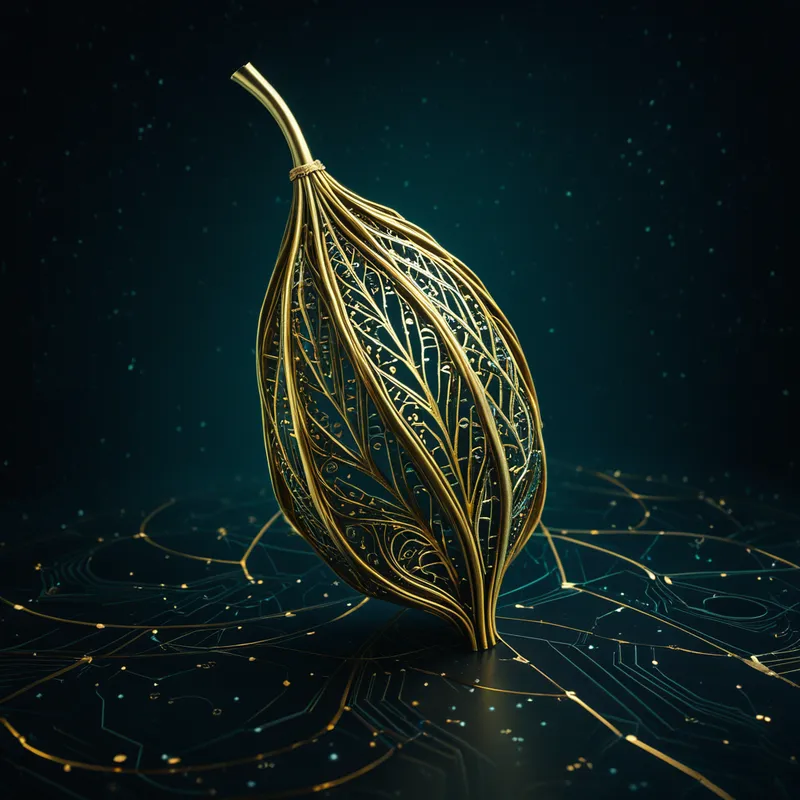
The silken floss is the second great symbol. It is the protective cradle, the insulating warmth, the connective thread. It represents the soft, nurturing, and sustaining energies that emerge from a source of sacrifice. It is the tangible gift that remains after the healing crisis, used to weave new structures (thread) and provide comfort (stuffing). The pod that must crack open to release it is a universal symbol of the crisis that precedes revelation and new life.
Finally, the plant’s commonality—choosing to grow by the roadside—is crucial. It symbolizes wisdom and grace that is not esoteric or hidden, but available to all who are humble and attentive enough to recognize it. The divine is not only on the mountaintop; it is in the ditch, offering its milk.
The Dreamer's Resonance
When the motif of the Milkweed plant seeds itself in the modern dreamscape, it often signals a process of somatic unburdening and nurturance sourcing. To dream of harvesting the milky sap suggests the dreamer is in a phase of seeking or receiving a “bitter medicine”—a hard truth about their health, a relationship, or a life pattern that must be acknowledged and integrated for healing to begin. There may be a physical sensation of tightness in the chest (the “knot”) seeking release.
Dreaming of gathering the silken floss, especially with a sense of calm focus, points to the dreamer actively drawing on inner or outer resources for comfort and regeneration. It may appear after a period of crisis (the cracked pod) as the psyche begins to marshal its softer, insulating energies. To dream of the floating seeds often speaks to a need to release old ideas or projects (the children) with faith, trusting the inner wind to carry them to fertile ground, while utilizing the “floss” of the experience for one’s own growth.

Alchemical Translation
The myth of Milkweed provides a non-egoic model for the alchemical process of individuation. Here, the goal is not to become a singular, impenetrable hero, but to become a more permeable, responsible, and nurturing node in the web of life.
The first operation is Recognizing the Need: The people’s hunger mirrors the soul’s feeling of lack or illness, the call to individuation. The second is The Voluntary Sacrifice (Solutio): Milkweed’s offering represents the ego’s necessary dissolution—allowing one’s fixed form (defenses, preconceptions) to be “cut” and tapped for its healing, albeit bitter, essence. We must access our own “milky sap”—our vulnerable, emotional truth.
The pod of the self must crack for the silken wisdom within to be gathered and rewoven into a new life.
The third operation is Spinning the New Thread (Coagulatio): Gathering the floss and spinning it into thread is the act of taking the insights and softness gained from the sacrifice and consciously weaving them into the fabric of one’s renewed life. This is the creation of a resilient, nurturing psyche that can insulate itself and others.
Finally, the myth culminates in the principle of Reciprocal Integration. The healed individual does not simply consume and move on. They sing the song of thanks. They offer their prayer—their attention, their care, their own creative work—back into the world. They complete the circuit. Thus, the individuated self, modeled on Milkweed, becomes a common yet essential source of medicine, warmth, and connection, firmly rooted in the humble, sacred earth of shared being.
Associated Symbols
Explore related symbols from the CaleaDream lexicon: