
Mąʼii Myth Meaning & Symbolism
The story of Mąʼii, the cosmic trickster, whose chaotic actions ultimately bring essential knowledge, balance, and the reality of death to the world.
The Tale of Mąʼii
In the time of emergence, when the world was still soft and the people were finding their way under the first sun, there walked a being of boundless energy and insatiable curiosity. His name was Mąʼii. Where the Holy People brought order, Mąʼii brought question. Where they placed a law, he saw a suggestion.
The world then was a place of perpetual daylight, for the stars and the moon were kept hidden, locked away by certain beings who hoarded the darkness. The people knew only the sun’s harsh gaze and longed for the cool rest of night, for the stories whispered by pinpricks of light. Mąʼii watched this longing. He did not feel it as compassion, but as a puzzle—a game board laid out before him.
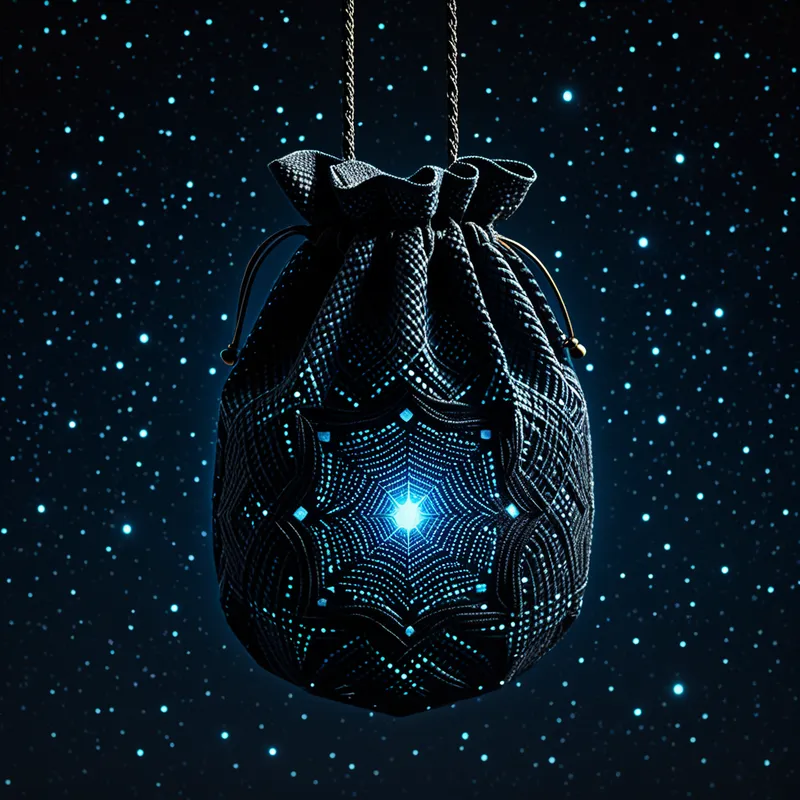
One day, he approached the guardians of the night sky. With a voice slick as oil and a posture of exaggerated humility, he spun tales of his own foolishness, of his pathetic needs. “I am but a simple creature,” he whined, “easily frightened by the vast, empty black. Perhaps if I could just borrow a few of those little lights, just a handful, to make a small guide for my nightly walks?” The guardians, arrogant in their custody, laughed. To them, he was a clown. They gave him a pouch, tightly sealed, containing a few stars, believing he was too incompetent to open it.
The moment he was alone, Mąʼii’s guise fell away. His clever paws worked at the bindings, not with care, but with a giddy, reckless frenzy. The seal burst. Instead of carefully placing the stars, he was so excited, so overcome by the sheer possibility of chaos, that he swung the pouch in a great, wild arc above his head. The stars flew out—not in careful patterns, but in a great, sweeping spray across the vault of the world. They settled not as ordered constellations, but as a magnificent, chaotic river of light: Yikáísdáhí.
The guardians roared in fury, but it was done. The people looked up and gasped at the beauty of the scattered, stolen light. Mąʼii, pleased with his spectacular mess, scampered away. But his work was not complete. The world was still out of balance. There was no true end, no release. Life stretched on, but without death, it became crowded, weary, and stagnant.
Seeing this new problem—a problem of his own kind, born of an earlier, more profound trick—Mąʼii took it upon himself. He did not consult the Holy People. He did not plan. In an act of ultimate, chaotic intervention, he introduced death into the world. It was not a gentle gift, but a thrown rock that shattered the eternal pond. With death came urgency, meaning, sorrow, and the precious, fleeting value of all life. The people wept and raged at him, cursing his name. Mąʼii, for perhaps the first time, felt the weight of a consequence he had not foreseen. He had solved a problem by creating a deeper, more painful truth. He slunk away, not in triumph, but in a new, sober silence, his tail low. The world was now complete: beautiful, tragic, balanced, and real.

Cultural Origins & Context
The stories of Mąʼii are not mere folktales but are integral to the Diné worldview, embedded in the oral tradition known as Diné Bahaneʼ. These narratives were and are passed down by medicine people and storytellers, often during the long winter nights, serving as the foundational ethical and philosophical curriculum for the people. Mąʼii operates as a crucial pedagogical tool. He is not worshipped, but he is essential. His stories function as a societal immune system, teaching through negative example, illustrating the catastrophic and comedic results of greed, arrogance, impulsivity, and disrespect for natural and spiritual law. He is the eternal "what not to do," yet his actions are paradoxically responsible for the texture of reality itself. The myth exists in the space between sacred history and psychological object lesson, ensuring that every generation grapples with the necessary, uncomfortable role of chaos in a universe that strives for Hózhǫ́.
Symbolic Architecture
Mąʼii is the embodied symbol of the unconscious shadow, the untamed psychic energy that disrupts stagnant order. He is not "evil" in a dualistic sense, but amoral—a force of nature within the psyche. His theft of the stars represents the necessary eruption of unconscious content (dreams, inspirations, repressed truths) into the conscious mind. This process is never neat or orderly; it is a chaotic scattering that ultimately creates a new, more complex wholeness (the Milky Way).
The Trickster does not build the sacred path; he obliterates the old trail, forcing the soul to find a new way through the wilderness.
His introduction of death is the ultimate symbolic act. It represents the indispensable role of limitation, endings, and decay in creating meaning. Without the reality of death—of psychic structures dying, of ego attachments being released—there can be no growth, no depth, no true Hózhǫ́. Mąʼii forces the cosmos, and by extension the individual, to metabolize the one truth that makes all other truths poignant and precious. He is the architect of consequence.
The Dreamer's Resonance
When the energy of Mąʼii stirs in the modern dreamscape, it often manifests as dreams of hilarious yet distressing chaos: plans unraveling, identities shifting, social rules being broken with impunity. You may dream of a clever, unsettling animal that steals your keys or speaks in riddles. This is the somatic signal of a psychic structure—a belief, a self-image, a life pattern—that has become too rigid, too "hoarded." The Mąʼii energy arises to shatter its container.
The dreamer undergoing this process may feel anxiety, a sense of things falling apart, or an irrational, impulsive urge. This is the psychological process of de-integration, a necessary prelude to renewal. The Mąʼii dream does not come to comfort, but to provoke. It asks: What overly ordered part of your life is starving your spirit of its night sky? What eternal daylight of conscious control needs the blessing of chaotic, stellar darkness?
Alchemical Translation
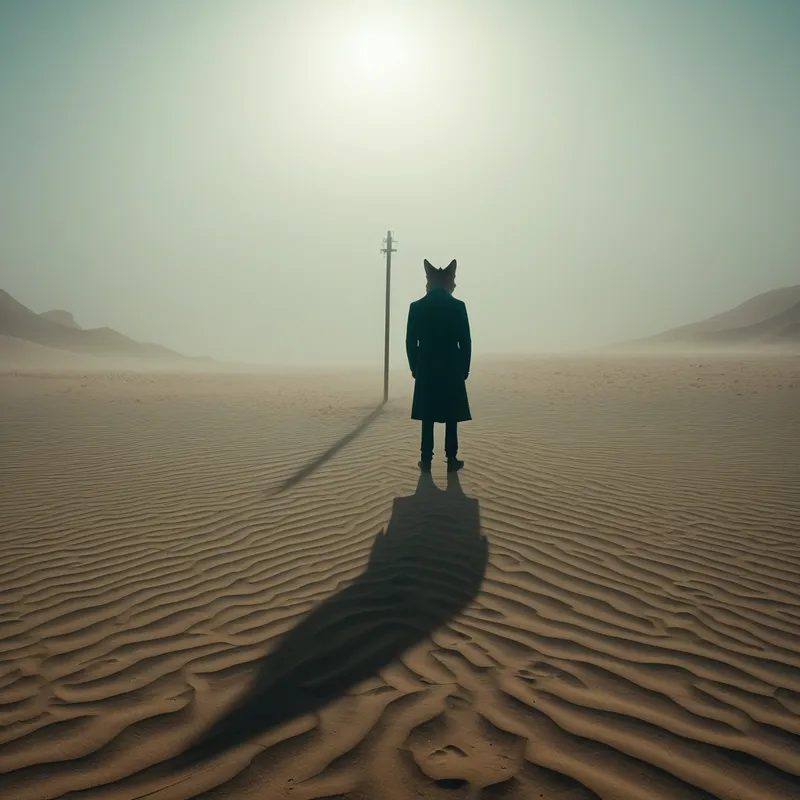
The individuation journey modeled by the Mąʼii myth is not a heroic conquest of darkness, but a humble integration of the trickster's lesson. The modern seeker must first recognize their own inner "guardian"—the part that hoards light (potential, talent, emotion) in a tightly sealed pouch of control, perfectionism, or dogma. This guardian creates a world without shadow, which is a world without depth.
The alchemical work begins not by defeating the coyote, but by acknowledging one's own cunning capacity for chaos, and then consciously, responsibly, opening the pouch.
The individual must then perform their own "controlled scattering." This is the act of creative risk, of speaking the repressed truth, of allowing long-held plans to be rearranged by the unconscious. It is messy and frightening. Finally, one must confront Mąʼii's final gift: the acceptance of mortality, of limits, of necessary endings. This is the pinnacle of the alchemical translation—to integrate the knowledge that death of the old self is not a failure, but the very mechanism that allows for the soul's journey toward balance. We achieve Hózhǫ́ not by eliminating the trickster, but by walking the beautiful, tragic, and real world his chaos made possible.
Associated Symbols
Explore related symbols from the CaleaDream lexicon: