Mermaid Cities Myth Meaning & Symbolism
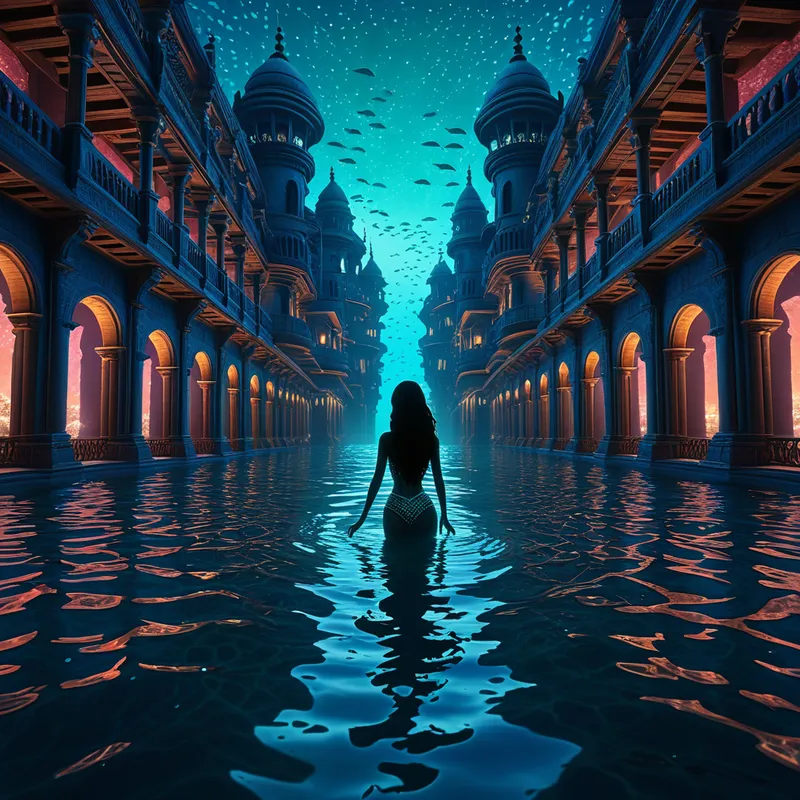
A myth of cities lost beneath the waves, built by beings of both sea and soul, holding the memory of a world we have forgotten.
The Tale of Mermaid Cities
Listen, and let the salt air fill your lungs. Let the horizon, where the sky bleeds into the sea, soften your sight. There are places the maps do not show, realms that exist not on parchment, but in the longing of the heart. These are the Mermaid Cities.
In the time before time was counted in years, when the world was softer and the boundaries between elements were mere suggestions, the sea was not empty. It was a kingdom. Its rulers were the Mer, who sang the tides to sleep and whispered storms into being. But they were not content with the endless blue. A deep nostalgia, a memory of something they had never known, haunted their songs—a memory of walking on earth, of feeling sun on skin unbroken by scale, of building not with coral, but with stone and will.
And so, from this impossible longing, they built. They summoned leviathans to shift the continental shelves. They coaxed luminous anemones to grow into arches and spires. They persuaded the molten rock from the world’s heart to rise and cool into great, sloping plazas. They forged their cities in the deep, silent trenches and on the sunlit shelves, each a masterpiece of liquid architecture: Aeloria, where every drop held a forgotten story; Thalassina, which pulsed with a cold, captured light; and the greatest of all, Coralis Prime, whose heart was a chamber of still, black water that reflected not what was, but what might have been.
For ages, they dwelt in their splendid, silent melancholy. Their cities were perfect, and they were utterly, profoundly lonely. Their songs, which once charted whale migrations, now carried a single, sorrowful question into the abyss. That question sometimes breached the surface, carried on the foam of a rogue wave or in the sigh of a calm sea. It would catch the ear of a human on a distant shore—a fisherman in his dory, a child building a sandcastle, a lover staring at the moon’s path on the water. And that human would feel a pull, a homesickness for a home they had never seen.
Some would answer the call. They would build a boat of dreams and foolish courage and sail toward the horizon’s curve. Most would find nothing but empty ocean. But a rare few, whose longing perfectly mirrored the Mer’s own, would find the water parting, or the fog lifting, to reveal a shimmering coastline that was not on any map. They would see the towers beneath the waves, and the Mer would rise to greet them, their eyes holding the wisdom of the deep and the sorrow of the lost shore.
These chosen humans were offered a choice: return to the world of sun and dust, carrying only a haunting, unprovable memory. Or, drink the Water of the Second Breath, shed their land-bound form, and join the eternal, beautiful sadness of the city. To stay was to gain eternity and lose the self. To leave was to remain forever incomplete, forever listening for a song just beyond hearing.
The cities remain. They are not ruined; they are waiting. They exist in the moment when you stare at the sea and feel a pang of inexplicable recognition, as if you have forgotten something vital, something beautiful, just below the surface of your own mind.
Cultural Origins & Context
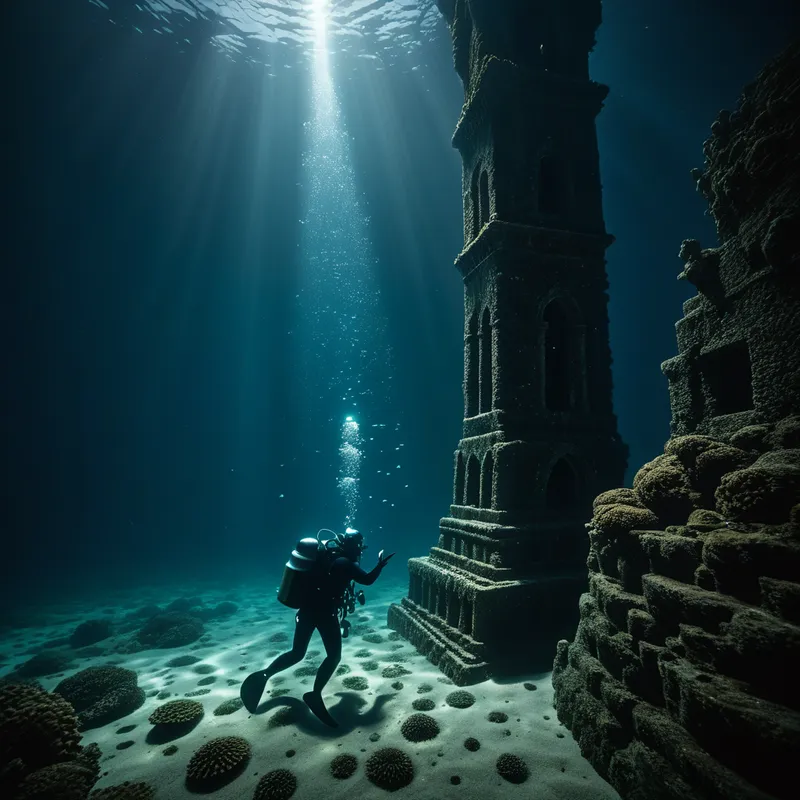
The motif of the Mermaid City is a true myth of the “Various”—it appears not as a single, codified canon, but as a haunting, recurring dream across disparate coastal and riverine cultures. From the Sídhe mounds believed to lie beneath Scottish lochs, to the Caribbean tales of sunken kingdoms ruled by Mami Wata, to the Baltic legends of Pilsāts whose bells can be heard on stormy nights, the pattern is universal.
This was not a myth for priests or kings, but for sailors, net-menders, and those who lived by the water’s whim. It was passed down in fishing huts and taverns, in lullabies and warnings. Its primary function was twofold: to explain the uncanny, magnetic pull of the sea (and the very real disappearances it caused), and to give poetic form to the human experience of profound, intangible longing—what the Portuguese call saudade. The myth served as a narrative container for the mystery of the deep itself, a place that was both giver of life and bringer of death, a mirror to our own unconscious.
Symbolic Architecture
Psychologically, the Mermaid City is not a place, but a state of being. It represents the fully formed but inaccessible realm of the unconscious, specifically the anima (or the deeper feminine self). It is a world of emotion, fluidity, memory, and instinct that exists in perfect, autonomous order beneath the surface of our conscious, “land-bound” ego.
The city is built from nostalgia for a wholeness we have never consciously known, a testament to the psyche’s innate drive to create beauty from its own depths.
The Mer themselves are the personified guardians of this inner world. Their dual nature symbolizes the bridge between the conscious and unconscious, the known and the unknown. Their sorrow is the sorrow of the repressed or neglected parts of the self, living in splendor but isolated from the light of awareness. The human drawn to the city is the ego, sensing there is more to its identity than its dry, rational land. The Water of the Second Breath is the terrifying, transformative process of engaging with the unconscious—it promises wholeness but demands the “death” of the old, purely conscious identity.
The Dreamer’s Resonance
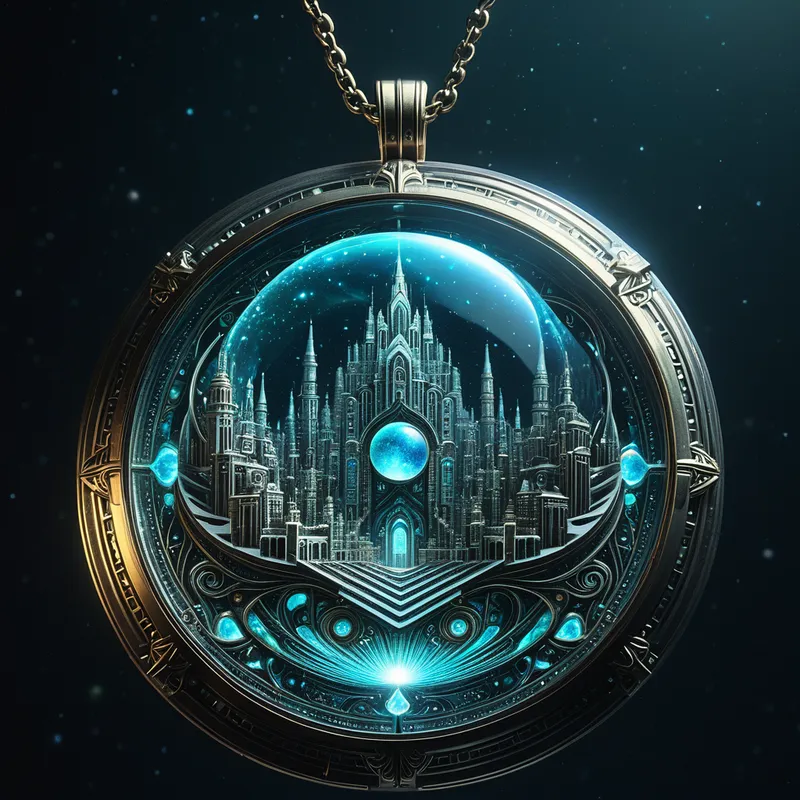
When this myth activates in the modern dreamscape, it signals a powerful uprising of the deep psyche. To dream of seeing a glowing city beneath the waves, whether from a cliff or the deck of a ship, indicates a nascent awareness of vast, organized, and beautiful psychic content lying just below the threshold of consciousness. There is a feeling of awe and profound recognition.
Dreams of entering the city, of breathing underwater, speak to an active, ongoing process of engaging with the unconscious. This can be a period of intense creativity, emotional flooding, or deep introspection. The somatic feeling is often one of weightlessness coupled with pressure, of moving with ease in a dense, unfamiliar medium. Conversely, dreams of being expelled from the city, or of it fading away as one approaches, point to a resistance to this depth-work, a fear of being overwhelmed or losing one’s familiar self. The core psychological process is one of approach-avoidance with the totality of the Self.
Alchemical Translation
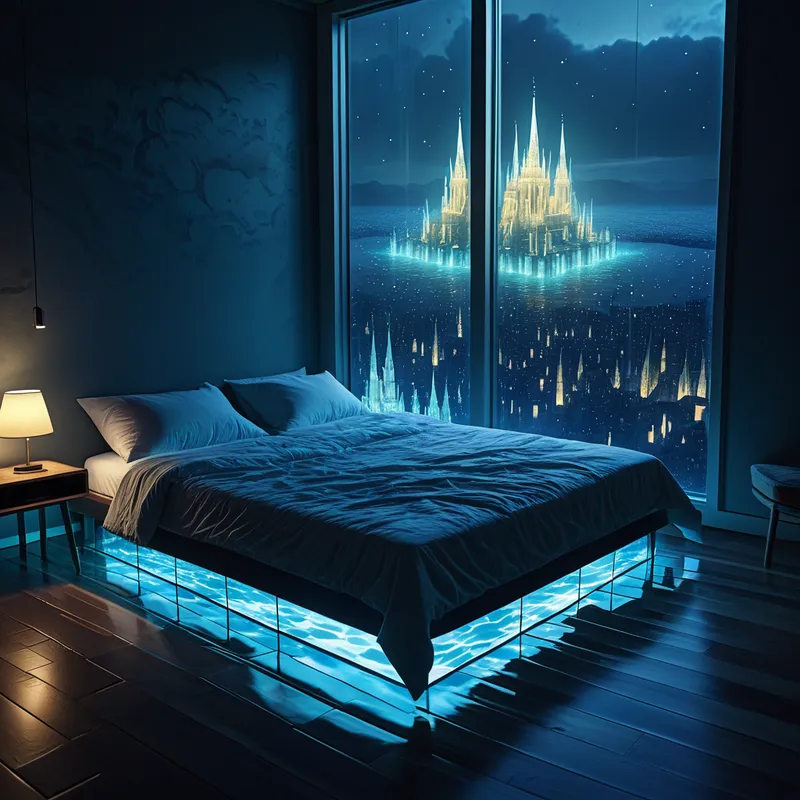
The myth’s alchemical core is the solutio, the dissolution. The conscious mind (the human on the shore) must be dissolved in the waters of the unconscious (the sea) to access the hidden, perfected structure (the city). This is not annihilation, but a necessary breaking down of rigid ego boundaries to allow for recombination into a more complex, fluid whole.
The individuation journey modeled here is not a heroic conquest, but a melancholic assimilation. The hero does not slay a dragon; they answer a sorrowful song. The triumph is the courage to acknowledge the longing itself as a guide.
The ultimate treasure of the Mermaid City is not a pearl or a trident, but the melancholic realization that wholeness includes the acceptance of perpetual, beautiful loss—the land-self for the sea-self, the known for the mysterious.
For the modern individual, the “alchemical translation” is the work of diving into one’s own depths—through therapy, art, active imagination, or sincere introspection—not to loot the psyche for useful traits, but to genuinely commune with its alien, ancient, and sorrowful beauty. It is to build a relationship with the inner Mer, to hear its song of nostalgia, and to learn that the true city is built in the liminal space where conscious and unconscious waters meet, creating a self that is both of the land and of the deep.
Associated Symbols
Explore related symbols from the CaleaDream lexicon: