
Mardöll Myth Meaning & Symbolism
A myth of the goddess Freyja, who wanders the world in disguise as Mardöll, weeping golden tears in search of her lost husband, Óðr.
The Tale of Mardöll
Listen. The wind does not always carry the scent of pine and salt. Sometimes, it carries a name, whispered so softly it is felt in the marrow before it is heard by the ear. Mardöll. It is a name for a time when the world is draped in a stranger’s face.
In the golden halls of Fólkvangr, where the chosen half of the slain feast, a throne sits empty. Not the high seat of the Lady of the Slain, but the place beside it, where a warmth once lingered. This is the hall of Freyja, she of the falcon-feather cloak and the heart that knows the weight of all desires. But her desire has walked away. Her husband, Óðr, the ecstatic one, the restless spirit, has vanished into the wide, weeping world. No one knows the path he took. The mead turns to ash in the cup; the song of the valkyries becomes a dull roar.
So Freyja cloaks her radiance. She takes a name that is not a name, but a description of a state of being: Mardöll, the one who lights or dazzles the sea. She wraps herself not in gold and Brisingamen, but in a guise of wandering sorrow. Her chariot, pulled by cats, stays behind. She walks. She walks across the Yggdrasil’s roots, from the realm of gods to the world of men, Midgard.
She walks as a stranger among strangers. Her famed beauty is hidden, not by ugliness, but by a profound otherness. People see a tall woman with eyes like deep fjords, her hair the colour of winter wheat, and they feel a pang of inexplicable loss. They call her Mardöll, for when she stands on the shore, staring at the grey, heaving sea, it seems as if her gaze makes the waves glitter with a cold, inner light. She asks no questions, yet her silence is a question that hangs in the air.
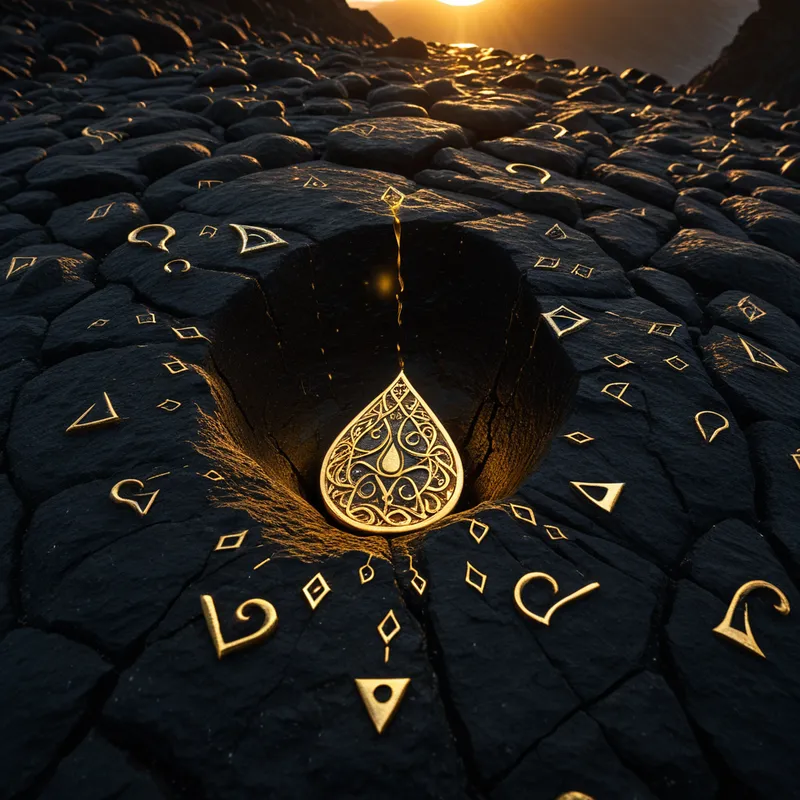
And she weeps. Not the furious tears of a thwarted queen, but a slow, ceaseless seep of pure grief. From her eyes fall tears of red gold, precious and heavy. They fall onto stone, into moss, into the churning foam of the sea. Each tear is a piece of her essence, a solidified fragment of her longing, scattered across the paths of the world. She wanders through forests that have forgotten their names, over mountains that hold their secrets close, her tears seeding the earth with luminous sorrow. She is looking, always looking, for a trace of that ecstatic presence, for the scent of Óðr on the wind. The myth does not sing of her finding him in this tale. It sings of the search itself, of the goddess who becomes a wanderer, who exchanges her title for a mystery, and whose grief becomes a currency of gold upon the land.
Cultural Origins & Context
The name Mardöll appears primarily in the Prose Edda, written by Snorri Sturluson, who cites it as one of the many names of the goddess Freyja. In the ancient poetic tradition, a goddess having multiple names—heiti—was not mere ornamentation. It was a metaphysical map. Each name captured a different aspect of her power, a different face she wore in the cosmic drama. Mardöll is not a separate character, but a specific manifestation, a role assumed.
This mythic fragment would have been carried by skalds and poets, part of the intricate tapestry of knowledge that explained the nature of the divine. In a culture intimately familiar with loss—to sea, to battle, to the long, dark winter—the image of a goddess herself undone by the absence of her beloved would have resonated profoundly. It democratized grief. If even the Lady of Fólkvangr could be brought low by longing, then human sorrow was not a weakness, but a shared, sacred condition. The myth functioned as a container for the experience of searching and the transformative power of enduring love’s absence.
Symbolic Architecture
At its core, the myth of Mardöll is an archetypal drama of the anima, the inner feminine principle, in a state of profound yearning for its lost counterpart, the animus or spirit of connection and meaning (Óðr). Freyja, in her full power, represents integrated love, fertility, and magical sovereignty. Óðr’s departure represents the fragmentation of that wholeness, the departure of life’s ecstatic, inspiring spark.
To become Mardöll is to consent to the journey of the bereft soul, to wander the outer world in search of the inner beloved.
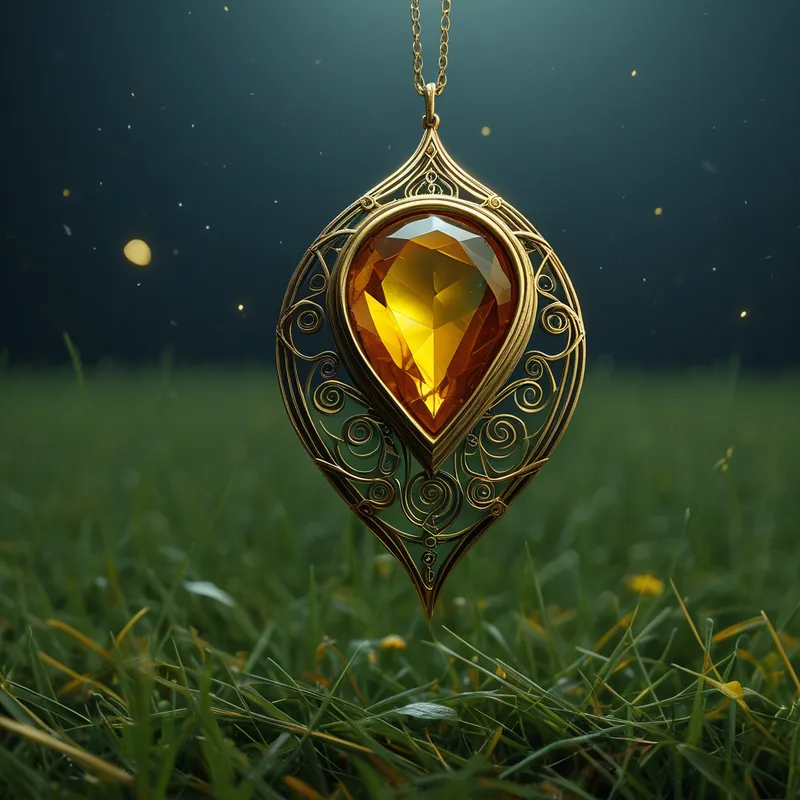
The disguise is critical. She does not search as Freyja, in all her glorious authority. She searches incognito, as "the one who dazzles the sea." This implies that her true essence, though hidden, still interacts with the world—her sorrow illuminates the depths, makes the unconscious (the sea) shimmer with potential meaning. The golden tears are the ultimate symbol: grief itself is alchemized into something of immense value. Each tear is a sacrifice of her previous, static identity, dropped along the path, creating a trail not of breadcrumbs, but of solidified feeling. The search for the other becomes, inevitably, a transformation of the self.
The Dreamer's Resonance
When this myth pattern stirs in the modern unconscious, it may manifest in dreams of searching through unfamiliar cities, looking for a lost person or object of immense but undefined importance. The dreamer may feel a cloak around them, a sense of being disguised or not fully seen in their waking life. There is often a somatic quality of quiet, persistent weeping—not hysterical, but a deep, somatic leak of essence.
Psychologically, this signals a process where a core part of the personality (a relationship, a vocation, a creative spark, a sense of meaning) has gone missing. The conscious ego is now in the "Mardöll phase": it has left the familiar palace of its old identity and is wandering the landscape of the psyche, feeling bereft but compelled. The tears represent the slow, often painful, release of attachment to how things were. The dream is the psyche’s way of validating this necessary, melancholic pilgrimage, affirming that to feel this loss deeply is not a failure, but the first step on a path toward re-finding—not necessarily the lost object, but a new relationship to one’s own capacity for love and inspiration.
Alchemical Translation
The alchemical journey mirrored in Mardöll’s wanderings is the nigredo, the blackening, the descent into the matter of one’s own grief. Freyja’s golden world turns to the grey of the sea and stone. This is not destruction, but the necessary dissolution of a completed state. By taking on the name and guise of Mardöll, the individual consciously enters the vas (the vessel) of the search itself.
The gold is not found; it is wept. Value is generated not by acquisition, but by the courageous expression of authentic feeling.
The process of individuation here demands the embrace of the wanderer’s role. One must be willing to feel lost, to be a stranger to oneself, and to let precious parts of the old self (the golden tears) fall away. Each tear shed is a solutio—a dissolving of a rigid part of the personality into a fluid state, where it can eventually be reconstituted. The ultimate goal is not merely the recovery of Óðr (the outer inspiration), but the reintegration of the experience of longing and loss into a fuller, more resilient consciousness. The one who returns from the search is not quite Freyja as she was, but a goddess who has also been Mardöll, who has dazzled the sea of the unconscious with her patient sorrow and now holds within her the map written in gold upon the earth. The search transforms the seeker into a vessel that can once again contain, and understand, the ecstatic presence of meaning.
Associated Symbols
Explore related symbols from the CaleaDream lexicon: