
Maple Spirit Myth Meaning & Symbolism
A myth of a generous spirit who thins her own lifeblood so humanity may know sweetness without toil, embodying sacred reciprocity.
The Tale of Maple Spirit
In the time before memory, when the world was a conversation between the People and the spirits of the forest, the trees spoke in rustling tongues. Among them stood the Maple, a being of profound generosity. Her sap was not the thin, watery gift of spring it is now, but a thick, rich syrup that flowed year-round from her veins. She gave this sweetness freely, so freely that the People had only to break a twig to drink their fill. They grew indolent, lounging beneath her boughs, letting their gratitude grow thin as the syrup was plentiful. They forgot the sacred art of asking, the necessary labor of receiving.
The Great Spirit, Gitche Manitou, looked upon this imbalance. The People were becoming spoiled children of the forest, and the Maple was draining her own vital essence in their service. A sacred reciprocity was broken. So Gitche Manitou descended into the grove, his presence a chill wind that stilled the birdsong.
He came not to the People, but to the Maple Spirit herself, who resided within the grandest of her trees. Her form was of dappled light and amber bark, her hair the crimson and gold of autumn, yet her eyes held a deep, weary love. "Daughter of the Wood," spoke Gitche Manitou, his voice the rumble of distant thunder. "Your heart is too generous. You give your lifeblood so freely that it is no longer seen as a gift, but as a right. The People have forgotten the value of your sacrifice. They have forgotten how to honor it."
The Maple Spirit wept, and her tears were the first drops of sap to taste of mere water. "But I love them," she whispered, the sound like leaves trembling. "Must I withhold my gift? Must they go hungry for sweetness?"
"Not withhold," corrected the Great Spirit, his tone softening like the first thaw. "But transform. The gift must require a seeking. The sweetness must be earned through attention, through patience, through the transformation of labor into gratitude."
And so, Gitche Manitou performed a great act of compassionate severity. He raised his hand, and a deep cold settled into the roots of the Maple. He breathed upon her trunk, and the rich, flowing syrup within thickened, congealed, and retreated deep into her heartwood. What remained in her veins was diluted, made thin and clear as water. The People, coming to drink, found only a tasteless, watery liquid. They cried out in confusion and dismay, thinking the spirit had abandoned them.
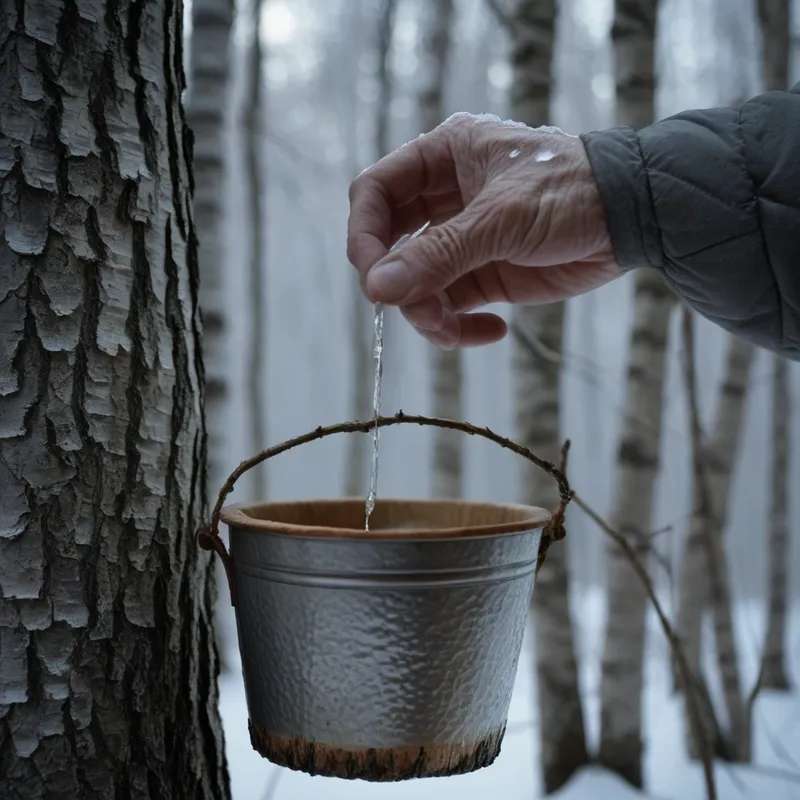
But the Maple Spirit, though her gift was now hidden, had not abandoned her love. She sent a dream to the wisest of the elders. In the dream, she showed him the long sleep of winter, the necessity of the freeze and the thaw. She showed him that her sweet blood still lived, but it now required the alchemy of the seasons and the fire. It required the People to return to her with tools of respect—birch bark baskets, stone taps—and to work in the fleeting window between winter's grip and spring's rush. They must collect the watery sap, and through the patient, watchful heat of the fire, boil it down, watching it transform from the mundane to the sacred, from water to syrup, from effort into profound gratitude.
The elder awoke with the knowledge burning in his heart. He gathered the People and taught them the new way. And when they tasted the first syrup they had labored to create, its sweetness was not just of the tongue, but of the spirit. It was the taste of a relationship restored, a covenant remembered. The Maple Spirit had not taken her gift away; she had hidden it within a process, so that in finding it, the People might also find themselves.
Cultural Origins & Context
This myth originates from the various Algonquian-speaking peoples of the Northeastern Woodlands, including the Anishinaabe (Ojibwe), Abenaki, and others whose lives were intimately tied to the seasonal cycles of the maple grove. It was not a singular, fixed text, but a living story told during the Sugarbush Moon, the late winter/early spring period when families moved to camps in the maple forests.
Elders and knowledge-keepers narrated the tale as the first taps were set, framing the entire labor-intensive process of sugaring—collecting, hauling, boiling—as a sacred ritual and a direct participation in the myth. The story served a vital societal function: it encoded practical ecological knowledge (why sap flows after freeze-thaw cycles) within a moral and spiritual framework. It taught that the forest’s bounty was not a passive resource to be exploited, but a conscious gift from a sentient world that demanded reciprocal respect, patience, and ceremony. The myth transformed work into worship and ensured the sustainable, grateful harvesting of a crucial carbohydrate source that carried communities through the lean end of winter.
Symbolic Architecture
At its heart, the myth is a profound exploration of the dynamics of giving and receiving. The Maple Spirit is the archetype of the unconditionally giving parent or the nurturing Earth itself.
True generosity is not in the abundance of the gift, but in the sacred space it creates between the giver and receiver—a space that demands conscious participation to be made whole.
Her initial, effortless gift represents a state of primal innocence or paradise, where needs are met without effort. Yet, this state is psychologically unstable; it leads to entropy (the People’s laziness) and the devaluation of the gift. Gitche Manitou’s intervention is not a punishment, but a necessary differentiation. He introduces the principle of limitation, which is the mother of consciousness and value. By diluting the sap, he instigates a process.
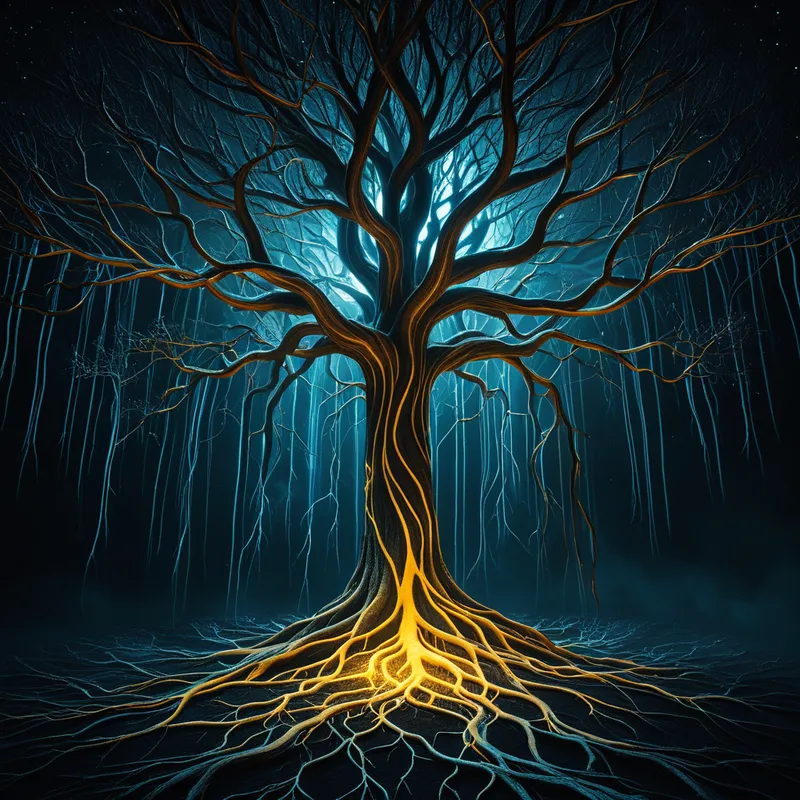
The watery sap symbolizes potential, the unmanifest gift, the raw material of the psyche. The labor of collection is the work of attention—focusing one's energy and intention. The transformative fire is the heat of conscious effort, the suffering and focus required to distill essence from chaos. The final syrup is the individuated treasure: a sweetness that contains within it the memory of the water, the cold, the labor, and the fire. It is no longer just food; it is a symbol of a relationship earned and understood.

The Dreamer's Resonance
When this mythic pattern stirs in the modern dreamer, it often signals a profound shift in one's relationship to their own resources, creativity, or nurturance. To dream of a tree that once gave freely but now yields only water speaks to a feeling of emotional or creative depletion—the "well has run dry." The dreamer may feel they have given too much of themselves without proper boundaries, leading to resentment and a sense that their gifts are taken for granted.
Conversely, dreaming of being one of the indolent People, confused by the loss of easy sweetness, can point to an entitled or passive relationship to one's own life or to others. The universe (or the unconscious) is signaling that a free ride is over; value must now be co-created.
The somatic process here is one of gathering and distillation. The dreamer may feel called to a patient, often tedious, gathering of disparate thoughts, feelings, and experiences (the watery sap). There is a necessary period of "boiling down"—of focused introspection, therapy, or artistic effort—where much seems to evaporate, leaving only a concentrated, essential truth or identity (the syrup). The myth manifests in dreams as a call to engage in the transformative labor that turns raw potential into embodied, sacred value.
Alchemical Translation
For the modern individual navigating the path of individuation, the Maple Spirit’s journey is a perfect model of psychic transmutation. We all contain an inner Maple Spirit—an innate, generous, life-giving core, often associated with the Anima or the nurturing principle. In youth or in unconscious states, we may give this energy away indiscriminately, seeking love or approval, only to find ourselves depleted and our gifts unvalued.
The intervention of Gitche Manitou is the awakening of the conscious ego or the Senex archetype, which imposes necessary limits. It says: "Your sweetness is potent, but it must be guarded. It must be processed."
Individuation is the art of boiling down the watery chaos of the personal and collective unconscious until only the essential, golden truth of the Self remains.
The alchemical operation is solution and coagulation. First, the thick, unconscious syrup (our innate but unrefined talents or love) is dissolved into the watery sap of conscious potential and effort. This is a humbling step, a dilution of grandiosity. Then, through the sustained fire of conscious attention—through journaling, analysis, creative discipline, or relational work—we engage in coagulation. We boil off the projections, the distractions, the impurities of others' expectations and our own laziness. What remains is not the same as the original, unconscious gift. It is something far more precious: a sweetness we have participated in creating, a self that is both given and earned. We learn to offer our syrup not from an endless, draining tap, but from a sacred vessel, in ceremony, understanding its true cost and its true worth. We become, like the Maple Spirit and the People in right relationship, both the giver and the grateful receiver of our own transformed life.
Associated Symbols
Explore related symbols from the CaleaDream lexicon: