
Manu-o-Kū Myth Meaning & Symbolism
A myth of the sacred white tern, a celestial navigator and messenger between worlds, guiding voyagers across the vast ocean of the unknown.
The Tale of Manu-o-Kū
Listen. The ocean is not empty. It is a great, breathing plain, a Moana-nui-a-Kiwa, whose horizons swallow the sun and cradle the moon. In the time when gods walked just behind the wind, and ancestors whispered in the waves, the greatest challenge was not the sea itself, but the path across it. To be lost was to be swallowed by the blue oblivion, your name forgotten.
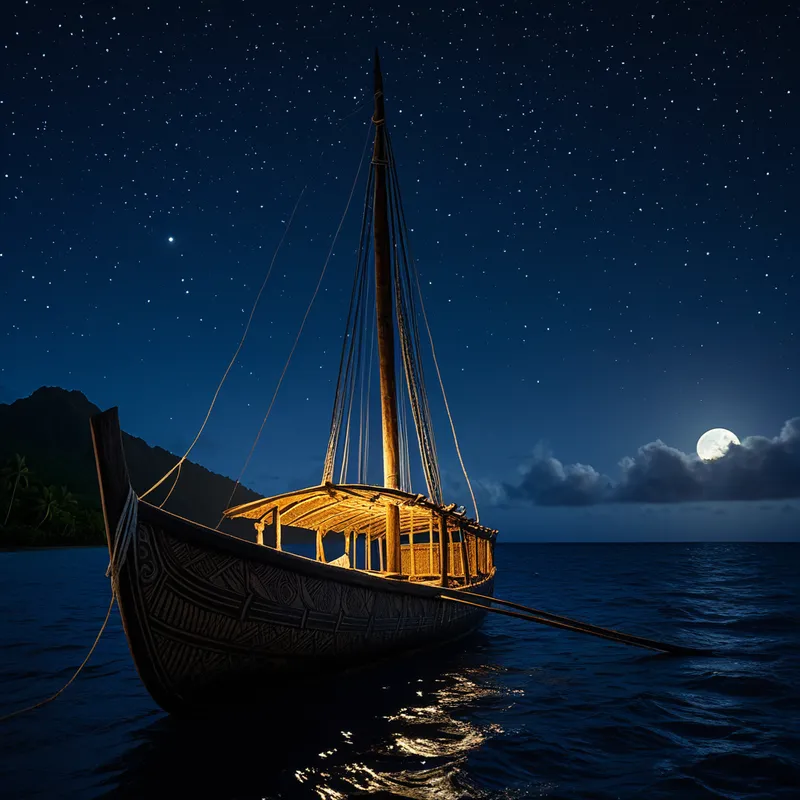
In such a time, there was a navigator, his hands etched with salt and stars, his mind a chart of currents known only to his lineage. He set his sight on a new land, a whisper on the wind from his grandfather’s dreams. He loaded his waʻa kaulua with hope, with mana, and with the prayers of his people. For days and nights, he sailed by the sun’s arc and the star paths, the kāpehu whetū. But then, the world softened. A veil of cloud drew across the heavens. The sun became a pale coin; the stars, memory. The sea and sky bled into one featureless gray dome. The swells spoke no direction. The wind held its breath.
This was the hour of despair, the hour when the ocean’s soul yawns wide. The navigator clung to the steering paddle, his heart a drum against his ribs. He sang the chants of his ancestors, but the gray silence swallowed the words. Just as the last knot of certainty unraveled within him, a fleck of pure white pierced the gloom.
From the nothingness, it came—a bird, small and fierce, with plumage like cloud-break and eyes like dark stars. It was the Manu-o-Kū. It did not circle aimlessly. It flew a straight, true line, a stitch of white thread in the gray tapestry. Then it returned, as if beckoning. The navigator, with nothing left to trust but this silent sign, turned his canoe to follow the bird’s path. Again and again, the Manu-o-Kū would fly ahead, vanish into the mist, and return, a living compass needle.
For a day and a night, this celestial dance continued. The bird was a promise made flesh. And then, as the first hint of dawn bled gold into the east, the mist tore. There, on the horizon, lay the lush green back of an island, a jewel rising from the sea. The Manu-o-Kū gave one last cry—a sound like breaking crystal—and soared upward, vanishing into the light of the new sun. The navigator had found not just land, but a covenant: that even in the deepest blindness, a guide may appear, if one has the heart to follow.
Cultural Origins & Context
This myth is not a singular story but a living pattern woven into the very fabric of Polynesia. The Manu-o-Kū, or white tern, is a real, ubiquitous seabird across the central Pacific. Its mythologization emerged from profound empirical observation integrated into a sacred worldview. For the master navigators—the pwo or kahuna—who traversed thousands of miles without instruments, the natural world was a resonant text.
The tern’s behavior provided critical data: its consistent flight out to sea at dawn to fish and return to land at dusk made it a reliable biological indicator of land’s direction, especially within a crucial 50-100 mile radius. This wasn't mere "bird-watching"; it was a high-stakes dialogue with the environment. The myth codified this practical knowledge into a form that could be carried in the soul, passed down through chants (oli) and oral histories. It served a vital societal function: it reinforced the concept of whanaungatanga—the kinship between humans, animals, and the elemental forces. The bird became a ʻaumakua for many, a familial guardian spirit. The story taught that survival depended not on dominating nature, but on listening to its subtle, guiding intelligence.
Symbolic Architecture
At its core, the Manu-o-Kū is the archetypal psychopomp of the oceanic realm. It is the mediator between states of being: between the known and the unknown, the visible and the invisible, despair and hope, being lost and finding one's way.
The guide does not appear where the path is clear, but where the map dissolves. Its function is not to lead the willing, but to make the lost willing to be led.
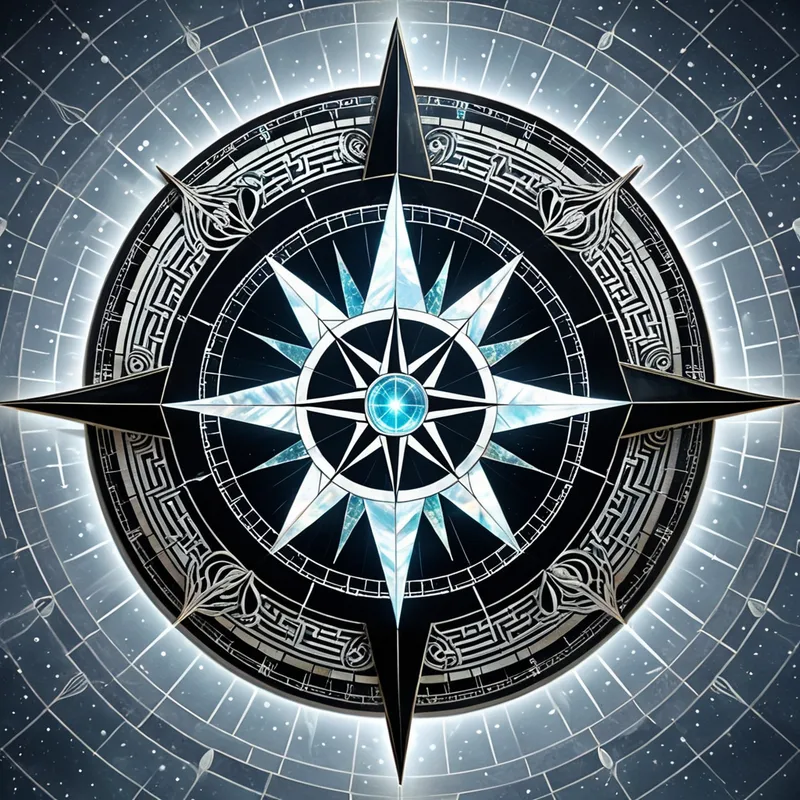
The Gray Veil represents the dissolution of conscious orientation. It is the psychological state where all former structures of meaning, all personal "star compasses" (beliefs, plans, identities) fail. The Navigator is the ego, the conscious will, skilled and prepared, yet ultimately humbled before the vastness of the unconscious (the moana). The Manu-o-Kū symbolizes an emergent intelligence from the psyche itself—an autonomous, guiding complex. It is not created by the navigator; it appears to him. It represents intuition, synchronicity, or a message from the Self (the totality of the psyche) that arises when the ego has exhausted its own resources. Its white color signifies purity of purpose and its connection to the transcendent, the spiritual realm beyond the personal.
The Dreamer's Resonance
When this mythic pattern stirs in the modern dreamer, it often manifests in dreams of being lost—in a featureless city, a trackless forest, or a fog-bound landscape. The somatic feeling is one of profound disorientation, a quiet panic that the inner GPS has failed. Then, a guide appears. It may not be a bird; it could be an unknown animal, a stranger offering a cryptic clue, or even a sudden, inexplicable knowing of which way to turn.
This dream signals a critical transition. The psyche is announcing that the individual's conscious direction has reached its limit. The old ways of navigating life—logic, willpower, familiar habits—are no longer sufficient for the journey ahead. The appearance of the guide marks the moment the unconscious offers a new trajectory. The psychological process is one of surrender and attunement. The dreamer is being asked to relinquish absolute conscious control and to develop a finer sensitivity to inner promptings, to "follow the bird" of intuition or a meaningful coincidence, even when it makes no rational sense. The resolution in the dream—finding the path, seeing the shore—indicates the nascent emergence of a new psychological orientation, guided by a deeper, more authentic layer of the Self.
Alchemical Translation
The myth of Manu-o-Kū is a perfect allegory for the alchemical stage of the nigredo giving way to the albedo. The gray, featureless sea is the massa confusa, the state of psychic dissolution necessary for transformation. The ego-navigator must endure this darkness, this loss of all certainty. This is the crucible.
The journey to the new shore is not an act of conquest, but an act of consent to be conducted. Individuation is less about steering and more about learning to read the conductors.
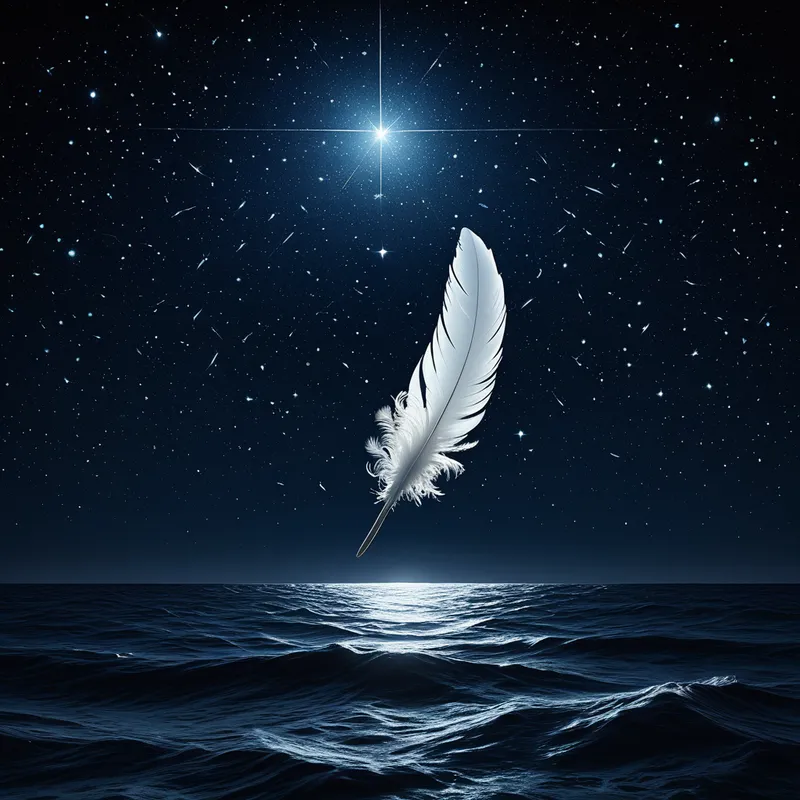
The arrival of the white tern is the first glimpse of the lumen naturae, the light of nature—an insight that emerges not from doctrine but from direct engagement with the psyche's own processes. Following it is the act of symbolic obedience, a commitment to the irrational but numinous guidance of the Self. This is the core of psychic transmutation: the leaden weight of egoic despair is transmuted into the white, guiding light of a supra-personal direction.
For the modern individual, this translates to those periods of life crisis, transition, or creative block where all former strategies fail. The myth instructs us not to fight the fog, but to wait within it, to listen with a different ear. The "land" that is found is not a return to the old world, but the discovery of a new inner continent—a more integrated state of being, a purpose or understanding that could only be reached by being utterly lost and then humbly led. We become, like the navigator, not masters of the sea, but wise partners in a sacred dialogue with the depths that guide us home.
Associated Symbols
Explore related symbols from the CaleaDream lexicon: