Mande Creation Myth Meaning & Symbolism
A West African myth where the world is born from a cosmic egg, shaped by a water spirit's sacrifice, and ordered through sacred speech and ritual.
The Tale of Mande Creation Myth
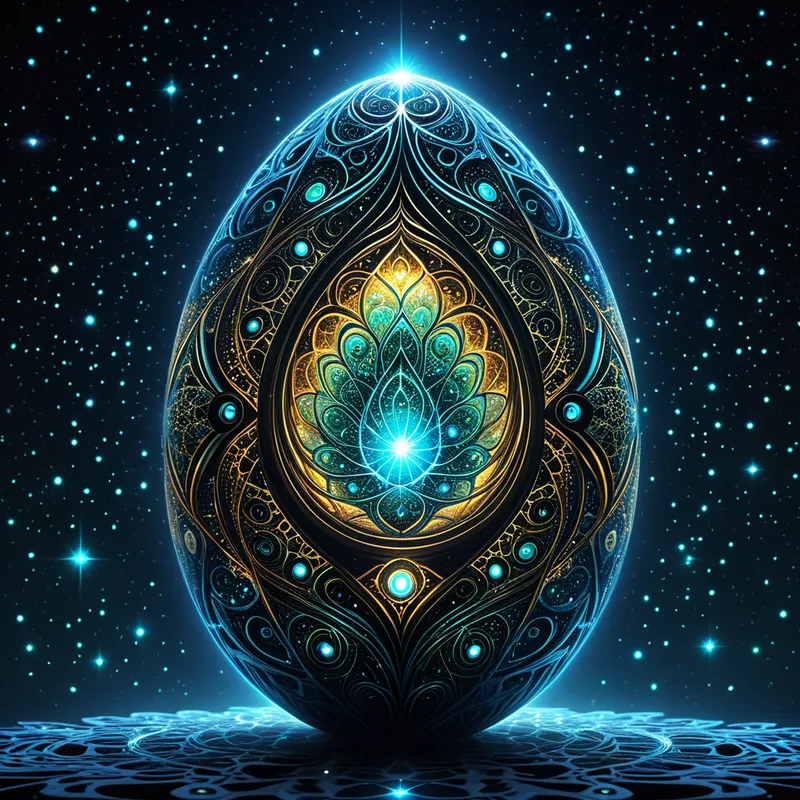
In the beginning, there was only the void, a deep and soundless darkness. And in that darkness, there was Mangala. Mangala was not a being of form, but of pure, conscious intention—the thought that thinks itself. From the substance of its own divine mind, Mangala fashioned a seed. This was no ordinary seed, but the Cosmic Egg, a perfect, closed sphere holding the twin forces of all that would ever be.
Within the egg’s dark, moist interior, chaos reigned. The twin Pemba and Faro stirred, locked in a struggle for dominance, for the right to define the shape of creation. Pemba, impulsive and fierce, broke free from the egg’s shell too soon, tearing a piece of it to ascend. But this act was a theft, a rupture of divine order. Pemba claimed the raw, dry earth and tried to rule it alone, sowing disorder and defiance.
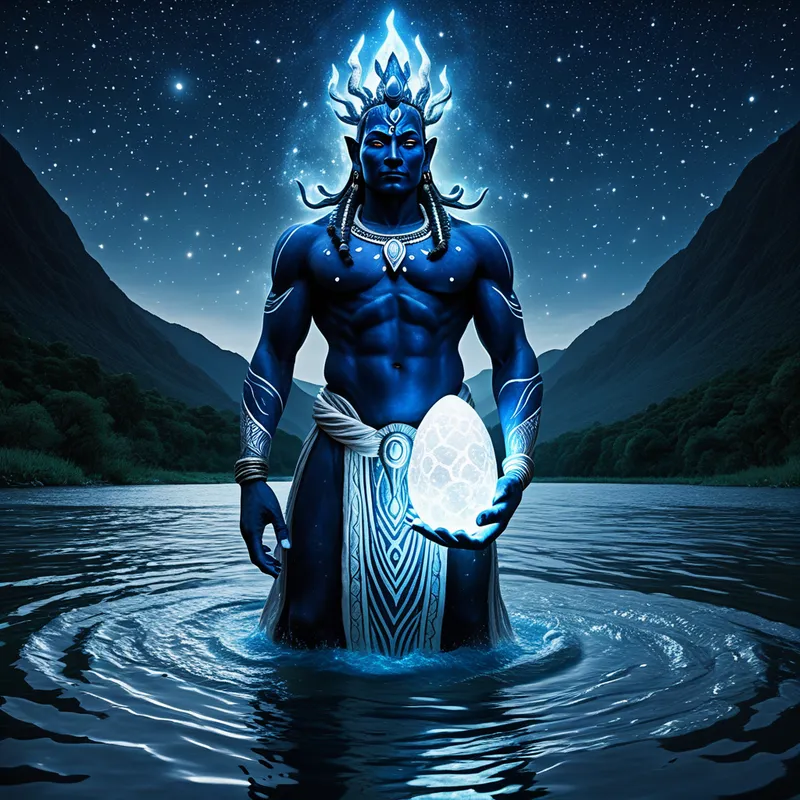
The world was left unbalanced, a wounded, barren place under a scorching sun. Mangala saw the flaw, the dangerous incompleteness. So Mangala acted again. The creator took the remaining, purer essence of the egg—the essence that was Faro—and sent it down to the world not as a conqueror, but as a sacrifice. Faro was made incarnate not in earth, but in water, becoming the great Water Spirit.
Faro descended in an ark of pure light, a vessel carrying the seeds of all plants, the patterns of all animals, and the sacred principles of society. The ark crashed into the waters, and Faro was dismembered, its body scattered and becoming one with the world river. This was not an end, but a divine scattering. From Faro’s flesh came the fish; from Faro’s blood, the nourishing red river clay; from Faro’s spirit, the very flow of the Niger.
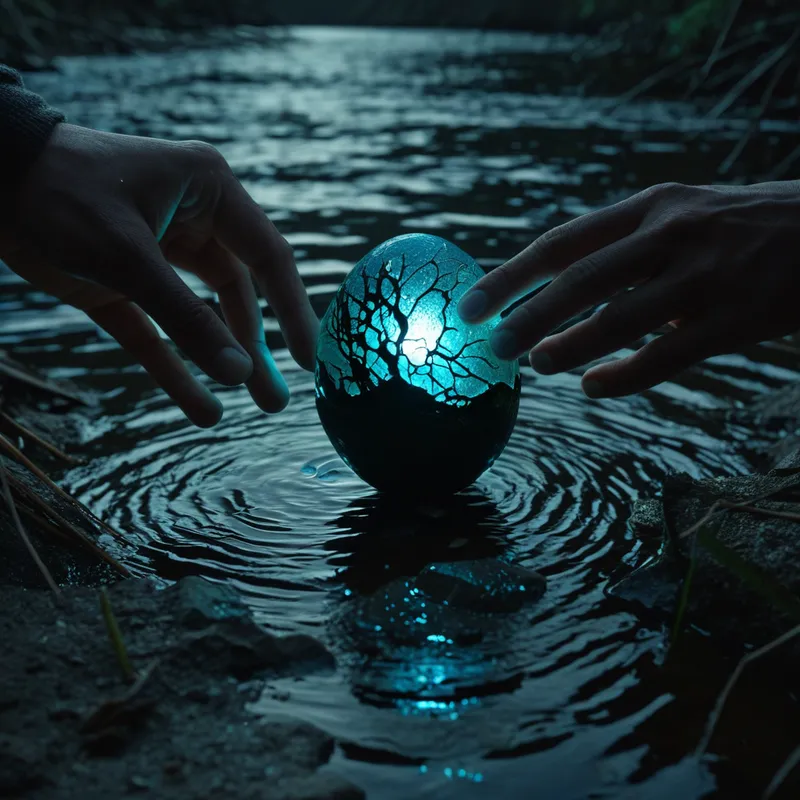
But Faro’s work was not done in death. Reborn, the water spirit began the great work of repair. Faro traveled the river’s course, speaking the true names of all things. With each uttered word, chaos receded. Grasses learned to grow toward the sun. Animals learned their paths. And the seven pieces of the original, shattered cosmic egg? Faro gathered them and placed them carefully along the riverbanks. These fragments became the first sacred sanctuaries, the points where the divine blueprint touched the earth, establishing order, lineage, and the possibility of human community. The world was no longer a stolen, broken thing. It was a living system, sung into harmony by the spirit of the water that now flowed through its very veins.
Cultural Origins & Context
This myth originates from the Mande peoples, a vast linguistic and cultural family in West Africa, including the Bambara, Malinke, and Dyula, whose historical heartland revolves around the great bend of the Niger River in modern-day Mali, Guinea, and Ivory Coast. It is the foundational narrative of the Komow, the society of initiated elders and spiritual guides.
The myth was not written but breathed. It was performed—chanted, danced, and recited during profound rituals of initiation, agricultural cycles, and the installation of chiefs. The griot, or jeli, the master of spoken memory, would be its primary custodian, weaving its verses into the fabric of social identity. Its function was multifaceted: it was a cosmological map explaining the origin of the world, a theological treatise on the nature of divine order versus human rebellion, and a social charter. It justified the sacred role of the ruler (the mansa), who, like Faro, was to be a force of order and fertility, and it encoded the essential relationship between the people and their life-giving river. The myth was not mere story; it was the active, living memory that sustained the world’s balance.
Symbolic Architecture
At its core, this is a myth about the transition from chaotic potential to harmonious, life-sustaining structure. The Cosmic Egg symbolizes the unus mundus, the unified world of undifferentiated potential where all opposites are contained. Pemba’s premature rupture represents the inevitable, often traumatic, first act of ego-consciousness—the selfish seizure of identity that creates a world out of balance, a world dominated by unchecked will.
The sacrifice of the divine is not a punishment, but the necessary cost of making the world whole. The god must be scattered so that the world may be gathered.
Faro is the archetype of the Logos—the ordering word. Faro’s dismemberment and rebirth as the river is the ultimate act of creative self-sacrifice. The deity does not impose order from above but becomes the system of order, its lifeblood. The gathering of the seven egg fragments signifies the establishment of sacred centers—consciousness, culture, law—within the wilderness of existence. It moves creation from a single, broken point (Pemba’s theft) to a networked, flowing system of meaning (Faro’s river).
The Dreamer's Resonance
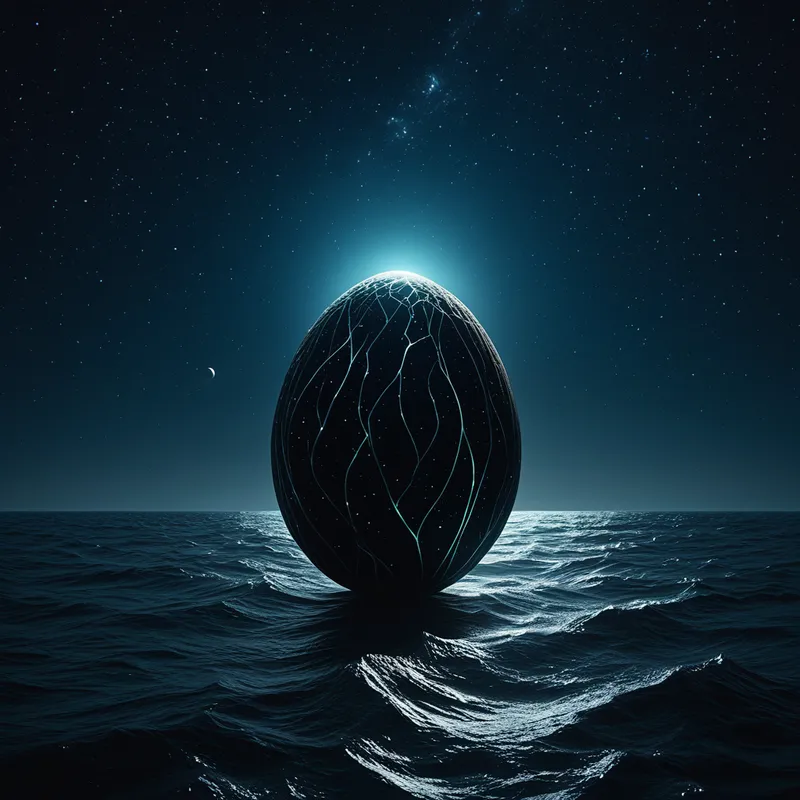
When this myth stirs in the modern soul, it often manifests in dreams of profound reordering. You may dream of a vast, silent body of water—an ocean or a deep river—that holds a mysterious, glowing object. You may witness something precious shatter, not with a sense of loss, but with a strange, inevitable rightness, its pieces needing to be collected. There may be dreams of learning a forgotten language or of hearing a voice that names things, bringing calm to inner chaos.
Somatically, this can feel like a release of a long-held, tense fragmentation—a “Pemba” state of striving and isolation—giving way to a fluid, integrative flow. It is the psyche’s process of moving from a ego-centric, “I seized this” mentality to an eco-centric, “I am part of this” awareness. The dreamwork involves gathering the scattered pieces of one’s own potential (the egg fragments) and placing them deliberately along the course of one’s life-river, creating internal sanctuaries of meaning.
Alchemical Translation
For the individual, the Mande creation myth maps the alchemical journey of individuation—not as becoming a solitary hero, but as becoming a conscious node within a greater living system. The “Pemba” stage is our necessary, often arrogant, initial assertion of selfhood. We break from the maternal unconscious (the egg) to claim our territory, our identity. But this alone leads to a barren, sun-scorched inner landscape, a life of competition and alienation.
The “Faro” stage is the call to sacrifice that isolated, rigid self-concept. It is the solve—the dismemberment. We must let our old, monolithic identity be broken apart by the waters of the unconscious, by life itself. Our certainties are scattered.
The rebirth of the spirit comes not from avoiding the flood, but from becoming the riverbed that gives it direction and purpose.
Then comes the coagula—the rebirth and re-membering. We consciously gather the authentic fragments of our soul—our talents, wounds, and truths—and, like Faro placing the egg shards, we situate them intentionally along our path. We speak the true names to our experiences, bringing order through understanding. We become a vessel for a flow greater than ourselves, finding our purpose not in ruling our domain, but in facilitating fertility, connection, and harmonious flow within our relationships and community. The goal is not to be the god who made the world, but to become the sacred river that sustains it.
Associated Symbols
Explore related symbols from the CaleaDream lexicon:
- Water — The primary element of Faro, representing the fluid, life-giving, ordering principle that heals the fractured world and carries the seeds of potential.
- Egg — The cosmic egg of Mangala, symbolizing the primal unity, the contained universe of all potential before the rupture of consciousness and creation.
- River — The manifestation of Faro’s sacrificed body, representing the flow of life, time, destiny, and the central axis that brings order and fertility to the world.
- Sacrifice — The dismemberment of Faro, embodying the necessary dissolution of a prior state of being to generate and sustain a new, more complex and harmonious order.
- Order — The divine principle established by Faro’s journey and speech, representing the move from primal chaos to a world structured by law, language, and social harmony.
- Seed — The primal seed of Mangala’s thought that becomes the cosmic egg, representing divine intention, latent potential, and the origin point of all existence.
- Earth — The domain prematurely claimed by Pemba, representing raw materiality, foundation, and the potential for both barren defiance and fertile growth.
- Spirit — The essence of Faro, the animating, intelligent force that inhabits and orders the natural world, particularly the waters and the life they sustain.
- Speech — The creative, ordering power of Faro’s true naming, which structures chaos and establishes the fundamental relationships and identities within creation.
- Journey — Faro’s travels along the river course, symbolizing the process of bringing consciousness, structure, and sacred meaning to the expanse of the world and the soul.
- Rebirth — The transformation of Faro from a sacrificed deity into the pervasive, life-sustaining river, representing cyclical renewal and the emergence of a higher form from dissolution.
- Mythos — The entire narrative framework that encodes the Mande understanding of cosmic origins, divine interaction, and the foundational principles of human society and the natural world.